
Howard Sturgis (1855–1920)
Author of Belchamber
About the Author
Image credit: Howard Sturgis and William Haynes Smith on the steps with two dogs at Queen's Acres, Windsor, before 1920 By Edith Wharton collection - Beinecke 10558628, Public Domain, https://commons.wikimedia.org/w/index.php?curid=58255011
Works by Howard Sturgis
Associated Works
Pages Passed from Hand to Hand: The Hidden Tradition of Homosexual Literature in English from 1748 to 1914 (1998) — Contributor — 185 copies, 1 review
Tagged
Common Knowledge
- Canonical name
- Sturgis, Howard
- Legal name
- Sturgis, Howard Overing
- Birthdate
- 1855-01-30
- Date of death
- 1920-02-07
- Gender
- male
- Education
- Eton College
University of Cambridge - Relationships
- Sturgis, Julian (brother)
- Nationality
- England
UK - Birthplace
- London, England, UK
- Place of death
- Windsor, Berkshire, England, UK
- Map Location
- England
Members
Reviews
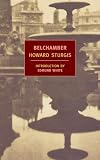
Shocked by how little notice and how few reviews this book has. I first came across it while reading Edith Wharton's biography, A Backward Glance, and I saw in the book that EM Forster was a lover of it too. My impression is that in every era, this book has had a small number of very devoted readers.
It's like few other books I've ever read. The type here is very clear to us: a shy, timid, bookish young man who's had the misfortune to be born as the sole heir to his lordly father's estate. show more The book shines in the delicate way it portrays Lord Belchamber's character and his timidity, without making us dislike him. He is a person of, at times, moral force (he reminds one of Alexei Karenin from Anna Karenina), but this qualities can be a person's undoing if they're not strong enough to back it up. And yet...and yet...there's a delicate beauty in his weakness as well. Perhaps this book resonated so strongly in me because I saw myself in Belchamber. Not every strong character needs to be a hero or an anti-hero. And not every weak character needs to be some sort of comic laughingstock. I think there's room in literature to portray people as they are: weak and strong at the same time. Totally worth your time if you loved, for instance John William's STONER or anything by Wharton or Henry James. show less
It's like few other books I've ever read. The type here is very clear to us: a shy, timid, bookish young man who's had the misfortune to be born as the sole heir to his lordly father's estate. show more The book shines in the delicate way it portrays Lord Belchamber's character and his timidity, without making us dislike him. He is a person of, at times, moral force (he reminds one of Alexei Karenin from Anna Karenina), but this qualities can be a person's undoing if they're not strong enough to back it up. And yet...and yet...there's a delicate beauty in his weakness as well. Perhaps this book resonated so strongly in me because I saw myself in Belchamber. Not every strong character needs to be a hero or an anti-hero. And not every weak character needs to be some sort of comic laughingstock. I think there's room in literature to portray people as they are: weak and strong at the same time. Totally worth your time if you loved, for instance John William's STONER or anything by Wharton or Henry James. show less
This book is an absolute romp! It is a social satire on the British upper classes before World War 1 and its protagonist, Sainty, is one of those introspective, self-centered individuals who weighs his every thought on a set of scales that ensure he feels badly. Still, he manages to be the only likable character in the entire novel.

“Thy love to me was wonderful, passing the love of woman. What woman could ever love him as I do? thought Tim as his hungry eyes rested on the face of his friend.”
A book about morality and the decisions we make. The cast of characters is entertaining, and the protagonist's indecision is fascinating
You May Also Like


Associated Authors
Statistics
- Works
- 3
- Also by
- 1
- Members
- 194
- Popularity
- #112,876
- Rating
- 3.7
- Reviews
- 4
- ISBNs
- 19
- Languages
- 1