
Sandy Hingston
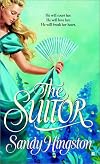
Author of The Suitor
About the Author
Disambiguation Notice:
Mallory Burgess also writes as Catherine FitzGerald and Sandy Hingston. More titles can be found under FitzGerald.
Series
Works by Sandy Hingston
Incantesimo d'amore 1 copy
Il corteggiatore 1 copy
Associated Works
Choice: True Stories of Birth, Contraception, Infertility, Adoption, Single Parenthood, and Abortion (2007) — Contributor — 94 copies, 4 reviews
Tagged
Common Knowledge
- Other names
- Burgess, Mallory
FitzGerald, Catherine - Gender
- female
- Disambiguation notice
- Mallory Burgess also writes as Catherine FitzGerald and Sandy Hingston.
More titles can be found under FitzGerald.
Members
Discussions
Regency Romance, Adopts Girl, Falls In Love in Name that Book (August 2013)
Reviews
This was a fun, unique story. Too often, romances follow a fairly standard plotline (if, indeed, they have any sort of plot), and the heroines and the men with whom they fall in love are often cut from one of three molds. I've never read a romance with a heroine as genuinely uppity and arrogant as Katherine, the heiress to the Duke of Marne. She is truly an abominable woman in the beginning. I almost didn't know if I could finish the book, and that's truly rare for me! I always want to know show more what happens at the end!
But then...I kinda fell in love with her character. I mean, she was shallow. God, was she shallow. But she was also born in a time period when people truly believed that rank was a benediction from God and meant that you were somehow better than everyone else who was below your rank, that you had a special purpose to uphold some moral code lest civilization fall to pieces. What drivel!
Luckily, our Katherine meets Alain Montclair, a rogue of the highest order. He seduces her and leaves her high and dry, whereupon she chases him to Paris. There she finds that he has been condemned to die and is languishing in the Bastille until his death date. She helps him escape, and the two run off together and become lovers. They lead a peasant's life for several weeks, and Katherine's worldview broadens and changes immeasurably as she is forced to work for their food, keep their house, and live on means very much below her station as a duke's daughter.
Then, through a series of events, she finds herself separated from Alain and betrothed to Lord Dalrymple, a seemingly good man who takes her just as she is, even knowing that she is a fallen woman.
Her relationship with Dalrymple seems to be going swimmingly, though she cannot help but yearn for the days and nights she spent with Alain. Dalrymple seems the perfect gentleman, particularly by Regency standards: he doesn't push her, he courts her by sending her appropriate gifts, and he just seems to be a genuinely nice man. Then, suddenly, he is a priggish fool who believes that women are such an inferior, separate species that even their opinions regarding flowers aren't to be listened to.
That, right there, is why this book didn't get 5 stars from me. The jump between the two personas of Dalrymple was not done well, so much so as to be unbelievable.
Through a series of events, Katherine learns that her Alain was not a pig and was, in fact, somewhat of a hero. When he crashes her wedding to Dalrymple, she leaves in a most spectacular fashion, and the two begin their life together.
There are, of course, aspects of this that are fairly similar to other romances. But the characters were fairly original (after all, how many Regency romances have you ever read where one of the supporting characters was a female teenager interested in medicine who had the support of the local doctor, who procured fetal pigs for her to dissect?), and a significant portion of the plot was most definitely unique. My only lament was that the sex scenes were not better fleshed out. That and the issue of Dalrymple's seemingly split personality led me to only give this book 4 stars instead of 5. Even so, I highly recommend this book to anyone who loves romances, particularly those set in the Regency period. show less
But then...I kinda fell in love with her character. I mean, she was shallow. God, was she shallow. But she was also born in a time period when people truly believed that rank was a benediction from God and meant that you were somehow better than everyone else who was below your rank, that you had a special purpose to uphold some moral code lest civilization fall to pieces. What drivel!
Luckily, our Katherine meets Alain Montclair, a rogue of the highest order. He seduces her and leaves her high and dry, whereupon she chases him to Paris. There she finds that he has been condemned to die and is languishing in the Bastille until his death date. She helps him escape, and the two run off together and become lovers. They lead a peasant's life for several weeks, and Katherine's worldview broadens and changes immeasurably as she is forced to work for their food, keep their house, and live on means very much below her station as a duke's daughter.
Then, through a series of events, she finds herself separated from Alain and betrothed to Lord Dalrymple, a seemingly good man who takes her just as she is, even knowing that she is a fallen woman.
Her relationship with Dalrymple seems to be going swimmingly, though she cannot help but yearn for the days and nights she spent with Alain. Dalrymple seems the perfect gentleman, particularly by Regency standards: he doesn't push her, he courts her by sending her appropriate gifts, and he just seems to be a genuinely nice man. Then, suddenly, he is a priggish fool who believes that women are such an inferior, separate species that even their opinions regarding flowers aren't to be listened to.
That, right there, is why this book didn't get 5 stars from me. The jump between the two personas of Dalrymple was not done well, so much so as to be unbelievable.
Through a series of events, Katherine learns that her Alain was not a pig and was, in fact, somewhat of a hero. When he crashes her wedding to Dalrymple, she leaves in a most spectacular fashion, and the two begin their life together.
There are, of course, aspects of this that are fairly similar to other romances. But the characters were fairly original (after all, how many Regency romances have you ever read where one of the supporting characters was a female teenager interested in medicine who had the support of the local doctor, who procured fetal pigs for her to dissect?), and a significant portion of the plot was most definitely unique. My only lament was that the sex scenes were not better fleshed out. That and the issue of Dalrymple's seemingly split personality led me to only give this book 4 stars instead of 5. Even so, I highly recommend this book to anyone who loves romances, particularly those set in the Regency period. show less

Nichola Hainesworth's mother is in complete despair. Nichola clumps, she rides astride, and she wants nothing more than to follow her five brothers to the Continent to fight Napoleon. None of these are qualities designed to make her a good match in the eyes of the ton. So Nichola is enrolled in Miss Treadwell's Academy for Young Ladies.
Little does Mrs. Hainesworth know that the academy is a project designed to teach young ladies to follow their hearts and their passions to make love matches show more and form true partnerships - not to land the most spectacular society catch. True to its mission, the academy hires roguish war hero Lord Brian Boru to teach awkward Nichola how to fence, with glorious results. Soon Nichola is the toast of the ton when she catches the eye of a duke's heir, but she's more interested in her wounded fencing teacher than in society's tulips.
Nichola is a wonderful strong character who is never afraid to say what she thinks. In making her fit for the ton, Mrs. Treadwell never tries to curb her freshness and originality. Instead, the academy teaches her not to be afraid of her height and to impart a measure of grace by teaching her to fence. The part where Lord Boru tells her to pretend flirtation is a fencing bout is so funny.
I also really liked that Nichola never deluded herself into thinking that Boru's wound doesn't matter. She acknowledges that it will make many things much more difficult and that it may very well curb her in doing so many of the athletic pursuits she both enjoys and excels at. But surprisingly (considering his injury), Boru is the only one who wholeheartedly pushes her to excel and not to go easy on him or anyone else. I loved the descriptions of fencing (although I wish she had had a bit more difficulty in that regard). I tried fencing for a while, but soon discovered that I don't have enough innate aggression to either enjoy it or be particularly good at it - pesky flight instinct. But I still love to watch good fencers in a bout, and I got the same sort of feeling from some of these scenes.
The scene in the river = yum.
On to the not-so-good:
* The love triangle was fun in that it was an actual triangle. I liked Anthony. I loved how much he admired Nichola and how attractive he made her feel. But his reasons for liking her in the end were a bit weird, and I thought Nichola forgave him much too easily at the end of things.
* The entire climax of the plot was dreadfully convoluted in general.
* I found the bits written in Scottish dialect distracting and cumbersome.
* I wanted to hear more from the other girls at the school - particularly Gwen and Bess. And no matter how unconventional the school in promoting love matches, I did think it was dreadfully out of time/character for
SPOILER: (the Countess to actually facilitate a before-marriage affair between Nichola and Boru - effectively allowing her to be ruined for any society marriage. Just seems wrong) END SPOILER
This was a fun premise, and I liked that neither the hero nor the heroine were conventionally attractive - Nichola was too tall and clumsy at first and Boru had his wound. But as much as I liked the characters, the resolution of the plot just didn't work for me.
Also posted at my blog. show less
Little does Mrs. Hainesworth know that the academy is a project designed to teach young ladies to follow their hearts and their passions to make love matches show more and form true partnerships - not to land the most spectacular society catch. True to its mission, the academy hires roguish war hero Lord Brian Boru to teach awkward Nichola how to fence, with glorious results. Soon Nichola is the toast of the ton when she catches the eye of a duke's heir, but she's more interested in her wounded fencing teacher than in society's tulips.
Nichola is a wonderful strong character who is never afraid to say what she thinks. In making her fit for the ton, Mrs. Treadwell never tries to curb her freshness and originality. Instead, the academy teaches her not to be afraid of her height and to impart a measure of grace by teaching her to fence. The part where Lord Boru tells her to pretend flirtation is a fencing bout is so funny.
I also really liked that Nichola never deluded herself into thinking that Boru's wound doesn't matter. She acknowledges that it will make many things much more difficult and that it may very well curb her in doing so many of the athletic pursuits she both enjoys and excels at. But surprisingly (considering his injury), Boru is the only one who wholeheartedly pushes her to excel and not to go easy on him or anyone else. I loved the descriptions of fencing (although I wish she had had a bit more difficulty in that regard). I tried fencing for a while, but soon discovered that I don't have enough innate aggression to either enjoy it or be particularly good at it - pesky flight instinct. But I still love to watch good fencers in a bout, and I got the same sort of feeling from some of these scenes.
The scene in the river = yum.
On to the not-so-good:
* The love triangle was fun in that it was an actual triangle. I liked Anthony. I loved how much he admired Nichola and how attractive he made her feel. But his reasons for liking her in the end were a bit weird, and I thought Nichola forgave him much too easily at the end of things.
* The entire climax of the plot was dreadfully convoluted in general.
* I found the bits written in Scottish dialect distracting and cumbersome.
* I wanted to hear more from the other girls at the school - particularly Gwen and Bess. And no matter how unconventional the school in promoting love matches, I did think it was dreadfully out of time/character for
SPOILER: (the Countess to actually facilitate a before-marriage affair between Nichola and Boru - effectively allowing her to be ruined for any society marriage. Just seems wrong) END SPOILER
This was a fun premise, and I liked that neither the hero nor the heroine were conventionally attractive - Nichola was too tall and clumsy at first and Boru had his wound. But as much as I liked the characters, the resolution of the plot just didn't work for me.
Also posted at my blog. show less

This was the very good story of Michel Faurer, a french born former knight of the Templar and Madeleine de Courtnay, a young convent raised English beauty. He meets her when she rescues him from drowning, near her brother's castle. The Templars are being persecuted by everyone except for the Scots. The story follows the hero and heroine on their adventures and ordeals. I am not going to give it all away here but the book is a keeper in my opinion. The ending was a little abrupt, I thought, show more and no epilogue, probably because there are more books in the series. show less

Beloved Lord follows 16 year old Anne Faurer, younger sister of the hero in Beloved Honor. She has been kicked out of her family's home in Scotland, since it is under English rule. Her home has been given to an English barrister, with a newborn son and a nasty wife who just left him on the day of his son's birth. Anne recently gave birth to a stillborn child and is called in to be a nursemaid.
Mallory Burgess doesn't seem to ever make it easy for her heroes and heroines, from what I've seen show more and this book is no exception. The hero and heroine go through some rough times and finally get together at the end of the book. This is the first book I have read however, that they are not married for their HEA. They are happy to be together at the end and hope they can marry someday, which left me a little frustrated. (No one wants bad to triumph over good!) No epilogue either.
I was really disappointed that Anne's mother, Madeline (from Beloved Knight and Beloved Honor), did not get together with Bay's older best friend Reggie, who has had a crush on her for forty years. 4/5 stars show less
Mallory Burgess doesn't seem to ever make it easy for her heroes and heroines, from what I've seen
I was really disappointed that Anne's mother, Madeline (from Beloved Knight and Beloved Honor), did not get together with Bay's older best friend Reggie, who has had a crush on her for forty years.
You May Also Like


Associated Authors
Statistics
- Works
- 22
- Also by
- 2
- Members
- 246
- Popularity
- #92,612
- Rating
- 3.9
- Reviews
- 7
- ISBNs
- 20
- Languages
- 2