

Okey Ndibe
Author of Foreign Gods, Inc.
About the Author
Okey Ndibe first came to the US to act as founding editor of African Commentary, a magazine published by Chinua Achebe. He has taught at Brown University, Connecticut College, Simon's Rock College, Trinity College, and the University of Lagos (as a Fulbright scholar). He is the author of two show more novels, Arrows of Rain and Foreign Gods, Inc., and his award-winning journalism has appeared in The New York Times, The Guardian, and the Hartford Courant. Mr. Ndibe lives in West Hartford, Connecticut, with his wife, Sheri, and their three children. show less
Image credit: Author Okey Ndibe at the 2016 Texas Book Festival. By Larry D. Moore, CC BY-SA 4.0, https://commons.wikimedia.org/w/index.php?curid=53508480
Works by Okey Ndibe
Associated Works
Of This Our Country: Acclaimed Nigerian Writers on the Home, Identity, and Culture They Know (2021) — Contributor — 21 copies
A Mind to Silence and other stories: The Caine Prize for African Writing 2021-22 (2022) — Foreword — 1 copy
Tagged
Common Knowledge
- Birthdate
- 1960
- Gender
- male
- Education
- University of Massachusetts, Amherst (MA, PhD)
- Occupations
- African & Diaspora literatures professor, Brown University
Editor, African Commentary
Member, editorial board, Hartford Courant - Places of residence
- West Hartford, Connecticut, USA
- Associated Place (for map)
- Connecticut, USA
Members
Reviews
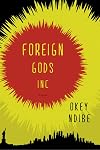
first: My thanks to Soho, who sent me this novel -- I am so happy I got a copy because it's amazing.
second: I'm skipping the plot here, but if you want to read about it, you'll find it on my reading journal page.
This book is one of those novels that you don't fully appreciate with only one read; nor do you fully appreciate it until you've let time pass and allow it to settle into your brain. The premise is very different, the writing is first class, and frankly, even the ending is unlike show more anything I've ever seen before. It's the story of one African immigrant for whom the dream has become a veritable nightmare -- and the unorthodox way in which he tries to remedy things for himself.
The book is definitely good in its brief examination of immigrant experience in America, but the best parts of this novel take place in the small Nigerian village that is the main character's (Ike) home. A reader can lose himself/herself here, caught up in the people who inhabit this place. It is a place where corruption abounds; where the capitalist present and traditional past meet head to head; where Christianity is in conflict with local religious tradition and divides the locals, even within families. It is a place where so much has changed while Ike's been gone that people from his past are hardly recognizable in the way he remembers them, and not always for the better. It's a place where everyone assumes that just because Ike is in America, he's living the dream. It is also a place with its own "foreign gods," who hold out promises of their own for those who dream of something better, as in one scene where Michael Jordan becomes a deity in his own right. As crazy as this entire story is, it is definitely the Nigerian characters and their colorful language who make Foreign Gods, Inc. the wonderful novel it turns out to be, especially Ike, who clearly has a foot in both worlds. They range from the scamming church pastor to Ike's uncle and the chief priest of the deity Ngene, to Ike's mother who is worried that Ike will be possessed by demons by hanging out with said uncle, and to Ike's first love, whose life turned out so badly that he hardly recognizes her. Thematically, this is a rich book -- well beyond being just another take on the immigrant experience, there's much to say here about art, about conflict (especially inner conflict within a troubled and divided soul), about religion, about the importance of the past and tradition vs. the modern world; you also get a look at the very male-oriented culture in this country, the colonial aspects, and there's also quite a lot in here about the power of stories. The river is also ever present throughout this book, as a source of life, power and conflict.
For me, it was almost like reading a "quest" sort of story with a conflicted main character who faces a number of obstacles before he can reach his intended goal. However, the strange but highly appropriate ending is unlike anything I've experienced before -- seriously, it was almost at the edge of surreal, something along the lines of the bizarre endings in novels of many works of weird fiction I've read. Its abruptness immediately leaves pause for the reader to conjure in his or her head exactly what's going on here, and it's a stunner. Foreign Gods, Inc. is a novel I highly, highly recommend, one that casual readers like myself can fully enjoy. It's a book that I know is going to stay with me a very long time. show less
second: I'm skipping the plot here, but if you want to read about it, you'll find it on my reading journal page.
This book is one of those novels that you don't fully appreciate with only one read; nor do you fully appreciate it until you've let time pass and allow it to settle into your brain. The premise is very different, the writing is first class, and frankly, even the ending is unlike show more anything I've ever seen before. It's the story of one African immigrant for whom the dream has become a veritable nightmare -- and the unorthodox way in which he tries to remedy things for himself.
The book is definitely good in its brief examination of immigrant experience in America, but the best parts of this novel take place in the small Nigerian village that is the main character's (Ike) home. A reader can lose himself/herself here, caught up in the people who inhabit this place. It is a place where corruption abounds; where the capitalist present and traditional past meet head to head; where Christianity is in conflict with local religious tradition and divides the locals, even within families. It is a place where so much has changed while Ike's been gone that people from his past are hardly recognizable in the way he remembers them, and not always for the better. It's a place where everyone assumes that just because Ike is in America, he's living the dream. It is also a place with its own "foreign gods," who hold out promises of their own for those who dream of something better, as in one scene where Michael Jordan becomes a deity in his own right. As crazy as this entire story is, it is definitely the Nigerian characters and their colorful language who make Foreign Gods, Inc. the wonderful novel it turns out to be, especially Ike, who clearly has a foot in both worlds. They range from the scamming church pastor to Ike's uncle and the chief priest of the deity Ngene, to Ike's mother who is worried that Ike will be possessed by demons by hanging out with said uncle, and to Ike's first love, whose life turned out so badly that he hardly recognizes her. Thematically, this is a rich book -- well beyond being just another take on the immigrant experience, there's much to say here about art, about conflict (especially inner conflict within a troubled and divided soul), about religion, about the importance of the past and tradition vs. the modern world; you also get a look at the very male-oriented culture in this country, the colonial aspects, and there's also quite a lot in here about the power of stories. The river is also ever present throughout this book, as a source of life, power and conflict.
For me, it was almost like reading a "quest" sort of story with a conflicted main character who faces a number of obstacles before he can reach his intended goal. However, the strange but highly appropriate ending is unlike anything I've experienced before -- seriously, it was almost at the edge of surreal, something along the lines of the bizarre endings in novels of many works of weird fiction I've read. Its abruptness immediately leaves pause for the reader to conjure in his or her head exactly what's going on here, and it's a stunner. Foreign Gods, Inc. is a novel I highly, highly recommend, one that casual readers like myself can fully enjoy. It's a book that I know is going to stay with me a very long time. show less
A young Nigerian with a degree in economics goes to the US to pursue the American dream, which he soon realizes is actually a myth, as his job hunting efforts prove fruitless and he ends up driving a cab, and unwisely hooks up with a greedy, demanding American woman. He gets the idea of going back to Nigeria to steal and eventually sell his home village's deity.
Once back in his village, we are presented with a vivid portrayal of colorful characters and conflicting beliefs that inevitably show more arise due to the cross-cultural confusion that globalization has wrought. Even the hapless 'hero', Ike, is a castaway in his own nebulous existence stripped of cultural identity.
Although many readers found Ike unlikable, he gained my sympathy despite his narrow relentless pursuit of financial success and other character flaws, even as he is overwhelmed by the futility of his own efforts.
While the novel is actually a serious commentary on how the new culture of materialism has overshadowed traditional values, as well as a scathing critique of a corruption in Nigeria, it is made utterly enjoyable by a keen drollness that is wrapped in the unique wit of a distinctly West African flavor. show less
Once back in his village, we are presented with a vivid portrayal of colorful characters and conflicting beliefs that inevitably show more arise due to the cross-cultural confusion that globalization has wrought. Even the hapless 'hero', Ike, is a castaway in his own nebulous existence stripped of cultural identity.
Although many readers found Ike unlikable, he gained my sympathy despite his narrow relentless pursuit of financial success and other character flaws, even as he is overwhelmed by the futility of his own efforts.
While the novel is actually a serious commentary on how the new culture of materialism has overshadowed traditional values, as well as a scathing critique of a corruption in Nigeria, it is made utterly enjoyable by a keen drollness that is wrapped in the unique wit of a distinctly West African flavor. show less
This picaresque bildungsroman, spiked with folktales, horrors, and gorgons aplenty, features a young man seeking his fortune in an un-fortun-ate world. The young man discovers instead his own base nature. To be honest, I thought this was going to be a funny, light-hearted read. I have grown accustomed to comic novels that harbor hideous truths. But Ndibe does something entirely different with this fiction. He uses a nineteenth or early twentieth-century sensibility and style in this novel show more with some success, and creates a tragi-comic naïf for whom we reserve a special pity. Only the time frame of the novel and its actual language are modern: the rest is as old as man himself.
Ike (pronounced Ee-kay) is a Nigerian immigrant to the United States. Although he attended a fancy New England college and graduated magna cum laude in economics, his thick Nigerian accent bars him from landing a job in his field. He struggles to find paying employment, finally landing a job as a taxicab driver. At the same time he searches for a wife to give him the infamous green card legal status he requires for higher paying low-level jobs for which he is (over)qualified.
This lacerating novel peels back the veneer to uncover the reality of immigrant life in the United States and in the home country for an educated man. Ike struggles mightily to rustle up the needed cash to return home in response to repeated requests by his family, but he also uses his visit to Nigeria to steal the effigy of a deity from his native village to sell on the New York art market. With this, he plans to vanish his financial woes and make his fortune.
Whirled about and confused in the maelstrom of humanity on two continents, Ike resembles a modern Don Quixote, though he seeks the good life promised by America rather than the chivalry, human goodness, and true love sought by Quixote. Like Quixote, Ike comes to his senses occasionally, only to sink back into a feverish belief that his dreams will come true. Comic elements abound (two bribe-taking customs sessions, a visit to a corrupt politician’s home, an interview with a Nigerian Christian pastor, as well as the absurdity of a high-end art market for religious deities), and although we are ready to laugh through much of the book, we come to realize this horrible dream is really true, and Ike is desperately spiraling out of control into the black hole of penury and despair.
Foreign Gods reads like a big short story, partly because of the ending, and partly because the time frame is short. We have character development but not resolution. We grow to like, if not admire, the character of Ike. He is more acted upon than actor, since he can’t seem to come to grips with the world in which he lives. He is perhaps not very clever, despite his degree, for he is guilty of the basest naiveté when it comes to his get-rich-quick plan. He is a good man at heart, but we onlookers know that will probably not be enough to get him through.
And if our reactions are not enough, here is Janet Maslin's take at the New York Times. This book was sent to me by Soho Crime in return for an honest review. show less
Ike (pronounced Ee-kay) is a Nigerian immigrant to the United States. Although he attended a fancy New England college and graduated magna cum laude in economics, his thick Nigerian accent bars him from landing a job in his field. He struggles to find paying employment, finally landing a job as a taxicab driver. At the same time he searches for a wife to give him the infamous green card legal status he requires for higher paying low-level jobs for which he is (over)qualified.
This lacerating novel peels back the veneer to uncover the reality of immigrant life in the United States and in the home country for an educated man. Ike struggles mightily to rustle up the needed cash to return home in response to repeated requests by his family, but he also uses his visit to Nigeria to steal the effigy of a deity from his native village to sell on the New York art market. With this, he plans to vanish his financial woes and make his fortune.
Whirled about and confused in the maelstrom of humanity on two continents, Ike resembles a modern Don Quixote, though he seeks the good life promised by America rather than the chivalry, human goodness, and true love sought by Quixote. Like Quixote, Ike comes to his senses occasionally, only to sink back into a feverish belief that his dreams will come true. Comic elements abound (two bribe-taking customs sessions, a visit to a corrupt politician’s home, an interview with a Nigerian Christian pastor, as well as the absurdity of a high-end art market for religious deities), and although we are ready to laugh through much of the book, we come to realize this horrible dream is really true, and Ike is desperately spiraling out of control into the black hole of penury and despair.
Foreign Gods reads like a big short story, partly because of the ending, and partly because the time frame is short. We have character development but not resolution. We grow to like, if not admire, the character of Ike. He is more acted upon than actor, since he can’t seem to come to grips with the world in which he lives. He is perhaps not very clever, despite his degree, for he is guilty of the basest naiveté when it comes to his get-rich-quick plan. He is a good man at heart, but we onlookers know that will probably not be enough to get him through.
And if our reactions are not enough, here is Janet Maslin's take at the New York Times. This book was sent to me by Soho Crime in return for an honest review. show less
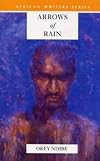
A poignant tale of post-colonial trauma, rape, violence and a failing nation-state in which the only pristine and unsullied element seems to be its fast-depleting journalist integrity.
Without giving too much away, this novel has a poignant beauty not found in others of its genres. The only qualms I have with it is that the ending, while natural for a novel of this kind, proved immensely anti-climatic given that the build-up to it was epic.
Nonetheless, a mesmerizing glance into the human psyche.
Without giving too much away, this novel has a poignant beauty not found in others of its genres. The only qualms I have with it is that the ending, while natural for a novel of this kind, proved immensely anti-climatic given that the build-up to it was epic.
Nonetheless, a mesmerizing glance into the human psyche.
Lists
Awards


You May Also Like


Associated Authors
Statistics
- Works
- 4
- Also by
- 2
- Members
- 371
- Popularity
- #64,991
- Rating
- 3.6
- Reviews
- 12
- ISBNs
- 26
- Languages
- 1