
Yvonne Adhiambo Owuor
Author of Dust
About the Author
Image credit: from wikipedia
Works by Yvonne Adhiambo Owuor
Associated Works
New Daughters of Africa: An International Anthology of Writing by Women of African Descent (2019) — Contributor — 116 copies, 1 review
Ten years of the Caine Prize for African writing : plus J.M. Coetzee, Nadine Gordimer and Ben Okri (2009) — Contributor — 16 copies, 1 review
A is for ancestors : a selection of works from the Caine Prize for African Writing 2003 (2004) — Contributor — 6 copies
Tagged
Common Knowledge
- Birthdate
- 1968
- Gender
- female
- Education
- Kenyatta University
Reading University (MA)
University of Queensland (MPhil) - Occupations
- fiction writer
screenwriter
executive director, Zanzibar International Film Festival - Awards and honors
- Caine Prize for African Writing (2003)
- Nationality
- Kenya
- Birthplace
- Nairobi, Kenya
- Map Location
- Kenya
Members
Reviews

Poetical prose or lyrical language have become a bit of a cliché, more often than not indicating that someone attempted to prettify their pededestrian writing by garlanding it with flowery adornments which frequently have a purplish tinge to them. Mind you, I still prefer that in most cases to supposedly "plain" language, which rather tends to be synonymous with "bland" and "lazy".
Not so, however, with Yvonna Adhiambo Owuor's novel The Dragonfly Sea - the poetical language here has not been show more grafted on the narrative retroactively but flows out of what the novel tells and how it tells it. And "flow" is indeed the operative word here, becuase the sea and its tidel motions are not only the main subject here but also the central structural element. The novel is about many things - the coming of age of its main protagonist Ayaana, life on the Kenyan island of Pate, about friendship and family, love and life - but all of them connect to the sea and are encompassed by it, and events and people come and go and return again like the tides of flood and ebb. And the novel`s language is as colourful and as Protean, as shifting and unsteady but also as flowing in a steady rhythm.
In short (and to avoid getting all flowery and effusive myself), I loved The Dragonfly Sea; it is a beautiful novel and I have nto been as moved by a book for quite some time. show less
Not so, however, with Yvonna Adhiambo Owuor's novel The Dragonfly Sea - the poetical language here has not been show more grafted on the narrative retroactively but flows out of what the novel tells and how it tells it. And "flow" is indeed the operative word here, becuase the sea and its tidel motions are not only the main subject here but also the central structural element. The novel is about many things - the coming of age of its main protagonist Ayaana, life on the Kenyan island of Pate, about friendship and family, love and life - but all of them connect to the sea and are encompassed by it, and events and people come and go and return again like the tides of flood and ebb. And the novel`s language is as colourful and as Protean, as shifting and unsteady but also as flowing in a steady rhythm.
In short (and to avoid getting all flowery and effusive myself), I loved The Dragonfly Sea; it is a beautiful novel and I have nto been as moved by a book for quite some time. show less
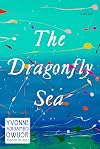
"A realization: there was nothing unique about his presence here." On the island of Pate, off the coast of Kenya, an epic tale of adventure springs forth from the sea. A meandering story echoing the oral tradition of storytelling. Many characters come and go, some returning to continue the story. Fascinating and inventive, but I found the book too physically weighty which limited the reading pleasure.
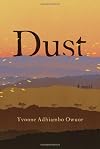
[Dust] is a symphony of memories, love, and grief. I savored the reading, the language, the story – and I also had to read slowly lest I be be overwhelmed.
Ostensibly the story is of a family and what happens when Odidi, the adult son, is shot. Dust is also the story of the hopes, dreams, achievements and disappointments of Odidi and Ajany, their parents Nyipir and Akai, of Galgalu, of Isaiah’s search, of a wandering trader, and of two policemen, Petrus and Ali Dida Hada. It is also the show more story of Kenya.
I knew this one would be a good read when I read the prologue, and, in spite of knowing what happens from the dust jacket, was pulled in immediately and kept reading, reading and hoping for a different result. And in spite of Odidi’s death, found the prologue beautiful.
The book is stunning, dense, and complex. And I’m going to leave it at that. Perhaps after I familiarize myself more with Kenya’s history and reread the book I could provide a more thorough analysis, but I don’t want to do that right now. This is a wonderful book. Read it! show less
Ostensibly the story is of a family and what happens when Odidi, the adult son, is shot. Dust is also the story of the hopes, dreams, achievements and disappointments of Odidi and Ajany, their parents Nyipir and Akai, of Galgalu, of Isaiah’s search, of a wandering trader, and of two policemen, Petrus and Ali Dida Hada. It is also the show more story of Kenya.
I knew this one would be a good read when I read the prologue, and, in spite of knowing what happens from the dust jacket, was pulled in immediately and kept reading, reading and hoping for a different result. And in spite of Odidi’s death, found the prologue beautiful.
The book is stunning, dense, and complex. And I’m going to leave it at that. Perhaps after I familiarize myself more with Kenya’s history and reread the book I could provide a more thorough analysis, but I don’t want to do that right now. This is a wonderful book. Read it! show less
Dust
Yvonne Adhiambo Owuor
Product description:
From a breathtaking new voice, a novel about a splintered family in Kenya—a story of power and deceit, unrequited love, survival and sacrifice.
Odidi Oganda, running for his life, is gunned down in the streets of Nairobi. His grief-stricken sister, Ajany, just returned from Brazil, and their father bring his body back to their crumbling home in the Kenyan drylands, seeking some comfort and peace. But the murder has stirred memories long left show more untouched and unleashed a series of unexpected events: Odidi and Ajany’s mercurial mother flees in a fit of rage; a young Englishman arrives at the Ogandas’ house, seeking his missing father; a hardened policeman who has borne witness to unspeakable acts reopens a cold case; and an all-seeing Trader with a murky identity plots an overdue revenge. In scenes stretching from the violent upheaval of contemporary Kenya back through a shocking political assassination in 1969 and the Mau Mau uprisings against British colonial rule in the 1950s, we come to learn the secrets held by this parched landscape, buried deep within the shared past of the family and of a conflicted nation.
Here is a spellbinding novel about a brother and sister who have lost their way; about how myths come to pass, history is written, and war stains us forever.
Why did you read this book:
• Vine review
• Enjoy historical fiction
What did reviewers say about this book:
“Go buy Yvonne Adhiambo Owuor’s Dust. In this dazzling novel you will find the entirety of human experience—tearshed, bloodshed, lust, love—in staggering proportions . . . Although written by an East African, Dust is not just for Afrophiles. It is for bibliophiles . . . Akai-ma ranks among the most inimitable female characters in modern literature.” —Taiye Selasi, New York Times Book Review
“Owuor’s fragmentary style is dense but lyrical.” —New Yorker
“This stunning debut novel grabs the reader’s heart, refusing to let go . . . Owuor represents another shining talent among Africa’s young writers publishing in English. This searing novel, though informed by her Kenyan roots, should not be pigeonholed. These unforgettable characters and universal themes will speak to all readers who seek truth and beauty in their literature.” —Library Journal (starred)
My thoughts:
“History is the third parent”
-- Nadeem Aslam The Blind Man’s Garden
I was immediately captivated by this elegantly rich well-constructed atmospheric work which explores the birthing and rising up of a new nation, Kenya through the eyes of a family wrought with secrets, silence, and surviving. It is the history of the past fifty years of Kenya most notably the Mau Mau uprisings of the early 1950s, the 1969 political assignation of Tom Mboya, and the violence associated with the 2007 elections that provides the anchors in time for the reader and the motivation points for the characters to deliberate their decisions. And, yes it helps to know about these events, but it is easy enough” to google” them to learn more, if necessary. Most of the action takes place in northern Kenya and it is the author’s poetic language of the landscape which tenderly showcases the beauty and austerity of this not well-known region. While I was often mesmerized by this language, at times it was a little too much and overpowered the storyline and the characters.
One of the key characters is Odidi Oganda, dying in the opening scene is the impetus for the gathering of his family and the other characters as answers are sought out. The storyline moves back and forth as bodies/bones evoke memories and breaks the bonds of silence. The narrator so aptly noted that after 1968 Kenya’s official languages became “English, Kiswahili, and Silence.” But most intriguing of all the characters is Odidi’s mother, Akai. She plays many roles and is connected to the major characters where here actions willingly and unwillingly is the threat of memory of too many wounds. I will be interesting to see what her place will be in African literature.
This vividly draw and emotionally written novel ties up the loose ends but most importantly provides the necessary hope for the characters and the country to move forward. show less
Yvonne Adhiambo Owuor
Product description:
From a breathtaking new voice, a novel about a splintered family in Kenya—a story of power and deceit, unrequited love, survival and sacrifice.
Odidi Oganda, running for his life, is gunned down in the streets of Nairobi. His grief-stricken sister, Ajany, just returned from Brazil, and their father bring his body back to their crumbling home in the Kenyan drylands, seeking some comfort and peace. But the murder has stirred memories long left show more untouched and unleashed a series of unexpected events: Odidi and Ajany’s mercurial mother flees in a fit of rage; a young Englishman arrives at the Ogandas’ house, seeking his missing father; a hardened policeman who has borne witness to unspeakable acts reopens a cold case; and an all-seeing Trader with a murky identity plots an overdue revenge. In scenes stretching from the violent upheaval of contemporary Kenya back through a shocking political assassination in 1969 and the Mau Mau uprisings against British colonial rule in the 1950s, we come to learn the secrets held by this parched landscape, buried deep within the shared past of the family and of a conflicted nation.
Here is a spellbinding novel about a brother and sister who have lost their way; about how myths come to pass, history is written, and war stains us forever.
Why did you read this book:
• Vine review
• Enjoy historical fiction
What did reviewers say about this book:
“Go buy Yvonne Adhiambo Owuor’s Dust. In this dazzling novel you will find the entirety of human experience—tearshed, bloodshed, lust, love—in staggering proportions . . . Although written by an East African, Dust is not just for Afrophiles. It is for bibliophiles . . . Akai-ma ranks among the most inimitable female characters in modern literature.” —Taiye Selasi, New York Times Book Review
“Owuor’s fragmentary style is dense but lyrical.” —New Yorker
“This stunning debut novel grabs the reader’s heart, refusing to let go . . . Owuor represents another shining talent among Africa’s young writers publishing in English. This searing novel, though informed by her Kenyan roots, should not be pigeonholed. These unforgettable characters and universal themes will speak to all readers who seek truth and beauty in their literature.” —Library Journal (starred)
My thoughts:
“History is the third parent”
-- Nadeem Aslam The Blind Man’s Garden
I was immediately captivated by this elegantly rich well-constructed atmospheric work which explores the birthing and rising up of a new nation, Kenya through the eyes of a family wrought with secrets, silence, and surviving. It is the history of the past fifty years of Kenya most notably the Mau Mau uprisings of the early 1950s, the 1969 political assignation of Tom Mboya, and the violence associated with the 2007 elections that provides the anchors in time for the reader and the motivation points for the characters to deliberate their decisions. And, yes it helps to know about these events, but it is easy enough” to google” them to learn more, if necessary. Most of the action takes place in northern Kenya and it is the author’s poetic language of the landscape which tenderly showcases the beauty and austerity of this not well-known region. While I was often mesmerized by this language, at times it was a little too much and overpowered the storyline and the characters.
One of the key characters is Odidi Oganda, dying in the opening scene is the impetus for the gathering of his family and the other characters as answers are sought out. The storyline moves back and forth as bodies/bones evoke memories and breaks the bonds of silence. The narrator so aptly noted that after 1968 Kenya’s official languages became “English, Kiswahili, and Silence.” But most intriguing of all the characters is Odidi’s mother, Akai. She plays many roles and is connected to the major characters where here actions willingly and unwillingly is the threat of memory of too many wounds. I will be interesting to see what her place will be in African literature.
This vividly draw and emotionally written novel ties up the loose ends but most importantly provides the necessary hope for the characters and the country to move forward. show less
Lists
Awards


You May Also Like


Associated Authors
Statistics
- Works
- 8
- Also by
- 6
- Members
- 397
- Popularity
- #61,077
- Rating
- 3.7
- Reviews
- 19
- ISBNs
- 20
- Languages
- 3