
Chika Unigwe
Author of On Black Sisters Street
About the Author
Works by Chika Unigwe
Associated Works
New Daughters of Africa: An International Anthology of Writing by Women of African Descent (2019) — Contributor — 116 copies, 1 review
Of This Our Country: Acclaimed Nigerian Writers on the Home, Identity, and Culture They Know (2021) — Contributor — 21 copies
Seventh Street Alchemy: A Selection of Writings from the Caine Prize for African Writing 2004 (2005) — Contributor — 9 copies
Tagged
Common Knowledge
- Canonical name
- Unigwe, Chika
- Legal name
- Unigwe, Chika
- Birthdate
- 1974
- Gender
- female
- Education
- "University of Nigeria, Nsukka(BA -English Language and Literature)","Catholic University of Leuven, Belgium(MA)",
"University of Leiden, The Netherlands(PhD), - Short biography
- Chika Unigwe is geboren in Enugu, Nigeria. Ze woont nu in Turnhout, Belgïe, met haar man en vier kinderen.
Ze licenceerde in Engelse taal en literatuur aan de University of Nigeria, Nsukka, behaalde een post-graduaat aan de KU Leuven en doctoreerde aan de Universiteit van Leiden. Haar proefschrift is getiteld: "In the shadow of Ala. Igbo women writing as an act of righting."
Chika Unigwe schrijft zowel fictie en poezie als educatieve boeken. In 2003 won ze de BBC Short Story Competition met haar kortverhaal, "Borrowed Smile", een Commonwealth Short Story Award met "Weathered Smiles" en een Vlaamse literaire prijs met haar eerste Nederlandstalige kortverhaal, "De Smaak van Sneeuw." In 2004 was ze finaliste voor de Caine Prize met haar kortverhaal "The Secret." In 2005 was ze met "Dreams", een ander kortverhaal, finaliste voor Million Writers Best Online Fiction. Haar "Thinking of Angel" was ook genomineerd voor dezelfde prijs. Met "Confetti, Glitter and Ash" won ze de derde prijs voor de Equiano Prize for Fiction (2005).
Haar kortverhalen zijn op de BBC World Service, Radio Nigeria, en in andere radio stations van het gemenebest uitgezonden.
Haar eerste roman, De Feniks, werd in September 2005 uitgegeven door Meulenhoff / Manteau; het is de eerste roman van een Vlaamse immigrante schrijfster. Het verhaal speelt zich af in Turnhout en behandelt thema's als rouw, ziekte en eenzaamheid. Thema's die Unigwe eerder behandelde in haar kortverhalen.
Haar tweede boek: Fata Morgana is een immigranten verhaal van keuzes en ontworteling. Het speelt zich af in de Antwerpse rosse buurt.Chika Unigwe was born in Enugu, Nigeria, and now lives in Turnhout, Belgium, with her husband and four children.
She holds a BA in English Language and Literature from the University of Nigeria, Nsukka, and an MA from the Catholic University of Leuven, Belgium. She also holds a PhD from the University of Leiden, The Netherlands, having completed a thesis entitled "In the shadow of Ala. Igbo women writing as an act of righting" in 2004.
Chika Unigwe is the author of fiction, poetry, articles and educational material. She won the 2003 BBC Short Story Competition for her story "Borrowed Smile", a Commonwealth Short Story Award for "Weathered Smiles" and a Flemish literary prize for "De Smaak van Sneeuw", her first short story written in Dutch. "The Secret", another of her short pieces, was nominated for the 2004 Caine Prize. She was the recipient of a 2007 Unesco-Aschberg fellowship for creative writing, and of a 2009 Rockefeller Foundation fellowship for creative writing.
Chika Unigwe's stories have been broadcast on BBC World Service, Radio Nigeria, and other Commonwealth Radio Stations.
Her first novel, De Feniks, was published in Dutch by Meulenhoff / Manteau in September 2005; it is the first book of fiction written by a Flemish author of African origin. The story, set in Turnhout, explores themes such as grief, illness and loneliness, subjects already touched upon in Unigwe’s earlier work. By featuring a central character who shares the novelist’s Afro-European background, the narrative also exposes some shortcomings of Belgian society, like its pervasive unwelcoming atmosphere and the superficiality of many of its inhabitants.
Chika Unigwe has recently published her second novel, On Black Sisters' Street (first released in Dutch under the title Fata Morgana), a tale of choices and displacement set against the backdrop of the Antwerp prostitution scene. - Nationality
- Nigeria
- Birthplace
- Enugu, Nigeria
- Places of residence
- Turnhout, Belgium
- Map Location
- Nigeria
Members
Reviews
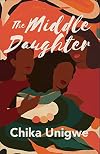
I was impressed enough with Unigwe’s On Black Sisters Street to be interested in reading more from this Nigerian-born author. Her new novel is quite different from that earlier one, though the two books have some common elements: three young women (this time actual sisters) as central characters and stories that focus on entrapment and abuse. Nani, the main character and eponymous middle daughter, is a teenager when the trouble begins. Her older sister, Udodi, away at university in the US, show more is killed in a car accident. Then, within a couple of years, her beloved father, Doda, dies from pancreatic cancer. Nani attributes all that subsequently befalls her to those original tragic losses.
Always a top student, she quickly falls behind in school and is no longer even able to imagine pursuing a medical education abroad. She also fails to remain emotionally connected to friends. Brisk and energetic Mother and Nani’s lively younger sister, Ugo, have moved on and re-engaged with life. They can neither understand Nani nor shake the almost mute girl out of melancholia. She spends afternoons sitting in the beautiful garden in front of the family’s spacious home in a gated community in Enugu, a predominantly Christian/Igbo city in southeastern Nigeria. The family is very well-to-do: Doda had an important civil service job and Mother has recently opened the highly lucrative “Rejoice Maternity Clinic.”It’s a hidden-in-plain-sight illegal business: Mother sells the unwanted babies of teenage girls to wealthy couples.
Nani only learns the truth about her mother’s work from Ephraim, an extremely odd Cameroonian who befriends her. He’s willing to listen to her speak of the dead when no one else is. Bombastic and bizarre, he’s an itinerant evangelical preacher, who’s somehow gotten himself into the high-end neighbourhood to share the gospel. Nani has no romantic attraction to him—who could? His ludicrous “bamboozling” of his audience with “the sizableness of [his] vocabulary” coupled with his inability to pronounce the letter “l” make it hard to appreciate the threat he poses. By the time he tells Nani: “You make me a raffing stock,” and “I rove you . . . but you make me so angry,” we understand that he’s dangerous, but it’s still hard not to laugh. I think Unigwe should’ve thought twice about diluting this character’s malevolence with a speech impediment.
Most of the plot revolves around Ephraim’s “abduction” of Nani. He invites her to a Christian forgiveness vigil and when she misses curfew and won’t be able to re-enter her family’s compound, he suggests that she stay at his house.There he rapes and impregnates her. Later he’s Christian enough to forgive her for seducing him. . Nani briefly returns home, but, unable to confide in her sister or mother (for whom the purity of her daughters is paramount) and growing increasingly distraught, she believes Ephraim to be the only one she can turn to. He offers her nothing but marriage “ordained by God,” followed by incarceration in the home, domestic abuse, and two more pregnancies.
The remainder of the novel concerns Nani’s efforts to get away from her captor. There’s a hitch, of course, and a big one: she needs to wrest her children from her husband. Nani’s sister, Ugo, has re-entered the picture at this point, just before fleeing to the US with Mother. The two will return to Nigeria when the investigation into Mother’s illicit business activities dies down. In the meantime, these two are urging Nani to come to the US without the kids.
I knew nothing about this book going into it. Partway through, apparently slow on the uptake, I happened to glance at a blurb on the back cover which, to my surprise, described it as a retelling of the myth of Persephone. I hadn’t made anything of Ephraim’s regular gifts of fruit; it was only when the flowers quite pointedly started dying off that I started to see any parallels. Nani can pass as Persephone, I suppose: she’s naïve and easily lured. She certainly lands in hell . . . but that’s where the parallels end. Ephraim seems an unlikely Hades—he’s too cartoonish— and by no stretch of the imagination is Nani’s mother a Demeter figure. Only at the end, does she mourn and mostly her own failure to assist. Her work—profiteering from teenage fertility—isn’t exactly Demeter’s either, but the business does take a nosedive after Nani’s marriage to Ephraim.
At about the halfway point, I thought Unigwe was just spinning her wheels, her novel mired in melodrama and going nowhere. It began to read like young-adult fare. Nani becomes a broken record. She cites Ephraim’s abuses ad nauseam and endlessly laments her mother’s lack of concern and failure to understand her middle daughter’s commitment to her children. It all becomes very tiresome. Part of the trouble is that Unigwe gives the reader no real reason to love these kids —offputtingly named Holy, PraiseHim, and Godsown by their father. This reader was certainly not invested in their story.
Unigwe’s book did began with some promise. For one thing, it has an interesting structure. Most chapters are told from Nani’s first-person point of view, but there are some sections concerning the youngest sister, Ugo, which are written in the the third person. Other chapters are presented as a poetic chorus from the point of view of Udodi, the dead sister. These contain many lines in Igbo and sometimes make reference to myths I’m unfamiliar with. Having left the earthly plane, Udodi has a clear view of events but can do little more than make philosophical remarks about them.
In the end, the book bored me. I think a lot of the problem comes down to Ephraim. It’s not that I haven’t known pompous, righteous, and even emotionally abusive types; it’s that Unigwe hasn’t made him feel real. Come to think of it, none of the characters is particularly interesting or credible. I needed to believe in these people for the story to work, and I simply could not.
Rating: 2.5 rounded down show less
Always a top student, she quickly falls behind in school and is no longer even able to imagine pursuing a medical education abroad. She also fails to remain emotionally connected to friends. Brisk and energetic Mother and Nani’s lively younger sister, Ugo, have moved on and re-engaged with life. They can neither understand Nani nor shake the almost mute girl out of melancholia. She spends afternoons sitting in the beautiful garden in front of the family’s spacious home in a gated community in Enugu, a predominantly Christian/Igbo city in southeastern Nigeria. The family is very well-to-do: Doda had an important civil service job and Mother has recently opened the highly lucrative “Rejoice Maternity Clinic.”
Nani only learns the truth about her mother’s work from Ephraim, an extremely odd Cameroonian who befriends her. He’s willing to listen to her speak of the dead when no one else is. Bombastic and bizarre, he’s an itinerant evangelical preacher, who’s somehow gotten himself into the high-end neighbourhood to share the gospel. Nani has no romantic attraction to him—who could? His ludicrous “bamboozling” of his audience with “the sizableness of [his] vocabulary” coupled with his inability to pronounce the letter “l” make it hard to appreciate the threat he poses. By the time he tells Nani: “You make me a raffing stock,” and “I rove you . . . but you make me so angry,” we understand that he’s dangerous, but it’s still hard not to laugh. I think Unigwe should’ve thought twice about diluting this character’s malevolence with a speech impediment.
Most of the plot revolves around Ephraim’s “abduction” of Nani. He invites her to a Christian forgiveness vigil and when she misses curfew and won’t be able to re-enter her family’s compound, he suggests that she stay at his house.
The remainder of the novel concerns Nani’s efforts to get away from her captor. There’s a hitch, of course, and a big one: she needs to wrest her children from her husband. Nani’s sister, Ugo, has re-entered the picture at this point, just before fleeing to the US with Mother. The two will return to Nigeria when the investigation into Mother’s illicit business activities dies down. In the meantime, these two are urging Nani to come to the US without the kids.
I knew nothing about this book going into it. Partway through, apparently slow on the uptake, I happened to glance at a blurb on the back cover which, to my surprise, described it as a retelling of the myth of Persephone. I hadn’t made anything of Ephraim’s regular gifts of fruit; it was only when the flowers quite pointedly started dying off that I started to see any parallels. Nani can pass as Persephone, I suppose: she’s naïve and easily lured. She certainly lands in hell . . . but that’s where the parallels end. Ephraim seems an unlikely Hades—he’s too cartoonish— and by no stretch of the imagination is Nani’s mother a Demeter figure. Only at the end, does she mourn and mostly her own failure to assist. Her work—profiteering from teenage fertility—isn’t exactly Demeter’s either, but the business does take a nosedive after Nani’s marriage to Ephraim.
At about the halfway point, I thought Unigwe was just spinning her wheels, her novel mired in melodrama and going nowhere. It began to read like young-adult fare. Nani becomes a broken record. She cites Ephraim’s abuses ad nauseam and endlessly laments her mother’s lack of concern and failure to understand her middle daughter’s commitment to her children. It all becomes very tiresome. Part of the trouble is that Unigwe gives the reader no real reason to love these kids —offputtingly named Holy, PraiseHim, and Godsown by their father. This reader was certainly not invested in their story.
Unigwe’s book did began with some promise. For one thing, it has an interesting structure. Most chapters are told from Nani’s first-person point of view, but there are some sections concerning the youngest sister, Ugo, which are written in the the third person. Other chapters are presented as a poetic chorus from the point of view of Udodi, the dead sister. These contain many lines in Igbo and sometimes make reference to myths I’m unfamiliar with. Having left the earthly plane, Udodi has a clear view of events but can do little more than make philosophical remarks about them.
In the end, the book bored me. I think a lot of the problem comes down to Ephraim. It’s not that I haven’t known pompous, righteous, and even emotionally abusive types; it’s that Unigwe hasn’t made him feel real. Come to think of it, none of the characters is particularly interesting or credible. I needed to believe in these people for the story to work, and I simply could not.
Rating: 2.5 rounded down show less
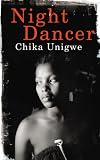
This novel is one of self-discovery, of feminism, of coming into one's own, and yet also very much a story of daughters and mothers. Our introduction to Mma, a young, educated Nigerian woman, is just after her mother's death when she is struggling with her feelings towards her. She really resented her mother and the sources of her resentment are a bit of mystery to the reader. Mma was brought up without a father and her single mother (very unusual in Nigeria) worked as a night dancer to show more support them in a reasonably comfortable lifestyle. Mma's resentment is off-putting, and to the reader it feels unjust. Slowly the book becomes one of discovery, as Mma reluctantly begins to learn about her mother and her mother's past, and discovers the family left behind.
While this novel doesn't pack the punch of Unigwe's first novel, [On Black Sisters' Street], it still is a very good read. Both of Unigwe's novels are about the lives of women, and her stories are not overly complex. She is excellent at connecting readers with her characters (despite the fact that Mma is hard to like at the beginning of this book). The feminist aspect of this story is of a mother who made choices that bucked tradition. Readers of Adichie and other authors of the Nigerian diaspora will find Unigwe a welcome addition to their reading. show less
While this novel doesn't pack the punch of Unigwe's first novel, [On Black Sisters' Street], it still is a very good read. Both of Unigwe's novels are about the lives of women, and her stories are not overly complex. She is excellent at connecting readers with her characters (despite the fact that Mma is hard to like at the beginning of this book). The feminist aspect of this story is of a mother who made choices that bucked tradition. Readers of Adichie and other authors of the Nigerian diaspora will find Unigwe a welcome addition to their reading. show less

There have been many contemporary books written to enlighten us as to why someone would chose to leave their country and immigrate, legally or illegally, to another country. I'm sure we all could name a few of these books, I could certainly, but [On Black Sisters' Street] tells me a story I have not heard before.
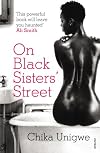
[On Black Sisters' Street] introduces us to Sisi, Efe, Ama and Joyce, four African women working as prostitutes Antwerp, Belgium. Alternating between the present, when the women are show more emotionally brought together by a traumatic event, and their individual pasts, this story is a searing one of dreams and desperations, hopes and tragedies. As Rachbxl says in her stellar reviewof the book, written for Belletrista last year: "...I would have assumed that I myself have nothing in common with a Nigerian prostitute; I can't say that any more because this book has challenged me to question the way I see things." I can't agree more.
The book is written in an easy prose style, sometimes using a vernacular—a Nigerian English—in dialog, which some may find challenging, but it's infrequent and lends authenticity to the story. There is a fairly clear picture of what the women's lives as prostitutes are like and how they navigate and survive such a life. The backstories of the women provide both a general sense of what life is really like for many in Nigeria, and, more specifically, these women. This is a sad and tragic story, certainly a riveting one. But beyond that one cannot help but admire these strong women who struggle to be the heroes of their own lives. show less
[On Black Sisters' Street] introduces us to Sisi, Efe, Ama and Joyce, four African women working as prostitutes Antwerp, Belgium. Alternating between the present, when the women are show more emotionally brought together by a traumatic event, and their individual pasts, this story is a searing one of dreams and desperations, hopes and tragedies. As Rachbxl says in her stellar reviewof the book, written for Belletrista last year: "...I would have assumed that I myself have nothing in common with a Nigerian prostitute; I can't say that any more because this book has challenged me to question the way I see things." I can't agree more.
The book is written in an easy prose style, sometimes using a vernacular—a Nigerian English—in dialog, which some may find challenging, but it's infrequent and lends authenticity to the story. There is a fairly clear picture of what the women's lives as prostitutes are like and how they navigate and survive such a life. The backstories of the women provide both a general sense of what life is really like for many in Nigeria, and, more specifically, these women. This is a sad and tragic story, certainly a riveting one. But beyond that one cannot help but admire these strong women who struggle to be the heroes of their own lives. show less
https://fromtheheartofeurope.eu/on-black-sisters-street-by-chika-unigwe/
A 2009 novel set in Belgium, about four women who have been trafficked from Nigeria for sex work in Antwerp (on Zwartzusterstraat, though in the novel the street name gets an extra ‘e’). Their back stories in Nigeria (and in one case Southern Sudan, as it then was) are well depicted, but the Antwerp sections are inconsistent, sometimes tightly described, but particularly towards the denouement at the end (which is show more signalled from the beginning) rather under-written in places. It’s important to give the victims of human trafficking their voices, and the novel asks and answers important questions, but I was a bit frustrated by the inconsistencies of structure and style. show less
A 2009 novel set in Belgium, about four women who have been trafficked from Nigeria for sex work in Antwerp (on Zwartzusterstraat, though in the novel the street name gets an extra ‘e’). Their back stories in Nigeria (and in one case Southern Sudan, as it then was) are well depicted, but the Antwerp sections are inconsistent, sometimes tightly described, but particularly towards the denouement at the end (which is show more signalled from the beginning) rather under-written in places. It’s important to give the victims of human trafficking their voices, and the novel asks and answers important questions, but I was a bit frustrated by the inconsistencies of structure and style. show less
Lists
Awards


You May Also Like


Associated Authors
Statistics
- Works
- 12
- Also by
- 8
- Members
- 384
- Popularity
- #62,947
- Rating
- 3.6
- Reviews
- 21
- ISBNs
- 44
- Languages
- 5