

Chibundu Onuzo
Author of Sankofa
About the Author
Image credit: bellanaja
Works by Chibundu Onuzo
Associated Works
New Daughters of Africa: An International Anthology of Writing by Women of African Descent (2019) — Contributor — 115 copies, 1 review
Tagged
Common Knowledge
- Legal name
- Onuzo, Imachibundu Oluwadara
- Birthdate
- 1991
- Gender
- female
- Education
- King's College, London (history)
University College London (MA) (social policy)
King's College, London (in progress) - Occupations
- student
- Awards and honors
- Royal Society of Literature (Fellow, 2018)
- Short biography
- Imachibundu Oluwadara "Chibundu" Onuzo (born 1991) is a Nigerian novelist, Her first novel, The Spider King's Daughter, won a Betty Trask Award, was shortlisted for the Dylan Thomas Prize and the Commonwealth Book Prize, and was longlisted for the Desmond Elliott Prize and the Etisalat Prize for Literature.[1]
Chibundu Onuzo was born in Nigeria in 1991, the youngest of four children, of parents who are doctors, and grew up there in Lagos.[2][3]
Onuzo has a bachelor's degree in history from King's College London,[4][1] and a master's degree in public policy from University College London.[5] As of 2017, she is studying for a PhD at King's College London - Nationality
- Nigeria
- Birthplace
- Lagos, Nigeria
- Places of residence
- Lagos, Nigeria
London, England, UK - Map Location
- Nigeria
Members
Reviews
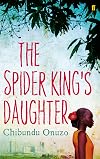
Goodness knows how The Spider King’s Daughter landed on my desk. I’ve long had a love for literature from the emerging world, and new authors in that multi-faceted genre are bound to claim my attention. Besides, I’ve been reading some heavy literature (in the widest sense of both words) recently, and I wants something I could leap into, swim through, and emerged happy. The Spider King’s Daughter nailed it.
It’s a gentle story really, despite its chilling undertones. Corruption, show more sexism, poverty, all are painted with a light brush. The Spider King, Olumide Johnson, was never going to be a fairy princess, and he isn’t. But Onuzo doesn’t dwell on the horror of his psyche, explaining or depicting it. There are a lot of Olumide Johnsons in the world, and we can take him as a given. His daughter Abikẹ is a more congenial figure, his wife perhaps a touch of a caricature, but as almost every black African writer has demonstrated, these people, products of colonialism who have skillfully adopted the opportunism of oppressors when history allowed, these people are there.
So too are the victims of economic injustice. The expulsion, or at best coercion to leave, of European oppressors did not produce a magic want, economic Eden, Nirvana. New oppressors emerged, and as social Darwinism will always prove, only the fittest climb to the top of the heap. The hawker, aka Runner G, is not in Darwinian terms, the fittest. He’s a damned good runner though. That’s how Abikẹ notices him.
Perhaps the remaining characters are not overly developed, but I’m not sure they need to be. All are victims of a society in flux, emerging from colonial yokes, shaking of one era and struggling to find their way in another. It; s not necessary to excavate far beyond that. Some back stories entwine several characters – no spoilers here – and that can be the case in any community.
The Spider King’s Daughter was all I asked of it. The narrative perspectives bounce off one another, the characters are convincing enough, the plat accelerates, the ending surprises. Chibundu Onuzo has written a second novel now (while studying for a Ph.D., no mean effort). Like other reviewers elsewhere I am jealous and awed by her success. If the second novel is half as good as the first (which she published at the age of 21, and began when she was 17) then I will grab it when it passes my desk, and devour it with delight. show less
It’s a gentle story really, despite its chilling undertones. Corruption, show more sexism, poverty, all are painted with a light brush. The Spider King, Olumide Johnson, was never going to be a fairy princess, and he isn’t. But Onuzo doesn’t dwell on the horror of his psyche, explaining or depicting it. There are a lot of Olumide Johnsons in the world, and we can take him as a given. His daughter Abikẹ is a more congenial figure, his wife perhaps a touch of a caricature, but as almost every black African writer has demonstrated, these people, products of colonialism who have skillfully adopted the opportunism of oppressors when history allowed, these people are there.
So too are the victims of economic injustice. The expulsion, or at best coercion to leave, of European oppressors did not produce a magic want, economic Eden, Nirvana. New oppressors emerged, and as social Darwinism will always prove, only the fittest climb to the top of the heap. The hawker, aka Runner G, is not in Darwinian terms, the fittest. He’s a damned good runner though. That’s how Abikẹ notices him.
Perhaps the remaining characters are not overly developed, but I’m not sure they need to be. All are victims of a society in flux, emerging from colonial yokes, shaking of one era and struggling to find their way in another. It; s not necessary to excavate far beyond that. Some back stories entwine several characters – no spoilers here – and that can be the case in any community.
The Spider King’s Daughter was all I asked of it. The narrative perspectives bounce off one another, the characters are convincing enough, the plat accelerates, the ending surprises. Chibundu Onuzo has written a second novel now (while studying for a Ph.D., no mean effort). Like other reviewers elsewhere I am jealous and awed by her success. If the second novel is half as good as the first (which she published at the age of 21, and began when she was 17) then I will grab it when it passes my desk, and devour it with delight. show less
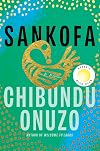
There are a number of novels out in the past few years in which someone returns/visits for the first time the African country of their birth/their parents/their ancestors. This one stands apart from the rest both in the quality of the writing and in how it refuses to follow any expected path.
Anna is separated and her Welsh mother's death has unsettled her. She never met her father, a student who returned home to Africa before she was born. Clearing out her mother's things, she finds his show more diary from his time in London and decides to find him. What she finds out about him is that his life was far from ordinary and while she felt she got to know who he was from his account of being a Black man in England during Enoch Powell's heyday, who his is now is a far different person.
Traveling to a small country on the west coast of Africa, Anna is out of her element. Always made to feel like an outsider in England, she's surprised to find that she's seen as an outsider in Africa, too. Her father is elusive and placed so far outside of what she's used to, Anna behaves in ways that surprise her.
This is a novel that kept turning in directions I didn't expect and I loved how nuanced and complex Onuzo allowed the story to become. There are no easy solutions or correct choices here, just the ones made by fallible human beings. And what looks like good from one angle, is not necessarily good from the other side. I'm eager to read this author's previous novels. show less
Anna is separated and her Welsh mother's death has unsettled her. She never met her father, a student who returned home to Africa before she was born. Clearing out her mother's things, she finds his show more diary from his time in London and decides to find him. What she finds out about him is that his life was far from ordinary and while she felt she got to know who he was from his account of being a Black man in England during Enoch Powell's heyday, who his is now is a far different person.
Traveling to a small country on the west coast of Africa, Anna is out of her element. Always made to feel like an outsider in England, she's surprised to find that she's seen as an outsider in Africa, too. Her father is elusive and placed so far outside of what she's used to, Anna behaves in ways that surprise her.
This is a novel that kept turning in directions I didn't expect and I loved how nuanced and complex Onuzo allowed the story to become. There are no easy solutions or correct choices here, just the ones made by fallible human beings. And what looks like good from one angle, is not necessarily good from the other side. I'm eager to read this author's previous novels. show less
Sankofa: A Reese Witherspoon Book Club Pick and a BBC 2 Between the Covers Book Club Pick by Chibundu Onuzo
Another recommendation from Between the Covers (BBC2), this one a success! I was absolutely captivated by the story, about a woman of dual heritage (Welsh mother, African father) who leaves the confines of her middle-aged life in London and travels alone to West Africa after discovering her father's diaries hidden in her late mother's effects.
Anna Graham has only ever known one half of her family history, a black child growing up in a white family who could neither protect nor prepare her show more for the racism faced by multiracial children in 1970s London. Now in her fifties, separated from her husband and with a grown but distant daughter, Anna is once again forced to question her identity. When her mother dies and Anna is left to sort through her personal papers, she discovers a diary written in 1969 by Francis Aggrey, her West African father. After reading her young father's account of racist attacks in London and his increasing political fervour, Anna feels that she has found a key to her heritage. She also learns from a scrapbook of newscuttings that Francis returned to his African roots and gained independence for his country, Banama, becoming the first prime minister. Now called Kofi Adjei, Anna's father is still alive and Anna is determined to meet him and explore the missing half of her ethnic origins.
Anna is a sympathetic narrator, gathering strength from her physical and spiritual journey to Africa. I could empathise with her quest to find out more about her father, never having known my own, and how biological inheritance is still important even when raised in a loving family: What did I want from him? What do children want from absent fathers? It was too late for any encounters with Francis Aggrey to be formative. I was too much of an adult for him to erase the confusion of my childhood. And yet, if I truly believed this, why was I here? Her first meeting with Francis/Kofi is painful to read but of course he relents and the story is shared between Anna and her new family – no half brother or sisters, because ‘we don’t have that in Africa’.
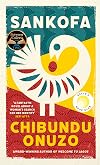
I also loved the meaning of the title, Sankofa, which is represented by a bird flying forward while facing backwards – or go back to your past to move on. Anna has to make sense of her father’s history and how he has changed from the young man in the diary to figure out what she wants from her own life, her marriage and her nationality. The ending was both surprising but also very fitting – I was scared for Anna at one point, only to realise that she actually needed shaking up!
Relatable characters and a heart-warming story of self-discovery. Recommended! (I'm also excited to discover that the author has written an African take on Romeo and Juliet, which I have added to my wishlist!) show less
Anna Graham has only ever known one half of her family history, a black child growing up in a white family who could neither protect nor prepare her show more for the racism faced by multiracial children in 1970s London. Now in her fifties, separated from her husband and with a grown but distant daughter, Anna is once again forced to question her identity. When her mother dies and Anna is left to sort through her personal papers, she discovers a diary written in 1969 by Francis Aggrey, her West African father. After reading her young father's account of racist attacks in London and his increasing political fervour, Anna feels that she has found a key to her heritage. She also learns from a scrapbook of newscuttings that Francis returned to his African roots and gained independence for his country, Banama, becoming the first prime minister. Now called Kofi Adjei, Anna's father is still alive and Anna is determined to meet him and explore the missing half of her ethnic origins.
Anna is a sympathetic narrator, gathering strength from her physical and spiritual journey to Africa. I could empathise with her quest to find out more about her father, never having known my own, and how biological inheritance is still important even when raised in a loving family: What did I want from him? What do children want from absent fathers? It was too late for any encounters with Francis Aggrey to be formative. I was too much of an adult for him to erase the confusion of my childhood. And yet, if I truly believed this, why was I here? Her first meeting with Francis/Kofi is painful to read but of course he relents and the story is shared between Anna and her new family – no half brother or sisters, because ‘we don’t have that in Africa’.
I also loved the meaning of the title, Sankofa, which is represented by a bird flying forward while facing backwards – or go back to your past to move on. Anna has to make sense of her father’s history and how he has changed from the young man in the diary to figure out what she wants from her own life, her marriage and her nationality. The ending was both surprising but also very fitting – I was scared for Anna at one point, only to realise that she actually needed shaking up!
Relatable characters and a heart-warming story of self-discovery. Recommended! (I'm also excited to discover that the author has written an African take on Romeo and Juliet, which I have added to my wishlist!) show less
A delightful slow burn that dances from the implausible to the unbelievable to the magical and back again. It is a story of a woman learning to allow herself to imagine, and how often she walks into walls she should be able to see. If I allow myself one complaint, it is that Anna is at times blindingly oblivious to her own faults in service of the plot. But that is, perhaps, the core of her development.
Lists
Awards


You May Also Like


Associated Authors
Statistics
- Works
- 4
- Also by
- 4
- Members
- 940
- Popularity
- #27,333
- Rating
- 3.8
- Reviews
- 58
- ISBNs
- 36
- Languages
- 3
