
Dinaw Mengestu
Author of The Beautiful Things That Heaven Bears
About the Author
Dinaw Mengestu was born in Addis Ababa, Ethiopia in 1978. In 1980, he, his mother, and his sister immigrated to the United States to join his father, who fled Ethiopia during the Red Terror. He graduated from Georgetown University and Columbia University's MFA program in fiction. He is the author show more of The Beautiful Things That Heaven Bears and How to Read the Air. He has also written for several publications including Rolling Stone and Harper's. (Bowker Author Biography) show less
Image credit: Dinaw Mengestu. Photo courtesy of US Embassy Canada.
Works by Dinaw Mengestu
The Paper Revolution 2 copies
Associated Works
The Decameron Project: 29 New Stories from the Pandemic (2020) — Contributor — 158 copies, 5 reviews
The Penguin Book of Migration Literature: Departures, Arrivals, Generations, Returns (2019) — Contributor — 96 copies
Mentors, Muses & Monsters: 30 Writers on the People Who Changed Their Lives (2009) — Contributor — 71 copies, 2 reviews
Tagged
Common Knowledge
- Canonical name
- Mengestu, Dinaw
- Legal name
- Mengestu, Dinaw
- Birthdate
- 1978
- Gender
- male
- Education
- Georgetown University (BA|English)
Columbia University (MFA|Fiction) - Occupations
- writer
journalist
teacher - Awards and honors
- Lannan Literary Fellowship (2007)
The New Yorker "20 Under 40" (2010)
New York Public Library Young Lions Award Finalist (2008)
National Book Foundation "5 Under 35" (2007)
MacArthur Fellowship (2012) - Nationality
- Ethiopia
USA - Birthplace
- Addis Ababa, Ethiopia
- Places of residence
- Peoria, Illinois, USA
New York, New York, USA
Washington, D.C., USA - Associated Place (for map)
- USA
Members
Reviews

Rating: 4.5* of five
The Publisher Says: After abandoning his once promising career as a journalist in search of a new life in Paris, Mamush meets Helen-a photographer whose way of seeing the world shows him the possibility of finding not only love, but family. Now, five years later, with his marriage to Helen on the verge of collapse, he returns to the close-knit immigrant Ethiopian community of Washington DC that defined his childhood. At its center is Mamush's stoic, implacable mother, and show more Samuel,the larger-than-life father-figure whose ceaseless charm and humor have always served as cover for a harder, more troubling truth. But on the same day that Mamush arrives home in Washington, Samuel is found dead in his garage.
With Helen and their two-year old son back in Paris, Mamush sets out on an unexpected journey across America in search of answers to questions he'd been told never to ask. As he does so, he begins to understand that perhaps the only chance he has of saving his family and making it back home is to confront not only the unresolved mystery around Samuel's life and death, but his own troubled memories, and the years spent masking them. Breath-taking, commanding, unforgettable work from one of America's most prodigiously gifted novelists.
I RECEIVED A DRC FROM THE PUBLISHER VIA NETGALLEY. THANK YOU.
My Review: I am a very, very white old man. I experience none of what Mamush does, or expects to, on a daily personal basis. My Young Gentleman Caller is half-black (he prefers lowercase to uppercase "Black"). There are times I am utterly oblivious to what that idiotic blood quantum theory of human identity means because I get none of it. What I *do* get is profiled, when traveling, as an American...some indefinable something about me is ineradicable, and inescapably American. Among anti-semites I am always assumed to be a Jew. (Among Jews as well, which can get awkward.) As a gay man, and an old one, I'm often seen as not queer enough, or just a bit too queer. Can't win for losin'.
So when I read Author Mengestu's books, I am not just pruriently peeping in on his characters' struggles with identity and its ramifications.
The great strength of Author Mengestu is his lovely language. One of my all-time favorite aperçus of his is from How to Read the Air: "There is nothing so easily remade as our definitions of ourselves." (Note to self: Why haven't we reviewed that one?) This book, too, is full of meaty thoughts on identity, on the mutability of selfhood, on the complexity of being alive in an interwoven web of love and fear and distrust, trying to spin new threads as old ones fray, of making the effort to stick yourself to the ones you thought you wanted to escape. The way webs form...from the center outward, directed by a design and made for a purpose...is, however, the opposite of that other great center-driven natural structure: the hurricane. These form when a depression becomes so empty that everything around it is drawn in to fill its vacant space in the atmosphere. Mamush, with the best of intentions, is a hurricane. “You’re like a donut. There’s a hole in the middle, where something solid should be,” says his wife.
He sticks to nothing, nothing sticks to him. His deep and abiding depression formed in his deeply uprooted "family." His mother and father escaped imploding Ethiopia, and in a truly terrible series of bad decisions, engendered their child Mamush. Neither, though they are friends, wants to raise a child with the other. Mamush has the ordinary single-mother experience of childhood with all its spaces and silences and absences. His father would've been absent no matter what because he is a man on a mission to help other Ethiopian immigrants starting a taxi business to employ them in the US. Tgat makes him professionally unrooted, always in motion, at the mercy of those around him, subject to their moods and attitudes in service of making a living. Mamush is his father's son. He abandons a job as a journalist...someone who observes from the sidelines...to run away from the ever-darkening US. It's the way these men live. He starts a family in France, which honestly sounds like one of the worst ideas anyone ever had. That, unsurprisingly, just presses his depression even lower down: his son is disabled, a hard, hard road for the best prepared parent. Predictably, it's a terrible stressor for Mamush. At his mother's summons to come home to DC and help her figure out where his father has got to, he's outta there leaving son and wife to struggle along without him.
It's deeply telling that he misses his plane. It's even more telling that he, on a whim with no forethought, then switches his ticket from DC to Chicago. It wasn't just a whim, really, as his parents had lived with him in Chicago before settling in DC. His unmooring from his plans, from his family, from his career, is all in service of a Quest. Who doesn't love a Quest? He's so turbulent, such a low-pressure spot in his own life, that he's attracting chaos at such a huge rate he must find a way to fill himself from the center outward or succumb to that destructive chaos.
A man in search of a center, a man whose essence is unquiet and kinetic, who now wants something he's never had and has no tools in his kit to create, is a danger to himself and others until he finds the thing that can act as solid ground. Standing still is only possible when there's solid ground under you. Then the hole formed so early in life, made from the same stuff as the edges are, is the small nugget of solidity he can stand on. From this small, awkwardly shaped piece, a center is formed, and the spinning of that web of intent, design, and adhesion can begin.
This is when Mamush says to his father: “There isn’t one story. Things start and end abruptly. Some pages are just a single paragraph. I don’t always understand who’s speaking or what’s happening. If what you’ve written is fact or fiction.”
Homecoming, homegoing, home is now within reach. It is a beautiful moment in a book that, for almost half its length, made me want to slap the hell out of Mamush, out of his parents, and maybe most of all his idiot wife who had a child with this deeply unready man. All comes out well, or at least "well" is finally in sight, for Mamush. Guaranteed? No. Delivered? Not really. But visible at last.
I think Dinaw Mengestu deserves a stonking medal for taking me on this journey that irked and annoyed me, but lured me on with his usual glorious phrasemaking music, then delivered me to an ending I could both believe completely and feel satisfied with. Kudos to you, sir. show less
The Publisher Says: After abandoning his once promising career as a journalist in search of a new life in Paris, Mamush meets Helen-a photographer whose way of seeing the world shows him the possibility of finding not only love, but family. Now, five years later, with his marriage to Helen on the verge of collapse, he returns to the close-knit immigrant Ethiopian community of Washington DC that defined his childhood. At its center is Mamush's stoic, implacable mother, and show more Samuel,the larger-than-life father-figure whose ceaseless charm and humor have always served as cover for a harder, more troubling truth. But on the same day that Mamush arrives home in Washington, Samuel is found dead in his garage.
With Helen and their two-year old son back in Paris, Mamush sets out on an unexpected journey across America in search of answers to questions he'd been told never to ask. As he does so, he begins to understand that perhaps the only chance he has of saving his family and making it back home is to confront not only the unresolved mystery around Samuel's life and death, but his own troubled memories, and the years spent masking them. Breath-taking, commanding, unforgettable work from one of America's most prodigiously gifted novelists.
I RECEIVED A DRC FROM THE PUBLISHER VIA NETGALLEY. THANK YOU.
My Review: I am a very, very white old man. I experience none of what Mamush does, or expects to, on a daily personal basis. My Young Gentleman Caller is half-black (he prefers lowercase to uppercase "Black"). There are times I am utterly oblivious to what that idiotic blood quantum theory of human identity means because I get none of it. What I *do* get is profiled, when traveling, as an American...some indefinable something about me is ineradicable, and inescapably American. Among anti-semites I am always assumed to be a Jew. (Among Jews as well, which can get awkward.) As a gay man, and an old one, I'm often seen as not queer enough, or just a bit too queer. Can't win for losin'.
So when I read Author Mengestu's books, I am not just pruriently peeping in on his characters' struggles with identity and its ramifications.
The great strength of Author Mengestu is his lovely language. One of my all-time favorite aperçus of his is from How to Read the Air: "There is nothing so easily remade as our definitions of ourselves." (Note to self: Why haven't we reviewed that one?) This book, too, is full of meaty thoughts on identity, on the mutability of selfhood, on the complexity of being alive in an interwoven web of love and fear and distrust, trying to spin new threads as old ones fray, of making the effort to stick yourself to the ones you thought you wanted to escape. The way webs form...from the center outward, directed by a design and made for a purpose...is, however, the opposite of that other great center-driven natural structure: the hurricane. These form when a depression becomes so empty that everything around it is drawn in to fill its vacant space in the atmosphere. Mamush, with the best of intentions, is a hurricane. “You’re like a donut. There’s a hole in the middle, where something solid should be,” says his wife.
He sticks to nothing, nothing sticks to him. His deep and abiding depression formed in his deeply uprooted "family." His mother and father escaped imploding Ethiopia, and in a truly terrible series of bad decisions, engendered their child Mamush. Neither, though they are friends, wants to raise a child with the other. Mamush has the ordinary single-mother experience of childhood with all its spaces and silences and absences. His father would've been absent no matter what because he is a man on a mission to help other Ethiopian immigrants starting a taxi business to employ them in the US. Tgat makes him professionally unrooted, always in motion, at the mercy of those around him, subject to their moods and attitudes in service of making a living. Mamush is his father's son. He abandons a job as a journalist...someone who observes from the sidelines...to run away from the ever-darkening US. It's the way these men live. He starts a family in France, which honestly sounds like one of the worst ideas anyone ever had. That, unsurprisingly, just presses his depression even lower down: his son is disabled, a hard, hard road for the best prepared parent. Predictably, it's a terrible stressor for Mamush. At his mother's summons to come home to DC and help her figure out where his father has got to, he's outta there leaving son and wife to struggle along without him.
It's deeply telling that he misses his plane. It's even more telling that he, on a whim with no forethought, then switches his ticket from DC to Chicago. It wasn't just a whim, really, as his parents had lived with him in Chicago before settling in DC. His unmooring from his plans, from his family, from his career, is all in service of a Quest. Who doesn't love a Quest? He's so turbulent, such a low-pressure spot in his own life, that he's attracting chaos at such a huge rate he must find a way to fill himself from the center outward or succumb to that destructive chaos.
A man in search of a center, a man whose essence is unquiet and kinetic, who now wants something he's never had and has no tools in his kit to create, is a danger to himself and others until he finds the thing that can act as solid ground. Standing still is only possible when there's solid ground under you. Then the hole formed so early in life, made from the same stuff as the edges are, is the small nugget of solidity he can stand on. From this small, awkwardly shaped piece, a center is formed, and the spinning of that web of intent, design, and adhesion can begin.
This is when Mamush says to his father: “There isn’t one story. Things start and end abruptly. Some pages are just a single paragraph. I don’t always understand who’s speaking or what’s happening. If what you’ve written is fact or fiction.”
Homecoming, homegoing, home is now within reach. It is a beautiful moment in a book that, for almost half its length, made me want to slap the hell out of Mamush, out of his parents, and maybe most of all his idiot wife who had a child with this deeply unready man. All comes out well, or at least "well" is finally in sight, for Mamush. Guaranteed? No. Delivered? Not really. But visible at last.
I think Dinaw Mengestu deserves a stonking medal for taking me on this journey that irked and annoyed me, but lured me on with his usual glorious phrasemaking music, then delivered me to an ending I could both believe completely and feel satisfied with. Kudos to you, sir. show less

"Yes. Let's say he returns home to Ethiopia. It's been forty years since he was last in the country. What do you thing happens to him next?"
"I don't know."
"Let me tell you. When he gets off the plane, he realizes he has no idea where he is. He's afraid to leave the airport. When he left, Addis was like a village....He's at home nowhere in the world. It's better not to know that. It's better to imagine that someday you will return home and that when you do, everything will be better than it show more was when you left."
Mamush returns to the US to see his mother, but he gets lost on the way. He's been living in Paris with his wife and son, but somehow he's always had one foot out the door and his once promising journalism career has faded. He returns to see his mother's friend, Samuel, a man he realizes is his father, a cab driver living in the DC suburbs and part of the Ethiopian community there. As he travels toward, or fails to travel toward, his father's funeral, he returns to the places in Chicago that marked him, and searches for the man he never really knew.
This is a bittersweet story that moves through time in a non-linear way, with Mamush's memories frequently taking him from the present moment. It should be confusing, but Dinaw Mengestu controls the narrative in such an assured way, that each digression makes sense and serves to build the story he is telling. As Mamush and Samuel navigate their lives, there is the constant presence of the absent country, a country they can't return to, or in Mamush's case, have never seen, but which is ever present, often more than the country in which they have lived most of their lives. And as Mamush looks at his father's life, he is also looking at his own, and in doing so may find what he needs to move forward. show less
"I don't know."
"Let me tell you. When he gets off the plane, he realizes he has no idea where he is. He's afraid to leave the airport. When he left, Addis was like a village....He's at home nowhere in the world. It's better not to know that. It's better to imagine that someday you will return home and that when you do, everything will be better than it show more was when you left."
Mamush returns to the US to see his mother, but he gets lost on the way. He's been living in Paris with his wife and son, but somehow he's always had one foot out the door and his once promising journalism career has faded. He returns to see his mother's friend, Samuel, a man he realizes is his father, a cab driver living in the DC suburbs and part of the Ethiopian community there. As he travels toward, or fails to travel toward, his father's funeral, he returns to the places in Chicago that marked him, and searches for the man he never really knew.
This is a bittersweet story that moves through time in a non-linear way, with Mamush's memories frequently taking him from the present moment. It should be confusing, but Dinaw Mengestu controls the narrative in such an assured way, that each digression makes sense and serves to build the story he is telling. As Mamush and Samuel navigate their lives, there is the constant presence of the absent country, a country they can't return to, or in Mamush's case, have never seen, but which is ever present, often more than the country in which they have lived most of their lives. And as Mamush looks at his father's life, he is also looking at his own, and in doing so may find what he needs to move forward. show less
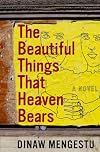
i finished reading this novel earlier today, and i have been pondering on it a lot. my brain keeps doing this:
the beautiful things that heaven bears, brought to you by the letter D:
* debut
* diaspora
* d.c. (washington)
* dante
* dostoevsky
* disconnection
* dreams
maybe now that i've typed that out, i can move on? heh.
“To get back up to the shining world from there
My guide and I went into that hidden tunnel,
And Following its path, we took no care
To rest, but climbed: he first, then I-so show more far,
through a round aperture I saw appear
Some of the beautiful things that Heaven bears,
Where we came forth, and once more saw the stars.”
~ Dante Alighieri, from Dante's Inferno
okay, so... i found this to be a heartbreakingly lovely book. mengetsu is a wonderful writer, and this is a very strong debut. i was very moved in reading about sepha's struggles as an ethiopian immigrant in washington d.c., and i was wanting the best for him. sigh. i was amused by the game sepha played with his friends - joseph from the congo, and kenneth from kenya. they had an ongoing 'coup challenge' to select different african countries, then naming the year the coups occurred, and the dictator. i mean, it's really not funny at all. but the fact is this is how these three men were bonding, and that this was the reality they had each left/escaped and which they couldn't forget.
sepha owns a variety store in the rundown logan circle neighbourhood of washington d.c. the area is undergoing gentrification, creating an us and them situation. us being the long-term black residents who are being priced out of their homes, and the 'them' ("they", in the book) being upper-middle class white people. one such white woman, judith, purchases a neighbouring home and renovates it beautifully. she has a young daughter, naomi. naomi is biracial, her father from mauritania. i think the cultural coming together is an important piece of the story - so many people struggle to find their place in the world. these challenges were amplified through sepha as his hopes and dreams of america, and where he fit in in his new home, seemed to remain just out of reach.
naomi and sepha's friendship was a highlight of the story for me, and i would have loved to have had more of naomi's character. together they read The Brothers Karamazov - sepha reading aloud to naomi, an exercise they both loved, and to which they both looked forward.
my only hesitations with this story had to do with sepha's role as a shop owner. i didn't quite get why or how he ended up in this position. it seems a stereotypical presentation - an immigrant running a corner store. it also felt like sepha just wasn't fully invested in the enterprise. i couldn't quite put my finger on whether his lack of action or interest in his shop was a symptom of his displacement, and a reflection of being worn down by circumstances? or if something else was going on here. sepha's ennui was understandable in so many other places. and his loneliness was so sad.
"...a man stuck between two worlds lives and dies alone. I have dangled and been suspended long enough."
i feel mengetsu strongly captured the immigrant experience. and i was very taken with the slice of washington d.c. he shared in this book. when settings play a large role in a story, and the writer has done this well, it's an added bonus for me in my reading.
anyway... i am getting a bit ramble-y and incoherent here. so i will stop. i am still thinking on the book and may update this review. show less
the beautiful things that heaven bears, brought to you by the letter D:
* debut
* diaspora
* d.c. (washington)
* dante
* dostoevsky
* disconnection
* dreams
maybe now that i've typed that out, i can move on? heh.
“To get back up to the shining world from there
My guide and I went into that hidden tunnel,
And Following its path, we took no care
To rest, but climbed: he first, then I-so show more far,
through a round aperture I saw appear
Some of the beautiful things that Heaven bears,
Where we came forth, and once more saw the stars.”
~ Dante Alighieri, from Dante's Inferno
okay, so... i found this to be a heartbreakingly lovely book. mengetsu is a wonderful writer, and this is a very strong debut. i was very moved in reading about sepha's struggles as an ethiopian immigrant in washington d.c., and i was wanting the best for him. sigh. i was amused by the game sepha played with his friends - joseph from the congo, and kenneth from kenya. they had an ongoing 'coup challenge' to select different african countries, then naming the year the coups occurred, and the dictator. i mean, it's really not funny at all. but the fact is this is how these three men were bonding, and that this was the reality they had each left/escaped and which they couldn't forget.
sepha owns a variety store in the rundown logan circle neighbourhood of washington d.c. the area is undergoing gentrification, creating an us and them situation. us being the long-term black residents who are being priced out of their homes, and the 'them' ("they", in the book) being upper-middle class white people. one such white woman, judith, purchases a neighbouring home and renovates it beautifully. she has a young daughter, naomi. naomi is biracial, her father from mauritania. i think the cultural coming together is an important piece of the story - so many people struggle to find their place in the world. these challenges were amplified through sepha as his hopes and dreams of america, and where he fit in in his new home, seemed to remain just out of reach.
naomi and sepha's friendship was a highlight of the story for me, and i would have loved to have had more of naomi's character. together they read The Brothers Karamazov - sepha reading aloud to naomi, an exercise they both loved, and to which they both looked forward.
my only hesitations with this story had to do with sepha's role as a shop owner. i didn't quite get why or how he ended up in this position. it seems a stereotypical presentation - an immigrant running a corner store. it also felt like sepha just wasn't fully invested in the enterprise. i couldn't quite put my finger on whether his lack of action or interest in his shop was a symptom of his displacement, and a reflection of being worn down by circumstances? or if something else was going on here. sepha's ennui was understandable in so many other places. and his loneliness was so sad.
"...a man stuck between two worlds lives and dies alone. I have dangled and been suspended long enough."
i feel mengetsu strongly captured the immigrant experience. and i was very taken with the slice of washington d.c. he shared in this book. when settings play a large role in a story, and the writer has done this well, it's an added bonus for me in my reading.
anyway... i am getting a bit ramble-y and incoherent here. so i will stop. i am still thinking on the book and may update this review. show less

Through a round aperture I saw appear, Some of the beautiful things that Heaven bears, Where we came forth, and once more saw the stars. The Inferno by Dante
…no one can understand that line like an African because that is what we lived thorough. Hell every day with only glimpses of heaven in between. from The Beautiful Things That Heaven Bears by Dinaw Mengestu
After I learned that I would be receiving a finished copy of Dinaw Mengestu’s new book Someone Like Us, I decided that while I show more was waiting for that book to arrive that I would read his debut novel The Beautiful Things that Heaven Bears. I was very glad that I did!
The novel is about a refugee from Nigeria adjusting to the reality of life in America as an immigrant, the American Dream proving to be only a dream.
“I came here running and screaming with the ghosts of an old one firmly attached to my back,” Stephanos tells us, not to find a better life. When his father disappeared in a Nigeria under a cruel dictatorship, he was sent to America to live with his uncle.
His early ambitions abandoned, he has accepted being poor and black, running a store on Logan Circle in Washington, D. C., his customers prostitutes and his poor black neighbors. He socializes with other African emigres and lives in a sparsely furnished apartment.
And yet, sometimes, he and his friends forget “who were are and where we came from, and in doing so, believe we are entitled to much more than we deserve.”
A well off, divorced, white woman, Judith, and her child, Naomi, move into the house next door. Stephanos comes to know them, the child spending hours in his store while he reads to her from her library book–The Brothers Karamazov! The woman invites him to dinner. The child’s attachment raises his hopes. Perhaps there is something more for him in this world.
The neighborhood changes with gentrification and white people moving in result in the original inhabitants being pushed out of their home by rising rents. Protests break out. And the woman is not spared.
The writing is beautiful, the horrendous backstory reveal masterfully handled. Stephanos is a sympathetic character. I can’t wait to read Mengestu’s newest novel. show less
…no one can understand that line like an African because that is what we lived thorough. Hell every day with only glimpses of heaven in between. from The Beautiful Things That Heaven Bears by Dinaw Mengestu
After I learned that I would be receiving a finished copy of Dinaw Mengestu’s new book Someone Like Us, I decided that while I show more was waiting for that book to arrive that I would read his debut novel The Beautiful Things that Heaven Bears. I was very glad that I did!
The novel is about a refugee from Nigeria adjusting to the reality of life in America as an immigrant, the American Dream proving to be only a dream.
“I came here running and screaming with the ghosts of an old one firmly attached to my back,” Stephanos tells us, not to find a better life. When his father disappeared in a Nigeria under a cruel dictatorship, he was sent to America to live with his uncle.
His early ambitions abandoned, he has accepted being poor and black, running a store on Logan Circle in Washington, D. C., his customers prostitutes and his poor black neighbors. He socializes with other African emigres and lives in a sparsely furnished apartment.
And yet, sometimes, he and his friends forget “who were are and where we came from, and in doing so, believe we are entitled to much more than we deserve.”
A well off, divorced, white woman, Judith, and her child, Naomi, move into the house next door. Stephanos comes to know them, the child spending hours in his store while he reads to her from her library book–The Brothers Karamazov! The woman invites him to dinner. The child’s attachment raises his hopes. Perhaps there is something more for him in this world.
The neighborhood changes with gentrification and white people moving in result in the original inhabitants being pushed out of their home by rising rents. Protests break out. And the woman is not spared.
The writing is beautiful, the horrendous backstory reveal masterfully handled. Stephanos is a sympathetic character. I can’t wait to read Mengestu’s newest novel. show less
Lists
Obama Reads (1)
Ethiopia (1)
Awards


You May Also Like


Associated Authors
Statistics
- Works
- 6
- Also by
- 8
- Members
- 2,382
- Popularity
- #10,777
- Rating
- 3.7
- Reviews
- 135
- ISBNs
- 85
- Languages
- 10
- Favorited
- 1

