
Jeffrey J. Kripal
Author of The Super Natural: A New Vision of the Unexplained
About the Author
Jeffrey J. Kripal holds the J. Newton Rayzor Chair in Philosophy and Religious Thought at Rice University and is the associate director of the Center for Theory and Research at the Esalen Institute in Big Sur, California. He has previously taught at Harvard Divinity School and Westminster College show more and is the author of eight books, including The Flip. show less
Works by Jeffrey J. Kripal
Mutants and Mystics: Science Fiction, Superhero Comics, and the Paranormal (2011) 112 copies, 2 reviews
Kali's Child: The Mystical and the Erotic in the Life and Teachings of Ramakrishna (1995) 54 copies, 1 review
Roads of Excess, Palaces of Wisdom: Eroticism and Reflexivity in the Study of Mysticism (2001) 33 copies
How to Think Impossibly: About Souls, UFOs, Time, Belief, and Everything Else (2024) 32 copies, 1 review
Associated Works
How Should We Talk about Religion?: Perspectives, Contexts, Particularities (ND Erasmus Institute Books) (2006) — Contributor — 4 copies
Tagged
Common Knowledge
- Canonical name
- Kripal, Jeffrey J.
- Legal name
- Kripal, Jeffrey John
- Birthdate
- 1962
- Gender
- male
- Education
- University of Chicago (Ph.D)
Conception Seminary College (BA) - Occupations
- professor
religion scholar - Organizations
- Rice University
- Nationality
- USA
- Associated Place (for map)
- USA
Members
Reviews

This book about the metaphysical and cultural significance of the study of the paranormal is constructed through case studies of Frederic Myers, Charles Fort, Jacques Vallee, and Bertrand Méheust.
Kripal is a scholar who really knows how to tell a story, and he's got plenty of stories to tell in this work. His authorial voice is sufficiently kind and intelligent that it can allow him the occasional use of profanity. And sentence fragments. As usual for him, he includes anecdotes from his show more own experience, but the focus is on the four "authors" studied. Of the four, I had previously read in the work of Charles Fort only, but I am now quite interested in writings by all three of the others, particularly Myers.
One element of this book's project is to give the reader a new perspective (or several) on "psychic phenomena" and "UFOs." Another is to suggest a fruitful rapprochement between the fringes of the physical sciences and the margins of the humanities. This book is a close companion to Kripal's earlier Mutants and Mystics, contributing to an original hermeneutics of the strange.
It is a very worthwhile read. show less
Kripal is a scholar who really knows how to tell a story, and he's got plenty of stories to tell in this work. His authorial voice is sufficiently kind and intelligent that it can allow him the occasional use of profanity. And sentence fragments. As usual for him, he includes anecdotes from his show more own experience, but the focus is on the four "authors" studied. Of the four, I had previously read in the work of Charles Fort only, but I am now quite interested in writings by all three of the others, particularly Myers.
One element of this book's project is to give the reader a new perspective (or several) on "psychic phenomena" and "UFOs." Another is to suggest a fruitful rapprochement between the fringes of the physical sciences and the margins of the humanities. This book is a close companion to Kripal's earlier Mutants and Mystics, contributing to an original hermeneutics of the strange.
It is a very worthwhile read. show less
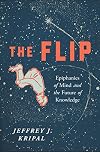
Wow. This is a book which pushes the scholarly and intellectual agenda forward. It is a way *forward*, which scholars all too often stop short of offering in their work. Kripal has synthesized years of comparative religious and philosophical study into what he self-consciously states is a tentative, open-ended "manifesto" for a different way of thinking about the relationship between the material world and a broadly-construed "spiritual" world (which includes art, culture, thought, belief, show more and experience of all kinds). Those of are familiar with the last decade of his work will see the footprints (and footnotes) here, tracing his evolution from more-or-less traditional scholar of Indian religions to expert on the mystical and paranormal in general, pushing the boundaries of the fields of religious studies and philosophy in ways most working in those fields have not yet caught up to (I count myself among the laggards). Here, Kripal lays bare the implications of that work: we need to see "mind" as an essential constituent of the universe. Sciences are right. Religions are right. But only partially, and only in light of each others considerations. While the stories of scientists who've had their minds changed may be the thing that constitutes his "data," in my reading the import of the work goes beyond these data. This is a proposal for an epistemological revolution which would allow the sciences and the humanities to achieve a measure of "consilience" often talked-about but rarely reached. If we open ourselves to seeing consciousness broadly at work in the universe, we might, says Kripal, be able to find new answers because we will ask new questions. We might be able to move beyond jealousies between religious worldviews, or between "religion" and "science," or between hard materialism and cultural constructivism. This book is a must-read! show less
 This review was written for LibraryThing Early Reviewers.
Kripal opens the books by noting that Esalen is a place of synchronicity, where connections form without apparent causes. Synchronicity is something I can confirm myself. On my one visit (so far), I sat down with two strangers: One of them was also there for her birthday which was that evening, and the other one had been in Mammoth Lakes the weekend prior, where I had just had a late summer vacation. The site, perched on cliffs above the Pacific, centered around the waters of the hot show more springs, is paradise on Earth.
Kripal's book is a serious intellectual history of the mission and accomplishments of Esalen. His framing is that Esalen is a (perhaps the) leading center of the Western development of the Tantra, an inter-religious, inter-philosophical practice of enlightenment of the body. Tantra draws from Hindu and Buddhist religious practices, syncretically picking up what is useful where it can, and putting these practices in deep conversation with Freudian beliefs about the unconscious.
The two founders of Esalen, Michael Murphy and Dick Price, were both immensely influenced by Stanford Professor Frederic Spiegelberg, a noted Sanskrit scholar. The Murphy family owned the land the hot springs were on. At the time, the baths were a gay hookup spot, a strange place for 1950s queer culture overseen by the rugged and austere Big Sur locals. Michael kicked out the occupiers in the "Night of the Dobermans", and founded Esalen proper in 1962.
It's easier to list who in the counter-culture wasn't at Esalen. Aldous Huxley, Timothy Leary, and ethnobotany/psychedelia were major early presences. Joan Baez lived on site and gave concerts. Abraham Maslow and Fritz Perls developed humanistic psychological theories through intense hands-ons encounter groups. The institute was profiled in Look, Time, and The New York Times. There were various ups and downs through the decades. Finances were always shaky and Dick Price died in a tragic hiking accident in 1985. In notable successes, a US-Soviet diplomatic program (initially organized around parapsychology research) brought Boris Yeltsin to the US and may have meaningfully contributed to the end of the Cold War.
Kripal acknowledges that Esalen is a flawed organization. Notably, it represents a white and wealthy slice of a spiritual movement. Getting to Big Sur for an extended period of time takes resources. There have been some minor revolts by the staff, and various managerial crises. More than a few people have killed themselves at Esalen, though it also fair to say that the place is a last resort for souls in crisis, and perhaps no community could have healed everybody. The institute has made some progress with the Esselen tribe, who were the original inhabitants. And unlike many in the New Age movement, no one has captured the flag (to borrow an Esalen motto) and it's avoided many excesses of authoritarian guruhood.
A comprehensive survey of a place like Esalen is impossible, but Kripal's book does a solid job of framing the goals and origins of the human potential movement and its key contributors. show less
Kripal's book is a serious intellectual history of the mission and accomplishments of Esalen. His framing is that Esalen is a (perhaps the) leading center of the Western development of the Tantra, an inter-religious, inter-philosophical practice of enlightenment of the body. Tantra draws from Hindu and Buddhist religious practices, syncretically picking up what is useful where it can, and putting these practices in deep conversation with Freudian beliefs about the unconscious.
The two founders of Esalen, Michael Murphy and Dick Price, were both immensely influenced by Stanford Professor Frederic Spiegelberg, a noted Sanskrit scholar. The Murphy family owned the land the hot springs were on. At the time, the baths were a gay hookup spot, a strange place for 1950s queer culture overseen by the rugged and austere Big Sur locals. Michael kicked out the occupiers in the "Night of the Dobermans", and founded Esalen proper in 1962.
It's easier to list who in the counter-culture wasn't at Esalen. Aldous Huxley, Timothy Leary, and ethnobotany/psychedelia were major early presences. Joan Baez lived on site and gave concerts. Abraham Maslow and Fritz Perls developed humanistic psychological theories through intense hands-ons encounter groups. The institute was profiled in Look, Time, and The New York Times. There were various ups and downs through the decades. Finances were always shaky and Dick Price died in a tragic hiking accident in 1985. In notable successes, a US-Soviet diplomatic program (initially organized around parapsychology research) brought Boris Yeltsin to the US and may have meaningfully contributed to the end of the Cold War.
Kripal acknowledges that Esalen is a flawed organization. Notably, it represents a white and wealthy slice of a spiritual movement. Getting to Big Sur for an extended period of time takes resources. There have been some minor revolts by the staff, and various managerial crises. More than a few people have killed themselves at Esalen, though it also fair to say that the place is a last resort for souls in crisis, and perhaps no community could have healed everybody. The institute has made some progress with the Esselen tribe, who were the original inhabitants. And unlike many in the New Age movement, no one has captured the flag (to borrow an Esalen motto) and it's avoided many excesses of authoritarian guruhood.
A comprehensive survey of a place like Esalen is impossible, but Kripal's book does a solid job of framing the goals and origins of the human potential movement and its key contributors. show less

This book from religion scholar Jeffrey Kripal treats the mutual generation of science fiction and paranormal mysticism, primarily under the figure of the costumed superhero of comic books. He explores the roots of late 20th-century popular culture in elite culture extending back into the 19th century, and caps it off with the case studies of comics artist Barry Windsor-Smith, science fiction author Phillip K. Dick, and "contactee" metaphysical speculator Whitley Streiber as instances of show more "supermodern gnosis" (255).
The body of the book is organized around a sequence of seven "mythemes" that constitute a "super-story" (Divinization/Demonization, Orientation, Alienation, Radiation, Realization, and Authorization) common to the culture of the paranormal that Kripal is presenting here. He manages to address these in a roughly chronological sequence reflecting their rising to prominence in literature and culture. Left unstated is the possibility that they represent an initiatic sequence which might transpire on the individual level in the same complex, feedback-ridden way that he shows it on the larger social scale.
Mutants and Mystics is physically gorgeous. It nicely bound on stunningly heavy stock, with a tough, non-gloss dust jacket. There are numerous full-page color illustrations throughout, mostly reproduced from the author's private collection of comics and science fiction. The page designs include multicolor text and very appropriate fonts that are nevertheless unusual in academic publishing.
Throughout the book there is a sense of humor, and Kripal makes great efforts to suspend judgment about the "reality" of the paranormal narratives with which he deals, although he admits frankly the points at which those efforts weaken. He is a skeptical scholar, but he is also a sympathetic mystic who has had his own confessed paranormal experiences, and who can be swayed by apparent signs and portents. He admits to confusion about the nature of this or that manifestation, but insists on the validity of a shared phenomenological core. Sounding like a character in the pages of a comic himself, he insists "The damned thing is radioactive" (8)!
The book is fun, thought-provoking, and at 350 pages, over all too soon. show less
The body of the book is organized around a sequence of seven "mythemes" that constitute a "super-story" (Divinization/Demonization, Orientation, Alienation, Radiation, Realization, and Authorization) common to the culture of the paranormal that Kripal is presenting here. He manages to address these in a roughly chronological sequence reflecting their rising to prominence in literature and culture. Left unstated is the possibility that they represent an initiatic sequence which might transpire on the individual level in the same complex, feedback-ridden way that he shows it on the larger social scale.
Mutants and Mystics is physically gorgeous. It nicely bound on stunningly heavy stock, with a tough, non-gloss dust jacket. There are numerous full-page color illustrations throughout, mostly reproduced from the author's private collection of comics and science fiction. The page designs include multicolor text and very appropriate fonts that are nevertheless unusual in academic publishing.
Throughout the book there is a sense of humor, and Kripal makes great efforts to suspend judgment about the "reality" of the paranormal narratives with which he deals, although he admits frankly the points at which those efforts weaken. He is a skeptical scholar, but he is also a sympathetic mystic who has had his own confessed paranormal experiences, and who can be swayed by apparent signs and portents. He admits to confusion about the nature of this or that manifestation, but insists on the validity of a shared phenomenological core. Sounding like a character in the pages of a comic himself, he insists "The damned thing is radioactive" (8)!
The book is fun, thought-provoking, and at 350 pages, over all too soon. show less
Lists
Awards


You May Also Like


Associated Authors
Statistics
- Works
- 23
- Also by
- 3
- Members
- 872
- Popularity
- #29,353
- Rating
- 3.9
- Reviews
- 23
- ISBNs
- 56
- Languages
- 2
- Favorited
- 1
