
Tananarive Due
Author of The Reformatory
About the Author
Tananarive Due, a former "Miami Herald" columnist, is the author of the national bestselling "My Soul to Keep" & "The Between", which was shortlisted for the prestigious Bram Stoker Award for a first novel. She lives in Washington State with her husband. (Bowker Author Biography)
Image credit: From the author's website: http://www.tananarivedue.com/about.htm
Series
Works by Tananarive Due
The Black Rose: The Dramatic Story of Madam C.J. Walker, America's First Black Female Millionaire (2000) 183 copies, 3 reviews
Freedom in the Family: A Mother-Daughter Memoir of the Fight for Civil Rights (2003) 81 copies, 1 review
Mazywood 2 copies
Moon Dogs (2024) 001 1 copy
Last Stop on Route Nine 1 copy
Associated Works
Octavia's Brood: Science Fiction Stories from Social Justice Movements (2015) — Contributor — 790 copies, 13 reviews
Dark Matter: A Century of Speculative Fiction from the African Diaspora (2000) — Contributor — 594 copies, 11 reviews
A People's Future of the United States: Speculative Fiction from 25 Extraordinary Writers (2019) — Contributor — 539 copies, 20 reviews
The Year's Best Science Fiction: Eighteenth Annual Collection (2001) — Contributor — 503 copies, 2 reviews
Long Hidden: Speculative Fiction from the Margins of History (2014) — Contributor — 229 copies, 17 reviews
Christmas and Other Horrors: A Winter Solstice Anthology (2023) — Contributor — 213 copies, 9 reviews
Lightspeed Magazine, Issue 49 • June 2014 (Women Destroy Science Fiction! special issue) (2014) — Contributor — 174 copies, 11 reviews
Dark Dreams: A Collection of Horror and Suspense by Black Writers (2004) — Contributor — 67 copies, 7 reviews
A Darker Shade of Noir: New Stories of Body Horror by Women Writers (2023) — Contributor — 60 copies, 18 reviews
New Suns 2: Original Speculative Fiction by People of Color (2023) — Contributor — 59 copies, 1 review
Dominion: An Anthology of Speculative Fiction from Africa and the African Diaspora (2020) — Foreword — 56 copies, 4 reviews
Strange Matings: Science Fiction, Feminism, African American Voices, and Octavia E. Butler (2013) — Contributor — 34 copies
Sunspot Jungle: Volume Two: The Ever Expanding Universe of Fantasy and Science Fiction (2018) — Contributor — 22 copies
Afro-Future Females: Black Writers Chart Science Fiction's Newest New-Wave Trajectory (2008) — Contributor — 13 copies
Tagged
Common Knowledge
- Birthdate
- 1966-01-05
- Gender
- female
- Education
- Northwestern University (BS|Journalism)
University of Leeds (MA|English Literature) - Occupations
- journalist (Miami Herald)
teacher (creative writing) - Awards and honors
- NAACP Image Award (2009)
- Relationships
- Barnes, Steven (husband)
Due, Patricia Stephens (mother) - Nationality
- USA
- Birthplace
- Tallahassee, Florida, USA
- Places of residence
- Longview, Washington, USA
Miami, Florida, USA - Associated Place (for map)
- Florida, USA
Members
Reviews
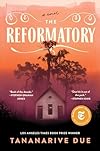
The Publisher Says: A gripping, page-turning novel set in Jim Crow Florida that follows Robert Stephens Jr. as he’s sent to a segregated reform school that is a chamber of terrors where he sees the horrors of racism and injustice, for the living, and the dead. Gracetown, Florida
June 1950
Twelve-year-old Robbie Stephens, Jr., is sentenced to six months at the Gracetown School for Boys, a reformatory, for kicking the son of the largest landowner in town in defense of his older sister, Gloria. show more So begins Robbie’s journey further into the terrors of the Jim Crow South and the very real horror of the school they call The Reformatory.
Robbie has a talent for seeing ghosts, or haints. But what was once a comfort to him after the loss of his mother has become a window to the truth of what happens at the reformatory. Boys forced to work to remediate their so-called crimes have gone missing, but the haints Robbie sees hint at worse things. Through his friends Redbone and Blue, Robbie is learning not just the rules but how to survive. Meanwhile, Gloria is rallying every family member and connection in Florida to find a way to get Robbie out before it’s too late.
The Reformatory is a haunting work of historical fiction written as only American Book Award–winning author Tananarive Due could, by piecing together the life of the relative her family never spoke of and bringing his tragedy and those of so many others at the infamous Dozier School for Boys to the light in this riveting novel.
I RECEIVED A DRC FROM THE PUBLISHER VIA NETGALLEY. THANK YOU.
My Review: FINALIST FOR THE 2024 LOCUS AWARD FOR BEST HORROR NOVEL! Award will be given at the ceremony on 22 June 2024.
This is one long story. Long in words, long in facts, long! What it isn't is a dragging mess to read. Ghosts, abused boys, wretched families, the oppressive miasma of Florida's hideous climate...any one of these could've sent me on my way. Instead they all work as a gestalt of Horror, suffering, and terror that left me drained but made me as happy to know this story as an old white man who has never had to fear this kind of abuse and calculated cruelty can be at knowing, from the inside out, what the system I and mine have benefited from did while we were looking anywhere but there.
The single most awful part is that it's fictionalized, not fiction.
I just do not know why anyone would, based on skin color or other cosmetic or cultural factors, engineer a life designed to end quickly and prematurely for innocent victims. Othering, a long-standing weapon of mass destruction, is the cruelest and excuses the cruelest means of hurting those unloved. Why we keep burying our knowledge of its occurrence is perfectly clear after reading this story: Admitting that we tolerated this, knowing on some level that it was happening because these people vanished, but not how, not what horrifying acts occurred in our names, is acutely painful.
So is torture. So is the murder of your loved ones.
Suddenly the pain of reading about it isn't quite so bad, is it.
I hope this book wins the Best Horror Locus Award on the twenty-second of June. Pity it won't be Juneteenth. show less
June 1950
Twelve-year-old Robbie Stephens, Jr., is sentenced to six months at the Gracetown School for Boys, a reformatory, for kicking the son of the largest landowner in town in defense of his older sister, Gloria. show more So begins Robbie’s journey further into the terrors of the Jim Crow South and the very real horror of the school they call The Reformatory.
Robbie has a talent for seeing ghosts, or haints. But what was once a comfort to him after the loss of his mother has become a window to the truth of what happens at the reformatory. Boys forced to work to remediate their so-called crimes have gone missing, but the haints Robbie sees hint at worse things. Through his friends Redbone and Blue, Robbie is learning not just the rules but how to survive. Meanwhile, Gloria is rallying every family member and connection in Florida to find a way to get Robbie out before it’s too late.
The Reformatory is a haunting work of historical fiction written as only American Book Award–winning author Tananarive Due could, by piecing together the life of the relative her family never spoke of and bringing his tragedy and those of so many others at the infamous Dozier School for Boys to the light in this riveting novel.
I RECEIVED A DRC FROM THE PUBLISHER VIA NETGALLEY. THANK YOU.
My Review: FINALIST FOR THE 2024 LOCUS AWARD FOR BEST HORROR NOVEL! Award will be given at the ceremony on 22 June 2024.
This is one long story. Long in words, long in facts, long! What it isn't is a dragging mess to read. Ghosts, abused boys, wretched families, the oppressive miasma of Florida's hideous climate...any one of these could've sent me on my way. Instead they all work as a gestalt of Horror, suffering, and terror that left me drained but made me as happy to know this story as an old white man who has never had to fear this kind of abuse and calculated cruelty can be at knowing, from the inside out, what the system I and mine have benefited from did while we were looking anywhere but there.
The single most awful part is that it's fictionalized, not fiction.
I just do not know why anyone would, based on skin color or other cosmetic or cultural factors, engineer a life designed to end quickly and prematurely for innocent victims. Othering, a long-standing weapon of mass destruction, is the cruelest and excuses the cruelest means of hurting those unloved. Why we keep burying our knowledge of its occurrence is perfectly clear after reading this story: Admitting that we tolerated this, knowing on some level that it was happening because these people vanished, but not how, not what horrifying acts occurred in our names, is acutely painful.
So is torture. So is the murder of your loved ones.
Suddenly the pain of reading about it isn't quite so bad, is it.
I hope this book wins the Best Horror Locus Award on the twenty-second of June. Pity it won't be Juneteenth. show less
So difficult to stay present for, but so impossible to look away from. The racial horrors of the Jim Crow South mixed with ghosts and actual sadists.
The story building and writing are fantastic, the characters are so painfully real, and the setting is seared into my mind. This is horror in the most real way, and it does it so well.
The story building and writing are fantastic, the characters are so painfully real, and the setting is seared into my mind. This is horror in the most real way, and it does it so well.
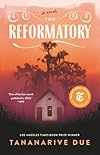
I can count on one hand the number of 500+ page books that have scored any higher than 3.5 stars on my persnickety rating ladder. I blame it on the IRS — an acronym I use for a trait I dub “Impatient Reader Syndrome.”
The rave reviews for Due’s eerie novel that’s set in the Jim Crow South describe it as a page-turner. Agreed. The problem for me: there were too many pages. Had this riveting tale been judiciously trimmed from 575+ pages to around 400, my rating would have likely been show more 4.5 stars. The middle third is particularly slow-moving.
But even with its girth and uneven pacing, my 4-star rating is proof that I enjoyed this supernatural ride. Most of the characters are compelling, and the author’s masterful blending of social issues, historical fiction and horror is impressive and effective. show less
The rave reviews for Due’s eerie novel that’s set in the Jim Crow South describe it as a page-turner. Agreed. The problem for me: there were too many pages. Had this riveting tale been judiciously trimmed from 575+ pages to around 400, my rating would have likely been show more 4.5 stars. The middle third is particularly slow-moving.
But even with its girth and uneven pacing, my 4-star rating is proof that I enjoyed this supernatural ride. Most of the characters are compelling, and the author’s masterful blending of social issues, historical fiction and horror is impressive and effective. show less

A 17 years old girl and her 12 years old brother are walking to their home late at night when a young man decides to make some advances towards the girl. The brother kicks the man in his knee in an attempt to protect his sister while the father of the young man watches from the side. What do you expect to happen next?
Let's add some details. It is 1950 in rural Florida, the siblings are black, the young man is white, the white family used to own the black family's grandparents and the show more siblings' father tried to unionize the mill belonging to the white family. By the morning Robert (the 12 years old) is arrested, put in front of a judge and sentenced to 6 months in the Gracetown School for Boys, a reformatory for both white and black boys (which is based on the real life Dozier School for Boys). And here is where the story really begins.
The sister, Gloria, has a gift to see the future (sporadically). Robert, like all kids in Gracetown can see the ghosts of the dead, or haints as they are called by everyone. This grounds the story into the supernatural world but the horror does not really come from there; it is the real life that horrifies. They both are naive at the start of the story, to the point of being dangerous (and I have some issues with that considering the history of their father). It makes for a good story but it also makes Gloria sound unlikable in places.
With Robert locked up, Gloria starts to look for a way to get her brother out of the school while Robert have to endure hell on Earth in the school - from beatings to even bigger wrongs. And as he is very well attuned to haints, he ends up reliving the past wrongs as well.
The scenes in the school are horrifying - even if you remove the ghosts (and some of the more horrifying scenes come from them), the reality is brutal. Gloria's quest to find a lawyer for her brother and to somehow find justice is as heartbreaking if not as gruesome. It is a novel about the Jim Crow South and a cautionary tale about a past that seems to rear its ugly head all the time. Due manages to build a lot of secondary characters who sound alive and real - and the mix of real people and invented characters is distinguishable - which I always enjoy in historical novels.
90% into the book I was planning to write a review which recommends this book to anyone, even readers who won't touch a speculative fiction novel if that is the last book on Earth. The supernatural and the real were so well balanced that you could read the novel as a metaphor (a non-genre writer would have used journal entries for example to introduce the same back stories while Gloria's premonitions are mostly used by the author to point to real-life stories with some of the secondary characters). The ending though is pure supernatural - Due writes her characters into a corner and they need the supernatural to get out of it. Not that the background for it is not there - it does not feel like a deus ex machina or one of those fantasy novels which seem to change their rules as the story requires it. It is designed to work that way and it flows properly in the novel. And yet... I wish it had gone a different way. The reality though is that had she gone for a different ending, the novel would have finished very differently. I still would recommend the book but I suspect that this ending will sour the experience for non-speculative fiction readers.
The book won a lot of awards last year including the biggest ones for Fantasy (World Fantasy) and Horror (Bram Stoker) plus the Shirley Jackson Award. It remained almost unnoticed outside of the genre spaces though. Which is a pity. It deserves to be read a lot more widely and it deserves a place in the growing pantheon of books about Jim Crow USA. show less
Let's add some details. It is 1950 in rural Florida, the siblings are black, the young man is white, the white family used to own the black family's grandparents and the show more siblings' father tried to unionize the mill belonging to the white family. By the morning Robert (the 12 years old) is arrested, put in front of a judge and sentenced to 6 months in the Gracetown School for Boys, a reformatory for both white and black boys (which is based on the real life Dozier School for Boys). And here is where the story really begins.
The sister, Gloria, has a gift to see the future (sporadically). Robert, like all kids in Gracetown can see the ghosts of the dead, or haints as they are called by everyone. This grounds the story into the supernatural world but the horror does not really come from there; it is the real life that horrifies. They both are naive at the start of the story, to the point of being dangerous (and I have some issues with that considering the history of their father). It makes for a good story but it also makes Gloria sound unlikable in places.
With Robert locked up, Gloria starts to look for a way to get her brother out of the school while Robert have to endure hell on Earth in the school - from beatings to even bigger wrongs. And as he is very well attuned to haints, he ends up reliving the past wrongs as well.
The scenes in the school are horrifying - even if you remove the ghosts (and some of the more horrifying scenes come from them), the reality is brutal. Gloria's quest to find a lawyer for her brother and to somehow find justice is as heartbreaking if not as gruesome. It is a novel about the Jim Crow South and a cautionary tale about a past that seems to rear its ugly head all the time. Due manages to build a lot of secondary characters who sound alive and real - and the mix of real people and invented characters is distinguishable - which I always enjoy in historical novels.
90% into the book I was planning to write a review which recommends this book to anyone, even readers who won't touch a speculative fiction novel if that is the last book on Earth. The supernatural and the real were so well balanced that you could read the novel as a metaphor (a non-genre writer would have used journal entries for example to introduce the same back stories while Gloria's premonitions are mostly used by the author to point to real-life stories with some of the secondary characters). The ending though is pure supernatural - Due writes her characters into a corner and they need the supernatural to get out of it. Not that the background for it is not there - it does not feel like a deus ex machina or one of those fantasy novels which seem to change their rules as the story requires it. It is designed to work that way and it flows properly in the novel. And yet... I wish it had gone a different way. The reality though is that had she gone for a different ending, the novel would have finished very differently. I still would recommend the book but I suspect that this ending will sour the experience for non-speculative fiction readers.
The book won a lot of awards last year including the biggest ones for Fantasy (World Fantasy) and Horror (Bram Stoker) plus the Shirley Jackson Award. It remained almost unnoticed outside of the genre spaces though. Which is a pity. It deserves to be read a lot more widely and it deserves a place in the growing pantheon of books about Jim Crow USA. show less
Lists
Diverse Horror (3)
Horror Books (1)
READ in 2023 (1)
StoryTel 2023 (1)
Which house? (1)
Everand 2023 (1)
Awards


You May Also Like


Associated Authors
Statistics
- Works
- 37
- Also by
- 67
- Members
- 6,647
- Popularity
- #3,681
- Rating
- 3.8
- Reviews
- 244
- ISBNs
- 141
- Languages
- 4
- Favorited
- 16
