
Jessica Ney
Author of Denizens of the Dark Wood
About the Author
Works by Jessica Ney
Eurydice Otherwise 1 copy
Associated Works
Middle-Earth Role-Playing: Complete System for Adventuring in J.R.R.Tolkien's World (1984) — Author, some editions — 180 copies
Tagged
Common Knowledge
- Legal name
- Ney-Grimm, Jessica Michele
- Other names
- J.M. Ney-Grimm
J.M. Salsbury
Ney, Jessica M. - Birthdate
- 1960
- Gender
- female
- Education
- University of Virginia, Charlottesville
- Occupations
- author
editor
game designer
artist - Short biography
- J.M. Ney-Grimm lives with her husband and children in Virginia, just east of the Blue Ridge Mountains. She's learning about permaculture gardening and debunking popular myths about food. The rest of the time she reads Robin McKinley, Diana Wynne Jones, and Lois McMaster Bujold, plays boardgames like Settlers of Catan, rears her twins, and writes stories set in her troll-infested North-lands.
- Nationality
- USA
- Birthplace
- Washington, D.C., USA
- Places of residence
- Virginia, USA
Maryland, USA - Associated Place (for map)
- USA
Members
Reviews
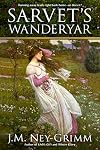
I received a review copy of this short story through the Member Giveaway on LibraryThing in exchange for an honest review.
Sarvet's Wanderyar is set in the fictional gender-segregated mountain culture of the Hammarleeding, the woman-lodge called Kaunis. Sarvet chafes under the sweltering shelter of her mother. Paiam uses Sarvet's physical disability (a lame leg) to keep her from doing anything, even the things Sarvet knows she can do. However Sarvet holds a dear secret: she desperately wishes show more to experience the world on a Wanderyar, just like the young men of the father-lodges.
I want to start by saying Ney-Grimm's short story was a delight to read. The language was easy to consume and accessible for YA readers, which I believe are the intended audience. Even better, contrary to quite a few YA books I read when I was 13-16, Sarvet sounded and behaved like a teenage girl. I enjoyed the depth of world-building, particularly for how short the story was, and I'm always enthusiastic about exploring new gender norms. For me this was also a wonderful adventure because a major theme was that gendered norms can be changed, and the mindset required to change them.
SPOILERS: What stopped me from giving this 5/5 stars was the ableism inherent in Sarvet's tale. I realize it's a cliche of fantasy writing, but my heart sunk when the first half of the story was Sarvet working to be recognized by her mother and society at large while disabled, and the magical conclusion was that she stopped being disabled. It felt disingenuous that a major theme of this story was about how being a women shouldn't be a barrier to achieving your dreams, when being disabled was a much bigger barrier, presented within the story as completely unsolvable, (outside of magic intervention) and a completely acceptable barrier to stop Sarvet from doing things. show less
Sarvet's Wanderyar is set in the fictional gender-segregated mountain culture of the Hammarleeding, the woman-lodge called Kaunis. Sarvet chafes under the sweltering shelter of her mother. Paiam uses Sarvet's physical disability (a lame leg) to keep her from doing anything, even the things Sarvet knows she can do. However Sarvet holds a dear secret: she desperately wishes show more to experience the world on a Wanderyar, just like the young men of the father-lodges.
I want to start by saying Ney-Grimm's short story was a delight to read. The language was easy to consume and accessible for YA readers, which I believe are the intended audience. Even better, contrary to quite a few YA books I read when I was 13-16, Sarvet sounded and behaved like a teenage girl. I enjoyed the depth of world-building, particularly for how short the story was, and I'm always enthusiastic about exploring new gender norms. For me this was also a wonderful adventure because a major theme was that gendered norms can be changed, and the mindset required to change them.
SPOILERS: What stopped me from giving this 5/5 stars was the ableism inherent in Sarvet's tale. I realize it's a cliche of fantasy writing, but my heart sunk when the first half of the story was Sarvet working to be recognized by her mother and society at large while disabled, and the magical conclusion was that she stopped being disabled. It felt disingenuous that a major theme of this story was about how being a women shouldn't be a barrier to achieving your dreams, when being disabled was a much bigger barrier, presented within the story as completely unsolvable, (outside of magic intervention) and a completely acceptable barrier to stop Sarvet from doing things. show less
This review was written for LibraryThing Member Giveaways.
I received a MOBI.file copy of this book from the author through a giveaway she had on LibraryThing and the following is my honest opinion.
In many cultures it’s unfortunately true, young girls and women are treated as second class citizens. While they’re constantly being told what they can and can’t do, the protagonist in this story, Sarvet, has it even more difficult since she walks with a relentless shuffle.
While the Hammarleeding mountain society which she’s part of restrains all show more girls close to the confines of their village, Sarvet is further hindered by her own mother who relentlessly reminds her of the myriad of things she can’t do. However, her mindset does not allow this from doing the things she’s determined to do. Sarvet has to overcome the sexual discrimination which keeps her from having the opportunities the boys get through the wandaryar they receive, in other words boys are educated in ways girls are not.
This short but poignant story is one which educates its readers regarding the coming of age for its protagonist, Sarvet. Her strong will and determination takes her from being a naïve and frighten young girl into that of a knowing and astonishing woman. The story shows that dreams no matter how improbable possess the ability of becoming realities if one sets their minds into doing the impossible.
For having written this empowering story for any young who reads it, I’ve given the author, J.M. Ney-Grimm, 5 STARS for her endeavor here. show less
In many cultures it’s unfortunately true, young girls and women are treated as second class citizens. While they’re constantly being told what they can and can’t do, the protagonist in this story, Sarvet, has it even more difficult since she walks with a relentless shuffle.
While the Hammarleeding mountain society which she’s part of restrains all show more girls close to the confines of their village, Sarvet is further hindered by her own mother who relentlessly reminds her of the myriad of things she can’t do. However, her mindset does not allow this from doing the things she’s determined to do. Sarvet has to overcome the sexual discrimination which keeps her from having the opportunities the boys get through the wandaryar they receive, in other words boys are educated in ways girls are not.
This short but poignant story is one which educates its readers regarding the coming of age for its protagonist, Sarvet. Her strong will and determination takes her from being a naïve and frighten young girl into that of a knowing and astonishing woman. The story shows that dreams no matter how improbable possess the ability of becoming realities if one sets their minds into doing the impossible.
For having written this empowering story for any young who reads it, I’ve given the author, J.M. Ney-Grimm, 5 STARS for her endeavor here. show less
This review was written for LibraryThing Member Giveaways.

As one of the original Iron Crown publications this is pretty lavish, with a lot of NPC's and backstory.
You May Also Like


Associated Authors
Statistics
- Works
- 37
- Also by
- 12
- Members
- 247
- Popularity
- #92,309
- Rating
- 3.4
- Reviews
- 3
- ISBNs
- 44
- Languages
- 2