
Margy Burns Knight
Author of Africa is Not a Country
About the Author
Series
Works by Margy Burns Knight
Talking Walls Teacher's Guide 10 copies
Tagged
Common Knowledge
- Gender
- female
Members
Reviews

One of those books whose didactic purpose really resonates with me, but which falls short in other areas, Who Belongs Here? is a picture-book with a dual narrative, following the true-life tale of a young Cambodian-American immigrant, while also presenting information about the history of immigration in the United States. The story of Nary, who, together with his grandmother and Uncle Savy, manages to escape the murderous Khmer Rouge, finding his way to a refugee camp in Thailand, and then show more to America, is juxtaposed with passages discussing everything from Ellis Island to the United Farm Workers.
Unfortunately, this structure doesn't always work so well. Although obviously intended to reinforce the personal story being presented with general historical knowledge, its effect was one of dividing the reader's attention, making each component weaker. I felt that Nary's journey was strong enough of a story to stand on its own, and that the informational asides could have been presented in an appendix at the rear. I was impressed that Knight discussed the influence of the Iroquois Confederacy on the American form of government (adult readers interested in this subject should examine Donald Grinde's excellent The Iroquois and the Founding of the American Nation), but appalled to see that she listed potatoes amongst the food crops brought to the Americas! How on earth did that get past an editor? And what other mistakes didn't I catch?
A book with a good purpose - teaching respect for diversity, and for our fellow immigrants - and appealing illustrations, Who Belongs Here? nevertheless had some serious weaknesses. I can see that it might be useful in a classroom setting, if a teacher is involved in the reading (and able to correct that odd error concerning the potato!), but sadly, it isn't one I would highly recommend. show less
Unfortunately, this structure doesn't always work so well. Although obviously intended to reinforce the personal story being presented with general historical knowledge, its effect was one of dividing the reader's attention, making each component weaker. I felt that Nary's journey was strong enough of a story to stand on its own, and that the informational asides could have been presented in an appendix at the rear. I was impressed that Knight discussed the influence of the Iroquois Confederacy on the American form of government (adult readers interested in this subject should examine Donald Grinde's excellent The Iroquois and the Founding of the American Nation), but appalled to see that she listed potatoes amongst the food crops brought to the Americas! How on earth did that get past an editor? And what other mistakes didn't I catch?
A book with a good purpose - teaching respect for diversity, and for our fellow immigrants - and appealing illustrations, Who Belongs Here? nevertheless had some serious weaknesses. I can see that it might be useful in a classroom setting, if a teacher is involved in the reading (and able to correct that odd error concerning the potato!), but sadly, it isn't one I would highly recommend. show less

Author Margy Burn Knight and illustrator Anne Sibley O'Brien - who also worked together on Who Belongs Here?: An American Story, as well as the sequel to this one, Talking Walls: The Stories Continue - present the stories of fourteen walls in this picture-book tour of the world's peoples and cultures. From walls that divide (the Berlin Wall, the walls of Nelson Mandela's prison) to walls that remember (the Vietnam Veteran's Memorial, the Aboriginal rock wall, with paintings from as long ago show more as 30,000 years), the walls depicted here serve many purposes, and have many meanings, but in the end, the are all a record of human activity, of one kind or another.
Talking Walls is an engaging introduction to some of the diverse peoples of the world, organized around a theme that I would not have thought to use, myself. I appreciated each story, and the additional notes at the rear, although I did find myself wishing (just a little bit) that the stone walls of New England, which appear on the front endpapers, would have been explored as well. But then, I grew up around those kind of walls. Still, that's a minor (and very personal) quibble, and in no way detracts from the over-all excellence of this title! show less
Talking Walls is an engaging introduction to some of the diverse peoples of the world, organized around a theme that I would not have thought to use, myself. I appreciated each story, and the additional notes at the rear, although I did find myself wishing (just a little bit) that the stone walls of New England, which appear on the front endpapers, would have been explored as well. But then, I grew up around those kind of walls. Still, that's a minor (and very personal) quibble, and in no way detracts from the over-all excellence of this title! show less
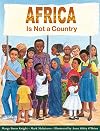
Who says kids' books can't be anti-imperialist? This picture book walks us through days-in-the-lives of children in almost all of Africa's 53 countries, teaching us about traditional Igbo dance, riddle games in the DRC, words in Setswana and Somali and Kikuyu, a million nice things you can make with cassava, andc., andc. I feel like it's a bit tough luck on Rwanda to make it carry the whole burden of representing Africa's sorrow and torment, especially when the Congo and Zimbabwe and Somalia show more and Sudan were all included, but I guess that was 2002 for you? And I can see why they didn't want it to be a litany of sorrow; I just finished reading this to a four-year-old at bedtime, for god's sake.
And? It put her right to sleep. show less
And? It put her right to sleep. show less

In this follow-up to their initial Talking Walls collection, author Margy Burns Knight and illustrator Anne Sibley O'Brien once again delve into the wealth of walls to be found, the world over, and their diverse meanings for the people who built them. From beautiful decorations (the Ndebele wall designs of South Africa, the Divali wall paintings of India) to protective/deflective capability (the walled city of Fez, Morocco, the Peace Lines of Belfast, Northern Ireland), the fourteen walls show more depicted here all 'speak' to something important in the history or current culture of their creators.
With a cover illustration taken from a class activity that was inspired by the initial Talking Walls book, Talking Walls: The Stories Continue is a worthy follow-up to its predecessor, covering some fascinating places and structures. I think my favorite was the Wat Po Temple in Bangkok, with its 'textbook' walls! The illustrations are colorful and full of life, and the text informative. The afterword - which includes further information about each wall depicted - offers added insight. All in all, this is an excellent picture-book for introducing young readers to the diverse peoples of the world, and is recommended especially to those readers who enjoyed the initial volume of Talking Walls! show less
With a cover illustration taken from a class activity that was inspired by the initial Talking Walls book, Talking Walls: The Stories Continue is a worthy follow-up to its predecessor, covering some fascinating places and structures. I think my favorite was the Wat Po Temple in Bangkok, with its 'textbook' walls! The illustrations are colorful and full of life, and the text informative. The afterword - which includes further information about each wall depicted - offers added insight. All in all, this is an excellent picture-book for introducing young readers to the diverse peoples of the world, and is recommended especially to those readers who enjoyed the initial volume of Talking Walls! show less
Awards


You May Also Like


Associated Authors
Statistics
- Works
- 8
- Members
- 1,311
- Popularity
- #19,588
- Rating
- 4.0
- Reviews
- 18
- ISBNs
- 52
- Languages
- 3