
Alan Peter Ryan (1943–2011)
Author of The Penguin Book of Vampire Stories
About the Author
Works by Alan Peter Ryan
La Cosa Dei Monti Catskill 4 copies
Il Treno Di Deacons Kill 3 copies
Following the Way 3 copies
Time and Tide 1 copy
Pieta 1 copy
Death To The Easter Bunny! 1 copy
"Apocalypse Now?" 1 copy
A Visit To Brighton 1 copy
Tell Mommy What Happened 1 copy
Onawa 1 copy
The Black Beyond 1 copy
Night Visions 1 1 copy
The Rose Of Knock 1 copy
Associated Works
The Magazine of Fantasy and Science Fiction September/October 2011, Vol. 121, Nos. 3 & 4 (2011) — Contributor — 14 copies
The Magazine of Fantasy and Science Fiction 65. Cyrion in Bronze. (1985) — Contributor, some editions — 11 copies
Tagged
Common Knowledge
- Legal name
- Ryan, Alan Peter
- Birthdate
- 1943-05-17
- Date of death
- 2011-06-03
- Gender
- male
- Nationality
- USA
- Birthplace
- Bronx, New York, USA
- Associated Place (for map)
- New York, USA
Members
Reviews
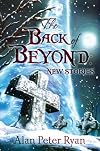
The Back of Beyond, by Alan Peter Ryan, is a slim volume of four short stories by an author who is new to me (although he won a World Fantasy Award in the 1980s); unfortunately, the author recently died at the age of 68 and this is apparently his last work. Each story has an element of the fantastical or otherworldly, but they are mostly gentle tales that reminded me a bit of the great Peter S. Beagle. In "Sexual Exploration is a Crime," a young man travels to Brazil where he's heard he can show more find a wonderful "temporary girlfriend"; he finds her, indeed, and finds more. "The Winter's Tale" is about a man living in a scary location who sets out to help a neighbour in a snowstorm, but must cope with the sprites and goblins that may or may not be accompanying him. "Starvation Valley" tells us of an estranged father and son taking a road trip across the US, and what happens (and doesn't happen) when they stop at an isolated restaurant for a meal. And "Mountain Man" evokes the old cowboy life, along with a perhaps ancient spirit of the mountains that may or may not need to eat our narrator.... As noted, with the exception of the last story, these are all very gentle tales, and even the last one tends to stir one more to pity than to horror; at least, it did me. I'm sorry to hear of the author's passing, and I think I would like to read more of his work. Recommended, in a quiet sort of way. show less

CAST A COLD EYE preys on my mind. I first read it from our local library when it came out and it gave me nightmares. Then I found a 1st Edition hardcover of it in a book shop in Inverness, where it was stacked by accident in a shelf of Scottish hardcover crime books. I bought it, read it again, and got more nightmares.
There's something going on in these pages that keys directly into my psyche. I think it's a Celt thing, and small towns where old men mutter secrets to each other in smoky bars show more while someone in the background sings the old songs. I know a bit about that kind of place. And so did Alan Ryan, a wonderful writer taken from us too soon.
He spoke in interviews of how he dodn't spend uch time on research, but went for feel and gut instinct in writing it, and in doing so, I think he too tapped into something primal about blood, and kin, and community.
It's a book with heart and soul, wearing both on its sleeve. Sure, it gets melodramatic in places, but in others there's a deft handling of creeping dread, and of how the supernatural might creep into a world view otherwise inimical to it.
I've found that not many of my supernatural fiction writing buddies have read this one -- it seems to have gone under the radar back in the day, and been largely ignored. Which is a great shame, as it's a great ghost story, a fine piece of writing, and a lovely examination of a way of life that's disappearing fast. Hopefully the Valacourt edition means more people are finding it.
I love it...even if it still gives me nightmares. show less
There's something going on in these pages that keys directly into my psyche. I think it's a Celt thing, and small towns where old men mutter secrets to each other in smoky bars show more while someone in the background sings the old songs. I know a bit about that kind of place. And so did Alan Ryan, a wonderful writer taken from us too soon.
He spoke in interviews of how he dodn't spend uch time on research, but went for feel and gut instinct in writing it, and in doing so, I think he too tapped into something primal about blood, and kin, and community.
It's a book with heart and soul, wearing both on its sleeve. Sure, it gets melodramatic in places, but in others there's a deft handling of creeping dread, and of how the supernatural might creep into a world view otherwise inimical to it.
I've found that not many of my supernatural fiction writing buddies have read this one -- it seems to have gone under the radar back in the day, and been largely ignored. Which is a great shame, as it's a great ghost story, a fine piece of writing, and a lovely examination of a way of life that's disappearing fast. Hopefully the Valacourt edition means more people are finding it.
I love it...even if it still gives me nightmares. show less
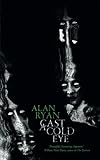
This was a moody, atmospheric ghost story, not so much scary as it was melancholy. An Irish-American writer travels to a small village on the Irish coast to research for several months, but he starts seeing apparitions and begins to suspect the villagers know more than they are letting on about them. I liked how Ryan wove Irish history and culture into his story and the technique of ghost stories told inside the story by the local priest, or seanachie.
What great atmosphere!
There are two stories at work here that will, given time and above all circumstance, ultimately converge. The novel begins with a scene that launches the first of these, as four men are waiting in a shabeen trying to keep warm while awaiting a funeral procession before going on to an ancient graveyard to perform some strange rites. As good writers will, Ryan gives us no explanations, so the question of what's going on here and why is planted in the reader's head from show more the outset and stays in the back of the mind throughout the novel until all is revealed. Great way to start a horror novel, if you ask me. The second storyline belongs to Jack Quinlan, who has come to Ireland, home of his ancestors, to do some research on a novel he's writing about the Famine. More specifically, his book is about
"a family and its struggles to survive through the Famine of 1846 and 1847, and about the horrible thing ... that happened to three members of his family in particular."
Jack takes a house in the rather isolated village of Doolin, planning to stay for three months, and it isn't too long before he sets up a nice routine of research, writing, and sometimes hanging out at the local pubs, where traditional music is played of an evening. He's met a girl, Grainne, to whom he's very much attracted, and all seems to be well with him right up until the moment when he starts to see and hear some very disturbing things which seem to follow him whenever he's out and about. And then one night he witnesses something he knows is real, but has no explanation for. The only person he can talk to about it is the local priest Father Henning, the local seanachie who loves telling eerie stories, yet is reluctant at best to talk with Jack about his experiences. The question becomes whether or not Jack's actually experiencing these horrific things -- is the research he's doing getting to him, or is it the remoteness and isolation of the place that's affecting him? And if it is true that Jack is not going off his rocker but is really seeing what he thinks he's seeing, why him?
Reading Cast a Cold Eye is to find yourself in the middle of an eerie mystery that grows darker and creepier along the way, one that is not solved up until the last minute. A lot of readers have noted, like the Kirkus reviewer of this book, that the story "doesn't add up," that there are too many loose ends, yada yada yada, but it all made perfectly good sense to me. I won't say why, since I'm sure many people will want to read this novel, but the answers really are all there. My regular habit is to finish a novel and then go back and reread the first chapter, and in this case, it's a hugely eye-opening moment, stunningly circular in nature. It may not scare the bejeebies out of modern horror readers, but for those of us who aren't looking for chainsaw-wielding killer clowns or the like, it's a delightful tale of ghostly horrors that will stay in your head for a long time after turning that last page. show less
There are two stories at work here that will, given time and above all circumstance, ultimately converge. The novel begins with a scene that launches the first of these, as four men are waiting in a shabeen trying to keep warm while awaiting a funeral procession before going on to an ancient graveyard to perform some strange rites. As good writers will, Ryan gives us no explanations, so the question of what's going on here and why is planted in the reader's head from show more the outset and stays in the back of the mind throughout the novel until all is revealed. Great way to start a horror novel, if you ask me. The second storyline belongs to Jack Quinlan, who has come to Ireland, home of his ancestors, to do some research on a novel he's writing about the Famine. More specifically, his book is about
"a family and its struggles to survive through the Famine of 1846 and 1847, and about the horrible thing ... that happened to three members of his family in particular."
Jack takes a house in the rather isolated village of Doolin, planning to stay for three months, and it isn't too long before he sets up a nice routine of research, writing, and sometimes hanging out at the local pubs, where traditional music is played of an evening. He's met a girl, Grainne, to whom he's very much attracted, and all seems to be well with him right up until the moment when he starts to see and hear some very disturbing things which seem to follow him whenever he's out and about. And then one night he witnesses something he knows is real, but has no explanation for. The only person he can talk to about it is the local priest Father Henning, the local seanachie who loves telling eerie stories, yet is reluctant at best to talk with Jack about his experiences. The question becomes whether or not Jack's actually experiencing these horrific things -- is the research he's doing getting to him, or is it the remoteness and isolation of the place that's affecting him? And if it is true that Jack is not going off his rocker but is really seeing what he thinks he's seeing, why him?
Reading Cast a Cold Eye is to find yourself in the middle of an eerie mystery that grows darker and creepier along the way, one that is not solved up until the last minute. A lot of readers have noted, like the Kirkus reviewer of this book, that the story "doesn't add up," that there are too many loose ends, yada yada yada, but it all made perfectly good sense to me. I won't say why, since I'm sure many people will want to read this novel, but the answers really are all there. My regular habit is to finish a novel and then go back and reread the first chapter, and in this case, it's a hugely eye-opening moment, stunningly circular in nature. It may not scare the bejeebies out of modern horror readers, but for those of us who aren't looking for chainsaw-wielding killer clowns or the like, it's a delightful tale of ghostly horrors that will stay in your head for a long time after turning that last page. show less
Lists
ScaredyKIT 2018 (1)
Strange Towns (1)
Awards


You May Also Like


Associated Authors
Statistics
- Works
- 36
- Also by
- 32
- Members
- 1,788
- Popularity
- #14,399
- Rating
- 3.7
- Reviews
- 18
- ISBNs
- 47
- Languages
- 2