
Werner Herzog (1) (1942–)
Author of Of Walking in Ice
For other authors named Werner Herzog, see the disambiguation page.
About the Author
Image credit: wikimedia.org
Works by Werner Herzog
Werner Herzog: A Guide for the Perplexed: Conversations with Paul Cronin (2014) — Author — 180 copies, 2 reviews
Scenarios I: Aguirre, the Wrath of God; The Enigma of Kaspar Hauser; Land of Silence and Darkness (1980) 29 copies
Fata Morgana [1971 film] 19 copies
Scenarios II: Signs of Life; Even Dwarfs Started Small; Fata Morgana; Heart of Glass (2018) 14 copies
The Werner Herzog Collection 12 copies
Lessons of Darkness [1992 film] 7 copies
Scenarios III: Stroszek; Nosferatu, Phantom of the Night; Where the Green Ants Dream; Cobra Verde (2019) 4 copies
Herzog Collection (Pal/Region 0) 3 copies
Nicolas Cage, 4 Films Featuring [DVD] Trespass / Stolen / The Humanity Bureau / Bad Lieutenant: Port of Call New Orleans (2017) — Director — 2 copies
Herzog's Kinski Gift Set [6 Discs] 2 copies
Short Films: The Great Ecstasy of Woodcarver Steiner / How Much Wood Would a Woodchuck Chuck / La Soufrière (2005) 1 copy
From One Second to the Next 1 copy
Huie's Sermon 1 copy
Werner Herzog Box Set 2 1 copy
Werner Herzog Collection 1 copy
Fitzcarraldo | Stroszek 1 copy
Salt and Fire [2016 film] 1 copy
Into the Inferno [2016 film] 1 copy
Associated Works
Tagged
Common Knowledge
- Canonical name
- Herzog, Werner
- Legal name
- Stipetić, Werner Herzog
- Birthdate
- 1942-09-05
- Gender
- male
- Education
- Munich University
- Occupations
- film director
film producer
actor
writer - Relationships
- Mattes, Eva (2nd wife)
Herzog, Lena (3rd wife) - Nationality
- Germany
- Birthplace
- Munich, Germany
- Places of residence
- Sachrang, Germany
Munich, Germany
Los Angeles, California, USA
Pittsburgh, Pennsylvania, USA - Associated Place (for map)
- Germany
Members
Reviews
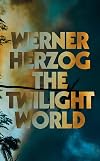
“The jungle does not recognize time.”
And Hiroo Onoda is the human embodiment of that statement! He is on Lubang Island in the Philippines at the end of World War II. But when the war ends, Onoda doesn’t believe it. And for the next 30 years, he conducts jungle warfare on the island, through the Korean War and into the Vietnam War! 30 flippin' years he continues to fight World War II!!! It's just an amazing story that seems impossible, but it isn't. I'm so blown away by it, I just keep show more telling everyone about what I read!
30 years... show less
And Hiroo Onoda is the human embodiment of that statement! He is on Lubang Island in the Philippines at the end of World War II. But when the war ends, Onoda doesn’t believe it. And for the next 30 years, he conducts jungle warfare on the island, through the Korean War and into the Vietnam War! 30 flippin' years he continues to fight World War II!!! It's just an amazing story that seems impossible, but it isn't. I'm so blown away by it, I just keep show more telling everyone about what I read!
30 years... show less
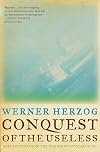
Conquest of the Useless is pure prose poetry and probably the best book about the jungle I've ever read. Before reading it I was already familiar with the film and the documentary Burden of Dreams, about the making of the film, which is required background before reading this book.
Conquest of the Useless reads like a fever dream. Although about the film, the main character is the jungle. It's written in diary format with some days taking up only a single line. There's no narrative but show more rather flashes of incident. What makes it so amazing are Herzog's trademark non sequitur's which weigh with unspoken significance. Scenes appear without context as part of the fabric of the jungle and it's dreamy obscenity of life and death. The book has many rewards and is hugely generous but will require patience. It took months for me to complete, I could only read small amounts at a time, when the mood was right, leaving scores of pages underlined. A great work of art in its own right. show less
Conquest of the Useless reads like a fever dream. Although about the film, the main character is the jungle. It's written in diary format with some days taking up only a single line. There's no narrative but show more rather flashes of incident. What makes it so amazing are Herzog's trademark non sequitur's which weigh with unspoken significance. Scenes appear without context as part of the fabric of the jungle and it's dreamy obscenity of life and death. The book has many rewards and is hugely generous but will require patience. It took months for me to complete, I could only read small amounts at a time, when the mood was right, leaving scores of pages underlined. A great work of art in its own right. show less
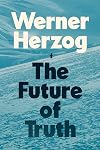
Herzog’s previous books haven’t exactly played nice with the truth. In Every Man for Himself and God Against All: A Memoir he’s downright contemptuous to the very idea of a universal truth and plainly states his memoirs will be full of lies, to further a better telling of the stories. Likewise in The Twilight World he makes it clear the narrative is as much fiction as fact. His movies return from time to time in this book as well, as points and counterpoints to the flights of fancy by show more which he jumps from one topic to another; the Emperor Nero, Potemkin Villages, Mike Tyson’s knowledge of Pepin, AI and generative video.
It's full of Herzog-isms: “It’s like a house that’s lit up in all its corners, it becomes uninhabitable”, on the topic of “overanalyzing” alien abductions. And on the topic of quotes he describes inventing an attribution to Pascal for "The collapse of the stellar universe will occur like creation in grandiose splendor” from Lessons of Darkness - a quote of his own invention.
On the one hand he's "opposed the foolish belief that equates truth with facts” but on the other, the holocaust has evidence of “such density, such overwhelming force, that it must be accounted true, even if facts aren’t everything.”. It's difficult to discern a coherent through line. Herzog's apologetics for his own fibbing is that the audience somehow should know the difference when the work is fiction, yet he uses the example of Orson Welles' War of the Worlds causing panic in the closing - a factoid that itself might be heavily overblown, adding an extra dimension of confusion in Herzog confusing fact and fiction about a fictive work taken as fact (I've not been this confused since writing a review for Garth Marenghis fictional fiction).
The most illustrative to his point about malleable truth comes from his project covering rentable family members in Japan. From the phenomenon itself being both enacted in, and the subject of his own film, to the choice of the company to provide an actor pretending to be a client to be interviewed, with the motivation that a real client could never be truthful about their motivations. Did we learn more from the lie than we would of the truth? How can we square that with Herzog issuing warnings about fake news and generative AI? show less
It's full of Herzog-isms: “It’s like a house that’s lit up in all its corners, it becomes uninhabitable”, on the topic of “overanalyzing” alien abductions. And on the topic of quotes he describes inventing an attribution to Pascal for "The collapse of the stellar universe will occur like creation in grandiose splendor” from Lessons of Darkness - a quote of his own invention.
On the one hand he's "opposed the foolish belief that equates truth with facts” but on the other, the holocaust has evidence of “such density, such overwhelming force, that it must be accounted true, even if facts aren’t everything.”. It's difficult to discern a coherent through line. Herzog's apologetics for his own fibbing is that the audience somehow should know the difference when the work is fiction, yet he uses the example of Orson Welles' War of the Worlds causing panic in the closing - a factoid that itself might be heavily overblown, adding an extra dimension of confusion in Herzog confusing fact and fiction about a fictive work taken as fact (I've not been this confused since writing a review for Garth Marenghis fictional fiction).
The most illustrative to his point about malleable truth comes from his project covering rentable family members in Japan. From the phenomenon itself being both enacted in, and the subject of his own film, to the choice of the company to provide an actor pretending to be a client to be interviewed, with the motivation that a real client could never be truthful about their motivations. Did we learn more from the lie than we would of the truth? How can we square that with Herzog issuing warnings about fake news and generative AI? show less
What is Herzog without his trademark staccato delivery? Get the audiobook.
The Twilight World is the story of Hiroo Onoda's ongoing guerilla war long after WWII ends, but it's not a true story and Herzog tells you that up front. If you're interested in the facts you shouldn't read this. This is Herzog's dream of the meaning of Onoda's alternate reality opposed to the world that has moved on from the war he's still fighting. Herzog makes the Chuangzi line about the man waking from a dream who show more doesn't know if he dreamt he was a butterfly or is the butterfly dreaming he is a man central to the narrative, but never mentions it directly. We follow Onoda and his compatriots POV as their version of reality is repeatedly tested, and Herzog lets him be a mouthpiece for the changing tides of history, the continual wars in Asia, the technological sweep of jet planes to satellites, attempted to be understood by a man frozen in time. We never dig deep into the ethical questions of the people who died, but get a heroic account where Onoda is simply respected if not revered after his fight ends, a symbol of the unwavering Japanese fighting spirit mythmaking that saturated their culture and almost prevented the surrender. The book ends in an almost Lynchian fever dream of images, which along with the idiosyncratic way Herzog looks at the world through this story reminds you that this isn't "based on a true story", but something that was revealed to him in a dream. show less
The Twilight World is the story of Hiroo Onoda's ongoing guerilla war long after WWII ends, but it's not a true story and Herzog tells you that up front. If you're interested in the facts you shouldn't read this. This is Herzog's dream of the meaning of Onoda's alternate reality opposed to the world that has moved on from the war he's still fighting. Herzog makes the Chuangzi line about the man waking from a dream who show more doesn't know if he dreamt he was a butterfly or is the butterfly dreaming he is a man central to the narrative, but never mentions it directly. We follow Onoda and his compatriots POV as their version of reality is repeatedly tested, and Herzog lets him be a mouthpiece for the changing tides of history, the continual wars in Asia, the technological sweep of jet planes to satellites, attempted to be understood by a man frozen in time. We never dig deep into the ethical questions of the people who died, but get a heroic account where Onoda is simply respected if not revered after his fight ends, a symbol of the unwavering Japanese fighting spirit mythmaking that saturated their culture and almost prevented the surrender. The book ends in an almost Lynchian fever dream of images, which along with the idiosyncratic way Herzog looks at the world through this story reminds you that this isn't "based on a true story", but something that was revealed to him in a dream. show less
Lists
Awards


You May Also Like


Associated Authors
Statistics
- Works
- 91
- Also by
- 8
- Members
- 3,497
- Popularity
- #7,272
- Rating
- 4.0
- Reviews
- 85
- ISBNs
- 235
- Languages
- 15
- Favorited
- 4
