

Luc Boltanski
Author of The New Spirit of Capitalism
About the Author
Luc Boltanski is Professor of Sociology at the cole des hautes tudes en sciences sociales, Paris.
Image credit: Luc Boltanski est un sociologue français né le 4 janvier 1940. Il a initié avec Laurent Thévenot un courant pragmatique, appelé aussi « économies de la grandeur » ou « sociologie des régimes d'action ». Il est directeur d'études à l'EHESS.
Works by Luc Boltanski
Distant Suffering: Morality, Media and Politics (Cambridge Cultural Social Studies) (English and French Edition) (1993) 47 copies
Mysteries and Conspiracies: Detective Stories, Spy Novels and the Making of Modern Societies (2012) 30 copies
Associated Works
Tagged
Common Knowledge
- Birthdate
- 1940-01-04
- Gender
- male
- Nationality
- France
- Map Location
- France
Members
Reviews
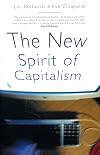
One of the best books I've read in some time. Recommended reading for everyone who has any interest in understanding modern society and economy.
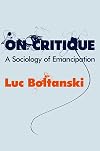
Luc Boltanski writes:
"The problems posed by the way in which the notion of domination was employed in critical sociology derive from the fact that it is at once too powerful and too vague in character. Extensive use of the notion of domination leads to conceiving virtually all relations between actions in their vertical dimension, from explicit hierarchical relations to the most personal of links. By the same token, what the sociologist will establish, in critical fashion, as a relationship show more of domination is not necessarily presented or even lived by actors in this register; and the later might even turn out to be offended by such a description. (If, for example, as a sociologist you explain to a man engrossed in the enchantment of love that the passion he experiences for his companion is in fact merely the result of the effect of social domination that she exercises over him, because she comes from a higher class than his, you risk meeting with some problems in getting your viewpoint accepted.) This extension of the notion of domination leads to extending the notion of violence in such a way as to stretch physical violence, which is experienced and described, at least in a number of cases, precisely as violence by the actors themselves, in the direction of symbolic violence (a key notion in Bourdieu’s sociology), which invariably is not experienced as such.
To explain how and why actors are dominated without knowing it, the theory must accord great importance to the illusions that blind them and appeal to the notion of the unconscious. An initial consequence is that actors are often treated as deceived beings or as if they were ‘cultural dopes’, to use Harold Garfinkel’s phrase. Their critical capacities in particular are underestimated or ignored. Another consequence is that preponderant weight is given to the dispositional properties of actors, at the expense of the properties inscribed in the situations into which they are plunged, and an attempt is made to explain virtually all of their behaviour by the internalization of dominant norms, above all in the course of the education process. It takes the form of an incorporation, which inscribes these norms in the body, like habits – a process that accounts for the reproduction of structures. However, by the same token, situations are neglected, sometimes in favour of dispositions and sometimes of structures. While situations can be observed and described as clearly by the actors who are continually immersed in them in the course of their everyday life as by sociologists, knowledge of structures is accessible exclusively to that latter. Their unmasking in fact requires the use of instruments of a macro-social character and, in particular, statistical instruments, based on the construction of categories, nomenclatures, and a metrology. But this is also to say that the instruments of which the exposure of structures is going to be based are largely dependent on the existence of powerful centres of calculation invariably places under the supervision of state or inter-state organizations. It follows, as numerous works over the last thirty years have shown, that these macro-social instruments, as well as the categories and metrologies on which they are based, must themselves be regarded as products of social activity and, in particular, the activity of states, so that they occupy the dual position, embarrassing to say the least, of instruments of social knowledge and objects of that knowledge.
Finally, a third consequence is to increase the asymmetry between deceived actors and a sociologist capable – and, it would appear from some formulations, the only one capable – of revealing the truth of their social condition to them. This leads to overestimating the power of sociology as science, the sole foundation on which the sociologist could base his claim to know much more about people than they themselves know. Sociology then tends to be invested with the overweening power of being the main discourse of truth on the social world, which leads it to enter into competition with other disciplines laying claim to the same imperialism. Above all, however, the critical enterprise finds itself torn between, on the one hand, the temptation of extending to all forms of knowledge the unmasking of the ‘ideologies’ on which they are based and, on the other, the need to maintain a reserved domain – that of Science – capable of providing a fulcrum for this operation. Finally, let us add that the intensification of the difference between sociological science and ordinary knowledge leads to an under-estimation of the effects of the circulation of sociological discourses in society and their re-appropriation/re-interpretation by actors – which is rather problematic in the case of a sociology that claims reflexivity. These repercussive effects of sociology in the social world are especially important in contemporary societies on account of the fact, in particular, of the enhanced role of secondary and university education (not to mention the role of the media), which leads actors to seize on explanatory schemas and languages derived from social science and to enlist them in their daily interactions (particularly in the course of their disputes.)" show less
"The problems posed by the way in which the notion of domination was employed in critical sociology derive from the fact that it is at once too powerful and too vague in character. Extensive use of the notion of domination leads to conceiving virtually all relations between actions in their vertical dimension, from explicit hierarchical relations to the most personal of links. By the same token, what the sociologist will establish, in critical fashion, as a relationship show more of domination is not necessarily presented or even lived by actors in this register; and the later might even turn out to be offended by such a description. (If, for example, as a sociologist you explain to a man engrossed in the enchantment of love that the passion he experiences for his companion is in fact merely the result of the effect of social domination that she exercises over him, because she comes from a higher class than his, you risk meeting with some problems in getting your viewpoint accepted.) This extension of the notion of domination leads to extending the notion of violence in such a way as to stretch physical violence, which is experienced and described, at least in a number of cases, precisely as violence by the actors themselves, in the direction of symbolic violence (a key notion in Bourdieu’s sociology), which invariably is not experienced as such.
To explain how and why actors are dominated without knowing it, the theory must accord great importance to the illusions that blind them and appeal to the notion of the unconscious. An initial consequence is that actors are often treated as deceived beings or as if they were ‘cultural dopes’, to use Harold Garfinkel’s phrase. Their critical capacities in particular are underestimated or ignored. Another consequence is that preponderant weight is given to the dispositional properties of actors, at the expense of the properties inscribed in the situations into which they are plunged, and an attempt is made to explain virtually all of their behaviour by the internalization of dominant norms, above all in the course of the education process. It takes the form of an incorporation, which inscribes these norms in the body, like habits – a process that accounts for the reproduction of structures. However, by the same token, situations are neglected, sometimes in favour of dispositions and sometimes of structures. While situations can be observed and described as clearly by the actors who are continually immersed in them in the course of their everyday life as by sociologists, knowledge of structures is accessible exclusively to that latter. Their unmasking in fact requires the use of instruments of a macro-social character and, in particular, statistical instruments, based on the construction of categories, nomenclatures, and a metrology. But this is also to say that the instruments of which the exposure of structures is going to be based are largely dependent on the existence of powerful centres of calculation invariably places under the supervision of state or inter-state organizations. It follows, as numerous works over the last thirty years have shown, that these macro-social instruments, as well as the categories and metrologies on which they are based, must themselves be regarded as products of social activity and, in particular, the activity of states, so that they occupy the dual position, embarrassing to say the least, of instruments of social knowledge and objects of that knowledge.
Finally, a third consequence is to increase the asymmetry between deceived actors and a sociologist capable – and, it would appear from some formulations, the only one capable – of revealing the truth of their social condition to them. This leads to overestimating the power of sociology as science, the sole foundation on which the sociologist could base his claim to know much more about people than they themselves know. Sociology then tends to be invested with the overweening power of being the main discourse of truth on the social world, which leads it to enter into competition with other disciplines laying claim to the same imperialism. Above all, however, the critical enterprise finds itself torn between, on the one hand, the temptation of extending to all forms of knowledge the unmasking of the ‘ideologies’ on which they are based and, on the other, the need to maintain a reserved domain – that of Science – capable of providing a fulcrum for this operation. Finally, let us add that the intensification of the difference between sociological science and ordinary knowledge leads to an under-estimation of the effects of the circulation of sociological discourses in society and their re-appropriation/re-interpretation by actors – which is rather problematic in the case of a sociology that claims reflexivity. These repercussive effects of sociology in the social world are especially important in contemporary societies on account of the fact, in particular, of the enhanced role of secondary and university education (not to mention the role of the media), which leads actors to seize on explanatory schemas and languages derived from social science and to enlist them in their daily interactions (particularly in the course of their disputes.)" show less
https://journals.openedition.org/lectures/687
Texte :
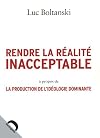
Deux sources différentes m'avaient donné envie de lire Rendre la réalité inacceptable de Luc Boltanski. C'est dire si le bouche-à-oreille vaut parfois tous les plaidoyers. L'auteur revient dans ce petit livre sur les conditions de production qui ont présidé à l'écriture d'un article publié avec Pierre Bourdieu en 1976 sous le titre « La production de l'idéologie dominante » dans Actes de la recherche en sciences sociales. J'ai show more craint un instant qu'il s'agissait d'un nouvel ouvrage, (un de plus...) visant à se positionner relativement à l'héritage scientifique que nous a laissé Pierre Bourdieu. En fait pas du tout ! Luc Boltanski nous livre une réflexion sur tout ce qu'il a fallu pour que cet article, et son support Actes de la recherche en sciences sociales, puisse paraître à ce moment là. Par ricochet, l'auteur montre combien il serait aujourd'hui impossible de publier ce même article tant les conditions de production du travail scientifique se sont altérées. Car en revenant sur le passé, l'auteur parvient mieux qu'une critique frontale, à questionner les pratiques d'administration de la recherche en vigueur aujourd'hui et à montrer leur effet puissamment délétère sur la production scientifique. Clairement, la mise au pas de la recherche au profit d'un ordre politique de plus en plus intrusif à travers des formes « douces » de management, sans tête apparente ou sans pilote1, n'aurait en effet jamais permis l'édition d'un tel texte. Et pour cause : le caractère subversif (dont l'ironie compose une arme bien comprise par l'auteur) de la revue comme de l'article ne serait guère compatible avec un encadrement de plus en plus normatif et administré du travail de recherche qui en censure toute la dimension créative, pourtant si nécessaire. Rien que je ne sache déjà en fait. Comme nombre d'entre nous, j'ai largement pris conscience du processus larvé de démantèlement de la recherche. Je me donc suis longuement demandé pourquoi ce livre me touchait profondément. C'est que, proche de la quarantaine, ce bouquin est venu me rappeler que j'avais connu la fin de la période décrite par l'auteur. Formé au département de sociologie de l'université de Nantes autour des années 90, j'ai en effet assisté en qualité d'objecteur de conscience, aux dernières heures du LERSCO2, le laboratoire labellisé CNRS. Je me souviens encore de mon "patron de labo à moi" (c'est ainsi que Luc Boltanski nomme Pierre Bourdieu), en l'occurrence Christian Baudelot, pestant contre la contractualisation à quatre ans qui entrait alors en vigueur au CNRS. Je me souviens de l'arrivée de ces premiers ordinateurs qui ont fait mettre définitivement au rebus la bruyante machine qui triait mécaniquement les cartes perforées pour traiter les questionnaires. Je me souviens de ce grand colloque « Crise et métamorphoses de la classe ouvrière » signant comme le dernier sursaut du laboratoire pour légitimer des recherches sur une classe dont les plus mauvais prophètes annonçaient la fin. Je me souviens du consternant état de sidération auquel a conduit le retrait définitif du CNRS puis de la redoutable anomie qui s'en est suivie touchant parfois les enseignants chercheurs jusqu'au plus intime de leur existence et de leur raison d'être. Je me souviens du fonds documentaire resté depuis vide, symbole de la désaffection et du désarroi de tout un ensemble. C'est bien sur tous ces aspects que Luc Boltanski revient sans pour autant sacrifier à la nostalgie d'époque révolue, ni au réenchantement d'une recherche supposée sans conflits et sans douleurs. En le lisant, on appréhende avec un certain effroi, le désagréable chemin parcouru, faisant qu'aujourd'hui, j'en suis stupidement à compter mes articles classés en A, B ou C pour savoir si j'ai des chances d'atteindre un score suffisant (deux points) pour être reconnu chercheur publiant. Avec la redoutable intuition, largement confortée par la lecture de Boltanski, que tout cela n'a pas grand-chose à voir avec la qualité scientifique qu'on est en droit d'attendre, et que cette nouvelle forme de tutelle, purement gestionnaire et comptable, reste plus que stérile. Luc Boltanki a raison : continuons de rendre la réalité inacceptable, faute de quoi nous finirons par tout accepter. show less
Texte :
Deux sources différentes m'avaient donné envie de lire Rendre la réalité inacceptable de Luc Boltanski. C'est dire si le bouche-à-oreille vaut parfois tous les plaidoyers. L'auteur revient dans ce petit livre sur les conditions de production qui ont présidé à l'écriture d'un article publié avec Pierre Bourdieu en 1976 sous le titre « La production de l'idéologie dominante » dans Actes de la recherche en sciences sociales. J'ai show more craint un instant qu'il s'agissait d'un nouvel ouvrage, (un de plus...) visant à se positionner relativement à l'héritage scientifique que nous a laissé Pierre Bourdieu. En fait pas du tout ! Luc Boltanski nous livre une réflexion sur tout ce qu'il a fallu pour que cet article, et son support Actes de la recherche en sciences sociales, puisse paraître à ce moment là. Par ricochet, l'auteur montre combien il serait aujourd'hui impossible de publier ce même article tant les conditions de production du travail scientifique se sont altérées. Car en revenant sur le passé, l'auteur parvient mieux qu'une critique frontale, à questionner les pratiques d'administration de la recherche en vigueur aujourd'hui et à montrer leur effet puissamment délétère sur la production scientifique. Clairement, la mise au pas de la recherche au profit d'un ordre politique de plus en plus intrusif à travers des formes « douces » de management, sans tête apparente ou sans pilote1, n'aurait en effet jamais permis l'édition d'un tel texte. Et pour cause : le caractère subversif (dont l'ironie compose une arme bien comprise par l'auteur) de la revue comme de l'article ne serait guère compatible avec un encadrement de plus en plus normatif et administré du travail de recherche qui en censure toute la dimension créative, pourtant si nécessaire. Rien que je ne sache déjà en fait. Comme nombre d'entre nous, j'ai largement pris conscience du processus larvé de démantèlement de la recherche. Je me donc suis longuement demandé pourquoi ce livre me touchait profondément. C'est que, proche de la quarantaine, ce bouquin est venu me rappeler que j'avais connu la fin de la période décrite par l'auteur. Formé au département de sociologie de l'université de Nantes autour des années 90, j'ai en effet assisté en qualité d'objecteur de conscience, aux dernières heures du LERSCO2, le laboratoire labellisé CNRS. Je me souviens encore de mon "patron de labo à moi" (c'est ainsi que Luc Boltanski nomme Pierre Bourdieu), en l'occurrence Christian Baudelot, pestant contre la contractualisation à quatre ans qui entrait alors en vigueur au CNRS. Je me souviens de l'arrivée de ces premiers ordinateurs qui ont fait mettre définitivement au rebus la bruyante machine qui triait mécaniquement les cartes perforées pour traiter les questionnaires. Je me souviens de ce grand colloque « Crise et métamorphoses de la classe ouvrière » signant comme le dernier sursaut du laboratoire pour légitimer des recherches sur une classe dont les plus mauvais prophètes annonçaient la fin. Je me souviens du consternant état de sidération auquel a conduit le retrait définitif du CNRS puis de la redoutable anomie qui s'en est suivie touchant parfois les enseignants chercheurs jusqu'au plus intime de leur existence et de leur raison d'être. Je me souviens du fonds documentaire resté depuis vide, symbole de la désaffection et du désarroi de tout un ensemble. C'est bien sur tous ces aspects que Luc Boltanski revient sans pour autant sacrifier à la nostalgie d'époque révolue, ni au réenchantement d'une recherche supposée sans conflits et sans douleurs. En le lisant, on appréhende avec un certain effroi, le désagréable chemin parcouru, faisant qu'aujourd'hui, j'en suis stupidement à compter mes articles classés en A, B ou C pour savoir si j'ai des chances d'atteindre un score suffisant (deux points) pour être reconnu chercheur publiant. Avec la redoutable intuition, largement confortée par la lecture de Boltanski, que tout cela n'a pas grand-chose à voir avec la qualité scientifique qu'on est en droit d'attendre, et que cette nouvelle forme de tutelle, purement gestionnaire et comptable, reste plus que stérile. Luc Boltanki a raison : continuons de rendre la réalité inacceptable, faute de quoi nous finirons par tout accepter. show less
Aug 6, 2025French

En bog som bør læses hvis man interesserer sig for kapitalisme-kritikkens muligheder. Giver bl.a. med udgangspunkt i managementlitteraturen indblik i tidens projektregime; påpeger konkurrencefordele som værende lig med omgåelse af konkurrencen og tidens påståede konkurrence for at være lig med den stærkestes (mest mobiles) ret. Er behersket optimistisk i forhold til en mangesidet konkret kritik af kapitalismens absurde kapitalophobning i forhold til andre retfærdiggørelsesregimer show more baseret på lighed, kreativitet og solidaritet, kombineret med en kritik af og bevægelse fra markedsgørelsen, som kapitalismen er afhængig af. Påpeger vigtigheden af at producere og formidle sammenhængende semantikker, diskurser og visioner som handlingslettende visioner for borgeres daglige orientering, fællesskaber og handlinger. show less
Nov 1, 2013Danish
Lists
Awards

You May Also Like


Associated Authors
Statistics
- Works
- 31
- Also by
- 1
- Members
- 643
- Popularity
- #39,229
- Rating
- 4.4
- Reviews
- 6
- ISBNs
- 94
- Languages
- 7