
Axel Honneth
Author of The Struggle for Recognition: The Moral Grammar of Social Conflicts
About the Author
Axel Honneth is Senior Professor of Philosophy at the Johann Wolfgang Goethe-Unverstt in Frankfurt, Germany, and the Jack C. Weinstein Professor of the Humanities at Columbia University in New York. In 2015 he was awarded the Ernst Bloch Prize.
Series
Works by Axel Honneth
Recognition or Disagreement: A Critical Encounter on the Politics of Freedom, Equality, and Identity (2016) — Author — 29 copies
Communicative Action: Essays on Jürgen Habermas's The Theory of Communicative Action (1986) — Editor — 28 copies
Philosophical Interventions in the Unfinished Project of Enlightenment (1992) — Editor — 28 copies, 1 review
Recognition: A Chapter in the History of European Ideas (The Seeley Lectures) (2018) 21 copies, 1 review
Cultural-Political Interventions in the Unfinished Project of Enlightenment (1992) — Editor — 21 copies
Kommunitarismus - Eine Debatte über die moralischen Grundlagen moderner Gesellschaften. (1993) 9 copies
Michel Foucault - Zwischenbilanz einer Rezeption. Frankfurter Foucault-Konferenz 2001. (2003) 4 copies
Befreiung aus der Mündigkeit: Paradoxien des gegenwärtigen Kapitalismus (Frankfurter Beiträge zur Soziologie und Sozialphilosophie) (2002) 3 copies
Suffering from indeterminacy : an attempt at a reactualization of Hegel's Philosophy of right : two lectures (2000) 2 copies
Von Person zu Person: Zur Moralität persönlicher Beziehungen (suhrkamp taschenbuch wissenschaft) (2008) 2 copies
Strukturwandel der Anerkennung: Paradoxien sozialer Integration in der Gegenwart (Frankfurter Beiträge zur Soziologie und Sozialphilosophie) (2013) 2 copies
Le souverain laborieux 1 copy
Tagged
Common Knowledge
- Birthdate
- 1949
- Gender
- male
- Occupations
- Professor of Philosophy, Columbia University
- Short biography
- Axel Honneth pursued his studies of philosophy in Bonn and Bochum and received his PhD in 1983 in Berlin. He subsequently was an assistant professor in Frankfurt am Main, and a full professor in Konstanz, Berlin and, finally, again in Frankfurt. In Frankfurt he also is director of the Institute for Social Research, the birthplace of the so-called "Frankfurt School". Axel Honneth is most well-known for his work on recognition in social philosophy.
- Nationality
- Germany
- Places of residence
- Frankfurt am Main, Germany
- Associated Place (for map)
- Frankfurt am Main, Germany
Members
Reviews

I was interested in this book mainly to see the theme of recognition pulled out of Hegel and made a more general topic of investigation, as potentially the basis for political association. The book certainly succeeds by that measure.
The question of recognition, at least in my own mind, is of the interpersonal basis of legitimate political and social relationships. It’s not the question of the basis of social or political authority, but the basis for social and political association itself show more — why and on what basis people come together into societies, cultures, and states.
Honneth, at the end of his sweep across French, British, and German ideas of recognition does land on Hegel’s account as the fullest account from which to try to draw a single, integrated account.
The French “amour propre” is the form that recognition takes in Honneth’s account of the French tradition. His discussion begins with Larochefoucauld and moves forward through Rousseau, and into more modern treatments by Sartre, then Althusser.
Overall, unlike especially the German treatment, “amour propre” (maybe popularly translated as “self-esteem”) is negative and psychological. It is not recognition as peers that is sought as a basis for richer political and social relationships, but recognition as superior. That that recognition rests on some shared standards of virtue or excellence or some other positive quality notwithstanding, what the subject seeks here is reputation.
With Rousseau’s treatment in particular, this seeking for recognition is pernicious. What counts is reputation rather than substance. It doesn’t matter whether superiority is truly earned, only that it be granted.
Entering a situation of potential recognition then is like entering a competition. Who will be judged superior? This makes the subject dependent for his self-esteem on the opinion of the other. He lives “outside himself” (and, really, it doesn’t matter whether the esteem of the other is validly earned or achieved by fakery).
Honneth ties this negative idea of recognition back to court politics, where the currency, especially going back to Larochefoucauld’s time, was in fact reputation. Success depended upon it and personal worth was measured by it.
From this negative and psychological account, Honneth moves on to the British treatment of recognition via the idea of “sympathy.” Drawing especially on Hume, Adam Smith, and John Stuart Mill, we see by contrast with the French “amour propre,” a true internalized social sense that disdains self-interest per se for the sake of developing an “impartial observer.”
The “impartial observer” is an internalized judge of behavior in accord with public standards and an ability to see your own and others’ feelings and behavior on a par with one another. “Sympathy” is not so much a feeling as, for Hume in Honneth’s words, “our natural ability to understand others’ mental states and experience them in our own minds.”
Smith in particular emphasizes the role of this impartial observer as distinguishing a desire for reputation and approval from a desire for justified reputation and approval. We might call that “recognition proper.”
In its absence, all we are concerned about is what Rousseau saw as destructive — the yearning for reputation per se, for being well thought of, even at the expense of authenticity (i.e., at the cost of your reputation not according with the truth about yourself).
Its presence provides the possibility for both authenticity and social harmony (attuning our standards of assessment, particular moral assessment, with our community).
With German thought, we step into a very different political history, one in which states are fragmented, and the nature and legitimacy of political association is very much at the forefront.
Honneth’s account takes Kant, and the birth of German Idealism, as a starting point, and the notion of “respect” as the key form in which recognition develops.
I found Honneth’s account of “respect” in Kant very refreshing, in his attempt to tie inclination and obligation together, to take Kant’s footnote (from his Groundwork of the Metaphysic of Morals) on the role of respect as a starting point. The problem is to transform the intelligible, or intellect-bound, notion of obligation to what actually produces behavior and action — the role that inclination otherwise plays but is misdirected by interests and desires. Respect, as in respect for the moral imperative, and for the other as an end in him/herself, is a proposed bridge between the intelligible and the natural, between the purely rational and the active person.
Honneth doesn’t think that Kant quite brings off the trick, but I won’t detour farther into that discussion.
It isn’t until Hegel, building on Fichte, that we get the most fully developed account of recognition. Recognition in Hegel is the basis for social relationship itself, as recognition “of each other as persons who deserve the right to co-determine our shared norms.” Much of this idea is present in Fichte’s thinking, but Hegel adds the critical grounding for recognition in actual, historically developed institutions, specifically the three spheres of ethical life in Hegel’s Philosophy of Right — family, civil society (which Honneth at least at one point glosses as the “market”), and the state.
Honneth’s final chapter is an attempt to integrate all three perspectives into a consistent, coherent overall concept of intersubjective (or interpersonal) recognition. As I mentioned, he takes the German/Hegel account as the fullest and the best starting point for such an integration.
The British/Smith/Hume account complements the Hegel account with an explanation of how it is that moral norms, via the development of a kind of internal observer (the “impartial observer”) inculcates habits of self-assessment and direction. This complements Hegel’s historical account of how subjects, through mutual recognition and mutual self-restriction, arrive at concrete forms of free social behavior.
For the French/Rousseau conception, the integration is a negative one, dealing with pathologies — the types of self-aggrandizing and self-alienating behaviors Rousseau (and others) describe result from the lack of something like what Hegel describes as participation in institutions of mutual recognition (family, civil society, and state).
Really, as a reader, I’m left kind of where I started, with the Hegelian conception being the seed for political and social life. But that conception is enriched: recognition of the other as peer, and participation in concrete institutions in which “freedom” is given concrete form through recognition of others’ standing and legitimate interests, sublimation of one’s own interests, and a kind of stage in which specific relationships, freedoms, practices, and norms can be worked out.
Needless to say, this is a book that appeals to an academic audience. It is intellectual history, and Honneth has a mastery of a very broad scope of thought. Not casual reading, although I have to say it reads pretty quickly. Honneth’s style (in translation) is not fussy or convoluted — it’s a smooth ride over some pretty tortuous roads. show less
The question of recognition, at least in my own mind, is of the interpersonal basis of legitimate political and social relationships. It’s not the question of the basis of social or political authority, but the basis for social and political association itself show more — why and on what basis people come together into societies, cultures, and states.
Honneth, at the end of his sweep across French, British, and German ideas of recognition does land on Hegel’s account as the fullest account from which to try to draw a single, integrated account.
The French “amour propre” is the form that recognition takes in Honneth’s account of the French tradition. His discussion begins with Larochefoucauld and moves forward through Rousseau, and into more modern treatments by Sartre, then Althusser.
Overall, unlike especially the German treatment, “amour propre” (maybe popularly translated as “self-esteem”) is negative and psychological. It is not recognition as peers that is sought as a basis for richer political and social relationships, but recognition as superior. That that recognition rests on some shared standards of virtue or excellence or some other positive quality notwithstanding, what the subject seeks here is reputation.
With Rousseau’s treatment in particular, this seeking for recognition is pernicious. What counts is reputation rather than substance. It doesn’t matter whether superiority is truly earned, only that it be granted.
Entering a situation of potential recognition then is like entering a competition. Who will be judged superior? This makes the subject dependent for his self-esteem on the opinion of the other. He lives “outside himself” (and, really, it doesn’t matter whether the esteem of the other is validly earned or achieved by fakery).
Honneth ties this negative idea of recognition back to court politics, where the currency, especially going back to Larochefoucauld’s time, was in fact reputation. Success depended upon it and personal worth was measured by it.
From this negative and psychological account, Honneth moves on to the British treatment of recognition via the idea of “sympathy.” Drawing especially on Hume, Adam Smith, and John Stuart Mill, we see by contrast with the French “amour propre,” a true internalized social sense that disdains self-interest per se for the sake of developing an “impartial observer.”
The “impartial observer” is an internalized judge of behavior in accord with public standards and an ability to see your own and others’ feelings and behavior on a par with one another. “Sympathy” is not so much a feeling as, for Hume in Honneth’s words, “our natural ability to understand others’ mental states and experience them in our own minds.”
Smith in particular emphasizes the role of this impartial observer as distinguishing a desire for reputation and approval from a desire for justified reputation and approval. We might call that “recognition proper.”
In its absence, all we are concerned about is what Rousseau saw as destructive — the yearning for reputation per se, for being well thought of, even at the expense of authenticity (i.e., at the cost of your reputation not according with the truth about yourself).
Its presence provides the possibility for both authenticity and social harmony (attuning our standards of assessment, particular moral assessment, with our community).
With German thought, we step into a very different political history, one in which states are fragmented, and the nature and legitimacy of political association is very much at the forefront.
Honneth’s account takes Kant, and the birth of German Idealism, as a starting point, and the notion of “respect” as the key form in which recognition develops.
I found Honneth’s account of “respect” in Kant very refreshing, in his attempt to tie inclination and obligation together, to take Kant’s footnote (from his Groundwork of the Metaphysic of Morals) on the role of respect as a starting point. The problem is to transform the intelligible, or intellect-bound, notion of obligation to what actually produces behavior and action — the role that inclination otherwise plays but is misdirected by interests and desires. Respect, as in respect for the moral imperative, and for the other as an end in him/herself, is a proposed bridge between the intelligible and the natural, between the purely rational and the active person.
Honneth doesn’t think that Kant quite brings off the trick, but I won’t detour farther into that discussion.
It isn’t until Hegel, building on Fichte, that we get the most fully developed account of recognition. Recognition in Hegel is the basis for social relationship itself, as recognition “of each other as persons who deserve the right to co-determine our shared norms.” Much of this idea is present in Fichte’s thinking, but Hegel adds the critical grounding for recognition in actual, historically developed institutions, specifically the three spheres of ethical life in Hegel’s Philosophy of Right — family, civil society (which Honneth at least at one point glosses as the “market”), and the state.
Honneth’s final chapter is an attempt to integrate all three perspectives into a consistent, coherent overall concept of intersubjective (or interpersonal) recognition. As I mentioned, he takes the German/Hegel account as the fullest and the best starting point for such an integration.
The British/Smith/Hume account complements the Hegel account with an explanation of how it is that moral norms, via the development of a kind of internal observer (the “impartial observer”) inculcates habits of self-assessment and direction. This complements Hegel’s historical account of how subjects, through mutual recognition and mutual self-restriction, arrive at concrete forms of free social behavior.
For the French/Rousseau conception, the integration is a negative one, dealing with pathologies — the types of self-aggrandizing and self-alienating behaviors Rousseau (and others) describe result from the lack of something like what Hegel describes as participation in institutions of mutual recognition (family, civil society, and state).
Really, as a reader, I’m left kind of where I started, with the Hegelian conception being the seed for political and social life. But that conception is enriched: recognition of the other as peer, and participation in concrete institutions in which “freedom” is given concrete form through recognition of others’ standing and legitimate interests, sublimation of one’s own interests, and a kind of stage in which specific relationships, freedoms, practices, and norms can be worked out.
Needless to say, this is a book that appeals to an academic audience. It is intellectual history, and Honneth has a mastery of a very broad scope of thought. Not casual reading, although I have to say it reads pretty quickly. Honneth’s style (in translation) is not fussy or convoluted — it’s a smooth ride over some pretty tortuous roads. show less
Kampf um Anerkennung: Zur moralischen Grammatik sozialer Konflikte (suhrkamp taschenbuch wissenschaft) by Axel Honneth

Honneth beginnt mit einer Lektüre der Schriften Hegels. Hegel verwirft die Hobbes'sche Naturrechtslehre des (ökonomisch-utilitaristischen) Kampfs jeder gegen jeden, da dieses nur "als ein Zusammehaang isolierter Einzelsubjekte, nicht aber nach dem Modell einer sittlichen Einheit aller gedacht zu werden vermag" (S. 23, s.a. S. 75). Im Gegenteil beschreibt Hegel "den Prozeß der Etablierung von ersten Sozialverhältnissen zunächst als einen Vorgang der Herauslösung der Subjekte aus show more natürlichen Bestimmungen" (S. 33). Im Hinblick auf Kriminalität soll gezeigt werden, "daß allein durch solche der Destruktion die sittlich reiferen Anerkennungsbeziehungen überhaupt erst geschaffen werden" (S.42). Zu Konflikten kommt zur Sprache, dass "die zerstrittenen Subjekte nicht als bloß egozentrisch handelnde, voneinander isolierte Wesen aufzufassen seien", sondern beide Subjekte "vielmehr ihr Gegenüber jeweils schon positiv in die eigenen Handelsorientierungen miteinbezogen" haben (S. 77). Konkret sieht Hegel drei Stufen der Anerkennung vor: Familie (Liebe), Bürgerliche Gesellschaft (Recht) und Staat (Solidarität) (S. 45/46). Honneth bespricht auch die verschiedenen Phasen in der Anerkennungsphilosophie Hegels. So kritisiert Honneth an Hegel, er habe "seine ursprüngliche Absicht, den Aufbau eines sittlichen Gemeinwesens philosophisch als die Stufenfolge eines Kampfes um Anerkennung nachzuvollziehen, auf halbem Wege preisgegeben", er habe "sie dem Ziel er Errichtung eines bewußtseinsphilosophischen Systems aufgeopfert und unvollendet hinter sich zurückgelassen." (S. 107), Hegel bleibe zu "spekulativ" (S. 111).
Diese Lücke versucht Honneth im weiteren Verlauf zu füllen. Insbesondere zieht Honneth hierzu die Entwicklungspsychologie George Herbert Meads zurate. Als "ersten Schritt zu einer naturalistischen Begründung der Anerkennungslehre Hegels" zitiert er Mead, "ein Bewußtsein seiner selbst kann ein Subjekt nur in dem Maße erwerben, wie es sein eigenes Handeln aus der symbolisch repräsentierten Perspektive einer zweiten Person wahrnehmen lernt" (S. 120f).
Auf dieser Grundlage arbeitet Honneth die drei Hegels Anerkennungsstufen erneut aus, erarbeitet verschiedene Parallelen (Selbstvertrauen -> Selbstachtung -> Selbstschätzung), Entwicklungsschritte, etc. (S.211), verwoben mit Beobachtungen z.B. zur Herausbildung der Grundrechte seit dem 18. Jahrhundert.
Wieder zurück zu "Persönlicher Identität und Mißachtung" geht es wieder etwas konkreter um den "Kampf". Zum Beispiele stellen Formen der Missachtung "nicht die gewaltsame Einschränkung der persönlichen Autonomie allein dar, sondern deren Verknüpfung mit dem Gefühl, nicht den Status eines vollwertigen, moralisch gleichberechtigten Interaktionspartners zu besitzen" (S.216) Weder Hegel noch Mead hätten aber gesehen, dass dies Subjekte dazu motivieren kann, in einen praktischen Kampf oder Konflikt einzutreten (S.219).
Zu "Moral und gesellschaftlicher Entwicklung rezensiert er dann Marx, Sorel und Sarte. Der frühe Marx habe die Trennung der Arbeiter von den Produktionsmitteln als moralischen Konflikt um Anerkennung begriffen (S. 233), allerdings das Konfliktmodell damit auch "produktionsästhetisch vereinseitigt" (S. 236) Allerdings kann Marx das Anerkennungsmodell nicht voll entfalten, in seinen späteren Schriften reduzierter er den Klassenkampf dann doch wieder auf ökonomische Aspekte (S. 237f). Zu Sorel und Sartre kritisiert Honneth, sie hätten "dem Formalismus des bürgerlichen rechts nicht den moralischen Stellenwert einräumen können, der in dem Maße zutage tritt, in dem am 'Kampf um Anerkennung' mit Hegel und Mead jene drei unterschiedliche Stufen unterschieden werden", und speziell zu Sartre, weil er "zwischen rechtlichen und rechtsjenseitigen Formen der wechselseitigen Anerkennung analytisch keine klaren Trennungslinien gezogen hat, muß sich ihm genauso wie jenem das Ziel der individuellen oder kollektiven Selbstverwicklichung mit demjenigen der Erweiterung von Freiheitsrechten auf unentwirrbare Weise vermischen" (S. 254).
Zuletzt bespricht Honneth noch die eigene Sicht auf die "moralische Logik sozialer Konflikte". In der "akademischen Soziologie" würden "Motive für Aufruhr, Protest und Widerstand kategorial in 'Interessen' umgewandelt, die sich aus der objektiven Ungleichverteilung von materiellen Lebenschancen ergeben sollen, ohne mit dem alltäglichen Netz moralischer Gefühlseinstellungen noch irgendwie verknüpft zu sein" (S.258); im Kontext der Untersuchung müsse man aber "individuelle Erfahrung von Mißachtung in einer Weise als typische Schlüsselerlebnisse einer ganzen Gruppe" deuten (S.260). Der "Einsatz im politischen Kampf" schenkt dem Einzelnen "ein Stück seiner verlorengegangenen Selbstachtung zurück", weil er "genau die Eigenschaft öffentlich demonstriert, deren Mißachtung als Kränkung erfahren wird" (S.263) Allerdings stellt Honneth klar, dass dieses Konfliktmodell nur eine Ergänzung, aber kein Ersatz für das utilitaristische Modell ist (S.265). Zum Schluss beschreibt Honneth gewissermaßen schon die Entwicklung der aktuell vielbesprochenen "Identitätspolitik" vorher: "mittlerweile sind nämlich durch soziostrukurelle Umbrüche in den entwickelten Gesellschaften die Möglichkeiten der Selbstverwirklichung objektiv so sehr erweitert worden, daß die Erfahrung einer individuellen oder kollektiven Differenz zum Anstoß einer ganzen Reihe von politischen Bewegungen geworden ist; deren Forderungen lassen sich langfristig wohl nur erfüllen, wenn es zu kulturellen Wandlungen kommt, die eine radikale Erweiterung von Beziehungen der Solidarität mit sich bringen" (S. 286f.).
Alles in einem ein sehr gutes Buch, das die Theorien besprochenen Autoren wie Hegel, Mead, Marx gut analysiert und vergleicht und die Theoriebruchstücke zu einem kohärenten Bild vereint. Das Anerkennungsmodell ist sicherlich eine gute Bereicherung für die Beschreibung aktueller Konfliktlinien, wie angedeutet bezüglich persönlicher Identitäten von linker Seite, aber auch bzgl. AfD, Querdenkern u.ä. show less
Diese Lücke versucht Honneth im weiteren Verlauf zu füllen. Insbesondere zieht Honneth hierzu die Entwicklungspsychologie George Herbert Meads zurate. Als "ersten Schritt zu einer naturalistischen Begründung der Anerkennungslehre Hegels" zitiert er Mead, "ein Bewußtsein seiner selbst kann ein Subjekt nur in dem Maße erwerben, wie es sein eigenes Handeln aus der symbolisch repräsentierten Perspektive einer zweiten Person wahrnehmen lernt" (S. 120f).
Auf dieser Grundlage arbeitet Honneth die drei Hegels Anerkennungsstufen erneut aus, erarbeitet verschiedene Parallelen (Selbstvertrauen -> Selbstachtung -> Selbstschätzung), Entwicklungsschritte, etc. (S.211), verwoben mit Beobachtungen z.B. zur Herausbildung der Grundrechte seit dem 18. Jahrhundert.
Wieder zurück zu "Persönlicher Identität und Mißachtung" geht es wieder etwas konkreter um den "Kampf". Zum Beispiele stellen Formen der Missachtung "nicht die gewaltsame Einschränkung der persönlichen Autonomie allein dar, sondern deren Verknüpfung mit dem Gefühl, nicht den Status eines vollwertigen, moralisch gleichberechtigten Interaktionspartners zu besitzen" (S.216) Weder Hegel noch Mead hätten aber gesehen, dass dies Subjekte dazu motivieren kann, in einen praktischen Kampf oder Konflikt einzutreten (S.219).
Zu "Moral und gesellschaftlicher Entwicklung rezensiert er dann Marx, Sorel und Sarte. Der frühe Marx habe die Trennung der Arbeiter von den Produktionsmitteln als moralischen Konflikt um Anerkennung begriffen (S. 233), allerdings das Konfliktmodell damit auch "produktionsästhetisch vereinseitigt" (S. 236) Allerdings kann Marx das Anerkennungsmodell nicht voll entfalten, in seinen späteren Schriften reduzierter er den Klassenkampf dann doch wieder auf ökonomische Aspekte (S. 237f). Zu Sorel und Sartre kritisiert Honneth, sie hätten "dem Formalismus des bürgerlichen rechts nicht den moralischen Stellenwert einräumen können, der in dem Maße zutage tritt, in dem am 'Kampf um Anerkennung' mit Hegel und Mead jene drei unterschiedliche Stufen unterschieden werden", und speziell zu Sartre, weil er "zwischen rechtlichen und rechtsjenseitigen Formen der wechselseitigen Anerkennung analytisch keine klaren Trennungslinien gezogen hat, muß sich ihm genauso wie jenem das Ziel der individuellen oder kollektiven Selbstverwicklichung mit demjenigen der Erweiterung von Freiheitsrechten auf unentwirrbare Weise vermischen" (S. 254).
Zuletzt bespricht Honneth noch die eigene Sicht auf die "moralische Logik sozialer Konflikte". In der "akademischen Soziologie" würden "Motive für Aufruhr, Protest und Widerstand kategorial in 'Interessen' umgewandelt, die sich aus der objektiven Ungleichverteilung von materiellen Lebenschancen ergeben sollen, ohne mit dem alltäglichen Netz moralischer Gefühlseinstellungen noch irgendwie verknüpft zu sein" (S.258); im Kontext der Untersuchung müsse man aber "individuelle Erfahrung von Mißachtung in einer Weise als typische Schlüsselerlebnisse einer ganzen Gruppe" deuten (S.260). Der "Einsatz im politischen Kampf" schenkt dem Einzelnen "ein Stück seiner verlorengegangenen Selbstachtung zurück", weil er "genau die Eigenschaft öffentlich demonstriert, deren Mißachtung als Kränkung erfahren wird" (S.263) Allerdings stellt Honneth klar, dass dieses Konfliktmodell nur eine Ergänzung, aber kein Ersatz für das utilitaristische Modell ist (S.265). Zum Schluss beschreibt Honneth gewissermaßen schon die Entwicklung der aktuell vielbesprochenen "Identitätspolitik" vorher: "mittlerweile sind nämlich durch soziostrukurelle Umbrüche in den entwickelten Gesellschaften die Möglichkeiten der Selbstverwirklichung objektiv so sehr erweitert worden, daß die Erfahrung einer individuellen oder kollektiven Differenz zum Anstoß einer ganzen Reihe von politischen Bewegungen geworden ist; deren Forderungen lassen sich langfristig wohl nur erfüllen, wenn es zu kulturellen Wandlungen kommt, die eine radikale Erweiterung von Beziehungen der Solidarität mit sich bringen" (S. 286f.).
Alles in einem ein sehr gutes Buch, das die Theorien besprochenen Autoren wie Hegel, Mead, Marx gut analysiert und vergleicht und die Theoriebruchstücke zu einem kohärenten Bild vereint. Das Anerkennungsmodell ist sicherlich eine gute Bereicherung für die Beschreibung aktueller Konfliktlinien, wie angedeutet bezüglich persönlicher Identitäten von linker Seite, aber auch bzgl. AfD, Querdenkern u.ä. show less

Fraser wins on points. Mostly jabs thrown, a few body shots, but no dangerous punches. For Fraser, this book has been superseded by her dialogue with Jaeggi. For Honneth, I mean... I'm just not a fan, and he seems to get worse with age. This is a perfectly reasonable statement of what his position was, is, and probably always will be, with the exception of one small essay that, I believe, was written in the midst of the financial crisis, in which he briefly considered that just maybe show more properly recognizing people won't solve all our problems. Good to know he stuffed those concerns back under the mattress and got on with out Hegeling Hegel.
But seriously, this is a good, quick intro to Honneth in Honneth's own voice, and there's value in that, as well as the great value of literally everything Nancy Fraser does. show less
But seriously, this is a good, quick intro to Honneth in Honneth's own voice, and there's value in that, as well as the great value of literally everything Nancy Fraser does. show less
Philosophical Interventions in the Unfinished Project of Enlightenment (Studies in Contemporary German Social Thought) by Axel Honneth
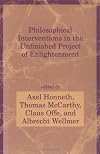
Finlayson (2005) says "The list of contributors reads like a "Who's Who?" of social theory" and responds to all aspects of H.'s philosophy. True, but the response is from their respective points of view and at an extremely general level. Brilliant, if that is what you want but it is more about the other philosophers positions and not analytic concerning H..
Awards

You May Also Like


Associated Authors
Statistics
- Works
- 55
- Members
- 1,123
- Popularity
- #22,887
- Rating
- 3.8
- Reviews
- 8
- ISBNs
- 182
- Languages
- 14