
Kyle Harper
Author of The Fate of Rome: Climate, Disease, and the End of an Empire
About the Author
Kyle Harper is professor of classics and letters and senior vice president and provost at the University of Oklahoma. His books include Slavery in the Late Roman World, AD 275-425.
Image credit: Princeton
Works by Kyle Harper
The Fate of Rome: Climate, Disease, and the End of an Empire (2017) — Author — 513 copies, 14 reviews
From Shame to Sin: The Christian Transformation of Sexual Morality in Late Antiquity (2016) 179 copies, 4 reviews
Associated Works
The Science of Roman History: Biology, Climate, and the Future of the Past (2018) — Contributor — 48 copies, 1 review
Ownership and Exploitation of Land and Natural Resources in the Roman World (2015) — Contributor — 15 copies
Tagged
Common Knowledge
- Canonical name
- Harper, Kyle
- Birthdate
- 1979-12-29
- Gender
- male
- Education
- Harvard University (PhD)
University of Oklahoma (BA) - Occupations
- provost
- Organizations
- University of Oklahoma
- Nationality
- USA
- Places of residence
- Oklahoma, USA
- Map Location
- Oklahoma, Etats-Unis
- Associated Place (for map)
- Oklahoma, USA
Members
Reviews
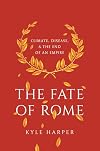
The Fate of Rome: Climate, Disease, and the End of an Empire (The Princeton History of the Ancient World) by Kyle Harper
https://nwhyte.livejournal.com/3145827.html
A very thought-provoking study of the natural causes behind the collapse of the Roman Empire, which he describes as the biggest economic reverse suffered by any region of the world in human history (though surely the destruction of the pre-colonisation Americas must come pretty close).
Harper goes in detail into the two big factors to which he attributes the fall of Rome: climate change and pandemic. The initial growth of the Roman Empire took place show more at a moment when the Mediterranean was unusually warm and wet by the standards of the last few thousand years. When the climate started shifting - not for anthropogenic reasons, just from the natural shift of orbits and sunspots - crops optimised for the previous situation did not do as well, and also shifting populations (both of humans and of animals) meant that new diseases had new populations to devastate.
He identifies three big pandemics which devastated the Roman Empire - the Antonine plague of 165, the plague of Cyprian in 249, and Justinian’s plague in 541. The first of these was probably related to smallpox, the second is uncertain and the third was definitely bubonic plague in its first major European manifestation. Unhealthy Roman urbanisation made it all worse. So did a major volcanic eruption in 536, the “year without a summer” - the volcano in question has not been identified, but the effects are clear. The 6th century plague was proportionally at least as bad as the Black Death of the 14th century. He pulls in lots of contemporary observations, notably from Galen and Procopius.
It’s a good read, though slightly oddly organised in places, and marked down for poor monochrome maps which don’t always illustrate the points being made and also for GRRRRRRR endnotes. In particular, though Harper doesn’t put it in these terms, it’s an important corrective to Gibbon, who very much wanted to find a human political cause of the Decline and Fall. The human factor is not absent from Harper’s account, but the key point is that the most developed society is still vulnerable to the vicissitudes of climate change and disease - a lesson for us all. show less
A very thought-provoking study of the natural causes behind the collapse of the Roman Empire, which he describes as the biggest economic reverse suffered by any region of the world in human history (though surely the destruction of the pre-colonisation Americas must come pretty close).
Harper goes in detail into the two big factors to which he attributes the fall of Rome: climate change and pandemic. The initial growth of the Roman Empire took place show more at a moment when the Mediterranean was unusually warm and wet by the standards of the last few thousand years. When the climate started shifting - not for anthropogenic reasons, just from the natural shift of orbits and sunspots - crops optimised for the previous situation did not do as well, and also shifting populations (both of humans and of animals) meant that new diseases had new populations to devastate.
He identifies three big pandemics which devastated the Roman Empire - the Antonine plague of 165, the plague of Cyprian in 249, and Justinian’s plague in 541. The first of these was probably related to smallpox, the second is uncertain and the third was definitely bubonic plague in its first major European manifestation. Unhealthy Roman urbanisation made it all worse. So did a major volcanic eruption in 536, the “year without a summer” - the volcano in question has not been identified, but the effects are clear. The 6th century plague was proportionally at least as bad as the Black Death of the 14th century. He pulls in lots of contemporary observations, notably from Galen and Procopius.
It’s a good read, though slightly oddly organised in places, and marked down for poor monochrome maps which don’t always illustrate the points being made and also for GRRRRRRR endnotes. In particular, though Harper doesn’t put it in these terms, it’s an important corrective to Gibbon, who very much wanted to find a human political cause of the Decline and Fall. The human factor is not absent from Harper’s account, but the key point is that the most developed society is still vulnerable to the vicissitudes of climate change and disease - a lesson for us all. show less
This book has an interesting topic -- I'm particularly interested in the Antonine Plague -- and it has some useful things to say, but I had a lot of trouble with the writing style. There are so, so many bland, introductory-type or sweeping statements that it started to drive me crazy. Just get to the meat of the information please and leave the grand pronouncements on the cutting room floor. I bet this book could have been a lot shorter and yet a lot better.
The other thing is that the reader show more for this audio book seemed to mispronounce virtually every Latin name and term. He didn't stop at Latin either. Inundate is a common enough word, right? It's pronounced /ˈinənˌdāt/. See, that second syllable is a schwa and so it's unaccented. But he would repeatedly somehow find the word "nun" in the middle of that word and accent it for all it was worth. There were other long words where this happened as well. I'm reminded of the question, does everyone have to do everything? If one doesn't know or want to know how to pronounce words properly, why become a reader? I started to think he was upset about something and deliberately trying to sabotage the audiobook.
Anyway, while I did find it very interesting to learn about how the heights of Romans changed, how the plague progressed and similar such topics, I think a rewrite might be in order, and a re-recording. It might also be good to split the nebulous topic into two books, one about disease, the other about climate so that the book could focus more instead of meandering about. show less
The other thing is that the reader show more for this audio book seemed to mispronounce virtually every Latin name and term. He didn't stop at Latin either. Inundate is a common enough word, right? It's pronounced /ˈinənˌdāt/. See, that second syllable is a schwa and so it's unaccented. But he would repeatedly somehow find the word "nun" in the middle of that word and accent it for all it was worth. There were other long words where this happened as well. I'm reminded of the question, does everyone have to do everything? If one doesn't know or want to know how to pronounce words properly, why become a reader? I started to think he was upset about something and deliberately trying to sabotage the audiobook.
Anyway, while I did find it very interesting to learn about how the heights of Romans changed, how the plague progressed and similar such topics, I think a rewrite might be in order, and a re-recording. It might also be good to split the nebulous topic into two books, one about disease, the other about climate so that the book could focus more instead of meandering about. show less
The Fate of Rome: Climate, Disease, and the End of an Empire (The Princeton History of the Ancient World) by Kyle Harper
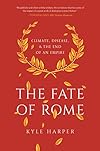
A thorough and chilling exploration into the fall of Rome.
In 150 CE, a Roman would have lived in what he or she imagined was an enduring, robust civilization, having reached a pinnacle of development and growth which the world had never yet seen, manifesting stability which they would easily imagine would continue indefinitely.
By 600, the world had completely changed for the Romans, and they knew their great age had passed. Civilization would not reach the same extent of strength, quality of show more life, etc. until the 19th century.
The author explores the traditional understanding of the fall of Rome based on Gibbon and historians after him. He then provides his major critique of that posture: it treated the environment as a constant and a given. This whole work is the author's exploration into what archaeology and climatology have taught us regarding what allowed for the rise of Rome and why it so thoroughly collapsed.
The bulk of the work tells the story of the Roman Climate Optimum and the growth and expansion of the Roman Empire and the Roman population. The author addresses the continual sources of sickness and death throughout the Roman Empire throughout its heyday - the pervasive gastrointestinal parasites and diseases that rendered Romans shorter than those who came before and after them and led to persistently high death rates - diarrhea as the primary cause of death in the Roman world.
He speaks in detail on the Antonine plague which he identifies as smallpox and does well at tracing its likely origins from sub-Saharan Africa and the wide Indian Ocean trading route use which facilitated the spread of smallpox from Egypt outward. He would also speak of the Cyprianic plague and make the argument it was a virus related to Ebola. The author associated the rise of Christianity with the Christian treatment of plague victims and the disruption caused by the plague.
The author addressed the climate variations - the Roman Climate Optimum (RCO) of 200 BCE to 150 CE, and then the intermediate period between it and the Late Antique Ice Age of 450 to 750. He explained how the Mediterranean climate was truly warmer and more humid and not at all consistent with the idea of the "Mediterranean climate" today during the RCO. He associated the end of the RCO with a lot of data regarding difficulties throughout the Empire in the disruptions of the 3rd century and afterward.
He also addresses the history - the terrible times of 240-270 and how it could have ended the Empire, the impressive nature of the resurgence of Empire in the fourth century, and all to set up the ultimate disasters which would end the Roman Empire as a going concern in the fifth century and onward.
The end of the book focuses on the disaster of the middle of the sixth century: the combination of less solar energy and intense volcanism that led to the coldest two decades of the past few thousand years from 540 to 560, and how those conditions facilitated the spread of bubonic plague in the days of Justinian and afterward. In great depth he explains how powerful the Justinian Plague was, how it also likely led to the death of half of Europe just as the Black Death of the 14th century would, and how the bubonic plague would persist and flare up throughout Europe and Western Asia from 540 until 750. He explained the truly apocalyptic situation this engendered, how it led to fervent eschatological expectations, and how that shaped Judaism, Christianity, and even the development of Islam. We see how the world of 520, even with Germanic invasions and incursions in the west, in many respects remained recognizably Roman; because of the inauguration of the Late Antique Ice Age and the coming of the plague, we see the almost complete collapse of Western civilization, and why it would not reach the heights it enjoyed in Roman times until the 19th century.
In light of climate change and COVID-19 this is a thoroughly terrifying book. It reminds us that our world which we take for granted as "normal" has only been so for 200 or so years at maximum. We can see the disruption to Roman life caused by changes in climate which prove minute compared to what we have done in saturating the atmosphere in carbon dioxide and can only wonder what will happen to us soon. Likewise, COVID-19 is almost nothing compared to smallpox, the Ebola-like virus, and the bubonic plague's impact on Roman society, and yet look how disruptive COVID-19 has proven. Our civilization is not as stable or as normal as we would like to imagine.
In its own way this book testifies to the satisfaction of all the plagues prophesied in the book of Revelation against the beast, false prophet, and whore known as Rome and its Empire and religion...and yet there's plenty to challenge Christian theology here, since the Empire experienced its great death knell at the height of its Christendom in the sixth century. As a result, many "Christianized" lands would be Islamicized as they have been until this day.
Nevertheless, an indispensable work for understanding the fall of the Roman Empire, and all kinds of lessons for modern man to consider. show less
In 150 CE, a Roman would have lived in what he or she imagined was an enduring, robust civilization, having reached a pinnacle of development and growth which the world had never yet seen, manifesting stability which they would easily imagine would continue indefinitely.
By 600, the world had completely changed for the Romans, and they knew their great age had passed. Civilization would not reach the same extent of strength, quality of show more life, etc. until the 19th century.
The author explores the traditional understanding of the fall of Rome based on Gibbon and historians after him. He then provides his major critique of that posture: it treated the environment as a constant and a given. This whole work is the author's exploration into what archaeology and climatology have taught us regarding what allowed for the rise of Rome and why it so thoroughly collapsed.
The bulk of the work tells the story of the Roman Climate Optimum and the growth and expansion of the Roman Empire and the Roman population. The author addresses the continual sources of sickness and death throughout the Roman Empire throughout its heyday - the pervasive gastrointestinal parasites and diseases that rendered Romans shorter than those who came before and after them and led to persistently high death rates - diarrhea as the primary cause of death in the Roman world.
He speaks in detail on the Antonine plague which he identifies as smallpox and does well at tracing its likely origins from sub-Saharan Africa and the wide Indian Ocean trading route use which facilitated the spread of smallpox from Egypt outward. He would also speak of the Cyprianic plague and make the argument it was a virus related to Ebola. The author associated the rise of Christianity with the Christian treatment of plague victims and the disruption caused by the plague.
The author addressed the climate variations - the Roman Climate Optimum (RCO) of 200 BCE to 150 CE, and then the intermediate period between it and the Late Antique Ice Age of 450 to 750. He explained how the Mediterranean climate was truly warmer and more humid and not at all consistent with the idea of the "Mediterranean climate" today during the RCO. He associated the end of the RCO with a lot of data regarding difficulties throughout the Empire in the disruptions of the 3rd century and afterward.
He also addresses the history - the terrible times of 240-270 and how it could have ended the Empire, the impressive nature of the resurgence of Empire in the fourth century, and all to set up the ultimate disasters which would end the Roman Empire as a going concern in the fifth century and onward.
The end of the book focuses on the disaster of the middle of the sixth century: the combination of less solar energy and intense volcanism that led to the coldest two decades of the past few thousand years from 540 to 560, and how those conditions facilitated the spread of bubonic plague in the days of Justinian and afterward. In great depth he explains how powerful the Justinian Plague was, how it also likely led to the death of half of Europe just as the Black Death of the 14th century would, and how the bubonic plague would persist and flare up throughout Europe and Western Asia from 540 until 750. He explained the truly apocalyptic situation this engendered, how it led to fervent eschatological expectations, and how that shaped Judaism, Christianity, and even the development of Islam. We see how the world of 520, even with Germanic invasions and incursions in the west, in many respects remained recognizably Roman; because of the inauguration of the Late Antique Ice Age and the coming of the plague, we see the almost complete collapse of Western civilization, and why it would not reach the heights it enjoyed in Roman times until the 19th century.
In light of climate change and COVID-19 this is a thoroughly terrifying book. It reminds us that our world which we take for granted as "normal" has only been so for 200 or so years at maximum. We can see the disruption to Roman life caused by changes in climate which prove minute compared to what we have done in saturating the atmosphere in carbon dioxide and can only wonder what will happen to us soon. Likewise, COVID-19 is almost nothing compared to smallpox, the Ebola-like virus, and the bubonic plague's impact on Roman society, and yet look how disruptive COVID-19 has proven. Our civilization is not as stable or as normal as we would like to imagine.
In its own way this book testifies to the satisfaction of all the plagues prophesied in the book of Revelation against the beast, false prophet, and whore known as Rome and its Empire and religion...and yet there's plenty to challenge Christian theology here, since the Empire experienced its great death knell at the height of its Christendom in the sixth century. As a result, many "Christianized" lands would be Islamicized as they have been until this day.
Nevertheless, an indispensable work for understanding the fall of the Roman Empire, and all kinds of lessons for modern man to consider. show less
Plagues upon the Earth: Disease and the Course of Human History: 106 (The Princeton Economic History of the Western World) by Kyle Harper
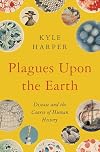
The tongue in cheek title of this book highlights the irony that while we largely celebrate science for pushing back against the biota and parasites that plague us, told from the bug’s view history is a series of evolutionary victories with some minor setbacks. So far,
Bugs 1, Homo sapiens 0.005
We are really at the beginning of understanding the genetic evolution of human, animal, and plant parasites at the same as science continues to fight against evolution, or in some cases, re-engineer show more it.
The story from the human perspective is unsettling. This book has beautiful illustrations of some of the weirdest and most unpleasant flies and bugs you’d ever want to see up close. It also has very plainly funny if gruesome descriptions of human hygiene prior to 1700.
More sobering is the history of human migration and conquest and it’s impact both on aboriginal populations and on the invaders themselves. Indeed, European conquistadors brought yellow fever and smallpox to the New World. But as Napoleon’s armies in the Caribbean found out, malaria made fighting there impossible and deadly.
Europeans simply weren’t made to thrive in the sub-Tropics. Waves upon waves of English overlords found the beautiful island of Jamaica a death trap. That is what made the importation of slaves from Africa all the more inviting: nobody else could live in those conditions and bring in the harvest of cane sugar.
Mitigation of the impact of deadly protozoa, bacteria, worms, and viruses came with the globalization of science.
The irony abounds.
The very same trends globalize previously regional epidemics and created pandemics. The spread of knowledge. International travel. Not just war for winnings brought us to our present stalemate with the bugs.
I learned to my chagrin that the greatest threat to chimpanzees in Africa are the very scientists who study them. One man sneezes and a community of chimpanzees drops dead. That’s a little simplistic but you get the idea.
Today we humans are the super pest. Since the beginnings of our bioengineering (including the early agricultural communities of the Fertile Crescent) we have been providing incentives for the bugs to adapt to our favourite breeds. And adaptation is pervasive amongst millions if not billions of bacteria and viruses.
The speed of our travel today “super-charged the diffusion of farm pests.” We really help evolution rock and roll. George Washington, for instance, was responsible for importing Tunisian sheep and their viruses, the source of swine flu in America. Meaning: you can’t put all the blame on Monsanto.
Bird flu, swine flu, rusts, and fungi. As with plant diseases human advancements created negative feedback to animal health as well. The feedback included government action and scientific innovation. Commercial agriculture and the transportation revolution represented human adaptations.
Rinderpest completely altered the lifestyle of African Masai. Horse flu in the 1870’s in the U.S. and Canada likely spurred innovation leading to the dominance of the horseless carriage.
Let’s face it: industrial scale agriculture creates the evolutionary breeding grounds for pathogens. Is there a real way to beat back this trend?
Not in my lifetime.
By 1900 there were 400 million cattle in the world, and America’s subsequent success with beef produced new pathogens. I’m thinking the global flu epidemic of 1919 that killed tens of millions after American soldiers brought the flu to the killing fields of Europe.
And today there are probably more chickens on the planet that humans. show less
Bugs 1, Homo sapiens 0.005
We are really at the beginning of understanding the genetic evolution of human, animal, and plant parasites at the same as science continues to fight against evolution, or in some cases, re-engineer show more it.
The story from the human perspective is unsettling. This book has beautiful illustrations of some of the weirdest and most unpleasant flies and bugs you’d ever want to see up close. It also has very plainly funny if gruesome descriptions of human hygiene prior to 1700.
More sobering is the history of human migration and conquest and it’s impact both on aboriginal populations and on the invaders themselves. Indeed, European conquistadors brought yellow fever and smallpox to the New World. But as Napoleon’s armies in the Caribbean found out, malaria made fighting there impossible and deadly.
Europeans simply weren’t made to thrive in the sub-Tropics. Waves upon waves of English overlords found the beautiful island of Jamaica a death trap. That is what made the importation of slaves from Africa all the more inviting: nobody else could live in those conditions and bring in the harvest of cane sugar.
Mitigation of the impact of deadly protozoa, bacteria, worms, and viruses came with the globalization of science.
The irony abounds.
The very same trends globalize previously regional epidemics and created pandemics. The spread of knowledge. International travel. Not just war for winnings brought us to our present stalemate with the bugs.
I learned to my chagrin that the greatest threat to chimpanzees in Africa are the very scientists who study them. One man sneezes and a community of chimpanzees drops dead. That’s a little simplistic but you get the idea.
Today we humans are the super pest. Since the beginnings of our bioengineering (including the early agricultural communities of the Fertile Crescent) we have been providing incentives for the bugs to adapt to our favourite breeds. And adaptation is pervasive amongst millions if not billions of bacteria and viruses.
The speed of our travel today “super-charged the diffusion of farm pests.” We really help evolution rock and roll. George Washington, for instance, was responsible for importing Tunisian sheep and their viruses, the source of swine flu in America. Meaning: you can’t put all the blame on Monsanto.
Bird flu, swine flu, rusts, and fungi. As with plant diseases human advancements created negative feedback to animal health as well. The feedback included government action and scientific innovation. Commercial agriculture and the transportation revolution represented human adaptations.
Rinderpest completely altered the lifestyle of African Masai. Horse flu in the 1870’s in the U.S. and Canada likely spurred innovation leading to the dominance of the horseless carriage.
Let’s face it: industrial scale agriculture creates the evolutionary breeding grounds for pathogens. Is there a real way to beat back this trend?
Not in my lifetime.
By 1900 there were 400 million cattle in the world, and America’s subsequent success with beef produced new pathogens. I’m thinking the global flu epidemic of 1919 that killed tens of millions after American soldiers brought the flu to the killing fields of Europe.
And today there are probably more chickens on the planet that humans. show less
Lists
Awards


You May Also Like


Associated Authors
Statistics
- Works
- 6
- Also by
- 4
- Members
- 949
- Popularity
- #27,106
- Rating
- 4.2
- Reviews
- 21
- ISBNs
- 43
- Languages
- 6