
Ian Serraillier (1912–1994)
Author of The Silver Sword
About the Author
Image credit: Serraillier playing the piano. Old dictionary of children's authors, photographer unknown
Works by Ian Serraillier
MAKING GOOD 2 copies
The Tale of the Monster Horse 2 copies
The Turtle Drum 1 copy
Katy at School 1 copy
Associated Works
Danny the Champion of the World (1975) — Series General Editor, some editions — 9,359 copies, 93 reviews
Bad Boys: Stories About Boys for Reading to Four to Seven Year Olds (Young Puffin Books) (1972) — Contributor — 17 copies
Tagged
Common Knowledge
- Legal name
- Serraillier, Ian Lucien
- Birthdate
- 1912-09-24
- Date of death
- 1994-11-28
- Gender
- male
- Education
- Brighton College
St Edmund Hall, Oxford University (BA|1935) - Occupations
- children's book author
English teacher
poet
novelist - Organizations
- Society of Friends
- Relationships
- Serraillier, Anne (spouse)
- Nationality
- UK
- Birthplace
- London, Middlesex, England, UK
- Places of residence
- London, Middlesex, England, UK
Cocking, Chichester, West Sussex, England, UK - Map Location
- England, UK
Members
Discussions
WW2 Childrens storybook - title or author unknown in Name that Book (December 2011)
Reviews
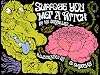
Grabbing illustrations mix with potent prose and just the right amount of haunting twists to make this a read to cherish year after year.
While this book begins with a child, who believes to have met a witch, it soon turns to the question of what others would do if they ran across one. Here, the story of two children, Roland and Miranda, begins and what happened when they were snatched by one. It's haunting and holds the rich threads of a fairy tale as it winds around the adventure with show more imagination, magic, and a tiny sense of dread. After all, no one really wants to meet a dangerous witch.
This one is worth picking up because of the artwork. The style seems chaotic at first glass but mesmerizes with details and knotted weaves. It fits the tale marvelously and will captivate not only young readers but older ones as well. It invites to flip through the pages and simply enjoy each scene. And wow, is that witch creepy.
The prose flows with traditional style and reminds of an early, story-telling era. The imagery and descriptions are well-crafted, letting the text flow with as much artistry as the illustrations. That also means that this will go over the youngest readers' heads and will even give many in the intended age group some difficulties, at times. It's still worth the read, though, since the plot is obvious, and the unknown words and phrases will stretch and boost vocabulary skills. It's a treat many will enjoy, and not just children...which also explains why it's been around and enjoyed for many decades. I received a complimentary digital copy and enjoyed the tale show less
While this book begins with a child, who believes to have met a witch, it soon turns to the question of what others would do if they ran across one. Here, the story of two children, Roland and Miranda, begins and what happened when they were snatched by one. It's haunting and holds the rich threads of a fairy tale as it winds around the adventure with show more imagination, magic, and a tiny sense of dread. After all, no one really wants to meet a dangerous witch.
This one is worth picking up because of the artwork. The style seems chaotic at first glass but mesmerizes with details and knotted weaves. It fits the tale marvelously and will captivate not only young readers but older ones as well. It invites to flip through the pages and simply enjoy each scene. And wow, is that witch creepy.
The prose flows with traditional style and reminds of an early, story-telling era. The imagery and descriptions are well-crafted, letting the text flow with as much artistry as the illustrations. That also means that this will go over the youngest readers' heads and will even give many in the intended age group some difficulties, at times. It's still worth the read, though, since the plot is obvious, and the unknown words and phrases will stretch and boost vocabulary skills. It's a treat many will enjoy, and not just children...which also explains why it's been around and enjoyed for many decades. I received a complimentary digital copy and enjoyed the tale show less

It's been a number of years since I last read the Anglo-Saxon epic of Beowulf (I keep meaning to read the new Heaney translation, and compare it to some of the more traditional versions), but reading Ian Serraillier's retelling for younger readers has really reminded me of the power of this tale, and the beauty of the language used to tell it. At forty-eight pages, Serraillier's edition is brief enough for young readers, but still manages to cover the three main episodes in the hero show more Beowulf's story - the battle with Grendel, the battle with Grendel's mother, and the battle with the unnamed dragon, at the end of the hero's life.
Retold in contemporary narrative verse, but retaining much of the flavor of the original, Beowulf the Warrior pairs an engaging narrative with beautiful woodcut illustrations by Mark Severin. I don't know that very young children will really appreciate it, as it isn't a story-book, but older children, capable of reading on their own, and interested in heroic tales, will surely love it! I know I would have... show less
Retold in contemporary narrative verse, but retaining much of the flavor of the original, Beowulf the Warrior pairs an engaging narrative with beautiful woodcut illustrations by Mark Severin. I don't know that very young children will really appreciate it, as it isn't a story-book, but older children, capable of reading on their own, and interested in heroic tales, will surely love it! I know I would have... show less
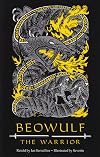
My daughter and I recently began volume 2 of Susan Wise Bauer's The Story of the World homeschool history curriculum. This retelling of Beowulf was recommended in those materials, and I am so glad we picked it up. The verse is powerful but accessible to children, and the illustrations really add to the atmosphere of the stories.
My daughter's not much into battles and heroics (she prefers books about animals), but even she enjoyed this version of the Beowulf tales. She read it on her own and show more then encouraged me to read it on my own ("Mommy, you should really read this story!") and then aloud to her. The language is lyrical and moving and great fun to read aloud.
An example from the very beginning when Hrothgar greets Beowulf, who has traveled across the "whale-road" to help defend Hrothgar's people from the monster Grendel:
"...'Beowulf,
I knew you as a child, and who has not exulted
In your fame as a fighter? It is a triumph song
That ocean thunders to her farthest shore,
It is a whisper in the frailest sea-shell...'"
When I read the end of the last of the three tales/episodes (The Fire Dragon) to my daughter she said, "Mommy, I nearly cried at that last part."
I feel the same way. show less
My daughter's not much into battles and heroics (she prefers books about animals), but even she enjoyed this version of the Beowulf tales. She read it on her own and show more then encouraged me to read it on my own ("Mommy, you should really read this story!") and then aloud to her. The language is lyrical and moving and great fun to read aloud.
An example from the very beginning when Hrothgar greets Beowulf, who has traveled across the "whale-road" to help defend Hrothgar's people from the monster Grendel:
"...'Beowulf,
I knew you as a child, and who has not exulted
In your fame as a fighter? It is a triumph song
That ocean thunders to her farthest shore,
It is a whisper in the frailest sea-shell...'"
When I read the end of the last of the three tales/episodes (The Fire Dragon) to my daughter she said, "Mommy, I nearly cried at that last part."
I feel the same way. show less

Ian Seraillier does a masterful job of translating the poetry of Gawain into language that gives a feel of its original rhythms without actually copying the forms of alliterative verse used by the Pearl poet. The illustrations by Victor Ambrus are rough and furry in appearance (like the Green Knight) and lend an appropriate air of menace to the story. This is probably the best adaptation of the story for younger (that is, younger than university age) readers and older readers who want a show more quick read or accessible introduction would enjoy it too. show less
Lists
THE WAR ROOM (2)
Sonlight Books (1)
Awards


You May Also Like


Associated Authors
Statistics
- Works
- 59
- Also by
- 21
- Members
- 4,199
- Popularity
- #5,986
- Rating
- 4.0
- Reviews
- 58
- ISBNs
- 108
- Languages
- 3
- Favorited
- 1
