
Michael Levy (2)
Author of Kosher Chinese: Living, Teaching, and Eating with China's Other Billion
For other authors named Michael Levy, see the disambiguation page.
Works by Michael Levy
Kosher Chinese: Living, Teaching, and Eating with China's Other Billion (2011) 202 copies, 23 reviews
Tagged
Common Knowledge
- Gender
- male
- Education
- Cornell University
- Occupations
- English teacher
- Nationality
- USA
- Places of residence
- USA
Israel
China
San Francisco, California, USA - Associated Place (for map)
- California, USA
Members
Reviews
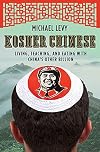
Kosher Chinese is one of the hands-down best expat memoirs I've read. The genre is strewn with the wreckage of idealistic twenty-to-fifty-somethings who travel to exotic locales, ostensibly to do Big Things, but who merely end up trying to sleep with the locals or "find themselves" while complaining that the food is gross, the language is too hard to learn, and the culture is just so irritating compared to the logical, sane American//Australian/British/etc. way of doing things.
Michael Levy show more has not written one of those memoirs. A Peace Corp volunteer in rural China, he made a sincere effort to integrate into his community, and to do so without judging it out of hand. That he succeeded is in evidence on every page of Kosher Chinese. Levy is an astute observer of everything that makes life in China so wonderful, aggravating, uplifting, and heartbreaking to the Western eye. His prose is precise without being flat and his observations alternately wry and evocative. Simply put, this is a must read for anyone interested in life as an expat, China's modernization, or even just a good travel yarn. Read this book! show less
Michael Levy show more has not written one of those memoirs. A Peace Corp volunteer in rural China, he made a sincere effort to integrate into his community, and to do so without judging it out of hand. That he succeeded is in evidence on every page of Kosher Chinese. Levy is an astute observer of everything that makes life in China so wonderful, aggravating, uplifting, and heartbreaking to the Western eye. His prose is precise without being flat and his observations alternately wry and evocative. Simply put, this is a must read for anyone interested in life as an expat, China's modernization, or even just a good travel yarn. Read this book! show less
 This review was written for LibraryThing Early Reviewers.
This is a very amusing but insightful look at life in a backwater town in China. Author Michael Levy goes to China (who knew the Peace Corps went to places like China?) as a Peace Corps volunteer and secures a placement as an English instructor at a somewhat second-rate university. He overcomes cultural taboos about food and some serious differences about educational philosophy and methodology.
We get an interesting and comical view of Chinese attitudes toward America. But the most important show more part of the book is the exploration of a culture in transition. Levy's students seem to feel rudderless and confused by all the changes taking place in their country. They are uneasy and uncertain about what the future might hold and how they should behave.
One of the sadder elements, for me, was the way in which the citizens would deny the evidence of their own eyes if it conflicted with what they had learned. An example of this is when the author would be speaking Chinese (not well, but still) and the Chinese would tell him that he was not speaking Chinese. Also, the Chinese have preconceived ideas about Jews that aren't realistic.
Highly recommended to anyone who wants to learn a bit about what China is really like, in a painless and enjoyable way. show less
We get an interesting and comical view of Chinese attitudes toward America. But the most important show more part of the book is the exploration of a culture in transition. Levy's students seem to feel rudderless and confused by all the changes taking place in their country. They are uneasy and uncertain about what the future might hold and how they should behave.
One of the sadder elements, for me, was the way in which the citizens would deny the evidence of their own eyes if it conflicted with what they had learned. An example of this is when the author would be speaking Chinese (not well, but still) and the Chinese would tell him that he was not speaking Chinese. Also, the Chinese have preconceived ideas about Jews that aren't realistic.
Highly recommended to anyone who wants to learn a bit about what China is really like, in a painless and enjoyable way. show less
This review was written for LibraryThing Early Reviewers.Michael Levy documents his two year assignment in the Peace Corp as a teacher in China. He embarks on his adventurous experience in the summer of 2005 beginning with 10 weeks of Chinese language lessons with 57 other volunteer trainees, and then travels alone to the remote city of Guiyang where the Guizhou University is located. Through his personal experience teaching both undergraduates and postgraduates, we learn a lot about modern China’s culture and style of living; eating habits, show more shopping habits, work habits, how they dress and talk, and their taste in music, movies, and sports. And we learn how they think. Indoctrinated, from early childhood, into China’s communist standards and policies they do not question authority and do not complain…ever.
The one thing they all do have in common is they love anything that is American, however, because they are strictly taught that all American’s are racist, religious zealots, who are generally unhappy with life, they scorn American standards. They learn about America from their Chinese text books and the Chinese media…so for them, what they learn must be true. Michael quickly discovers that nothing he could say would change their minds or opinions. But he befriends the students, his colleagues, and some local residents adapting to the Chinese way. When he does speak up in defense of his beliefs, ideals, and standards Levy tries to be diplomatic and sensitive to the possibility of offending. In several situations where he could have ended up in arguments or a physical fight he maintains his cool and does an admirable job of representing the United States. He is honest with the students, caring about their futures, and considerate of their feelings. And he is a good sport.
This is not about the China that most foreigners view; Shanghai, Beijing, and Hong Kong, westernized hotels and commercialized tourist sights. This is about a small city deep in the heart of China where children may be raised by grandparents so the parents could move to the large cities for factory jobs, where it is not uncommon for a twelve year old to drop out of school to do manual labor, and where people think it is sophisticated and worldly to shop at the local Wal-Mart and eat at Pizza Hut. With keen observation, Michael Levy’s writing is witty and laugh-out-loud funny. Anyone interested in learning about the contemporary culture of China’s "other billion" people would certainly enjoy this book. show less
The one thing they all do have in common is they love anything that is American, however, because they are strictly taught that all American’s are racist, religious zealots, who are generally unhappy with life, they scorn American standards. They learn about America from their Chinese text books and the Chinese media…so for them, what they learn must be true. Michael quickly discovers that nothing he could say would change their minds or opinions. But he befriends the students, his colleagues, and some local residents adapting to the Chinese way. When he does speak up in defense of his beliefs, ideals, and standards Levy tries to be diplomatic and sensitive to the possibility of offending. In several situations where he could have ended up in arguments or a physical fight he maintains his cool and does an admirable job of representing the United States. He is honest with the students, caring about their futures, and considerate of their feelings. And he is a good sport.
This is not about the China that most foreigners view; Shanghai, Beijing, and Hong Kong, westernized hotels and commercialized tourist sights. This is about a small city deep in the heart of China where children may be raised by grandparents so the parents could move to the large cities for factory jobs, where it is not uncommon for a twelve year old to drop out of school to do manual labor, and where people think it is sophisticated and worldly to shop at the local Wal-Mart and eat at Pizza Hut. With keen observation, Michael Levy’s writing is witty and laugh-out-loud funny. Anyone interested in learning about the contemporary culture of China’s "other billion" people would certainly enjoy this book. show less
This review was written for LibraryThing Early Reviewers.This book was not only extremely amusing, but it also, I think, gave me a look on what it's really like to live in China. Levy writes about China and the Chinese people, particularly its young people, with compassion and wit. And of course there's the typical travel stories of strange food -- he finally forced himself to eat dog but drew the line at fried millipedes -- and hilarious language mistakes. Levy got into a lot of strange situations in China -- I think the "Santa Claus and Silly show more String incident" was my favorite -- and he wasn't afraid to poke fun at/criticize himself as well as other people. I would recommend this to anyone who wants to know what it's like in the "real" China. show less
This review was written for LibraryThing Early Reviewers.Lists
Awards


You May Also Like


Statistics
- Works
- 1
- Members
- 202
- Popularity
- #109,081
- Rating
- 3.6
- Reviews
- 23
- ISBNs
- 102
- Languages
- 3
