
Hope Mirrlees (1887–1978)
Author of Lud-in-the-Mist
About the Author
Works by Hope Mirrlees
A Fly in Amber, Being an Extravagant Biography of the Romantic Antiquary Sir Robert Bruce Cotton (1962) 10 copies, 1 review
Moods and tensions : poems 2 copies
Poems 1 copy
Associated Works
Gender in Modernism: New Geographies, Complex Intersections (2007) — Contributor — 12 copies, 1 review
Tagged
Common Knowledge
- Legal name
- Mirrlees, Helen Hope
- Birthdate
- 1887-04-08
- Date of death
- 1978-08-01
- Gender
- female
- Education
- Royal Academy of Dramatic Art
University of Cambridge (Newnham College)
École des Langues Orientales, Paris (Russian) - Occupations
- poet
translator
writer
scholar
classicist
biographer - Relationships
- Harrison, Jane Ellen (friend)
- Short biography
- Hope Mirrlees was a British translator, poet and novelist. Her circle of friends included Virginia Woolf, T. S. Eliot, Gertrude Stein, Bertrand Russell, and Lady Ottoline Morrell. She's best known for Lud-in-the-Mist, a 1926 fantasy novel and influential classic, and for Paris: A Poem, an influential modernist volume published in 1918 by the Hogarth Press.
- Nationality
- UK
- Birthplace
- Erpingham, Chislehurst, Kent, England, UK
- Places of residence
- Scotland, UK
South Africa - Place of death
- Thames Bank, Goring on Thames, Oxfordshire, England, UK
- Map Location
- England, UK
Members
Discussions
Chat about... Lud-in-the-Mist by Hope Mirrlees in The SF&F Book Chat (February 2013)
Reviews
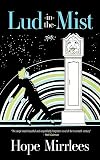
Ok, y’all, I know it’s been a hot minute since I’ve posted anything here; I just needed some time away from the socials. HOWEVER, I need to pop in here to talk about LUD-IN-THE-MIST by Hope Mirrlees. Recommended by Emily (@anunexpectedletter) after we discussed our mutual love of Jonathan Strange and Mr. Norrell, I ordered it right away (thanks @a.novel.concept!) and Emily is correct: it’s delightful! Part fairy tale, part mystery, with a dash of the Gothic and some court intrigue show more thrown in for good measure, all tied up in a story full of whimsy, I enjoyed every page of this book.
Lud-in-the-Mist, the capital of the Free State of Dorimare, is bordered to the west by Fairyland. According to Dorimare law, all things Fairy are banned from the land, especially the addictive fairy fruit. Nathaniel Chanitcleer, the mayor of Lud, finds life in his city perfect, yet something seems missing. When fairy fruit is smuggled into the city, and Chanticleer’s children eat some and they both disappear over the Debatable Hills in the direction of Fairyland, he sets out on a journey that will uncover a decades old murder, possibly cost him his position as mayor, and take him to the border of Fairyland and all that has to offer.
Mirrlees’ writing and imagery is gorgeous, and while there are a lot of plot threads woven throughout, everything is brought together in a satisfying finale. It’s clear that many contemporary authors, including Neil Gaiman and Susanna Clarke, who wrote their own stories of cities bordering on the lands of Fairy, drew their inspiration from Mirrlees and LUD-IN-THE-MIST. It’s such a charming novel, it’s not hard to see how this slim volume inspired so many stories that came after it. If you’re a fan of classic fantasy, do yourself a favor and pick up this wonderful book.
🏷️ : #fantasy #hopemirrlees #ludinthemist #fairy #fairyland #anovelconceptlansingmi #bookreview #fantasybooks #booksbooksbooks #bookstagram #booklover #bookdragon #bookworm #frommybookshelf #frommybookshelfblog show less
Lud-in-the-Mist, the capital of the Free State of Dorimare, is bordered to the west by Fairyland. According to Dorimare law, all things Fairy are banned from the land, especially the addictive fairy fruit. Nathaniel Chanitcleer, the mayor of Lud, finds life in his city perfect, yet something seems missing. When fairy fruit is smuggled into the city, and Chanticleer’s children eat some and they both disappear over the Debatable Hills in the direction of Fairyland, he sets out on a journey that will uncover a decades old murder, possibly cost him his position as mayor, and take him to the border of Fairyland and all that has to offer.
Mirrlees’ writing and imagery is gorgeous, and while there are a lot of plot threads woven throughout, everything is brought together in a satisfying finale. It’s clear that many contemporary authors, including Neil Gaiman and Susanna Clarke, who wrote their own stories of cities bordering on the lands of Fairy, drew their inspiration from Mirrlees and LUD-IN-THE-MIST. It’s such a charming novel, it’s not hard to see how this slim volume inspired so many stories that came after it. If you’re a fan of classic fantasy, do yourself a favor and pick up this wonderful book.
🏷️ : #fantasy #hopemirrlees #ludinthemist #fairy #fairyland #anovelconceptlansingmi #bookreview #fantasybooks #booksbooksbooks #bookstagram #booklover #bookdragon #bookworm #frommybookshelf #frommybookshelfblog show less

The story holds a pervasive charm even as it treats of somber and malefic aspects of life. Mirrlees simply opts to take it all as evidence of the world's Goodness, I think, and is no Pollyanna. In place of the horror of the young, then, the acceptance of those who have endured as well as enjoyed.
The book does read like Cabell (the notion of the Note, the prose of the story, the dialogue of characters), though for all that hers is a different voice, a different sensibility, if sympathetic. show more Mirrlees also has a great vocabulary, with a penchant for archaic and rare words like Cabell and Leiber and other fantasists. A stroke of genius to always hint at the fey, at least through the first third, and in this respect not only by talking of them rather than featuring them as characters, but also that the Ludites and Dorimarites themselves generally speak of the fey as though the latter were permanently offstage. There are ready sayings and common gestures and traditions, a folklore of the Silent People, but nothing in current society. Even for the characters in the novel, then, the fey are once removed. It is a ready analogue of our world, as different this world she builds might first appear.
Perhaps Mirrlees's most striking invention (if not the Note already mentioned) is her idea that Law is the obverse of fairy fruit, and consequently, the World-in-Law the counter to Faerie.
"But you remember what my father said [Nathaniel to his friend Ambrose] about the Law being man's substitute for fairy fruit? Fairy things are all of them supposed to be shadowy cheats -- delusion. But man can't live without delusion, so he creates for himself another delusion, the world-in-law, subject to no other law than the will of man, where man juggles with facts to his heart's content, and says, 'If I choose I shall make a man old enough to be my father my son, and if I choose I shall turn fruit into silk and black into white, for this is the world I have made myself, and here I am master.' And he creates a monster to inhabit it -- the man-in-law, who is like a mechanical toy and always behaves exactly as he is expected to behave, and is no more like you and me than are the faeries." [162-63]
This is a powerful idea, it embraces both modern economic game theory and the Law of Thelema, and my guess is that Mirrlees attended to more of its nuance and implications than she states explicitly, to her enduring credit.
Mirrlees offers, above or perhaps behind her very engaging tale, a sad critique of Reason, and civilisation. Not in a nihilist sense, but a Romantic sense of hopelessness or disappointment. It is this theme and its relation to the World-in-Law which will reward a rereading, I think.
//
From Lin Carter's preface or foreword to the Ballantine Adult Fantasy imprint:
The novel really begins when Master Nathaniel Chanticleer, one of the most respected burghers of Dorimare, of a fine old family, learns that his young son has been tempted to eat of fairy fruit. The emotional crisis that follows, and Chanticleer's painful re-examination of all the tenets by which he has lived so long, is the heart and crux of Miss Mirrlees' brilliant and deeply moving novel, which culminates in the desperate quest of Master Nathaniel after his wandering exiled son to the very borders of Faerie ... and beyond. [x]
//
A candidate from the novel for the Library of Imaginary Books: Traces of Fairy in the Inhabitant's Customs, Arts, Vegetation and Language of Dorimare [14] show less
The book does read like Cabell (the notion of the Note, the prose of the story, the dialogue of characters), though for all that hers is a different voice, a different sensibility, if sympathetic. show more Mirrlees also has a great vocabulary, with a penchant for archaic and rare words like Cabell and Leiber and other fantasists. A stroke of genius to always hint at the fey, at least through the first third, and in this respect not only by talking of them rather than featuring them as characters, but also that the Ludites and Dorimarites themselves generally speak of the fey as though the latter were permanently offstage. There are ready sayings and common gestures and traditions, a folklore of the Silent People, but nothing in current society. Even for the characters in the novel, then, the fey are once removed. It is a ready analogue of our world, as different this world she builds might first appear.
Perhaps Mirrlees's most striking invention (if not the Note already mentioned) is her idea that Law is the obverse of fairy fruit, and consequently, the World-in-Law the counter to Faerie.
"But you remember what my father said [Nathaniel to his friend Ambrose] about the Law being man's substitute for fairy fruit? Fairy things are all of them supposed to be shadowy cheats -- delusion. But man can't live without delusion, so he creates for himself another delusion, the world-in-law, subject to no other law than the will of man, where man juggles with facts to his heart's content, and says, 'If I choose I shall make a man old enough to be my father my son, and if I choose I shall turn fruit into silk and black into white, for this is the world I have made myself, and here I am master.' And he creates a monster to inhabit it -- the man-in-law, who is like a mechanical toy and always behaves exactly as he is expected to behave, and is no more like you and me than are the faeries." [162-63]
This is a powerful idea, it embraces both modern economic game theory and the Law of Thelema, and my guess is that Mirrlees attended to more of its nuance and implications than she states explicitly, to her enduring credit.
Mirrlees offers, above or perhaps behind her very engaging tale, a sad critique of Reason, and civilisation. Not in a nihilist sense, but a Romantic sense of hopelessness or disappointment. It is this theme and its relation to the World-in-Law which will reward a rereading, I think.
//
From Lin Carter's preface or foreword to the Ballantine Adult Fantasy imprint:
The novel really begins when Master Nathaniel Chanticleer, one of the most respected burghers of Dorimare, of a fine old family, learns that his young son has been tempted to eat of fairy fruit. The emotional crisis that follows, and Chanticleer's painful re-examination of all the tenets by which he has lived so long, is the heart and crux of Miss Mirrlees' brilliant and deeply moving novel, which culminates in the desperate quest of Master Nathaniel after his wandering exiled son to the very borders of Faerie ... and beyond. [x]
//
A candidate from the novel for the Library of Imaginary Books: Traces of Fairy in the Inhabitant's Customs, Arts, Vegetation and Language of Dorimare [14] show less
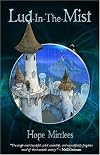
Like many others, I sought this out based on Neil Gaiman's high praise for it. Also like many others, as I began it, I thought it had the feel of Susannah Clarke's wondrous [b: Jonathan Strange and Mr. Norrell|14201|Jonathan Strange & Mr Norrell|Susanna Clarke|https://i.gr-assets.com/images/S/compressed.photo.goodreads.com/books/1357027589l/14201._SY75_.jpg|3921305], which I love. Written in 1926, it perhaps skews a bit old-fashioned in style and tone - but as someone who happily reads most show more anything from Jane Austen on, that shouldn't trouble me, and the vaguely 17th-century-like setting allows for a deliberately archaic flavor. But somehow this just didn't work for me.
One problem was the characters. They have cute, colorful names, but rather colorless personalities - unless invested with some heavy-handed trait like red hair, bright eyes, or catchphrases ("Ho-ho-HOH!"). I was briefly interested in poor Ranulph, who sobs, screams, and goes into hysterics easily, poor child - but then runs away, vanishes into fairyland, then reappears, fully functional and happy-ever-after. Plotting is another problem - people "suddenly remember" things, other people willingly pour out terrible stories of plots and trauma to total strangers, having never talked about them before. Huh? And oh, by the way, this guy turns out to be that guy who knew all about this - fancy that! There's some pleasant world-building of history, traditions, and customs - the silent fair is rather evocative, and for some reason I loved the name of the "Debatable Hills." It just all felt rather carpentered, and not very well. Nothing felt inevitable, incidents seemed more random than organic, and then resolved by the decision to open the gates... and they all lived happily ever after.
I admire Neil Gaiman very much - as a person, a supporter of libraries and other laudable causes, and as a writer (sometimes: I loved [b: Coraline|17061|Coraline|Neil Gaiman|https://i.gr-assets.com/images/S/compressed.photo.goodreads.com/books/1493497435l/17061._SY75_.jpg|2834844], [b: The Ocean at the End of the Lane |15783514|The Ocean at the End of the Lane|Neil Gaiman|https://i.gr-assets.com/images/S/compressed.photo.goodreads.com/books/1497098563l/15783514._SY75_.jpg|21500681], and [b: The Graveyard Book|2213661|The Graveyard Book|Neil Gaiman|https://i.gr-assets.com/images/S/compressed.photo.goodreads.com/books/1531295292l/2213661._SY75_.jpg|2219449]...others, not so much). But somehow his enthusiasms for other writers (like [a: Diana Wynne Jones|4260|Diana Wynne Jones|https://images.gr-assets.com/authors/1597798776p2/4260.jpg] - and I am a thorough-going dog person!) often don't chime with mine. This is one of those times. show less
One problem was the characters. They have cute, colorful names, but rather colorless personalities - unless invested with some heavy-handed trait like red hair, bright eyes, or catchphrases ("Ho-ho-HOH!"). I was briefly interested in poor Ranulph, who sobs, screams, and goes into hysterics easily, poor child - but then runs away, vanishes into fairyland, then reappears, fully functional and happy-ever-after. Plotting is another problem - people "suddenly remember" things, other people willingly pour out terrible stories of plots and trauma to total strangers, having never talked about them before. Huh? And oh, by the way, this guy turns out to be that guy who knew all about this - fancy that! There's some pleasant world-building of history, traditions, and customs - the silent fair is rather evocative, and for some reason I loved the name of the "Debatable Hills." It just all felt rather carpentered, and not very well. Nothing felt inevitable, incidents seemed more random than organic, and then resolved by the decision to open the gates... and they all lived happily ever after.
I admire Neil Gaiman very much - as a person, a supporter of libraries and other laudable causes, and as a writer (sometimes: I loved [b: Coraline|17061|Coraline|Neil Gaiman|https://i.gr-assets.com/images/S/compressed.photo.goodreads.com/books/1493497435l/17061._SY75_.jpg|2834844], [b: The Ocean at the End of the Lane |15783514|The Ocean at the End of the Lane|Neil Gaiman|https://i.gr-assets.com/images/S/compressed.photo.goodreads.com/books/1497098563l/15783514._SY75_.jpg|21500681], and [b: The Graveyard Book|2213661|The Graveyard Book|Neil Gaiman|https://i.gr-assets.com/images/S/compressed.photo.goodreads.com/books/1531295292l/2213661._SY75_.jpg|2219449]...others, not so much). But somehow his enthusiasms for other writers (like [a: Diana Wynne Jones|4260|Diana Wynne Jones|https://images.gr-assets.com/authors/1597798776p2/4260.jpg] - and I am a thorough-going dog person!) often don't chime with mine. This is one of those times. show less
An excellent but little-known fantasy/fairytale for adults, from early twentieth-century British author Hope Mirrlees. This novel is efficient (especially by fantasy standards), well-written (though the edition I read was not at all well-copyedited), engaging, and thoughtful--sometimes in an unsettling way. As it follows its main character through his evolving relationship with the fairy Other, Lud-in-the-Mist thinks about mortality, the nature of reality, and humans' urges toward both the show more mundane and the wilder aspects of our minds and worlds.
A side note: The novel's incidental bits of Orientalism are deeply problematic but fascinating, at least from the perspective of a scholar of twentieth-century British literature and culture. It would be interesting to think more carefully about what Others and Otherness are here, and about the relationship between the vaguely-mentioned racial/geographic Others and, of course, the Fairies. show less
A side note: The novel's incidental bits of Orientalism are deeply problematic but fascinating, at least from the perspective of a scholar of twentieth-century British literature and culture. It would be interesting to think more carefully about what Others and Otherness are here, and about the relationship between the vaguely-mentioned racial/geographic Others and, of course, the Fairies. show less
Lists
Awards

You May Also Like


Associated Authors
Statistics
- Works
- 11
- Also by
- 2
- Members
- 2,417
- Popularity
- #10,602
- Rating
- 3.8
- Reviews
- 70
- ISBNs
- 56
- Languages
- 7
- Favorited
- 10