
Robert Holdstock (1948–2009)
Author of Mythago Wood
About the Author
Image credit: Radioflux, 2004
Series
Works by Robert Holdstock
Tour of the Universe: The Journey of a Lifetime: The Recorded Diaries of Leio Scott and Caroline Luranski (1980) — Author — 60 copies
Berserker SF Gateway Omnibus: The Shadow of the Wolf, The Bull Chief, The Horned Warrior (2014) 2 copies
The Silvering 1 copy
L'occhio dell'eternita 1 copy
The Hexing/The Labyrinth 1 copy
Mythago Wood 1 1 copy
Mythago Wood 2: Lavondyss 1 copy
Infantasm {short story} 1 copy
Mithago Wood 1 copy
Sintels en andere verhalen 1 copy
Sintels en andere verhalen 1 copy
Sintels en andere verhalen 1 copy
Sintels en andere verhalen 1 copy
Sintels en andere verhalen 1 copy
Sintels en andere verhalen 1 copy
Sintels en andere verhalen 1 copy
Ultramondes 1 copy
Associated Works
The Best Fantasy Stories from the Magazine of Fantasy & Science Fiction (1985) — Contributor — 77 copies, 2 reviews
Roads of Destiny: And Other Tales of Alternative Histories and Parallel Realms: 43 (British Library Tales of the Weird) (2023) — Contributor — 33 copies
Tagged
Common Knowledge
- Legal name
- Holdstock, Robert Paul
- Other names
- Holdstock, Robert P.
Holdstock, Rob
Faulcon, Robert
Carlsen, Chris
Kirk, Richard
Black, Robert (show all 8)
Blake, Ken
Eisler, Steven - Birthdate
- 1948-08-02
- Date of death
- 2009-11-29
- Gender
- male
- Education
- University College of North Wales, Bangor (B.Sc. Applied Zoology) (1970)
London School of Hygiene and Tropical Medicine (M.Sc. Medical Zoology) (1971)
Gillingham Grammar School for Boys - Occupations
- banana boatman
construction worker
slate miner
medical researcher
author
editor - Awards and honors
- Guest of Honour, Eastercon, UK (1991)
- Relationships
- Sarah Biggs (partner)
- Cause of death
- infection (E. coli)
- Nationality
- UK
- Birthplace
- Hythe, Kent, England, UK
- Places of residence
- Hythe, Kent, England, UK (birth)
North London, Middlesex, England, UK - Place of death
- London, Middlesex, England, UK
- Map Location
- England, UK
Members
Discussions
Mythago Wood LE in Folio Society Devotees (August 2025)
Sci-Fi Classics Art Book in Name that Book (August 2010)
Reviews
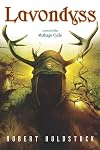
ORIGINALLY POSTED AT Fantasy Literature.
Many times I don't like sequels because there's nothing new to learn. Authors tend to give us all of their world-building in the first novel, so I'm often bored by a sequel. But Lavondyss blew my mind. It is, I have no doubt, one of the best fantasy novels ever written.
In Mythago Wood, Harry Keeton entered the forest with Steven and he's been there for years. We got the sense back then that Harry had some secret personal purpose for going in — it show more wasn't just to help Steven. His sister Tallis remembers him leaving when she was four years old. Her parents are distressed and assume he's dead. When Tallis hears what she believes is a communication from Harry and starts interacting with the wood, her parents think she's gone batty. But Tallis is determined to bring Harry home.
Lavondyss may be the perfect fantasy novel. First of all, it's written in Robert Holdstock's beautiful style. I tend to be picky and demanding about style. A good story will not do it for me if the writing is pedestrian. It doesn't have to be poetic, but it needs to be interesting and creative — not just, as we say, "serviceable." Robert Holdstock's writing style, at least in these novels, is similar to Patricia McKillip's: straightforward, but kind of dreamy, too. To me, it's perfect.
Secondly, Lavondyss made me think. It was complex and convoluted, and I didn't even know how complex it was until I got to the end. At that point I had to go back and re-read several passages so I could try to understand what had happened. It's not that it wasn't related effectively, but rather that Mr. Holdstock does not spoon-feed the reader. He does not divulge everything we want to know when we want to know it. We're given hints and impressions (and maybe even some false information from unreliable characters?) that must be accumulated and assembled. My brain had trouble bringing it all together in the end. What, exactly, is Lavondyss? Why do the mythagos travel there? What drove Harry into the forest? Who is he there? How is he related to the mythagos? How do Mr. Williams and Wynne-Jones fit in? Most importantly: what is the nature of myth, story, and legend, and where do they come from? (There are lots of other questions I could ask, but I'd be giving too much away.) Instead of leaving me frustrated, I am fascinated, and motivated to find the answers.
Lastly, the story made me feel. The characters are endearing and I experienced their joy, pain, hope, and hopelessness. The ending was sad, happy, chilling, shocking, wonderful, and inconclusive. It stayed with me for days.
I am still confused about a lot of stuff that I was hoping would be cleared up, but I'm happily confused. This is a story that requires a re-read in order to appreciate its richness. I've jotted down some notes — stuff I learned in the parts of Lavondyss that I re-read. I will have to go back to Mythago Wood and then read further in the series. I look forward to it and I can't wait to spend more time in, and learn more about, Rhyhope Wood.
See my review for Mythago Wood. show less
Many times I don't like sequels because there's nothing new to learn. Authors tend to give us all of their world-building in the first novel, so I'm often bored by a sequel. But Lavondyss blew my mind. It is, I have no doubt, one of the best fantasy novels ever written.
In Mythago Wood, Harry Keeton entered the forest with Steven and he's been there for years. We got the sense back then that Harry had some secret personal purpose for going in — it show more wasn't just to help Steven. His sister Tallis remembers him leaving when she was four years old. Her parents are distressed and assume he's dead. When Tallis hears what she believes is a communication from Harry and starts interacting with the wood, her parents think she's gone batty. But Tallis is determined to bring Harry home.
Lavondyss may be the perfect fantasy novel. First of all, it's written in Robert Holdstock's beautiful style. I tend to be picky and demanding about style. A good story will not do it for me if the writing is pedestrian. It doesn't have to be poetic, but it needs to be interesting and creative — not just, as we say, "serviceable." Robert Holdstock's writing style, at least in these novels, is similar to Patricia McKillip's: straightforward, but kind of dreamy, too. To me, it's perfect.
Secondly, Lavondyss made me think. It was complex and convoluted, and I didn't even know how complex it was until I got to the end. At that point I had to go back and re-read several passages so I could try to understand what had happened. It's not that it wasn't related effectively, but rather that Mr. Holdstock does not spoon-feed the reader. He does not divulge everything we want to know when we want to know it. We're given hints and impressions (and maybe even some false information from unreliable characters?) that must be accumulated and assembled. My brain had trouble bringing it all together in the end. What, exactly, is Lavondyss? Why do the mythagos travel there? What drove Harry into the forest? Who is he there? How is he related to the mythagos? How do Mr. Williams and Wynne-Jones fit in? Most importantly: what is the nature of myth, story, and legend, and where do they come from? (There are lots of other questions I could ask, but I'd be giving too much away.) Instead of leaving me frustrated, I am fascinated, and motivated to find the answers.
Lastly, the story made me feel. The characters are endearing and I experienced their joy, pain, hope, and hopelessness. The ending was sad, happy, chilling, shocking, wonderful, and inconclusive. It stayed with me for days.
I am still confused about a lot of stuff that I was hoping would be cleared up, but I'm happily confused. This is a story that requires a re-read in order to appreciate its richness. I've jotted down some notes — stuff I learned in the parts of Lavondyss that I re-read. I will have to go back to Mythago Wood and then read further in the series. I look forward to it and I can't wait to spend more time in, and learn more about, Rhyhope Wood.
See my review for Mythago Wood. show less
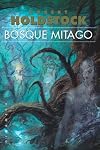
Steven Huxley, poco después de finalizar la Segunda Guerra Mundial, regresa a Refugio del Roble, en Inglaterra, la finca en la que pasó la mayor parte de su vida junto a su hermano Christian, su madre enferma, y su padre, obsesionado con sus investigaciones sobre el cercano Bosque de Ryhope. Ahora, tras la muerte de sus padres, se encontrará con un envejecido y desmejorado Christian, aquejado de la misma obsesión que su padre. Tras investigar en los escritos de este, Steven llegará a la show more conclusión de que algo misterioso se oculta en el bosque, un lugar donde tiempo y espacio se distorsionan.
‘Bosque Mitago’ (Mythago Wood, 1984), del británico Robert Holdstock, es una maravillosa novela, en la que es mejor adentrarse sabiendo lo menos posible, dejándose envolver de su melancólica atmósfera. La historia está muy bien escrita (o traducida), y es una delicia dejarse llevar con cada párrafo. En mi opinión, una joya imprescindible. show less
‘Bosque Mitago’ (Mythago Wood, 1984), del británico Robert Holdstock, es una maravillosa novela, en la que es mejor adentrarse sabiendo lo menos posible, dejándose envolver de su melancólica atmósfera. La historia está muy bien escrita (o traducida), y es una delicia dejarse llevar con cada párrafo. En mi opinión, una joya imprescindible. show less

I first read this book not long after initial publication in 1984, but at that time I didn't really pay it proper attention and skimmed possibly the last two-thirds of the novel. As a result, it didn't really chime with me. Fast forward forty years, though (and having lost Robert Holdstock shockingly early in the interim), I felt I should give it another try. I'm pleased I did.
Steven Huxley and his brother Christian grew up in a house on the edge of Ryhope Wood, deep in rural Herefordshire. show more Their father is convinced that there is something special about the wood; it lies on a conjunction of ley lines and appears to have remarkable properties. Not only does it seem to be a remnant of ancient forest that dates back into prehistory, but the confluence of powers within the wood seize upon elements of ancestral memory in the subconsciousness of anyone who stays in the vicinity of the wood for any time. From those elements of subconscious memory, the wood generates beasts, beings or structures that embody myth itself - 'mythagos'.
Huxley's father's obsession with the mythagos drove his wife to an early grave; and later, himself. When Steven returns from military service in 1946, he finds his brother seemingly going down the same path. Gradually, Huxley begins to encounter mythagos of his own; one of them is a young woman, Guiwenneth, Both his father and Christian had manifested this mythago, and become infatuated with her. Steven does the same, but Christian, who had retreated into the wood to try to find her, returns and kidnaps Guiwenneth, taking her back into the deep wood. Steven, assisted by Harry Keeton, an airman who encountered a similar wild wood in occupied France and who wants answers of his own. Together, they enter Ryhope Wood. But the powers of the wood extend beyond space and time, and their search may have no end...
Starting with a character who believes himself firmly grounded in rationality, the story that unfolds in Mythago Wood soon embraces myth and legend. In the first third of the book, when Steven Huxley is still trying to rationalise what he is beginning to experience, some of the imagery recalls the writing of J.G. Ballard and his explorations of “inner space”; at the same time, I found some of the early descriptions of the mythagos' manifestations genuinely chilling.
Most commentators consider this to be a work of fantasy in the same literary league as Tolkien and others, but with a far more grounded approach to the myths and legends of these isles. Indeed, Holdstock is not above introducing myth figures from our later history, including the Civil War and the First World War. Others have even suggested that it could be categorised (if you must) as science fiction, as long as the science you are referencing is Jungian psychology. Certainly, the main characters approach the question of the nature of Ryhope Wood through reasoning and an application of their own understanding of physical reality, whilst at the same time recognising that the power within the wood transcends that of the material world.
The airman character, Harry Keeton, at first appears to be a supporting character, though as events unfold it turns out that he has his own reasons for wanting to get to the heart of Ryhope Wood. As an injured Second World War airman, whose facial burns suggest that he might have been a patient of the legendary pioneering plastic surgeon, Archibald McIndoe, Keeton himself represents a more modern mythic figure. McIndoe's 'guinea pigs' became legendary in the British post-war ethos, suggesting that the novel's main characters from our world may themselves be mythic figures: the eccentric academic father, the brothers at odds with each other, the heroic wounded airman. These modern mythic figures are ideally placed to explore the myth figures of the deep past.
(It is also interesting to note that Holdstock, like other British sf and fantasy writers of the post-war 'Airfix' generation, such as Brian Aldiss, Christopher Priest and J.G. Ballard, display their interest in aviation quite clearly. When Steven Huxley explores the possibility of making an aerial reconnaissance of Ryhope Wood, it would have been easy for Holdstock to talk about him hiring 'a light aircraft', or a 'single-engined aircraft'. Instead, Holdstock specifies a Percival Proctor, which is historically accurate but quite a superfluous level of detail in what we are supposed to think of as a fantasy novel. This is either Robert Holdstock indulging a personal interest shared with other fans of his era, or an Easter Egg for other aviation fans.)
The setting up of the family history and the description of the setting take up around the first third of the book. There then follows a section where Steven Huxley begins to first encounter, and then begin to understand, mythagos. Only by the third part of the novel do the characters decide to enter the wildwood in pursuit of Guiwenneth. By the time I realised that this meant that we were looking at a fairly standard mythic search quest, I was already heavily invested with the story and continued reading because I wanted to know how it all turned out. But the description of the dense wildwood, where the unwary traveller finds themselves caught in dense thickets of undergrowth, or misdirected by strange paths and powers away from the centre seemed to be a metaphor for the book itself. The further the reader penetrates into the wood, the more involved they become with the story, only later realising that both the wood and the novel are bigger than they seem, and that time may pass differently than in the outside world...
I was pleasantly surprised to see Holdstock referencing the Abbots Bromley Horn Dance as an example of a mythic survival down to the present day, complete with thousand-year-old antler headgear (See: https://robertday154.wordpress.com/2024/09/11/dancing-in-the-streets/). Bearing this in mind, the premise of the novel has a ring of plausibility about it, though on the day that the death was announced of the 1200 year old Major Oak in Sherwood Forest, a tree connected with the myth of Robin Hood, it does make me wonder how much of our native myth can survive our modern age of AI-generated fabulations. As a reminder of the land's ancient mythscape, Mythago Wood has much to recommend it.
My copy has a somewhat puzzling bibliographic background. It is a Gollancz hardcover; searching on its ISBN suggests a publication date of 2007, but the colophon only carries the publication date of 1984. No other editions or impressions are suggested, and the colophon carries a full number line. Yet it also quotes an ISBN-13 number and and gives Orion Books' website address (which never existed in 1984!), the dust jacket carries the words “Winner of the World Fantasy Award” (awarded in 1985) and the “other books by Robert Holdstock” listing in the endpapers includes books published long after that date. All this evidence points towards this actually being a new impression of the first edition, with a new dust jacket and endpaper pages, but no change to the colophon. For collectors, this means that this 2007 book may give the impression that it is a first edition. Whilst an attractive book, proper first editions (which have a different jacket illustration) can sell for £150 or more, whereas this edition appears to command a value of some £35-£45. show less
Steven Huxley and his brother Christian grew up in a house on the edge of Ryhope Wood, deep in rural Herefordshire. show more Their father is convinced that there is something special about the wood; it lies on a conjunction of ley lines and appears to have remarkable properties. Not only does it seem to be a remnant of ancient forest that dates back into prehistory, but the confluence of powers within the wood seize upon elements of ancestral memory in the subconsciousness of anyone who stays in the vicinity of the wood for any time. From those elements of subconscious memory, the wood generates beasts, beings or structures that embody myth itself - 'mythagos'.
Huxley's father's obsession with the mythagos drove his wife to an early grave; and later, himself. When Steven returns from military service in 1946, he finds his brother seemingly going down the same path. Gradually, Huxley begins to encounter mythagos of his own; one of them is a young woman, Guiwenneth, Both his father and Christian had manifested this mythago, and become infatuated with her. Steven does the same, but Christian, who had retreated into the wood to try to find her, returns and kidnaps Guiwenneth, taking her back into the deep wood. Steven, assisted by Harry Keeton, an airman who encountered a similar wild wood in occupied France and who wants answers of his own. Together, they enter Ryhope Wood. But the powers of the wood extend beyond space and time, and their search may have no end...
Starting with a character who believes himself firmly grounded in rationality, the story that unfolds in Mythago Wood soon embraces myth and legend. In the first third of the book, when Steven Huxley is still trying to rationalise what he is beginning to experience, some of the imagery recalls the writing of J.G. Ballard and his explorations of “inner space”; at the same time, I found some of the early descriptions of the mythagos' manifestations genuinely chilling.
Most commentators consider this to be a work of fantasy in the same literary league as Tolkien and others, but with a far more grounded approach to the myths and legends of these isles. Indeed, Holdstock is not above introducing myth figures from our later history, including the Civil War and the First World War. Others have even suggested that it could be categorised (if you must) as science fiction, as long as the science you are referencing is Jungian psychology. Certainly, the main characters approach the question of the nature of Ryhope Wood through reasoning and an application of their own understanding of physical reality, whilst at the same time recognising that the power within the wood transcends that of the material world.
The airman character, Harry Keeton, at first appears to be a supporting character, though as events unfold it turns out that he has his own reasons for wanting to get to the heart of Ryhope Wood. As an injured Second World War airman, whose facial burns suggest that he might have been a patient of the legendary pioneering plastic surgeon, Archibald McIndoe, Keeton himself represents a more modern mythic figure. McIndoe's 'guinea pigs' became legendary in the British post-war ethos, suggesting that the novel's main characters from our world may themselves be mythic figures: the eccentric academic father, the brothers at odds with each other, the heroic wounded airman. These modern mythic figures are ideally placed to explore the myth figures of the deep past.
(It is also interesting to note that Holdstock, like other British sf and fantasy writers of the post-war 'Airfix' generation, such as Brian Aldiss, Christopher Priest and J.G. Ballard, display their interest in aviation quite clearly. When Steven Huxley explores the possibility of making an aerial reconnaissance of Ryhope Wood, it would have been easy for Holdstock to talk about him hiring 'a light aircraft', or a 'single-engined aircraft'. Instead, Holdstock specifies a Percival Proctor, which is historically accurate but quite a superfluous level of detail in what we are supposed to think of as a fantasy novel. This is either Robert Holdstock indulging a personal interest shared with other fans of his era, or an Easter Egg for other aviation fans.)
The setting up of the family history and the description of the setting take up around the first third of the book. There then follows a section where Steven Huxley begins to first encounter, and then begin to understand, mythagos. Only by the third part of the novel do the characters decide to enter the wildwood in pursuit of Guiwenneth. By the time I realised that this meant that we were looking at a fairly standard mythic search quest, I was already heavily invested with the story and continued reading because I wanted to know how it all turned out. But the description of the dense wildwood, where the unwary traveller finds themselves caught in dense thickets of undergrowth, or misdirected by strange paths and powers away from the centre seemed to be a metaphor for the book itself. The further the reader penetrates into the wood, the more involved they become with the story, only later realising that both the wood and the novel are bigger than they seem, and that time may pass differently than in the outside world...
I was pleasantly surprised to see Holdstock referencing the Abbots Bromley Horn Dance as an example of a mythic survival down to the present day, complete with thousand-year-old antler headgear (See: https://robertday154.wordpress.com/2024/09/11/dancing-in-the-streets/). Bearing this in mind, the premise of the novel has a ring of plausibility about it, though on the day that the death was announced of the 1200 year old Major Oak in Sherwood Forest, a tree connected with the myth of Robin Hood, it does make me wonder how much of our native myth can survive our modern age of AI-generated fabulations. As a reminder of the land's ancient mythscape, Mythago Wood has much to recommend it.
My copy has a somewhat puzzling bibliographic background. It is a Gollancz hardcover; searching on its ISBN suggests a publication date of 2007, but the colophon only carries the publication date of 1984. No other editions or impressions are suggested, and the colophon carries a full number line. Yet it also quotes an ISBN-13 number and and gives Orion Books' website address (which never existed in 1984!), the dust jacket carries the words “Winner of the World Fantasy Award” (awarded in 1985) and the “other books by Robert Holdstock” listing in the endpapers includes books published long after that date. All this evidence points towards this actually being a new impression of the first edition, with a new dust jacket and endpaper pages, but no change to the colophon. For collectors, this means that this 2007 book may give the impression that it is a first edition. Whilst an attractive book, proper first editions (which have a different jacket illustration) can sell for £150 or more, whereas this edition appears to command a value of some £35-£45. show less
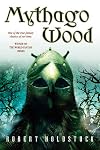
I grew up on the edge of a little wood -- it was mostly ‘young’ growth, to be honest, not anything like the ancient woods in this book -- but I can remembering adventuring through it as a child, and how once you made it past the brush and briars on the edge it receded into this creepy, quiet forest floor littered with old leaves and trillium. I remember a giant boulder that I would go read on, and past the boulder was a giant old felled tree, and once you passed the rise on the other show more side of the valley the floor would change to sticky mud at the lowest points, and there, I can remember thinking that magic had to be real. Mythago Wood maintains that not only is the magic real, but our fairy tales and myths come to flesh and blood life through our collective memory. This was like a much, MUCH darker Bridge to Terabithia in that you cross the threshold, and you're in a different world were magic exists and exerts its influence on your life, and I’m frankly shocked that I hadn’t really run across it before, because it was outstanding. I’m really glad I ran across it, and I know it’s going to leave shockwaves on my memory for quite a while. show less
Lists
Awards


You May Also Like


Associated Authors
Statistics
- Works
- 129
- Also by
- 31
- Members
- 9,438
- Popularity
- #2,542
- Rating
- 3.6
- Reviews
- 198
- ISBNs
- 318
- Languages
- 13
- Favorited
- 34