
Charlotte Armstrong (1905–1969)
Author of A Dram of Poison
About the Author
Series
Works by Charlotte Armstrong
Three Day Magic 2 copies
Hvem er bange for ulven 1 copy
VENENO! 1 copy
De ikke mistænkte 1 copy
two short novels of suspense 1 copy
Univaeltaja 1 copy
Svartögd främling 1 copy
Claude Chabrol: Süßes Gift 1 copy
And Already Lost... 1 copy
The Enemy [short story] 1 copy
Hitchcock esittää 1 copy
The Protégé 1 copy
Associated Works
A Moment on the Edge : 100 Years of Crime Stories by Women (2002) — Contributor — 295 copies, 6 reviews
Troubled Daughters, Twisted Wives: Stories from the Trailblazers of Domestic Suspense (2013) — Contributor — 186 copies, 11 reviews
Isaac Asimov's Magical Worlds of Fantasy, Volume 7: Magical Wishes (1891) — Contributor — 96 copies, 1 review
Women Crime Writers: Eight Suspense Novels of the 1940s and 1950s (2015) — Contributor; Contributor — 73 copies
The Web She Weaves: An Anthology of Mystery and Suspense Stories by Women (1983) — Contributor — 60 copies, 2 reviews
Simply the Best Mysteries: Edgar Award Winners and Front-Runners (1998) — Contributor — 46 copies, 1 review
Het Beste Boek 68: De wilde gans / Kamer 807 / De Camerons / Zijner majesteits U-boot — Author — 3 copies, 1 review
Reader's Digest Condensed Books: Run Silent, Run Deep / The Dollmaker / Crusader's Tomb / Hunter / Mischief (1955) — Contributor — 2 copies
Lay On, MacDuff! / Man of Brittany / H as in Hunted / Death Rides a Sorrel Horse — Contributor — 1 copy
Tagged
Common Knowledge
- Legal name
- Lewi, Charlotte Armstrong
- Other names
- Valentine, Jo (pen name)
- Birthdate
- 1905-05-02
- Date of death
- 1969-07-18
- Gender
- female
- Education
- Barnard College (BA|1925)
University of Wisconsin
Vulcan High School - Occupations
- playwright
poet
novelist
mystery writer - Short biography
- Charlotte Armstrong Lewi was an American author. Under the names Charlotte Armstrong and Jo Valentine, she wrote more than 28 novels. She also worked for The New York Times advertising department, and as a fashion reporter for Breath of the Avenue (a buyer's guide), and in an accounting firm. She attended the University of Wisconsin-Madison and received a Bachelor of Arts degree from Barnard College in 1925. She had a daughter and two sons with her husband, Jack Lewi.
- Nationality
- USA
- Birthplace
- Vulcan, Michigan, USA
- Places of residence
- Vulcan, Michigan, USA
New York, New York, USA
Madison, Wisconsin, USA
Glendale, California, USA - Place of death
- Glendale, California, USA
- Associated Place (for map)
- USA
Members
Reviews
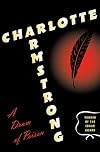
One chapter in, and I was already dreading the rest of the book, with the setup of the main character and their access to Chekov's Gun, if you will, leading me to believe I already knew where all of this was going. The weapon of choice is in the title of the novel, after all.
Or is it?
I'm glad I ignored my instincts and forged ahead, for A Dram of Poison turns out to be so much more than the dry whodunit it's false start implies, and instead evolves into a bizarre existential road movie, a show more strange cross between Agatha Christie and It's a Mad, Mad, Mad, Mad World. I won't even discuss the plot out of fear of spoiling... not any obscure plot twist, but the slow revelation of personalities and situations that completely endear every eclectic character that jumps on as the story barrels towards the inevitable conclusion.
This is a book with feels, and it earns your trust as it entertains. For the life of me, I can't understand how this has not been adapted to the screen yet. As far as I can tell, Charlotte Armstrong has had many works adapted to film and television, but the best A Dram of Poison was an episode of an old Playhouse episode most likely lost to time. Seriously, if you enjoy caring about the characters you read, and don't mind some philosophical soul-searching mixed in with your mystery, you can't pass this one up. show less
Or is it?
I'm glad I ignored my instincts and forged ahead, for A Dram of Poison turns out to be so much more than the dry whodunit it's false start implies, and instead evolves into a bizarre existential road movie, a show more strange cross between Agatha Christie and It's a Mad, Mad, Mad, Mad World. I won't even discuss the plot out of fear of spoiling... not any obscure plot twist, but the slow revelation of personalities and situations that completely endear every eclectic character that jumps on as the story barrels towards the inevitable conclusion.
This is a book with feels, and it earns your trust as it entertains. For the life of me, I can't understand how this has not been adapted to the screen yet. As far as I can tell, Charlotte Armstrong has had many works adapted to film and television, but the best A Dram of Poison was an episode of an old Playhouse episode most likely lost to time. Seriously, if you enjoy caring about the characters you read, and don't mind some philosophical soul-searching mixed in with your mystery, you can't pass this one up. show less
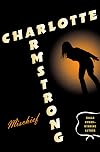
This is pretty good suspense tale is awash in 1940’s sensibilities. It is not any period description that nails the time and place but instead the presentation of the hearts and minds of the characters. They are as trapped in their time and mindset as they are in the hotel where much of the story takes place. Every time I thought this story was just a light entertainment, the story lived up to the title Mischief and surprised me. They were not cheap surprises like a squirrel popping out of show more a cake but surprises derived from the characters strengths and weaknesses—allowing for a slow ratcheting of suspense a click at a time. The stakes seem modest but all the more credit for drawing the reader in. Liked the ending just as much as the rest—a marvelous ambivalence. Looking forward to seeing what else I can find by the author. show less
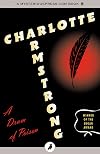
A Dram Of Poison' wasn't at all the book that I'd expected it to be. To some extent, that's because the publisher's summary seems to have been written by somebody who hasn't read the book. Mostly, though, it was because this is quite an unusual book in terms of both style and content.
'A Dram Of Poison' started like The Great American Novel rather than a crime novella Kenneth Gibson's life is evoked with skill and a modicum of lyricism in just a few pages, so that I knew who he is at show more fifty-five and who he would probably have continued to be had he not met a young woman, (well, a thirty-eight-year-old woman) at her father's funeral. I was impressed, intrigued and surprised.
The surprise was mostly atthe storytelling style, which had an odd distance to it that felt accurate without being intimate and insightful without being empathic. To me, it felt like the kind of account that I'd have expected fifty years earlier from Wharton or James. I admired the delicacy with which Armstrong captured Gibson's shifting moods and emotions and startling moments of reassessement with the dispassionate accuracy of someone recording the results of an experiment.
Intially, Gibson seemed like a nice guy: habitually kind, driven by a mixture of duty and the desire to have a quiet but respectable place in the world. I was taken by surprise when his kindness to Rosemary translated itself into a proposal of marriage. I started to think less well of him when I saw how the marriage was turning out. It seemed to me that he treated his wife like a dog he'd rescued from the pound and nursed back to health. There was no malice in it but there seemed to be no understanding either. I had to remind myself that he was born in 1900, had lived alone for decades and had almost no experience of women.
Then, disaster struck and everything changed. Gibson's sister, Ethel, a dominant and rigidly organised woman, joined the married couple's newly-formed household, to help cope with the consequences of the disaster. That's when Gibson's descent into unhappiness started.
Like Gibson himself, the prose describing these events kept emotions at arms length, denying them a voice, while letting the reader's imagination see clearly how circumstances have changed, dreams have been lost and bleak futures have been ushered in.
I hadn't liked Gibson much when he was in rescue mode. Now I felt sorry for him as he started to see himself becoming an old cripple, leading a life he didn't choose and harbouring resentments he could not voice.
I found the second quarter of the book hard-going. Ethel's worldview was, probably unintentionally, poisonous. Gibson's depression was so deep that it was hard to watch. Gibson, Rosemary and Ethel began to seem doomed, in undramatic, mundane ways that would slowly bleed them of life. The book's central argument at this point seemed to be about what it meant to see the world clearly and whether seeing altruism in others as real was a failure to understand human nature. The writing was excellent but the ideas leached hope and happiness out of the world. I was almost as ready to give up on the book as Gibson was to give up on himself.
The second half of the book left me dazed. Suddenly, I went from a doom-laden, oppressive, tough to read book to a novelisation of a Bernard Shaw type of play of ideas, filled to the brim with optimism, wit, friendship and a determination to overcome adversity. I felt like I'd moved from Hitchcock's 'Rope' to Capra's 'It's A Wonderful Life' in the blink of an eye. The first half of the book took me days to slog through. The second half I consumed eagerly in an afternoon.
I liked the second half much better but it was such a surprise, it took me a while to adjust to what was happening.
My only previous exposure to Armstrong's work was with 'Mischief' (1950) which was an excellent hard-boiled thriller. If I'd gone into 'A Dram Of Poison' thinking of it as a book of ideas rather than a Golden Age Mystery I'd probably have enjoyed the novella more. As it was, I struggled with it. show less
'A Dram Of Poison' started like The Great American Novel rather than a crime novella Kenneth Gibson's life is evoked with skill and a modicum of lyricism in just a few pages, so that I knew who he is at show more fifty-five and who he would probably have continued to be had he not met a young woman, (well, a thirty-eight-year-old woman) at her father's funeral. I was impressed, intrigued and surprised.
The surprise was mostly atthe storytelling style, which had an odd distance to it that felt accurate without being intimate and insightful without being empathic. To me, it felt like the kind of account that I'd have expected fifty years earlier from Wharton or James. I admired the delicacy with which Armstrong captured Gibson's shifting moods and emotions and startling moments of reassessement with the dispassionate accuracy of someone recording the results of an experiment.
Intially, Gibson seemed like a nice guy: habitually kind, driven by a mixture of duty and the desire to have a quiet but respectable place in the world. I was taken by surprise when his kindness to Rosemary translated itself into a proposal of marriage. I started to think less well of him when I saw how the marriage was turning out. It seemed to me that he treated his wife like a dog he'd rescued from the pound and nursed back to health. There was no malice in it but there seemed to be no understanding either. I had to remind myself that he was born in 1900, had lived alone for decades and had almost no experience of women.
Then, disaster struck and everything changed. Gibson's sister, Ethel, a dominant and rigidly organised woman, joined the married couple's newly-formed household, to help cope with the consequences of the disaster. That's when Gibson's descent into unhappiness started.
Like Gibson himself, the prose describing these events kept emotions at arms length, denying them a voice, while letting the reader's imagination see clearly how circumstances have changed, dreams have been lost and bleak futures have been ushered in.
I hadn't liked Gibson much when he was in rescue mode. Now I felt sorry for him as he started to see himself becoming an old cripple, leading a life he didn't choose and harbouring resentments he could not voice.
I found the second quarter of the book hard-going. Ethel's worldview was, probably unintentionally, poisonous. Gibson's depression was so deep that it was hard to watch. Gibson, Rosemary and Ethel began to seem doomed, in undramatic, mundane ways that would slowly bleed them of life. The book's central argument at this point seemed to be about what it meant to see the world clearly and whether seeing altruism in others as real was a failure to understand human nature. The writing was excellent but the ideas leached hope and happiness out of the world. I was almost as ready to give up on the book as Gibson was to give up on himself.
The second half of the book left me dazed. Suddenly, I went from a doom-laden, oppressive, tough to read book to a novelisation of a Bernard Shaw type of play of ideas, filled to the brim with optimism, wit, friendship and a determination to overcome adversity. I felt like I'd moved from Hitchcock's 'Rope' to Capra's 'It's A Wonderful Life' in the blink of an eye. The first half of the book took me days to slog through. The second half I consumed eagerly in an afternoon.
I liked the second half much better but it was such a surprise, it took me a while to adjust to what was happening.
My only previous exposure to Armstrong's work was with 'Mischief' (1950) which was an excellent hard-boiled thriller. If I'd gone into 'A Dram Of Poison' thinking of it as a book of ideas rather than a Golden Age Mystery I'd probably have enjoyed the novella more. As it was, I struggled with it. show less

An early psychological thriller that turns innocence on its head. It was good; reasonably gripping and well-paced, but it suffers for how many times this theme got used after it was published; evil babysitter.
Spoilers.
Modern readers will feel a tingle of dread as Peter and Ruth Jones go out for an evening, leaving their daughter in the care of Nell, the hotel elevator operator’s niece. Nell seems a little off, even to them, but in such a meek and mild manner we know she will go off the show more rails in a spectacular way. Ruth is slightly apprehensive, feminine intuition, mother’s instinct, whatever it is, Armstrong doesn’t belittle it even if Ruth as a character chides herself for being flighty.
And boy does she come unhinged. Her unmasking is done quite well. Not exactly subtle, but eerie and with a quality of the unknown; what is she capable of? Uncle Eddie muses about her having to come to live with him and his wife after an incident, leaving the reader to wonder what she’s done and why she’s been “sent away”.
More characters are introduced and for a time it’s unclear how Armstrong will inject them into the story. Lyn and Jed are going on a date. They have a fight and both flounce off into the night; Jed to his hotel (the very same one the Joneses are at) and Lyn to home. While sulking that he would have a date that night if it kills him (careful what you wish for), Jed sees Nell in room 807 from across the courtyard. After some pantomime he goes over with a flask and what starts out as a semi-illicit flirtation turns weird fast.
Nell has gone through all the Joneses stuff and put on Ruth’s jewelry, clothes, shoes and spilled her perfume. It's creepy in the extreme. She’s in high flirt mode with a touch of hilarity when Bunny appears; her charge. Jed is floored. With escalating menace Nell manages to get Bunny back into bed, but Jed is trapped and it’s going to get worse.
I won’t go into much more detail, but the way things go isn’t too much of a surprise. Nell is devious, violent and insane. Jed is scheming, cowardly, but wants to be a hero. Bunny catches the attention of more people in the hotel than is good for Nell’s scheme. People come knocking. Ruth and Peter are trying to have a good time, but Ruth’s inner warning system keeps rattling her and eventually she comes back to the hotel early. Shit really hits the fan.
Some of the side plots and inner monologues, especially Jed’s, get a little much at times. He talks to himself over and over about being the hero or taking a stand, but he never does. I did like the fight at the end though. Unexpected. Overall it’s a worthy book, but as I said, the basic plot has been copied a lot so it lacks the punch it must have had in 1950. show less
Spoilers.
Modern readers will feel a tingle of dread as Peter and Ruth Jones go out for an evening, leaving their daughter in the care of Nell, the hotel elevator operator’s niece. Nell seems a little off, even to them, but in such a meek and mild manner we know she will go off the show more rails in a spectacular way. Ruth is slightly apprehensive, feminine intuition, mother’s instinct, whatever it is, Armstrong doesn’t belittle it even if Ruth as a character chides herself for being flighty.
And boy does she come unhinged. Her unmasking is done quite well. Not exactly subtle, but eerie and with a quality of the unknown; what is she capable of? Uncle Eddie muses about her having to come to live with him and his wife after an incident, leaving the reader to wonder what she’s done and why she’s been “sent away”.
More characters are introduced and for a time it’s unclear how Armstrong will inject them into the story. Lyn and Jed are going on a date. They have a fight and both flounce off into the night; Jed to his hotel (the very same one the Joneses are at) and Lyn to home. While sulking that he would have a date that night if it kills him (careful what you wish for), Jed sees Nell in room 807 from across the courtyard. After some pantomime he goes over with a flask and what starts out as a semi-illicit flirtation turns weird fast.
Nell has gone through all the Joneses stuff and put on Ruth’s jewelry, clothes, shoes and spilled her perfume. It's creepy in the extreme. She’s in high flirt mode with a touch of hilarity when Bunny appears; her charge. Jed is floored. With escalating menace Nell manages to get Bunny back into bed, but Jed is trapped and it’s going to get worse.
I won’t go into much more detail, but the way things go isn’t too much of a surprise. Nell is devious, violent and insane. Jed is scheming, cowardly, but wants to be a hero. Bunny catches the attention of more people in the hotel than is good for Nell’s scheme. People come knocking. Ruth and Peter are trying to have a good time, but Ruth’s inner warning system keeps rattling her and eventually she comes back to the hotel early. Shit really hits the fan.
Some of the side plots and inner monologues, especially Jed’s, get a little much at times. He talks to himself over and over about being the hero or taking a stand, but he never does. I did like the fight at the end though. Unexpected. Overall it’s a worthy book, but as I said, the basic plot has been copied a lot so it lacks the punch it must have had in 1950. show less
Lists
Edgar Award (1)
Awards


You May Also Like


Associated Authors
Statistics
- Works
- 70
- Also by
- 54
- Members
- 2,102
- Popularity
- #12,245
- Rating
- 3.6
- Reviews
- 43
- ISBNs
- 186
- Languages
- 7
- Favorited
- 3