
John Ridley (1) (1965–)
Author of 12 Years a Slave [2013 film]
For other authors named John Ridley, see the disambiguation page.
About the Author
Image credit: John Ridley (1)
Series
Works by John Ridley
Action Comics (2016-) #1082 3 copies
Black Panther (2021-) #15 2 copies
Black Panther (2021-) #14 2 copies
Absolute Power: Origins 2 2 copies
Absolute Power: Origins 1 2 copies
Action Comics (2016-) #1083 2 copies
Absolute Power: Origins 3 2 copies
Batman Black & White #3 (2020- ) — Contributor — 1 copy
Ministry of Compliance #1 1 copy
Associated Works
Tagged
Common Knowledge
- Canonical name
- Ridley, John
- Legal name
- Ridley IV, John
- Birthdate
- 1965-10-01
- Gender
- male
- Occupations
- film director
screenwriter
novelist
graphic novelist - Awards and honors
- Academy Award (Best Screenplay, 2014, 12 Years a Slave)
- Nationality
- USA
- Birthplace
- Milwaukee, Wisconsin, USA
- Associated Place (for map)
- Wisconsin, USA
Members
Reviews

After the long, meandering, dull narratives of Ta-Nehisi Coates's run, this volume felt like a return to form for Black Panther. Coates never figured out how to integrate story, character, themes, and action; in his work, you had long boring scenes of dialogue alternating with long boring scenes of action. I don't think I've ever previously read a comic written by John Ridley, but he clearly knows how to write a comic book, and how to do so in a highly effective way, to boot.
The basic show more premise here is that T'Challa had sleeper agents in other countries, living seemingly normal lives, but ready to be activated if the need came up—known only to him. Except, all of a sudden, they are being killed off... so he must spring into action to defend them, while making sure no one knows of yet another long-laid plan founded on a lack of trust. Ridley's characterization of T'Challa definitely owes a lot to Christopher Priest's; this is the master plate spinner, except this time the plates are crashing down.
The story isn't quite complete here; League of Comic Geeks tells me The Long Shadow ran eight issues, and this volume weirdly collects just five. So one doesn't know how it will all play out. But I liked almost everything here: the sense that for once T'Challa is on the back foot is well done, the action is strong (Juann Cabal is probably the best regular Black Panther artist in a long while), and the character interactions are sharp and interesting. If Ridley's subsequent volumes maintain this level of quality, this will be an all-time great Black Panther run.
Issue #3 was a special double-length issue, celebrating Black Panther's 200th issue; it came with two bonus stories. (Weirdly, the collection sticks them in the middle by publication order, interrupting the ongoing story; it would surely have made much more sense to put them at the end!) One, "The Wakandan" by John Ridley and Germán Peralta gives a backstory for a new character, Tosin, an angsty resident of Wakanda's "mute zones" with vibranium superpowers. Meh. The other is a tale of T'Challa being eaten by the panther god to go on a mystical quest; I really enjoyed the unique writing and art of Juni Ba. show less
The basic show more premise here is that T'Challa had sleeper agents in other countries, living seemingly normal lives, but ready to be activated if the need came up—known only to him. Except, all of a sudden, they are being killed off... so he must spring into action to defend them, while making sure no one knows of yet another long-laid plan founded on a lack of trust. Ridley's characterization of T'Challa definitely owes a lot to Christopher Priest's; this is the master plate spinner, except this time the plates are crashing down.
The story isn't quite complete here; League of Comic Geeks tells me The Long Shadow ran eight issues, and this volume weirdly collects just five. So one doesn't know how it will all play out. But I liked almost everything here: the sense that for once T'Challa is on the back foot is well done, the action is strong (Juann Cabal is probably the best regular Black Panther artist in a long while), and the character interactions are sharp and interesting. If Ridley's subsequent volumes maintain this level of quality, this will be an all-time great Black Panther run.
Issue #3 was a special double-length issue, celebrating Black Panther's 200th issue; it came with two bonus stories. (Weirdly, the collection sticks them in the middle by publication order, interrupting the ongoing story; it would surely have made much more sense to put them at the end!) One, "The Wakandan" by John Ridley and Germán Peralta gives a backstory for a new character, Tosin, an angsty resident of Wakanda's "mute zones" with vibranium superpowers. Meh. The other is a tale of T'Challa being eaten by the panther god to go on a mystical quest; I really enjoyed the unique writing and art of Juni Ba. show less
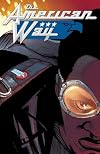
Everyone thinks The Watchmen or The Dark Knight Returns are subversive deconstructions of the superhero genre. Frankly, neither holds a candle to John Ridley's masterful approach to setting golden and now silver-age characters in a world that isn't colourblind. Stunning stuff, both for how topical it is in an era of racist pushback but also for how it inevitably calls out how comics are rarely ever "woke" in any meaningful sense.

While I enjoyed the set-up of volume 1 of John Ridley's Black Panther a lot, I found what was done with that set-up in volume 2 pretty awful, to be honest. The third and final volume is better than volume 2, thankfully... but as it's a direct continuation, it's hard to move past how heavy-handed some of the plot turns in volume 2 were, as the story of volume 3 directly depends on them.
This volume opens with Black Panther operating as chairman of the Avengers, still no longer welcome in show more Wakanda. The world's Internet infrastructure is taken over, and when T'Challa goes to investigate, it turns out that it's one of his own people who's done it, the very friend whose death kicked the whole thing off in volume 1 . His enemy has the power to neutralize the Avengers, so T'Challa must take him down on his own with his own allies.
It's fine. Some of the twists are good, some are heavy-handed; some moments feel earned, some do not. I think overall, Ridley's run had the core of a good idea, an interrogation of the extend to which T'Challa was willing to go to protect Wakanda, but it wasn't done in a good way, because far too many characters judge T'Challa by a weird standard of ethics. One of the best parts of Priest's run (with which Ridley's is very obviously in dialogue) was how it treated Black Panther a king, not a superhero—what would a superpowered king do in a world of superpowers? how would he act to protect his nation and its interests? Ridley's run wonders if there might be ways in which T'Challa thus might go too far... but it doesn't do this interestingly, because everyone judges T'Challa for his choices right away without considering the rationale or consequences of them. To say what T'Challa does is bad because it's not what other superheroes do is a really boring way to criticize T'Challa. At his best, T'Challa was a square peg in a round hole, but instead of exploring how that lack of fit plays out, Ridley's run just asserts he ought to have been a round peg all along. Why do I need to read a fifteen-issue run devoted to telling me the character I'm reading is bad? It's cynical and uninteresting, and I'm worried this all leaves the character in a bad place for future stories as well. show less
This volume opens with Black Panther operating as chairman of the Avengers, still no longer welcome in show more Wakanda. The world's Internet infrastructure is taken over, and when T'Challa goes to investigate, it turns out that it's one of his own people who's done it
It's fine. Some of the twists are good, some are heavy-handed; some moments feel earned, some do not. I think overall, Ridley's run had the core of a good idea, an interrogation of the extend to which T'Challa was willing to go to protect Wakanda, but it wasn't done in a good way, because far too many characters judge T'Challa by a weird standard of ethics. One of the best parts of Priest's run (with which Ridley's is very obviously in dialogue) was how it treated Black Panther a king, not a superhero—what would a superpowered king do in a world of superpowers? how would he act to protect his nation and its interests? Ridley's run wonders if there might be ways in which T'Challa thus might go too far... but it doesn't do this interestingly, because everyone judges T'Challa for his choices right away without considering the rationale or consequences of them. To say what T'Challa does is bad because it's not what other superheroes do is a really boring way to criticize T'Challa. At his best, T'Challa was a square peg in a round hole, but instead of exploring how that lack of fit plays out, Ridley's run just asserts he ought to have been a round peg all along. Why do I need to read a fifteen-issue run devoted to telling me the character I'm reading is bad? It's cynical and uninteresting, and I'm worried this all leaves the character in a bad place for future stories as well. show less
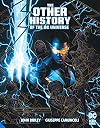
I love the mission statement -- a look at the history of the DC universe from the perspective of heroes from marginalized groups -- but I am wholly underwhelmed with the execution.
First, this is a graphic novel that is told entirely in typeset text: no word balloons or sound effects, just long, long columns and big blocks of words. And the words are so dull, droning on like high school book reports, with the books in question being mostly the various iterations of the Outsiders franchise, show more with and without "Batman and . . . " in front of it. We are put into the heads of six different characters, but instead of an emotional journey, we mostly get their summaries of events, more like a daily planner than a diary even. Ridley does some subversion and upending of the original comics, but most are so old and obscure that even a DC nerd like me hasn't read them all. And without any context, my eyes frequently glazed over at the endless recaps and abrupt and-then-this-happened, and-then-this-happened, and-then-this-happened level segues. It took me an hour each to read the five chapters collected, and I found myself avoiding the book entirely for a day or two in the middle of the weeklong marathon of reading it.
It doesn't help that Ridley has a warts-and-all, downbeat take on most of his narrators. Black Lightning gets ripped up the most, coming off as an angry, arrogant asshole. Mal Duncan comes off little better, but at least has Bumblebee there to offset his dreary and perhaps delusional voice. The chapters with Katana and Renee Montoya are super depressing. Anissa "Thunder" Pierce does some heavy lifting in her chapter to save the book, but it is too little too late by then.
The art is equally dull, by the way, as it's an illustrated book, not sequential storytelling. Each page has one image or three to four panels of art trying to stay out of the way of the text. It's all character studies or isolated representational moments or direct homages. An Italian artist roughly mimics the DC house style for the decades from the 1960 to 2010s, and I'm sorry, but you're in trouble when you are most comfortable aping Jim Aparo.
Yet another DC Black Label disappointment. They really need to reassess this imprint. show less
First, this is a graphic novel that is told entirely in typeset text: no word balloons or sound effects, just long, long columns and big blocks of words. And the words are so dull, droning on like high school book reports, with the books in question being mostly the various iterations of the Outsiders franchise, show more with and without "Batman and . . . " in front of it. We are put into the heads of six different characters, but instead of an emotional journey, we mostly get their summaries of events, more like a daily planner than a diary even. Ridley does some subversion and upending of the original comics, but most are so old and obscure that even a DC nerd like me hasn't read them all. And without any context, my eyes frequently glazed over at the endless recaps and abrupt and-then-this-happened, and-then-this-happened, and-then-this-happened level segues. It took me an hour each to read the five chapters collected, and I found myself avoiding the book entirely for a day or two in the middle of the weeklong marathon of reading it.
It doesn't help that Ridley has a warts-and-all, downbeat take on most of his narrators. Black Lightning gets ripped up the most, coming off as an angry, arrogant asshole. Mal Duncan comes off little better, but at least has Bumblebee there to offset his dreary and perhaps delusional voice. The chapters with Katana and Renee Montoya are super depressing. Anissa "Thunder" Pierce does some heavy lifting in her chapter to save the book, but it is too little too late by then.
The art is equally dull, by the way, as it's an illustrated book, not sequential storytelling. Each page has one image or three to four panels of art trying to stay out of the way of the text. It's all character studies or isolated representational moments or direct homages. An Italian artist roughly mimics the DC house style for the decades from the 1960 to 2010s, and I'm sorry, but you're in trouble when you are most comfortable aping Jim Aparo.
Yet another DC Black Label disappointment. They really need to reassess this imprint. show less
Lists
Awards


You May Also Like


Associated Authors
Statistics
- Works
- 105
- Also by
- 2
- Members
- 2,042
- Popularity
- #12,591
- Rating
- 3.4
- Reviews
- 49
- ISBNs
- 158
- Languages
- 6
- Favorited
- 1