
Bernard Hamilton
Author of Religion in the Medieval West (Arnold Publication)
About the Author
Bernard Hamilton is Professor Emeritus of Crusading History at the University of Nottingham.
Works by Bernard Hamilton
The Leper King and his Heirs: Baldwin IV and the Crusader Kingdom of Jerusalem (2000) 61 copies, 1 review
Coronation 1 copy
Regele lepros și urmașii săi 1 copy
Associated Works
The New Cambridge Medieval History: Volume 4, c.1024-c.1198, Part 1 (2004) — Contributor — 75 copies, 1 review
Porphyrogenita: Essays on the History and Literature of Byzantium and the Latin East in Honour of Julian Chrysostomides (2003) — Contributor — 1 copy
Tagged
Common Knowledge
Members
Reviews
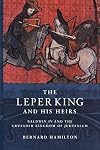
If you're thinking of reading this book then that is really all the information you need to influence your choice.
This book tells just about everything there is to know about Baldwin and the world he lived in and is wonderful with its citations. It would have been a 5 star review had the text been a little less dry. It wasn't so staunchly academic that it was impossible to read cover to cover but it is most certainly concerned with being as academic as possible.
If you're looking for a show more quicker overview of Baldwin's life and times or if you'd rather read something written with less concern towards being academic then Payne's The Dream and the Tomb is a better bet. If Baldwin is someone important to you (or to your academic research at which point the citations will be your friend) then this one is going to suit you well. show less
This book tells just about everything there is to know about Baldwin and the world he lived in and is wonderful with its citations. It would have been a 5 star review had the text been a little less dry. It wasn't so staunchly academic that it was impossible to read cover to cover but it is most certainly concerned with being as academic as possible.
If you're looking for a show more quicker overview of Baldwin's life and times or if you'd rather read something written with less concern towards being academic then Payne's The Dream and the Tomb is a better bet. If Baldwin is someone important to you (or to your academic research at which point the citations will be your friend) then this one is going to suit you well. show less
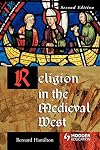
RELIGION IN THE MEDIEVAL WEST
Western European civilization evolved during the medieval
centuries when the whole area was converted to Christianity
in its Latin Catholic form. This account is an introduction to
the religious life of that formative period, but is concerned less
with the history of the institutional Church than with the
interaction between that Church and lay society. It is essential
to know about medieval religion in order to understand
medieval society at all, because almost show more everyone then accepted
a religious explanation of the world in which they lived,
although the extent to which they practised their faith varied
considerably. This book is designed to help people who are
interested in the Middle Ages, but who may have little or no
knowledge of Christianity, to understand the role of the dominant
religion, Latin Catholicism, in the life of society and of the
individual. Attention is also given to the growth of a dissenting
tradition, as well as to medieval Christian attitudes to the
other great world religions.
This new edition of Religion in the Medieval West has been
updated throughout, and reorganized for ease of use. New
isual evidence has been provided and a glossary of technical
terms included.
Bernard Hamilton is Professor Emeritus of Crusading
History at the University of Nottingham. show less
Western European civilization evolved during the medieval
centuries when the whole area was converted to Christianity
in its Latin Catholic form. This account is an introduction to
the religious life of that formative period, but is concerned less
with the history of the institutional Church than with the
interaction between that Church and lay society. It is essential
to know about medieval religion in order to understand
medieval society at all, because almost show more everyone then accepted
a religious explanation of the world in which they lived,
although the extent to which they practised their faith varied
considerably. This book is designed to help people who are
interested in the Middle Ages, but who may have little or no
knowledge of Christianity, to understand the role of the dominant
religion, Latin Catholicism, in the life of society and of the
individual. Attention is also given to the growth of a dissenting
tradition, as well as to medieval Christian attitudes to the
other great world religions.
This new edition of Religion in the Medieval West has been
updated throughout, and reorganized for ease of use. New
isual evidence has been provided and a glossary of technical
terms included.
Bernard Hamilton is Professor Emeritus of Crusading
History at the University of Nottingham. show less
Apr 19, 2024Spanish

THE MEDIEVAL INQUISITION
FOUNDATIONS OF MEDIEVAL HISTORY
General Editor M. T Clanchy
Any discussion of the controversial subject of heresy and its prosecu
tion by the Inquisition is fraught with problems. How is heresy to be
defined? Was it different from religious doubt or anti-clericalism? Why
did heresy increase and what rules governed the inquisitors, making
them different from other enforcers of orthodoxy? In tracing the evolu-
tion of the Inquisition in the centuries before the Reformation,
Dr. show more Hamilton shows that the inquisitors intended to convert heretics
through spiritual penances rather than to burn or torture them
indiscriminately as lay society often demanded. Nevertheless, the
Inquisition, founded by the papacy at the height of its power in the
first half of the thirteenth century, was, despite its high religious
purpose, responsible for a great deal of inhumanity. In later centuries
indeed, it was sometimes subverted to serve the ends of secular rulers:
Philip IV's cynical use of it to destroy the Knights Templar, the élit
of crusading chivalry, is an indication of how far the Inquisition had
become, in much of Western Europe, an established part of the
of government.
The Protestant Reformation broke with much of the medieval past
but not with the fundamental aim of the Inquisition-religious con-
formity. The Protestants, too, like their Catholic contemporaries
accepted coercion as a means to this end.
The author: Dr. Bernard Hamilton is a Senior Lecturer in History
at the University of Nottingham. His most recent publications are
Monastic Reform, Catharism and the Crusades (900 -1300) (London
1979) and The Latin Church in the Crusader States: The Secular Church
London, 1980).
Cover: St. Peter Martyr disputing with heretics, from the fresco of
The Church Militant and Triumphant' by Andrea Bonaiuti in the
Spanish Chapel of the Dominican convent of Sta Maria Novella,
Florence. Peter Martyr, papal inquisitor in Lombardy, was
ssassinated by Cathar supporters in 1252, thus supplying the
Inquisition with its first canonized saint. The dogs shown here rend-
ing the wolf of heresy in defence of the sheep (the faithful believers)
on a pun: The Domini canes are the hounds of the Lord, and also
the Dominicans show less
FOUNDATIONS OF MEDIEVAL HISTORY
General Editor M. T Clanchy
Any discussion of the controversial subject of heresy and its prosecu
tion by the Inquisition is fraught with problems. How is heresy to be
defined? Was it different from religious doubt or anti-clericalism? Why
did heresy increase and what rules governed the inquisitors, making
them different from other enforcers of orthodoxy? In tracing the evolu-
tion of the Inquisition in the centuries before the Reformation,
Dr. show more Hamilton shows that the inquisitors intended to convert heretics
through spiritual penances rather than to burn or torture them
indiscriminately as lay society often demanded. Nevertheless, the
Inquisition, founded by the papacy at the height of its power in the
first half of the thirteenth century, was, despite its high religious
purpose, responsible for a great deal of inhumanity. In later centuries
indeed, it was sometimes subverted to serve the ends of secular rulers:
Philip IV's cynical use of it to destroy the Knights Templar, the élit
of crusading chivalry, is an indication of how far the Inquisition had
become, in much of Western Europe, an established part of the
of government.
The Protestant Reformation broke with much of the medieval past
but not with the fundamental aim of the Inquisition-religious con-
formity. The Protestants, too, like their Catholic contemporaries
accepted coercion as a means to this end.
The author: Dr. Bernard Hamilton is a Senior Lecturer in History
at the University of Nottingham. His most recent publications are
Monastic Reform, Catharism and the Crusades (900 -1300) (London
1979) and The Latin Church in the Crusader States: The Secular Church
London, 1980).
Cover: St. Peter Martyr disputing with heretics, from the fresco of
The Church Militant and Triumphant' by Andrea Bonaiuti in the
Spanish Chapel of the Dominican convent of Sta Maria Novella,
Florence. Peter Martyr, papal inquisitor in Lombardy, was
ssassinated by Cathar supporters in 1252, thus supplying the
Inquisition with its first canonized saint. The dogs shown here rend-
ing the wolf of heresy in defence of the sheep (the faithful believers)
on a pun: The Domini canes are the hounds of the Lord, and also
the Dominicans show less
You May Also Like


Associated Authors
Statistics
- Works
- 12
- Also by
- 4
- Members
- 222
- Popularity
- #100,928
- Rating
- 4.2
- Reviews
- 5
- ISBNs
- 23