
About the Author
Peter Hellman is an award-winning journalist and author. He was a features writer for New York magazine and today contributes to the New York Times, the Wall Street Journal, and other publications
Works by Peter Hellman
The Auschwitz Album: A Book Based Upon an Album Discovered by a Concentration Camp Survivor, Lili Meier (1981) 123 copies, 2 reviews
Associated Works
Tagged
Common Knowledge
- Birthdate
- 1943-03-13
- Gender
- male
- Occupations
- journalist
Members
Reviews

They say that a picture is worth a thousand words, and it is certainly true that of all the many books I have read on the Holocaust, none ever effected me quite as The Auschwitz Album did. Discovered by concentration camp survivor Lili Jacob (now Meier) in the abandoned German barracks of the Dora (Mittelbau-Dora) slave labor camp after liberation, this "scrapbook" offers a visual chronicle of the arrival of a transport of Hungarian Jews at the death camp Auschwitz-Birkenau in 1944.
Any show more photographs you may have seen, of Jews "disembarking" at Auschwitz, being "sorted" by SS officers, or marching off in various lines, undoubtedly comes from this album, which is unique among Holocaust documents. As Peter Hellman explains in his brief textual introduction (in which he also sketches Lili Meier's life story), it was SS policy not to photograph the Jewish victims of Auschwitz, making these 188 photographs the only ones ever taken of the millions of souls who passed through that place of horrors, most never to reemerge.
It is unclear why an exception was made for this project, what purpose the photographs were meant to serve, or who took them. Here are no scenes of overt violence, no starved or mutilated bodies, no gas chambers, no crematoria. Just the dazed and bewildered faces of people emerging from dark cattle cars; the chaos of the train platform, on which the men and women were herded into separate lines; the "selection" process, in which a flick of the finger meant either life or death; and the march, either towards slave labor, or the gas chamber.
Here are the faces of women and men - young and old, healthy or infirm, beautiful and ugly, affluent, impoverished, terrified or stoic. Here, of course, are the faces of the children, many pinched and sad, some cheerful. Caught forever in this moment in time, they all seem curiously innocent, almost tranquil. None of them know. They have no idea that they have crossed over into the land of death. They do not know that in a matter of hours, their very bodies will have vanished from the earth...
But we do. We, the modern readers and viewers, know where they are headed. We know that the parent and child, separated at "selection," will never see one another again. We know that the little old grandmother, black kerchief securely tied around her head, young children trailing her like ducklings, is leading her charges towards the gates of death. We know what is going to happen, and that gives these images a curious power - and an unbearable poignancy. show less
Any show more photographs you may have seen, of Jews "disembarking" at Auschwitz, being "sorted" by SS officers, or marching off in various lines, undoubtedly comes from this album, which is unique among Holocaust documents. As Peter Hellman explains in his brief textual introduction (in which he also sketches Lili Meier's life story), it was SS policy not to photograph the Jewish victims of Auschwitz, making these 188 photographs the only ones ever taken of the millions of souls who passed through that place of horrors, most never to reemerge.
It is unclear why an exception was made for this project, what purpose the photographs were meant to serve, or who took them. Here are no scenes of overt violence, no starved or mutilated bodies, no gas chambers, no crematoria. Just the dazed and bewildered faces of people emerging from dark cattle cars; the chaos of the train platform, on which the men and women were herded into separate lines; the "selection" process, in which a flick of the finger meant either life or death; and the march, either towards slave labor, or the gas chamber.
Here are the faces of women and men - young and old, healthy or infirm, beautiful and ugly, affluent, impoverished, terrified or stoic. Here, of course, are the faces of the children, many pinched and sad, some cheerful. Caught forever in this moment in time, they all seem curiously innocent, almost tranquil. None of them know. They have no idea that they have crossed over into the land of death. They do not know that in a matter of hours, their very bodies will have vanished from the earth...
But we do. We, the modern readers and viewers, know where they are headed. We know that the parent and child, separated at "selection," will never see one another again. We know that the little old grandmother, black kerchief securely tied around her head, young children trailing her like ducklings, is leading her charges towards the gates of death. We know what is going to happen, and that gives these images a curious power - and an unbearable poignancy. show less
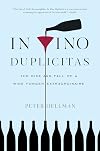
3.5 stars.
This book was a quick and engaging read and unlike a lot of other reviewers, I quite liked how the various chapter sections would ping pong between moments of the main timeline, intercut as well by historical background that filled in info on the various characters and the wines themselves.
However, the book ended up leaving me unsatisfied for two main reasons. The first is there really are no characters one can attach themselves to, which reduces a reader’s connection to the show more book. Beyond the wine forger, this book is filled with narcissists, sociopaths, and various people who championed themselves as special for little reason other than their access to both expensive wine, and the money necessary to purchase it. Even the main winemaker whose family label is repeatedly forged, and is written to appear as a moral center of the book, ends up having a falling out with his siblings and leaving their winery.
The second is there is no real resolution as to why the main character became a wine forger to begin with. There are possibilities brought up in an addendum after the last chapter, but no definitive confirmation, as the author is unable to get an interview with the main subject or anyone in his family. One of the main reasons I read books involving true crime is to find out the psychology and motivation behind the criminal—to get answers as to what makes a person behave in such ways. In the end, this book teases reasons why, but leaves solid conclusions unfulfilled, which was quite disappointing, and left my reaction when the book was finished more negative than what I felt when I was reading much of it. show less
This book was a quick and engaging read and unlike a lot of other reviewers, I quite liked how the various chapter sections would ping pong between moments of the main timeline, intercut as well by historical background that filled in info on the various characters and the wines themselves.
However, the book ended up leaving me unsatisfied for two main reasons. The first is there really are no characters one can attach themselves to, which reduces a reader’s connection to the show more book. Beyond the wine forger, this book is filled with narcissists, sociopaths, and various people who championed themselves as special for little reason other than their access to both expensive wine, and the money necessary to purchase it. Even the main winemaker whose family label is repeatedly forged, and is written to appear as a moral center of the book, ends up having a falling out with his siblings and leaving their winery.
The second is there is no real resolution as to why the main character became a wine forger to begin with. There are possibilities brought up in an addendum after the last chapter, but no definitive confirmation, as the author is unable to get an interview with the main subject or anyone in his family. One of the main reasons I read books involving true crime is to find out the psychology and motivation behind the criminal—to get answers as to what makes a person behave in such ways. In the end, this book teases reasons why, but leaves solid conclusions unfulfilled, which was quite disappointing, and left my reaction when the book was finished more negative than what I felt when I was reading much of it. show less
If you've seen "Sour Grapes" - and if you haven't, you should - much of this will be familiar. But still, its a detailed narrative of Rudy Kurniawan (his assumed, rather than real name, but the one by which he is best known) and his assault on the very high end of the wine market, flooding it with forgeries. Its not hard to have some sympathy for him; after all most of the dupees were spending tens even hundreds of thousands of dollars on bottles and cases of rare wine. If they can't tell show more the difference between the real and the fake, more fool them no? Its not quite a victimless crime, but surely caveat emptor? Its hard to generate sympathy for Bill Koch for example
A couple of questions remain though, which In Vino Duplicitas, entertaining as it is doesn't quite to the bottom of. Firstly, and probably most importantly, where did the money come from? How does a student and refugee go from part time employment at the golf pro shop, to charging hundreds of thousands of dollars a day at Hermes and trading millions of dollars of wine in just a couple of years? Secondly, to what extent were the wine auction houses complicit? Maybe the wine was dubious, but it boosted sales and sale prices and that's good for everyone. And thirdly, did Kurniawan start off as a fraudster, or did he simply work out that the so called wine afficianados really couldn't tell the difference between the good stuff and plonk, and couldn't resist the chance to pot such slow moving targets
A great yarn, but not the end of the story show less
A couple of questions remain though, which In Vino Duplicitas, entertaining as it is doesn't quite to the bottom of. Firstly, and probably most importantly, where did the money come from? How does a student and refugee go from part time employment at the golf pro shop, to charging hundreds of thousands of dollars a day at Hermes and trading millions of dollars of wine in just a couple of years? Secondly, to what extent were the wine auction houses complicit? Maybe the wine was dubious, but it boosted sales and sale prices and that's good for everyone. And thirdly, did Kurniawan start off as a fraudster, or did he simply work out that the so called wine afficianados really couldn't tell the difference between the good stuff and plonk, and couldn't resist the chance to pot such slow moving targets
A great yarn, but not the end of the story show less
For most of us, the world of rare and and expensive wines is very foreign indeed. It's hard to wrap one's head around the fact that there are bottles of wine in existence that are valued at more than a brand new vehicle and that people actually purchase and drink these wines. This is an interesting account of the story of con man Rudy Kurniawan, who forged a tremendous amount of these wines and was eventually caught. Definitely a different kind of true crime story and an interesting read.
Awards


You May Also Like


Associated Authors
Statistics
- Works
- 9
- Also by
- 3
- Members
- 372
- Popularity
- #64,809
- Rating
- 3.7
- Reviews
- 10
- ISBNs
- 28
- Languages
- 3