
David Wisehart
Author of Devil's Lair
About the Author
Image credit: David Wisehart as Ernest in "The Importance of Being Earnest"
Series
Works by David Wisehart
Resistance Front (Volume 1) 6 copies
Tagged
Common Knowledge
There is no Common Knowledge data for this author yet. You can help.
Members
Reviews

Could not wait to turn the page.
This book captured me from the prologue. It is the true definition of a horror novel. One of the things I really enjoyed was it was not "wordy". The book has enough description of the people, places and events to make it a great read but still allows you to use your own imagination. This plot line may not be new, but it is done very well, set in the now with believable characters. Not only will I be anxiously waiting the next book - but I would also like to show more see it hit the big screen. Hurry up Mr. Wisehart I Want More! show less
This book captured me from the prologue. It is the true definition of a horror novel. One of the things I really enjoyed was it was not "wordy". The book has enough description of the people, places and events to make it a great read but still allows you to use your own imagination. This plot line may not be new, but it is done very well, set in the now with believable characters. Not only will I be anxiously waiting the next book - but I would also like to show more see it hit the big screen. Hurry up Mr. Wisehart I Want More! show less
This review was written for LibraryThing Member Giveaways.
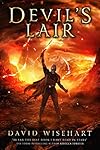
I just finished David Wisehart's "The Devil's Lair," provided through Library Thing. Since this was the first book I've read on my new Kindle Fire, I want to say a few words about the experience prior to writing my review.
At age 61, the eyes aren't what they used to be, and I really appreciate the ability to raise the type font and select an off-white background. I also appreciate the ability to create bookmarks, highlights and notes electronically. Those highlights and notes are very show more useful in writing this review. There is, however, a downside, and I'm going to assume it's a function of electronic formatting of Wisehart's manuscript. On my downloaded version, five pages of the book are blank. Each displays a header with the book's title, but there is no other text on the page. I don't know if those pages contained essential information, but their lack did not diminish my understanding of the story - I think.
Wisehart's Library Thing author's page notes that his favorite authors include Dante and Umberto Eco, and those authors clearly inform his writing. "The Devil's Lair" is part adventure story, part retelling of Dante's "Inferno," part examination of the Christian precepts of love, sin, and hope - all set in 14th century Italy. The world is on the edge of apocalypse, with massive plague deaths, and the very earth dying with its inhabitants. Four travelers - an English monk, a young epileptic who sees visions when stricken, poet Giovanni Boccaccio ("The Decameron"), and a wounded knight with amnesia - join in an attempt to save the world by descending to Hell and stealing the Holy Grail from Satan. They are armed with only their faith (to various degrees among the four) and a lance, the head of which, they believe to have been the point that wounded Jesus on the cross.
It's been more than 40 years since I read either Boccaccio or Dante, but I'm going to assume that the four protagonists of Wisehart's book more or less follow Dante's path through the nine circles of hell, meeting the same general cast of lost souls - thieves, blasphemers, heretics, etc. Each of the four also confronts his or her history - family members, friends, colleagues - who sinned and fell into purgatory. Two of the travelers will die and two will live.
"The Devil's Lair" is a ripping yarn, with complex, well drawn characters, some 14th century Indiana Jones action," an exploration of certain scientific phenomena, and even a modicum of toilet humor. It is, however, more an exploration of sin and redemption, and hope, the monk's figurative and literal mantra. There are also theological discussions that resonate today. I am not Catholic and not well versed in Catholic history and dogma. So, I was surprised at a discussion of abortion, noting that "The early church fathers taught that in all cases abortion is murder, but Saint Augustine took a different view. His teachings are now canon law. He wrote that the human soul develops in stages: a vegetative soul, an animal soul, and a rational soul. This means that an early abortion is like killing a plant. A later abortion is like killing an animal." "When is it murder?" "At forty days for a boy, or eighty days for a girl. That's when the child becomes fetus animatus. Full human."
A discussion with Roman legionnaire Longinus (who, at least in this tale, stabbed Jesus on the cross), deals with the notion of a just war in terms more applicable to the Bush presidency than St. Augustine. "War is a noble calling," the centurion declared. "War is good for morale and bad for morality," replied the monk, Wiiliam..."Rome never fought a war of aggression. Only defense. If we had not attacked them, they would have attacked us." "William frowned, 'War is sometimes a necessary evil. But when it is not necessary, it is only evil.'" And capital punishment. When the centurion says it was his job to kill murderers (flanking Jesus on the cross), William says, "Keep them in prison until God takes them. A man awaiting execution is alive, as we are, by the grace of God. Who are we to deny him that grace? If God wants a man to die, He'll stop the man's heart. God is all-powerful. He does not need us to do his killing for him." And, "More evil is done in the name of Good than in the name of the Devil." Nice.
I need to make two points that, to me, are negatives. Most of us do not read Latin, and there is a considerable amount of Latin throughout the book. It was, of course, the common European tongue of the time, but as the saying of high school students goes, "Latin's a dead language, as dead as dead can be; first it killed the Romans and now it's killing me." The inclusion of Latin in this book is hardly a fatal flaw, but just not helpful to the average reader. The second point is the author's use of archaic and obscure language. Wisehart is obviously proud of his vocabulary, or has one hell of a dictionary at his elbow. Tatterdemalion. Dwale. Ensorcelled. Chatoyant. Incarnadine. Vatic. Bricolage. On and on. In most cases, a common word would have done just as well.
Overlooking those faults - or what I perceive as faults - Wisehart includes some marvelous passages in "The Devil's Lair." A playful "dialogue" between Boccaccio and a donkey regarding Balaam's ass; Petrarch's discussion of holy relics ("Relics are like loaves and fishes. They tend to multiply. Would you care to see my collection?"); the epileptic girl trying to breast feed her dead baby in Purgatory; the fights with Cerberus, Medusa and the Manticore; the Devil trapped in the ice of his own tears at losing God's love. There's also a nice musing on fame and remembrance - why we want to leave something behind, whether books or children. "Dante nodded, '...I was looking at a man reading a book. He lives in the future. I do not know when or where. But when he reads my book, so can I. When anyone reads it, I am there. It is all I have left of who I was." Boccaccio asks, "But if people stop reading your work?" Dante replies, "Then I am lost."
If Wisehart keeps writing like this, he won't have to worry about becoming lost. show less
At age 61, the eyes aren't what they used to be, and I really appreciate the ability to raise the type font and select an off-white background. I also appreciate the ability to create bookmarks, highlights and notes electronically. Those highlights and notes are very show more useful in writing this review. There is, however, a downside, and I'm going to assume it's a function of electronic formatting of Wisehart's manuscript. On my downloaded version, five pages of the book are blank. Each displays a header with the book's title, but there is no other text on the page. I don't know if those pages contained essential information, but their lack did not diminish my understanding of the story - I think.
Wisehart's Library Thing author's page notes that his favorite authors include Dante and Umberto Eco, and those authors clearly inform his writing. "The Devil's Lair" is part adventure story, part retelling of Dante's "Inferno," part examination of the Christian precepts of love, sin, and hope - all set in 14th century Italy. The world is on the edge of apocalypse, with massive plague deaths, and the very earth dying with its inhabitants. Four travelers - an English monk, a young epileptic who sees visions when stricken, poet Giovanni Boccaccio ("The Decameron"), and a wounded knight with amnesia - join in an attempt to save the world by descending to Hell and stealing the Holy Grail from Satan. They are armed with only their faith (to various degrees among the four) and a lance, the head of which, they believe to have been the point that wounded Jesus on the cross.
It's been more than 40 years since I read either Boccaccio or Dante, but I'm going to assume that the four protagonists of Wisehart's book more or less follow Dante's path through the nine circles of hell, meeting the same general cast of lost souls - thieves, blasphemers, heretics, etc. Each of the four also confronts his or her history - family members, friends, colleagues - who sinned and fell into purgatory. Two of the travelers will die and two will live.
"The Devil's Lair" is a ripping yarn, with complex, well drawn characters, some 14th century Indiana Jones action," an exploration of certain scientific phenomena, and even a modicum of toilet humor. It is, however, more an exploration of sin and redemption, and hope, the monk's figurative and literal mantra. There are also theological discussions that resonate today. I am not Catholic and not well versed in Catholic history and dogma. So, I was surprised at a discussion of abortion, noting that "The early church fathers taught that in all cases abortion is murder, but Saint Augustine took a different view. His teachings are now canon law. He wrote that the human soul develops in stages: a vegetative soul, an animal soul, and a rational soul. This means that an early abortion is like killing a plant. A later abortion is like killing an animal." "When is it murder?" "At forty days for a boy, or eighty days for a girl. That's when the child becomes fetus animatus. Full human."
A discussion with Roman legionnaire Longinus (who, at least in this tale, stabbed Jesus on the cross), deals with the notion of a just war in terms more applicable to the Bush presidency than St. Augustine. "War is a noble calling," the centurion declared. "War is good for morale and bad for morality," replied the monk, Wiiliam..."Rome never fought a war of aggression. Only defense. If we had not attacked them, they would have attacked us." "William frowned, 'War is sometimes a necessary evil. But when it is not necessary, it is only evil.'" And capital punishment. When the centurion says it was his job to kill murderers (flanking Jesus on the cross), William says, "Keep them in prison until God takes them. A man awaiting execution is alive, as we are, by the grace of God. Who are we to deny him that grace? If God wants a man to die, He'll stop the man's heart. God is all-powerful. He does not need us to do his killing for him." And, "More evil is done in the name of Good than in the name of the Devil." Nice.
I need to make two points that, to me, are negatives. Most of us do not read Latin, and there is a considerable amount of Latin throughout the book. It was, of course, the common European tongue of the time, but as the saying of high school students goes, "Latin's a dead language, as dead as dead can be; first it killed the Romans and now it's killing me." The inclusion of Latin in this book is hardly a fatal flaw, but just not helpful to the average reader. The second point is the author's use of archaic and obscure language. Wisehart is obviously proud of his vocabulary, or has one hell of a dictionary at his elbow. Tatterdemalion. Dwale. Ensorcelled. Chatoyant. Incarnadine. Vatic. Bricolage. On and on. In most cases, a common word would have done just as well.
Overlooking those faults - or what I perceive as faults - Wisehart includes some marvelous passages in "The Devil's Lair." A playful "dialogue" between Boccaccio and a donkey regarding Balaam's ass; Petrarch's discussion of holy relics ("Relics are like loaves and fishes. They tend to multiply. Would you care to see my collection?"); the epileptic girl trying to breast feed her dead baby in Purgatory; the fights with Cerberus, Medusa and the Manticore; the Devil trapped in the ice of his own tears at losing God's love. There's also a nice musing on fame and remembrance - why we want to leave something behind, whether books or children. "Dante nodded, '...I was looking at a man reading a book. He lives in the future. I do not know when or where. But when he reads my book, so can I. When anyone reads it, I am there. It is all I have left of who I was." Boccaccio asks, "But if people stop reading your work?" Dante replies, "Then I am lost."
If Wisehart keeps writing like this, he won't have to worry about becoming lost. show less
This review was written for LibraryThing Member Giveaways.

Disclaimer: I received this ebook via the LibraryThing Member Giveaway direct from the author.
I'm a sucker for biblical mythology so when I saw this would play heavily with Dante's Inferno, I had high hopes. When I discovered that the story takes place in a world where the Inferno was a travelogue rather than a work of fiction, I was even more excited. I sat back, set my mind to the mid-fourteenth century, and let the cart pull me forth.
Devil's Lair reads like a by-the-book screenplay; enter show more the scene late, exit it right before the viewer (reader) fits all the pieces together. I'd wager a practiced screenwriter could adapt this work and leave very little out as this appears to be a tightly woven tale. Aside from the premise, there's really nothing new here - we've got a small but varied party setting out on an adventure, encountering obstacles and enduring hardships from battles to disbelieving patrons, finding strength in themselves and each other - but all of those little pieces are done exceptionally well and they add up to a fulfilling whole. The pacing and subplots kept me interested from cover to cover and I enjoyed seeing the familiar faces--some in new places--when the group traverses the levels of Hell. For the most part, the pacing enabled Devil's Lair to feel much shorter than its true length as I flicked the pages by.
The chemistry and tension between the characters seemed believable if a little simple at times. The medieval setting aids in the belief as the religious fervor of that age could compel people to do things that some rational thinking would oppose. Regardless, their interactions and qualities more than made up for any arched eyebrows I may have made.
One section did jump out at me as feeling misplaced but it appears much later in a fairly stress-laden chapter. The slight vulgarity just didn't sit well with me as being in-character but that's really a very minor nit to pick. It simply made me do the literary equivalent of a double-take in an otherwise beautifully smooth narrative.
The ending itself was perfect. Upon reflection it was completely telegraphed but done so in that clever "ah, so that's why you set it up like that" way. You've no doubt seen it before but again, like many things in this book, that familiar element was portrayed exquisitely. It manages to wrap up the story completely as well as keep in mind that the Inferno's reality just may be our own. show less
I'm a sucker for biblical mythology so when I saw this would play heavily with Dante's Inferno, I had high hopes. When I discovered that the story takes place in a world where the Inferno was a travelogue rather than a work of fiction, I was even more excited. I sat back, set my mind to the mid-fourteenth century, and let the cart pull me forth.
Devil's Lair reads like a by-the-book screenplay; enter show more the scene late, exit it right before the viewer (reader) fits all the pieces together. I'd wager a practiced screenwriter could adapt this work and leave very little out as this appears to be a tightly woven tale. Aside from the premise, there's really nothing new here - we've got a small but varied party setting out on an adventure, encountering obstacles and enduring hardships from battles to disbelieving patrons, finding strength in themselves and each other - but all of those little pieces are done exceptionally well and they add up to a fulfilling whole. The pacing and subplots kept me interested from cover to cover and I enjoyed seeing the familiar faces--some in new places--when the group traverses the levels of Hell. For the most part, the pacing enabled Devil's Lair to feel much shorter than its true length as I flicked the pages by.
The chemistry and tension between the characters seemed believable if a little simple at times. The medieval setting aids in the belief as the religious fervor of that age could compel people to do things that some rational thinking would oppose. Regardless, their interactions and qualities more than made up for any arched eyebrows I may have made.
One section did jump out at me as feeling misplaced but it appears much later in a fairly stress-laden chapter. The slight vulgarity just didn't sit well with me as being in-character but that's really a very minor nit to pick. It simply made me do the literary equivalent of a double-take in an otherwise beautifully smooth narrative.
The ending itself was perfect. Upon reflection it was completely telegraphed but done so in that clever "ah, so that's why you set it up like that" way. You've no doubt seen it before but again, like many things in this book, that familiar element was portrayed exquisitely. It manages to wrap up the story completely as well as keep in mind that the Inferno's reality just may be our own. show less
This review was written for LibraryThing Member Giveaways.
This is an enjoyable historical fantasy woven around Dante's Inferno, the Grail legends, and the history of the Knights Templar. The focus, however, is less on knights than it is on poets and theologians. Wisehart obviously loves medieval poetry and has studied theology, but the book never gets bogged down in "clever" asides. The substance of the poetry and beliefs have a direct impact on the plot, and you don't need to have an understanding of those topics to enjoy it.
This is not a great show more novel, but it's unique and a pleasure to read. show less
This is not a great show more novel, but it's unique and a pleasure to read. show less
You May Also Like


Associated Authors
Statistics
- Works
- 13
- Members
- 280
- Popularity
- #83,033
- Rating
- 3.7
- Reviews
- 34
- ISBNs
- 1
