
Anna Elliott
Author of Georgiana Darcy's Diary
About the Author
Series
Works by Anna Elliott
The Spitfire Murders: A Homefront Sleuths Mystery (The Homefront Sleuths Cozy Mystery Series Book 3) (2025) 12 copies, 1 review
The Judas Monk Murders: A Homefront Sleuths Mystery (The Homefront Sleuths Cozy Mystery Series Book 4) (2025) 10 copies, 1 review
The Murders at Clarion Castle: A Homefront Sleuths Mystery (The Homefront Sleuths Cozy Mystery Series Book 5) 8 copies, 1 review
The Harvest Festival Murders: A Homefront Sleuths Mystery (The Homefront Sleuths Cozy Mystery Series Book 6) (2025) 5 copies, 1 review
The Scrooge Conspiracy: A Homefront Sleuths Mystery (The Homefront Sleuths Cozy Mystery Series Book 7) 4 copies, 1 review
The Valentine Cipher: A Homefront Sleuths Mystery (The Homefront Sleuths Cozy Mystery Series) 2 copies, 1 review
Star-Sown Sky: A Becky & Flynn WWI Mystery (The Becky and Flynn Mystery Series Book 5) 2 copies, 2 reviews
Associated Works
Author in Progress: A No-Holds-Barred Guide to What It Really Takes to Get Published (2016) — Contributor — 72 copies, 1 review
The MX Book of New Sherlock Holmes Stories Part XVII: Whatever Remains . . . Must Be the Truth (1891-1898) (2019) — Contributor — 12 copies
Tagged
Common Knowledge
- Gender
- female
- Education
- Pennsylvania State University
- Occupations
- writer
- Agent
- Jacques de Spoelberch
- Relationships
- Veley, Charles (father)
- Nationality
- USA
- Places of residence
- New Jersey, USA
Washington, D.C., USA - Associated Place (for map)
- USA
Members
Reviews

Summary: Lady Isolde is many things: the granddaughter of King Arthur and of his sister Morgan, the daughter of the traitorous Modred, a healer who is gifted with strong but unpredictable flashes of the Sight, and the former High Queen to two of Arthur's successors: Constantine, the young king, as well as Marche, Constantine's murderer and the figure that haunts Isolde's nightmares. Now that Marche has turned traitor and formed an alliance with the bloodthirsty Saxon King Octa, Isolde and show more the other British kings are left in dire straits, with little chance of holding Britain free of Saxon conquest. When Trystan - a young man who is Isolde's childhood friend, a mercenary fighter, escaped slave, and Marche's son, amongst other things - reappears at the fortress where Isolde is staying, she formulates a desperate plan to save the kingdom: she and Trystan will cross Saxon lands, and seek an alliance with King Cerdic of Wessex. But their journey together will place them in grave peril - both from the the swords of bandits and enemy fighters, as well as from their own feelings for each other, feelings to which they dare not admit, even to themselves.
Review: Once again, Anna Elliott has done an excellent job of taking Arthurian legend (or, in this case, the post-Arthurian legend of Trystan and Isolde) and grounding it in a believable historical context of Britain in the Dark Ages. Of course, there are bits of her story that are either anachronistic or made up out of whole cloth, as she freely admits in her author's note. But on the whole, she's taken tales that are frequently treated as fantastical or implausible, and turned them into a story that is easy to believe might actually have happened.. Even the fantasy-based elements that remain in her story - Isolde's gift of the Sight - feel grounded in known Celtic religious traditions, and don't ruin the story's credibility.
The story of Trystan and Isolde is, of course, primarily a romance. While most of the romance elements had been stripped away from Twilight of Avalon, they're brought more to the forefront here, although the romance isn't really the driving force of the story. Or, well, it *is*, but it's also well-integrated with the politics and the action, so that while the relationship is only the sole focus of a few scenes, it's always present humming away in the background, motivating the character's choices without totally overshadowing the outcomes of those choices.
It is, however, the type of romance story where the entire conflict is driven by the fact that the main characters refuse to actually speak their minds and thus misunderstandings ensue, which gets pretty old pretty quickly. No matter how much I like the characters (and I certainly do like both Isolde and Trystan), I wind up just wanting to slap both of them and say "look, I know you think that he/she doesn't love you back and you don't want to burden them with the knowledge of Your Impossible Unrequited Love because they are too good for you, but for the love of little apples, just speak up and tell them that you love them and think they're awesome and that you want to do unspeakable things to them, and save everyone involved a lot of hassle." Of course, if they'd actually listened to that advice and, y'know, *talked* to each other, it would have been a very short book indeed. And, just because the lack-of-communication-style romance gets on my nerves occasionally, it doesn't mean it's not effective; I still got all mushy when they finally do tell each other how they feel.
Overall, Dark Moon of Avalon was a solid blending of historical fiction and Arthurian legend, with interesting and sympathetic characters, plenty of action, a touching love story, and a realistic historical framework. I'm looking forward to seeing how Elliott wraps up the story in Sunrise of Avalon. 4 out of 5 stars.
Recommendation: Elliott does a nice job of summarizing what's come before (although without boring established readers), so this could theoretically be read independently of Twilight of Avalon... but since everything that I liked about this book I also liked about the first one, I'd really recommend reading them in order. Recommended for fans of historical fiction, particularly those who find normal Arthurian retellings a bit melodramatic or implausible. If you're unsure, I'd definitely recommend checking out one of Elliott's free short stories on her website to get a feel for her writing and her world. show less
Review: Once again, Anna Elliott has done an excellent job of taking Arthurian legend (or, in this case, the post-Arthurian legend of Trystan and Isolde) and grounding it in a believable historical context of Britain in the Dark Ages. Of course, there are bits of her story that are either anachronistic or made up out of whole cloth, as she freely admits in her author's note. But on the whole, she's taken tales that are frequently treated as fantastical or implausible, and turned them into a story that is easy to believe might actually have happened.. Even the fantasy-based elements that remain in her story - Isolde's gift of the Sight - feel grounded in known Celtic religious traditions, and don't ruin the story's credibility.
The story of Trystan and Isolde is, of course, primarily a romance. While most of the romance elements had been stripped away from Twilight of Avalon, they're brought more to the forefront here, although the romance isn't really the driving force of the story. Or, well, it *is*, but it's also well-integrated with the politics and the action, so that while the relationship is only the sole focus of a few scenes, it's always present humming away in the background, motivating the character's choices without totally overshadowing the outcomes of those choices.
It is, however, the type of romance story where the entire conflict is driven by the fact that the main characters refuse to actually speak their minds and thus misunderstandings ensue, which gets pretty old pretty quickly. No matter how much I like the characters (and I certainly do like both Isolde and Trystan), I wind up just wanting to slap both of them and say "look, I know you think that he/she doesn't love you back and you don't want to burden them with the knowledge of Your Impossible Unrequited Love because they are too good for you, but for the love of little apples, just speak up and tell them that you love them and think they're awesome and that you want to do unspeakable things to them, and save everyone involved a lot of hassle." Of course, if they'd actually listened to that advice and, y'know, *talked* to each other, it would have been a very short book indeed. And, just because the lack-of-communication-style romance gets on my nerves occasionally, it doesn't mean it's not effective; I still got all mushy when they finally do tell each other how they feel.
Overall, Dark Moon of Avalon was a solid blending of historical fiction and Arthurian legend, with interesting and sympathetic characters, plenty of action, a touching love story, and a realistic historical framework. I'm looking forward to seeing how Elliott wraps up the story in Sunrise of Avalon. 4 out of 5 stars.
Recommendation: Elliott does a nice job of summarizing what's come before (although without boring established readers), so this could theoretically be read independently of Twilight of Avalon... but since everything that I liked about this book I also liked about the first one, I'd really recommend reading them in order. Recommended for fans of historical fiction, particularly those who find normal Arthurian retellings a bit melodramatic or implausible. If you're unsure, I'd definitely recommend checking out one of Elliott's free short stories on her website to get a feel for her writing and her world. show less
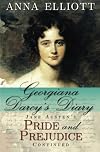
Let me start off by listing the strikes against this book. It's apparently self-published (not, of course, an automatic guarantee of Bad, but it is a truth universally acknowledged that self-pubs are more prone to editorial quality issues). Its author's name is suspiciously similar to an Austen character; I hereby sincerely apologize if "Anna Elliott" is indeed the author's real name, but if not I do wish she had come up with a different pseudonym. It's frequently (always?) free on Amazon. show more (There's a "however" coming up – go 'head and get it. I'll wait.) It's a continuation of Pride and Prejudice, which sparks off a list of its own: it's basically fan-fiction (and while yes, there is some very good stuff out there, it cannot be denied that most of it is utter dreck); the last "continuation" I read was not very good although it was by an author I know and love; and trying to echo a literary voice like Jane Austen's can only end in tears. Any of these is worrying; all together should be horripilating.
However. (See?)
From the introduction: "I can't begin to match Jane Austen's immortal writing style, and wouldn't even pretend to try. ... I would never aspire to imitate Jane Austen or compare my work to hers. Georgiana Darcy's Diary is meant to be an entertainment, written for those readers who, like me, simply can't get enough of Jane Austen and her world." Well. That's promising. Humility and self-awareness in an author - I'm not Jane Austen and won't pretend I can be - is wonderful. This is, Ms. Elliott states, the reason she chose the format of a journal written by a character Miss Austen did not give much dialogue to: Georgiana Darcy. That's kind of brilliant. There's no going back and comparing a paragraph from the Diary to a paragraph from P&P, no window to complain, really, about much short of massive missteps of language or anachronism.
There were, as I recall, a few scattered typos – and one bit of an editorial whopper: mention of, I believe, a hat "died to match". (There was a terrible accident at the milliner's one day, you see …) Apart from that, the voice was very well done. I don't know how it would stand up to a sterner scrutiny, or to a highly critical eye in terms of historical accuracy, but I was happy to believe it was the narrative voice of not only a very young woman of 1814, but in fact of Georgiana Darcy. (It does help that Georgiana was seen so little in Pride and Prejudice, of course, and that the years between 16 and 19 inevitably change a person.)
Ms. Elliott did something with this book that the late, great Joan Aiken failed at in her sequel to Mansfield Park: getting the original main characters out of the way. In Mansfield Revisited, Fanny and Edmund were whisked away to the Indies very early in the book, never to be heard from more till the very end, thus clearing the path of extraneous already-happy-ever-aftered people so that Fanny's sister Susan could get down to the business of HEA. Here, though, not only did the diary format allow the author to evade the question of whether her third-person narration would live up to Jane Austen's, it also allowed her to fix the point of view solidly behind Georgiana's eyes – Georgiana, who doesn't spend every minute with Lizzie or Darcy.
Actually, she did two things that Joan Aiken did not: she also made me care about the characters on whom she was focusing. Georgiana in The Original is a figure of some pity and sympathy – she went through something terrible with bloody Wickham, and otherwise serves almost entirely as a foil for Darcy, giving him depth, providing an avenue for Lizzie to see the relaxed, affectionate side of him. The sympathy carries over to this Diary, but the sympathy deepens as the girl becomes a well-rounded character in her own right.
Was it perfect? No. But it was much better than I anticipated. It was very good. show less
However. (See?)
From the introduction: "I can't begin to match Jane Austen's immortal writing style, and wouldn't even pretend to try. ... I would never aspire to imitate Jane Austen or compare my work to hers. Georgiana Darcy's Diary is meant to be an entertainment, written for those readers who, like me, simply can't get enough of Jane Austen and her world." Well. That's promising. Humility and self-awareness in an author - I'm not Jane Austen and won't pretend I can be - is wonderful. This is, Ms. Elliott states, the reason she chose the format of a journal written by a character Miss Austen did not give much dialogue to: Georgiana Darcy. That's kind of brilliant. There's no going back and comparing a paragraph from the Diary to a paragraph from P&P, no window to complain, really, about much short of massive missteps of language or anachronism.
There were, as I recall, a few scattered typos – and one bit of an editorial whopper: mention of, I believe, a hat "died to match". (There was a terrible accident at the milliner's one day, you see …) Apart from that, the voice was very well done. I don't know how it would stand up to a sterner scrutiny, or to a highly critical eye in terms of historical accuracy, but I was happy to believe it was the narrative voice of not only a very young woman of 1814, but in fact of Georgiana Darcy. (It does help that Georgiana was seen so little in Pride and Prejudice, of course, and that the years between 16 and 19 inevitably change a person.)
Ms. Elliott did something with this book that the late, great Joan Aiken failed at in her sequel to Mansfield Park: getting the original main characters out of the way. In Mansfield Revisited, Fanny and Edmund were whisked away to the Indies very early in the book, never to be heard from more till the very end, thus clearing the path of extraneous already-happy-ever-aftered people so that Fanny's sister Susan could get down to the business of HEA. Here, though, not only did the diary format allow the author to evade the question of whether her third-person narration would live up to Jane Austen's, it also allowed her to fix the point of view solidly behind Georgiana's eyes – Georgiana, who doesn't spend every minute with Lizzie or Darcy.
Actually, she did two things that Joan Aiken did not: she also made me care about the characters on whom she was focusing. Georgiana in The Original is a figure of some pity and sympathy – she went through something terrible with bloody Wickham, and otherwise serves almost entirely as a foil for Darcy, giving him depth, providing an avenue for Lizzie to see the relaxed, affectionate side of him. The sympathy carries over to this Diary, but the sympathy deepens as the girl becomes a well-rounded character in her own right.
Was it perfect? No. But it was much better than I anticipated. It was very good. show less
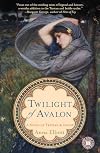
I have to say right off the bat that this book wasn’t what I was expecting at all. I was expecting (and maybe dreading, a bit) a fantasy-ish retelling of the Trystan and Isolde story. But what Anna Elliott does here, to my delighted surprise, is combine elements of the legends with what is known about the early Middle Ages—in this case, the invasions of the Saxons in the 5th and 6th centuries. Most of the Trystan and Isolde stories are based on those written down in the 12th, 13th, and show more 14th centuries, and are therefore done in the tradition of courtly romances. Anna Elliott’s rendition is much more realistic.
The story opens just after the death of Isolde’s husband Constantine, the High King of Britain. Immediately, Lord Marche begins jockeying for power, quickly becoming the High King. Isolde escapes marriage with him; becoming acquainted with a prisoner named Trystan. At first he called himself , or stranger, is an appropriate description; he’ half-Briton and half-Saxon, yet neither at the same time. The novel, which is the first in a trilogy, is told primarily from the point of view of Isolde, but I suspect further books in the series will tell the story from Trystan’s side, too. This book is not a straight romance, as the relationship between Isolde and Tystan is just beginning to evolve here. I expect much more to happen in further books.
As I’ve said before, I went into the reading of the book as a skeptic—not only because I thought it would be more fantasy, but also because I was skeptical of the idea of the whole healer aspect. I also thought that there would be a lot more magic here, and there isn’t—Isolde has lost her powers, but they’re really still there, hiding underneath the surface. I was a bit out of my comfort zone; I don’t usually read novels based on the Arthurian legends. But this book was a completely unique one. It’s interesting how the author managed to use written versions of the Trytan and Isolde story in order to return it to the way the stories were originally told—orally. I loved how the author incorporated the historical elements into the story, grounding it in reality while at the same time stay more or less true to the oral tradition of storytelling (which is a major theme of this novel).
Not only is the setting very real, but the characters are, too. For a trilogy to work properly, you have to make it so that the reader is drawn into the lives of the characters enough so that they want to read on. I definitely will be reading more in this trilogy; the next book, Dark Moon of Avalon, comes out in May, and I can’t wait! All in all, a really strong start to what promises to be an exciting trilogy. show less
The story opens just after the death of Isolde’s husband Constantine, the High King of Britain. Immediately, Lord Marche begins jockeying for power, quickly becoming the High King. Isolde escapes marriage with him; becoming acquainted with a prisoner named Trystan. At first he called himself , or stranger, is an appropriate description; he’ half-Briton and half-Saxon, yet neither at the same time. The novel, which is the first in a trilogy, is told primarily from the point of view of Isolde, but I suspect further books in the series will tell the story from Trystan’s side, too. This book is not a straight romance, as the relationship between Isolde and Tystan is just beginning to evolve here. I expect much more to happen in further books.
As I’ve said before, I went into the reading of the book as a skeptic—not only because I thought it would be more fantasy, but also because I was skeptical of the idea of the whole healer aspect. I also thought that there would be a lot more magic here, and there isn’t—Isolde has lost her powers, but they’re really still there, hiding underneath the surface. I was a bit out of my comfort zone; I don’t usually read novels based on the Arthurian legends. But this book was a completely unique one. It’s interesting how the author managed to use written versions of the Trytan and Isolde story in order to return it to the way the stories were originally told—orally. I loved how the author incorporated the historical elements into the story, grounding it in reality while at the same time stay more or less true to the oral tradition of storytelling (which is a major theme of this novel).
Not only is the setting very real, but the characters are, too. For a trilogy to work properly, you have to make it so that the reader is drawn into the lives of the characters enough so that they want to read on. I definitely will be reading more in this trilogy; the next book, Dark Moon of Avalon, comes out in May, and I can’t wait! All in all, a really strong start to what promises to be an exciting trilogy. show less

Summary: King Arthur has been dead for seven years, and the kingdom of Britain is still feeling the effects. His successor, King Constantine, has now also fallen in battle with the Saxons, and his wife, Isolde - granddaughter of Arthur by the treasonous pairing of Arthur's bastard son Modred with his wife Gwynefar - is in a precarious position, haunted by a past she cannot remember and only delicately balanced between the factions that threaten to tear Britain apart. She is nominally still show more High Queen, but none of them men's council trusts her due to her traitor father, and most fear her as a witch, due to the blood of Morgan that flows through her veins. King Marche seems primed to seize power, and he is a hard, cold, and cruel man. There is nothing that Isolde can do to prevent Marche from becoming High King... but when he claims her as his queen on threat of death, the only option left to her is to flee, along with a mysterious prisoner who seems neither Briton nor Saxon, but may hold the key to Isolde's future and freedom.
Review: I realized pretty immediately upon opening this book that it was not going to be quite what I expected. The first generations of the family tree had names that were familiar enough, but having Isolde be the daughter of Modred and Gwynefar was a version of Arthurian legend I had never heard before, and it threw me a little bit, and took me a while to establish myself in Elliott's version of Dark Age Britain. (Her version is based on an early version of the Arthur story - before Lancelot even entered the legend, and the betrayal of Modred and Gwynhefar was what brought down the kingdom - so it's not like she made it up out of whole cloth.) The legend of Tristan and Isolde sticks more closely to established legend, although it was clear from very early on that this was not going to be a version in which Mark was a sympathetic cuckold. Elliott's Marche is severely unsympathetic; I almost wish she'd given him a hint of something positive, a little glimmer of a shade of gray, instead of making him an unrelieved villain. I was also expecting a Tristan & Isolde story to have a little more romance than this one provided - there is certainly a spark between the two characters, but any actual romance is left for later in the series. However, I found that I didn't really miss the traditional romantic elements much; there was more than enough else going on to hold my interest.
I think my favorite thing about this book was how well Elliott grounded the familiar story in a plausible historical context. I could well believe that these characters existed and lived much as she writes them - Isolde's a proto-feminist but not anachronistically so, especially with the blood of Avalon in her veins. The juxtaposition of pagan and Christian traditions is usually one of the more interesting parts of Arthurian stories for me, and while that was present, I felt like it could have been played up more strongly. I also really liked the sense of things falling apart, of fading from the golden light of Arthur's Camelot into the beginning of a dark age - I've learned from Jo Graham's books that I really enjoy stories of people trying to hold together after everything they've known has fallen away.
Overall, though, while I really enjoyed the setting, the story, and the characters, there was just a little bit of a spark that was missing that kept me from totally loving it. Don't get me wrong, it's a very enjoyable read and a very interesting take on some old tales, and I'm certainly interested in reading the sequel(s), but it fell just a bit short of the mark in terms of leaping out, grabbing me, and making itself a favorite. 4 out of 5 stars.
Recommendation: It's definitely worth reading for most historical fiction fans, and shouldn't be missed by readers who enjoy Arthurian legend. show less
Review: I realized pretty immediately upon opening this book that it was not going to be quite what I expected. The first generations of the family tree had names that were familiar enough, but having Isolde be the daughter of Modred and Gwynefar was a version of Arthurian legend I had never heard before, and it threw me a little bit, and took me a while to establish myself in Elliott's version of Dark Age Britain. (Her version is based on an early version of the Arthur story - before Lancelot even entered the legend, and the betrayal of Modred and Gwynhefar was what brought down the kingdom - so it's not like she made it up out of whole cloth.) The legend of Tristan and Isolde sticks more closely to established legend, although it was clear from very early on that this was not going to be a version in which Mark was a sympathetic cuckold. Elliott's Marche is severely unsympathetic; I almost wish she'd given him a hint of something positive, a little glimmer of a shade of gray, instead of making him an unrelieved villain. I was also expecting a Tristan & Isolde story to have a little more romance than this one provided - there is certainly a spark between the two characters, but any actual romance is left for later in the series. However, I found that I didn't really miss the traditional romantic elements much; there was more than enough else going on to hold my interest.
I think my favorite thing about this book was how well Elliott grounded the familiar story in a plausible historical context. I could well believe that these characters existed and lived much as she writes them - Isolde's a proto-feminist but not anachronistically so, especially with the blood of Avalon in her veins. The juxtaposition of pagan and Christian traditions is usually one of the more interesting parts of Arthurian stories for me, and while that was present, I felt like it could have been played up more strongly. I also really liked the sense of things falling apart, of fading from the golden light of Arthur's Camelot into the beginning of a dark age - I've learned from Jo Graham's books that I really enjoy stories of people trying to hold together after everything they've known has fallen away.
Overall, though, while I really enjoyed the setting, the story, and the characters, there was just a little bit of a spark that was missing that kept me from totally loving it. Don't get me wrong, it's a very enjoyable read and a very interesting take on some old tales, and I'm certainly interested in reading the sequel(s), but it fell just a bit short of the mark in terms of leaping out, grabbing me, and making itself a favorite. 4 out of 5 stars.
Recommendation: It's definitely worth reading for most historical fiction fans, and shouldn't be missed by readers who enjoy Arthurian legend. show less
Lists
Awards

You May Also Like


Associated Authors
Statistics
- Works
- 66
- Also by
- 2
- Members
- 1,659
- Popularity
- #15,495
- Rating
- 3.7
- Reviews
- 173
- ISBNs
- 50
- Languages
- 2
- Favorited
- 1
