
J. R. Tomlin
Author of A Kingdom's Cost
About the Author
Series
Works by J. R. Tomlin
The Lion of Galloway 1 copy
Associated Works
Tagged
Common Knowledge
- Legal name
- Tomlin, Jeanne
- Other names
- Tomlin, Jeanne
- Birthdate
- 20th century
- Gender
- female
- Nationality
- USA
- Places of residence
- Oregon, USA
Edinburgh, Scotland, UK - Associated Place (for map)
- USA
Members
Reviews
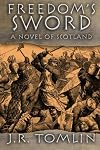
"Scots, wha hae"...The Scots in me was stirred while reading this entertaining book. I do not usually read military-based books but J.R.Tomlin provided stirring accounts that made me appreciate this genre. She brought Andrew De Moray to life, sparking an interest to learn more about his life and times. I appreciated the appendices at the end that helped place all the characters. Her descriptions were excellent, especially De Moray's solitary confinement experience, the day-to-day life of his show more people and the battles. The recorded history from this time period is sparse and I did not mind the literary license she employed to bring us the human side of Andrew and his relationships with Caitrina, his uncle and his followers. Telling the story from Andrew's eyes gave me a different perspective of the times and I look forward to reading another work from this author in the future.
Note: This review is based on an ARC book provided by the author but this did not influence my review in any way. show less
Note: This review is based on an ARC book provided by the author but this did not influence my review in any way. show less
This review was written for LibraryThing Member Giveaways.
I like historical fiction. I like military history. I like Scotland. So I was pretty sure I'd like Freedom's Sword, and as I turned off my kindle after reading the last word, I sat back, relaxed, and enjoyed my visit to the first Scottish War of Independence.
A little background: Scotland was once upon a time a completely free and independent entity from England. But back in the 1200's a squabble between potential claimants to the throne ended up with Edward I deciding he was in charge. This show more sparked the first Scottish War of Independence. Most Americans are vaguely familiar with this because we've seen Braveheart. Unlike Freedom's Sword, Braveheart played pretty fast and loose with the facts to make a romantic, compelling story. Tomlin thought the truth was compelling enough, and from what I can tell stuck pretty closely to it. Personally, I agree with her.
So, as the tale opens we meet Andrew Moray, brand new knight about to go off on his first battle. It goes horribly, he's taken captive, and after months of torment in an English dungeon and a breath-taking escape, he returns to Scotland with a burning desire to reconquer his homeland. From there we follow him as he rounds up a force of like minded men and retakes northern Scotland from the English.
It's a good story. And I read most of it over the Forth of July weekend, so a tale of booting out the English seemed especially resonant. Battle scenes are vibrant without being overblown. Details of place are in enough depth to give an image of what is happening, but not so dense that you need to hack through them with a machete to find the plot. Most of the secondary characters are well enough defined that you won't confuse them with each other. The history is well researched and alive. It's what moves the story along as opposed to being scenery.
If I wanted anything from Freedom's Sword, it was actually more history on what exactly was happening and why. I'm well versed on medieval history, weaponry, and tactics, so I was following along pretty well, but a bit more on how Edward I ended up in charge, why they were rebelling against him in the first place, how things were different under Toom Tabard, why Robert the Bruce was a natural claimant to the throne, and how the Scottish political system worked would have been useful. With Tomlin's obvious love of the subject and deft writing, I would have been well pleased by another fifty pages of background.
There was one jarring aspect of Freedom's Sword. For some reason it suddenly shifts point of view (POV) to Caitrina, Andrew's Lady. And while I thought more or less everything involving Andrew was interesting, I rapidly lost interest when the story shifted to Caitrina. (Fortunately it didn't happen too often.) It's not that her story was badly written, nor was it boring per se; it just didn't have a lot to do with the rest of the plot. There's nothing that happens from Caitrina's POV that couldn't be dealt with in a few lines of dialog with her talking to Andrew. There's nothing added by hopping to her head. She's so tangentially related to the plot that at one point twenty-seven chapters go by without a mention of her. It almost feels like there was a plan to do a secondary story line of life on the home front, but somehow it didn't make it into the final story. Personally I would have liked to have seen that sort of a storyline. I think Tomlin could have done many fine things with it, but that will have to remain in the wish stage.
Beyond that my only other complaint was the lack of idea of when thing happen. We get one date stamp in the beginning of the tale and another at the very end. Some in between would have made it easier to keep track of what was going on.
All in all I enjoyed Freedom's Sword quiet a bit, and look forward to seeing what else Tomlin will come up with. show less
A little background: Scotland was once upon a time a completely free and independent entity from England. But back in the 1200's a squabble between potential claimants to the throne ended up with Edward I deciding he was in charge. This show more sparked the first Scottish War of Independence. Most Americans are vaguely familiar with this because we've seen Braveheart. Unlike Freedom's Sword, Braveheart played pretty fast and loose with the facts to make a romantic, compelling story. Tomlin thought the truth was compelling enough, and from what I can tell stuck pretty closely to it. Personally, I agree with her.
So, as the tale opens we meet Andrew Moray, brand new knight about to go off on his first battle. It goes horribly, he's taken captive, and after months of torment in an English dungeon and a breath-taking escape, he returns to Scotland with a burning desire to reconquer his homeland. From there we follow him as he rounds up a force of like minded men and retakes northern Scotland from the English.
It's a good story. And I read most of it over the Forth of July weekend, so a tale of booting out the English seemed especially resonant. Battle scenes are vibrant without being overblown. Details of place are in enough depth to give an image of what is happening, but not so dense that you need to hack through them with a machete to find the plot. Most of the secondary characters are well enough defined that you won't confuse them with each other. The history is well researched and alive. It's what moves the story along as opposed to being scenery.
If I wanted anything from Freedom's Sword, it was actually more history on what exactly was happening and why. I'm well versed on medieval history, weaponry, and tactics, so I was following along pretty well, but a bit more on how Edward I ended up in charge, why they were rebelling against him in the first place, how things were different under Toom Tabard, why Robert the Bruce was a natural claimant to the throne, and how the Scottish political system worked would have been useful. With Tomlin's obvious love of the subject and deft writing, I would have been well pleased by another fifty pages of background.
There was one jarring aspect of Freedom's Sword. For some reason it suddenly shifts point of view (POV) to Caitrina, Andrew's Lady. And while I thought more or less everything involving Andrew was interesting, I rapidly lost interest when the story shifted to Caitrina. (Fortunately it didn't happen too often.) It's not that her story was badly written, nor was it boring per se; it just didn't have a lot to do with the rest of the plot. There's nothing that happens from Caitrina's POV that couldn't be dealt with in a few lines of dialog with her talking to Andrew. There's nothing added by hopping to her head. She's so tangentially related to the plot that at one point twenty-seven chapters go by without a mention of her. It almost feels like there was a plan to do a secondary story line of life on the home front, but somehow it didn't make it into the final story. Personally I would have liked to have seen that sort of a storyline. I think Tomlin could have done many fine things with it, but that will have to remain in the wish stage.
Beyond that my only other complaint was the lack of idea of when thing happen. We get one date stamp in the beginning of the tale and another at the very end. Some in between would have made it easier to keep track of what was going on.
All in all I enjoyed Freedom's Sword quiet a bit, and look forward to seeing what else Tomlin will come up with. show less
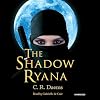
Series Info/Source: This is the first book in The Shadow Sisters series. I borrowed this as an audiobook from Audible.
Thoughts: I borrowed this through Audible on a whim and wasn't sure what to expect. I was surprised to really enjoy this. This isn't just a story about a worthless girl trying to find her way as an assassin but it is bigger than that. This is about a girl trying to balance her life between the family she yearns for and the job she is amazingly good at.
Ryana is despised by her show more family for being a girl and quickly sold off to an old woman who is part of the Shadow Sisters (a group of spies and assassin). Ryana trains hard because she is desperate to please the Shadow Sisters. When she is sent on an impossible mission to find out where missing Shadow Sisters are going, she uncovers and even larger plot. Even more surprising, she discovers family, friendship, and a whole world outside of the Shadow Sisters confines.
Ryana as a character is definitely the star of the show. She is incredibly capable as an assassin and spy, but doesn't really want to be good at killing people. She is, at heart, a sweet, smart, and earnest girl who is forced into making living by lying and killing and she ends up being really good at it. The tight-knit relationships she forms with the gypsies that she travels with is heartwarming and entertaining. The lengths she goes to to protect her new found "family" is heartbreaking at times. Ryana has no sense of self protection and constantly throws herself into dire situations with no thought for her life or health.
There is a complex plot around the missing Shadow Sisters here and that is woven around Ryana trying to travel with (and protect to some extent) the gypsies. Watching her gain some sense of both herself and of the broader world was fun. There is plenty of action as well. I did think the world-building and plot were a bit weak, but Ryana mostly made up for that.
There are some more serious elements in this story too. The persecution of the gypsies is discussed quite a bit, and casual violence towards women is commonplace. It's sorrowful how assumed all of the violence against women is, even though many of the characters in the story scorn those who overpower various women throughout. I would hate to be a woman living in this world; they must live in constant fear. I did think some of the scenes where Ryana gained access to high ranking people were a bit unbelievable but I guess this is a fantasy story. I really enjoyed where this story ended.
I listened to this on audiobook and the audiobook was well done. The narration was pleasant to listen to and easy to follow. I would definitely recommend listening to this on audiobook if you enjoy audiobooks.
My Summary (4/5): Overall I am happy I read this. This is a strangely heart-warming, and sometimes vicious, story about a unwanted young girl who becomes a very good assassin and spy but wants more from life. There are some wonderful characters, a good plot, and lots of action. Right now I don't plan on reading the second book because it is no longer available on audiobook through Audible, and I really loved how this book ended...I don't really see the need to read another book in this series. While I loved Ryana as a character the world-building and plot were a bit weak. show less
Thoughts: I borrowed this through Audible on a whim and wasn't sure what to expect. I was surprised to really enjoy this. This isn't just a story about a worthless girl trying to find her way as an assassin but it is bigger than that. This is about a girl trying to balance her life between the family she yearns for and the job she is amazingly good at.
Ryana is despised by her show more family for being a girl and quickly sold off to an old woman who is part of the Shadow Sisters (a group of spies and assassin). Ryana trains hard because she is desperate to please the Shadow Sisters. When she is sent on an impossible mission to find out where missing Shadow Sisters are going, she uncovers and even larger plot. Even more surprising, she discovers family, friendship, and a whole world outside of the Shadow Sisters confines.
Ryana as a character is definitely the star of the show. She is incredibly capable as an assassin and spy, but doesn't really want to be good at killing people. She is, at heart, a sweet, smart, and earnest girl who is forced into making living by lying and killing and she ends up being really good at it. The tight-knit relationships she forms with the gypsies that she travels with is heartwarming and entertaining. The lengths she goes to to protect her new found "family" is heartbreaking at times. Ryana has no sense of self protection and constantly throws herself into dire situations with no thought for her life or health.
There is a complex plot around the missing Shadow Sisters here and that is woven around Ryana trying to travel with (and protect to some extent) the gypsies. Watching her gain some sense of both herself and of the broader world was fun. There is plenty of action as well. I did think the world-building and plot were a bit weak, but Ryana mostly made up for that.
There are some more serious elements in this story too. The persecution of the gypsies is discussed quite a bit, and casual violence towards women is commonplace. It's sorrowful how assumed all of the violence against women is, even though many of the characters in the story scorn those who overpower various women throughout. I would hate to be a woman living in this world; they must live in constant fear. I did think some of the scenes where Ryana gained access to high ranking people were a bit unbelievable but I guess this is a fantasy story. I really enjoyed where this story ended.
I listened to this on audiobook and the audiobook was well done. The narration was pleasant to listen to and easy to follow. I would definitely recommend listening to this on audiobook if you enjoy audiobooks.
My Summary (4/5): Overall I am happy I read this. This is a strangely heart-warming, and sometimes vicious, story about a unwanted young girl who becomes a very good assassin and spy but wants more from life. There are some wonderful characters, a good plot, and lots of action. Right now I don't plan on reading the second book because it is no longer available on audiobook through Audible, and I really loved how this book ended...I don't really see the need to read another book in this series. While I loved Ryana as a character the world-building and plot were a bit weak. show less
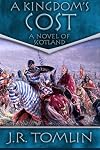
We are lectured daily about this, that or the other freedom. Freedom of speech, freedom of assembly. Freedom to consume ridiculously-priced coffees with silly names. Sometimes historical fiction provides a reminder that our liberties are only words, and that they can be whisked away in a moment at the whim of the powerful.
A Kingdom’s Cost is set at the beginning of the 14th Century, during the long-drawn-out wars of Scottish independence. It follows the exploits of the squire James show more Douglas. Homeless and landless at the beginning of the novel, his father dead at the hands of Edward Longshanks, he makes his way back from hiding in France to throw in his lot with Robert the Bruce. By the end of the story he has become a battle-hardened veteran, "Black Douglas" to his English enemies, brutal and ruthless in the service of his king.
J.R. Tomlin shows us a harder time, one in which winter brings starvation and wounds turn bad. No freedoms here, only obligations, to one’s family and to one’s lord. Her picture is of a society clinging to the landscape. Violence and cruelty are routine. She does not shy away from bloodshed – men and horses are remorselessly gutted and we learn more than we really want to know about the reality of hanging, drawing and quartering.
The landscapes themselves, meanwhile, are beautifully drawn. As in John Buchan’s adventures, the action seems to grow out of the Scottish settings. Mountains and glens, furze and heather provide a counterpoint to the dangers the hero faces, emphasising them and at the same time putting them in their place.
Tomlin’s characters are romanticised and perhaps a little self-consciously “historical”, but this does not matter because she has real flair for dramatic story-telling. The narrative plunges on in a series of episodes reflecting the progress – or lack of it – in the Bruce’s campaign. There is a vivid evocation of personal experience – sweat and the smell of horse manure, the weight of chain mail, a herald shouting to the assembled army with nobody able to hear his words.
One judgement which every writer of historical fiction has to make concerns the language. How authentic need it be to provide a flavour of the time? Tomlin has opted for a scattering of antique expressions, apparently intended to give a patina to the story. Not a wise choice. Most of them are out of place historically, serving to highlight the romanticised aspect of the book rather than its authenticity.
She seems particularly fond of the word “mayhap”, which occurs over and over again, sometimes in dialogue where it might pass muster but more often in narrative passages. The first time I came across this, the effect was like a poke in the eye. A sadder pedant than I am might have looked up “mayhap” and found that the earliest recorded usage (OED) was in 1536 – more than two hundred years later. An even sadder case might have started looking up other expressions Tomlin uses and found “merlon” (1704), good-brother (1513), “retiral” (1611), “gallowglass” (1515), “garron” (16th Century). The truth is that the Scottish wars took place a full generation before Chaucer was born. Even in the south spoken English would have been barely recognisable to us; in Scotland they would probably have used Norman French or Mediaeval Gaelic (Robert the Bruce’s ancestors were Norman).
In my Kindle edition I also found a number of proofing and formatting errors which even a casual check should have picked up. Typographical errors included the usual missing spaces between words, “fair” instead of “fare”, “censor” instead of “censer”, “your” instead of “you’re” and so on. More serious were the sudden changes of font which appeared in half a dozen paragraphs throughout the book. Things like this are very disappointing in an otherwise well-crafted work. Disappointing too was the failure to provide either a cover or a table of contents – the latter would have been particularly welcome as there were several appendices and a list of characters which I would have liked to refer to while reading.
Tomlin shares with the authors of "Kidnapped" and "The 39 Steps" an ability to draw a vivid story out of the landscape. Sad that she does not pay as much attention to the detail. show less
A Kingdom’s Cost is set at the beginning of the 14th Century, during the long-drawn-out wars of Scottish independence. It follows the exploits of the squire James show more Douglas. Homeless and landless at the beginning of the novel, his father dead at the hands of Edward Longshanks, he makes his way back from hiding in France to throw in his lot with Robert the Bruce. By the end of the story he has become a battle-hardened veteran, "Black Douglas" to his English enemies, brutal and ruthless in the service of his king.
J.R. Tomlin shows us a harder time, one in which winter brings starvation and wounds turn bad. No freedoms here, only obligations, to one’s family and to one’s lord. Her picture is of a society clinging to the landscape. Violence and cruelty are routine. She does not shy away from bloodshed – men and horses are remorselessly gutted and we learn more than we really want to know about the reality of hanging, drawing and quartering.
The landscapes themselves, meanwhile, are beautifully drawn. As in John Buchan’s adventures, the action seems to grow out of the Scottish settings. Mountains and glens, furze and heather provide a counterpoint to the dangers the hero faces, emphasising them and at the same time putting them in their place.
Tomlin’s characters are romanticised and perhaps a little self-consciously “historical”, but this does not matter because she has real flair for dramatic story-telling. The narrative plunges on in a series of episodes reflecting the progress – or lack of it – in the Bruce’s campaign. There is a vivid evocation of personal experience – sweat and the smell of horse manure, the weight of chain mail, a herald shouting to the assembled army with nobody able to hear his words.
One judgement which every writer of historical fiction has to make concerns the language. How authentic need it be to provide a flavour of the time? Tomlin has opted for a scattering of antique expressions, apparently intended to give a patina to the story. Not a wise choice. Most of them are out of place historically, serving to highlight the romanticised aspect of the book rather than its authenticity.
She seems particularly fond of the word “mayhap”, which occurs over and over again, sometimes in dialogue where it might pass muster but more often in narrative passages. The first time I came across this, the effect was like a poke in the eye. A sadder pedant than I am might have looked up “mayhap” and found that the earliest recorded usage (OED) was in 1536 – more than two hundred years later. An even sadder case might have started looking up other expressions Tomlin uses and found “merlon” (1704), good-brother (1513), “retiral” (1611), “gallowglass” (1515), “garron” (16th Century). The truth is that the Scottish wars took place a full generation before Chaucer was born. Even in the south spoken English would have been barely recognisable to us; in Scotland they would probably have used Norman French or Mediaeval Gaelic (Robert the Bruce’s ancestors were Norman).
In my Kindle edition I also found a number of proofing and formatting errors which even a casual check should have picked up. Typographical errors included the usual missing spaces between words, “fair” instead of “fare”, “censor” instead of “censer”, “your” instead of “you’re” and so on. More serious were the sudden changes of font which appeared in half a dozen paragraphs throughout the book. Things like this are very disappointing in an otherwise well-crafted work. Disappointing too was the failure to provide either a cover or a table of contents – the latter would have been particularly welcome as there were several appendices and a list of characters which I would have liked to refer to while reading.
Tomlin shares with the authors of "Kidnapped" and "The 39 Steps" an ability to draw a vivid story out of the landscape. Sad that she does not pay as much attention to the detail. show less
Lists
Awards


You May Also Like


Associated Authors
Statistics
- Works
- 32
- Also by
- 1
- Members
- 1,084
- Popularity
- #23,705
- Rating
- 3.7
- Reviews
- 134
- ISBNs
- 47
- Favorited
- 1
