
Christian Reus-Smit
Author of The Oxford Handbook of International Relations
Works by Christian Reus-Smit
Associated Works
Tagged
Common Knowledge
Members
Reviews
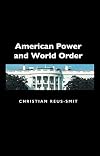
'American Power and World Order' provides an intelligent and accessible rethinking of the sources, use and exercise of state power, and of the relation between this power and the successful exerting of influence or achievement of policy objectives. The discussion is relevant to all countries, but applies specifically, and is drawn from, the contemporary circumstance of the United States. This book is not very long and is elegantly written, making it easily and eagerly digested.
The author, show more Christian Reus-Smit, is Professor of International Relations at the European University Institute in Florence, and formerly head of school at the Australian National University. Professor Reus-Smit is an experienced and well regarded international relations academic, but this is easily his most accessible book. As a constructivist overview of state power, the book’s central tenets and arguments retain their vibrancy and have not dated since original publication in 2004.
The core argument is that power (specifically the conception of power based on material preponderance, including both 'hard' and 'soft' variants), does not automatically translate into influence nor automatically produce desired results. Despite the intuited understanding of many statesmen, academics and public service mandarins over time, evidence indicates there is often no direct causal link between the exercise of power and achievement of goals. Rather, the relationship between the idea of power as a possession and any consequent real-world effects is at best an attenuated one.
'American Power and World Order' attends to the fact that the US, for all its obvious sources of power and undisputed Superpower status, has experienced in the new millennium very mixed success in achieving its foreign policy aims. Similarly, small and medium powers have been remarkably successful in avoiding, coopting or channelling US power and influence to the benefit of their own ends. (see for example: 'Hegemony Constrained: Evasion, Modification, and Resistance to American Foreign Policy' by Davis B. Bobrow).
By contrast, it seems that in many areas the much less-powerful EU has achieved a relatively high strike rate in producing the foreign policy outcomes they desire. This may be due to a foreign policy posture in the EU that implicitly recognises both the socially constructed nature of power as well as the materially constructed.
In this excellent short book, Professor Reus-Smit provides a well-written, timely and insightful discussion (ground in contemporary international relations) of the conceptions – and misconceptions – of 'power'. Anyone interested in, studying, or professionally involved in international relations would gain from reading it. show less
The author, show more Christian Reus-Smit, is Professor of International Relations at the European University Institute in Florence, and formerly head of school at the Australian National University. Professor Reus-Smit is an experienced and well regarded international relations academic, but this is easily his most accessible book. As a constructivist overview of state power, the book’s central tenets and arguments retain their vibrancy and have not dated since original publication in 2004.
The core argument is that power (specifically the conception of power based on material preponderance, including both 'hard' and 'soft' variants), does not automatically translate into influence nor automatically produce desired results. Despite the intuited understanding of many statesmen, academics and public service mandarins over time, evidence indicates there is often no direct causal link between the exercise of power and achievement of goals. Rather, the relationship between the idea of power as a possession and any consequent real-world effects is at best an attenuated one.
'American Power and World Order' attends to the fact that the US, for all its obvious sources of power and undisputed Superpower status, has experienced in the new millennium very mixed success in achieving its foreign policy aims. Similarly, small and medium powers have been remarkably successful in avoiding, coopting or channelling US power and influence to the benefit of their own ends. (see for example: 'Hegemony Constrained: Evasion, Modification, and Resistance to American Foreign Policy' by Davis B. Bobrow).
By contrast, it seems that in many areas the much less-powerful EU has achieved a relatively high strike rate in producing the foreign policy outcomes they desire. This may be due to a foreign policy posture in the EU that implicitly recognises both the socially constructed nature of power as well as the materially constructed.
In this excellent short book, Professor Reus-Smit provides a well-written, timely and insightful discussion (ground in contemporary international relations) of the conceptions – and misconceptions – of 'power'. Anyone interested in, studying, or professionally involved in international relations would gain from reading it. show less
You May Also Like


Associated Authors
Statistics
- Works
- 7
- Also by
- 1
- Members
- 183
- Popularity
- #118,258
- Rating
- 3.5
- Reviews
- 1
- ISBNs
- 26