
Christiane Singer (1943–2007)
Author of Derniers fragments d'un long voyage
Works by Christiane Singer
Coffret Christiane Singer - 3 vols. Contient Histoire d'âme, Les âges de la vie et Une passion (2017) 1 copy, 1 review
O Lado Positivo das Crises 1 copy
Tagged
Common Knowledge
- Birthdate
- 1943-03-23
- Date of death
- 2007-04-04
- Education
- Université d'Aix-en-Provence (Doctorat, Lettres modernes)
Conservatoire de diction et d’art dramatique à Marseille - Occupations
- Université de Fribourg, Suisse (Chargée de cours)
Université de Bâle, Suisse (Lectrice) - Awards and honors
- Prix de la langue française (Pour l'ensemble de son œuvre, 20 06)
- Nationality
- France
- Birthplace
- Marseille, Bouches-du-Rhône, Provence-Alpes-Côte-d'Azur, France
- Places of residence
- Paris, ïle-de-France, France
Marseille, Bouches-du-Rhône, Provence-Alpes-Côte-d'Azur, France
Rastenberg, Autriche - Place of death
- Vienne, Autriche
- Map Location
- France
Members
Reviews
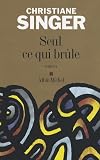
In her preface to this novel published in 2007, Christiane Singer says that nothing appears to her more apt when thinking unreal thoughts of today and comparing them equally to other ways of thinking which can be equally passionate and fantastic. She chooses to think about an incident from a story in the Heptameron by Marguerite de Navarre published in 1558: a friend of a person of the nobility is invited to stay in a chateau and at diner time he sits down to be served at a long table, while show more he is eating a beautiful young woman with a shaved head takes her place at the other end of the table, she does not say anything, eats a little and then the waiter brings out a drink contained in the skull of a dead person. The woman drinks and leaves the table as silently as she came into the room.
Singer imagines a backstory to this event, which she tells in an epistolary format. The first long letter is by Sigismund of Ehrenberg to his friend the Seigneur de Bernage. He tells of his passion for a young girl of 13 years whom he marries as soon as she is considered to be of age; not very long after her next birthday. He worships the ground she walks on and she loves him with equal passion. His business affairs take him away from the castle and he arranges for one of his squires to keep his young wife Albe entertained. When he catches sight of them in bed together he stabs his squire to death and locks his wife in her room and arranges for a barber to visit her every three days to shave her head. The next instalment of the story is from a notebook kept by Albe during her internment. She still loves her husband, she tries to make the best of her new life and prays for the day when he will come to her again. The third piece is another letter from Sigismund to his friend. Sigismund is now at the end of his life, he has four children with Albe and has lived happily, he reminds his friend of the evening that he stayed to diner and Albe had appeared at the other end of the table.
This is a story where a contemporary author has imagined how a young wife from another age might think when an incident causes her husband to take harsh retaliatory measures. It is a story of love within the context of the times. Albe knows her duty to her husband, she accepts her punishment she knows that his love for her will triumph in the end. It is not a story that sits easily with contemporary thoughts on love and marriage, but it works well enough in this beautifully told story. It has also reminded me that I have not yet read The Heptameron and so 4 stars. show less
Singer imagines a backstory to this event, which she tells in an epistolary format. The first long letter is by Sigismund of Ehrenberg to his friend the Seigneur de Bernage. He tells of his passion for a young girl of 13 years whom he marries as soon as she is considered to be of age; not very long after her next birthday. He worships the ground she walks on and she loves him with equal passion. His business affairs take him away from the castle and he arranges for one of his squires to keep his young wife Albe entertained. When he catches sight of them in bed together he stabs his squire to death and locks his wife in her room and arranges for a barber to visit her every three days to shave her head. The next instalment of the story is from a notebook kept by Albe during her internment. She still loves her husband, she tries to make the best of her new life and prays for the day when he will come to her again. The third piece is another letter from Sigismund to his friend. Sigismund is now at the end of his life, he has four children with Albe and has lived happily, he reminds his friend of the evening that he stayed to diner and Albe had appeared at the other end of the table.
This is a story where a contemporary author has imagined how a young wife from another age might think when an incident causes her husband to take harsh retaliatory measures. It is a story of love within the context of the times. Albe knows her duty to her husband, she accepts her punishment she knows that his love for her will triumph in the end. It is not a story that sits easily with contemporary thoughts on love and marriage, but it works well enough in this beautifully told story. It has also reminded me that I have not yet read The Heptameron and so 4 stars. show less
Encore une fois, un vrai plaisir de retrouver les mots et la puissance de Christiane Singer qui sait à nouveau si bien dire la vie, les soucis, les forces sacrées qui sont en nous, l'art de contempler, d'accueillir, d'aimer. Un guide simple et puissant pour nous mettre en lien avec notre part sacrée. Formidablement touchant.

> Parmi mes lectures étrangères de la semaine, je retiens surtout la Chronique tendre des jours amers, de Christiane Singer. L'oeuvre est étrange, c'est le moins qu'on puisse dire. Le personnage central, Ann H. Gay, est de son enfance a sa maturité “fabriqué" par les personnages de sa famille d'abord, par les personnages que le hasard met ensuite sur sa route. Il ne s'agit pas de prouver que Ann H. Gay n'existe pas par elle-même; il s'agit plutôt de faire valoir la profondeur des show more rapports humains, et l'influence qu'ils exercent sur chacun, si on parvient a rejeter totalement les notions de classe sociale, d'appartenance familiale et de fermeture du corps au corps des autres.
Si Ann H. Gay parait ne pas exister, c'est qu'elle existe tellement qu'elle est capable de s'identifier quasi totalement aux autres personnages, d'être eux le temps qu'il faut pour devenir autre. Le thème est difficile et aurait pu suscîter un roman austère. Il n'en est rien. La culture littéraire de l'auteur est immense et il n'y parait pas trop, parce que toutes les références répondent a un propos très précis.
D'autre part la qualité de l'écriture, dense et d’une précision rigoureuse, tout en soutenant l'intérêt romanesque du récit, ce récit qui est une galerie de portraits fascinante, permet a Christiane Singer, au-delà de l'affabulation et de l’étrangeté continuellement soutenue, de nous offrir ce qui est en réalité tout aussi bien un essai qu'une oeuvre d'imagination. Quand l'auteur accorde aux signes et aux rites une très grande influence et aussi une très grande puissance, il ne s'agit pas d'un recours a la pensée magique; c’est au contraire un instrument qui permet d'aller a l'essentiel de l'humain, c’est-a-dire a ce qui n'est pas codifié par les usages et les pouvoirs.
Il faut savoir lire, malgré le dépaysement total dans lequel on est plongé, ce qu'il y a d'ironie corrosive dans le roman. Remarquer par exemple que les hommes sont absents de la galerie de personnages, sauf s'ils sont très vieux ou très jeunes. Les autres, bien plus que Ann H. Gay ne l'est, sont inexistants. Un personnage féminin dit quelque part, et c’est péremtoire : “L'expérience vertigineuse du vide, c'est au mâle que je la dois." A tout seigneur…! (Réginald MARTEL).
—La presse, 26 février 1977, D. Arts et lettres show less
Si Ann H. Gay parait ne pas exister, c'est qu'elle existe tellement qu'elle est capable de s'identifier quasi totalement aux autres personnages, d'être eux le temps qu'il faut pour devenir autre. Le thème est difficile et aurait pu suscîter un roman austère. Il n'en est rien. La culture littéraire de l'auteur est immense et il n'y parait pas trop, parce que toutes les références répondent a un propos très précis.
D'autre part la qualité de l'écriture, dense et d’une précision rigoureuse, tout en soutenant l'intérêt romanesque du récit, ce récit qui est une galerie de portraits fascinante, permet a Christiane Singer, au-delà de l'affabulation et de l’étrangeté continuellement soutenue, de nous offrir ce qui est en réalité tout aussi bien un essai qu'une oeuvre d'imagination. Quand l'auteur accorde aux signes et aux rites une très grande influence et aussi une très grande puissance, il ne s'agit pas d'un recours a la pensée magique; c’est au contraire un instrument qui permet d'aller a l'essentiel de l'humain, c’est-a-dire a ce qui n'est pas codifié par les usages et les pouvoirs.
Il faut savoir lire, malgré le dépaysement total dans lequel on est plongé, ce qu'il y a d'ironie corrosive dans le roman. Remarquer par exemple que les hommes sont absents de la galerie de personnages, sauf s'ils sont très vieux ou très jeunes. Les autres, bien plus que Ann H. Gay ne l'est, sont inexistants. Un personnage féminin dit quelque part, et c’est péremtoire : “L'expérience vertigineuse du vide, c'est au mâle que je la dois." A tout seigneur…! (Réginald MARTEL).
—La presse, 26 février 1977, D. Arts et lettres show less
Apr 1, 2021 (Edited)French
Quelle beauté, quelle écriture, quelle inspiration que ce livre et cette auteure, Christiane Singer ! C'est un bonheur pour moi de la lire, de m'en remplir et et de me délecter de ce qu'elle dit de la vie, de notre petite existence qui peut être d'une richesse inouïe si l'on sait juste vivre le moment présent, regarder les beautés qui nous entourent, sortir des chemins battus.
" La vie n'a pas de sens, ni sens interdit, ni sens obligatoire. Et si elle n'a pas de sens, c'est qu'elle va show more dans tous les sens et déborde de sens, inonde tout. Elle fait mal aussi longtemps qu'on veut lui imposer un sens, la tordre dans une direction ou dans une autre. Si elle n'a pas de sens, c'est qu'elle est le sens." show less
" La vie n'a pas de sens, ni sens interdit, ni sens obligatoire. Et si elle n'a pas de sens, c'est qu'elle va show more dans tous les sens et déborde de sens, inonde tout. Elle fait mal aussi longtemps qu'on veut lui imposer un sens, la tordre dans une direction ou dans une autre. Si elle n'a pas de sens, c'est qu'elle est le sens." show less
Awards


You May Also Like


Statistics
- Works
- 30
- Members
- 197
- Popularity
- #111,409
- Rating
- 3.5
- Reviews
- 21
- ISBNs
- 55
- Languages
- 6

