
T. Denean Sharpley-Whiting
Author of Pimps Up, Ho's Down: Hip Hop's Hold on Young Black Women
About the Author
T. Denean Sharpley-Whiting is the director of Vanaeiblt University's Program in African American and Diaspora Studies and the W. T. Banoy Center for Baudelaire and Modern French Studies. She is the author of four books, including the award-Winning Pimps Up Down and the editor of Coedital of five show more others, most recently the Ration Anthology of Theory and Criticism. show less
Series
Works by T. Denean Sharpley-Whiting
The 13th Fellow 1 copy
Associated Works
Black French Women and the Struggle for Equality, 1848-2016 (2018) — Foreword, some editions — 8 copies
Tagged
Common Knowledge
- Legal name
- Sharpley-Whiting, Tracy Denean
- Other names
- Whiting, Tracy
- Gender
- female
- Education
- Brown University (PhD|French studies|1994)
- Occupations
- French & Diasporic Studies professor, Vanderbilt University
- Organizations
- Vanderbilt University
- Nationality
- USA
- Associated Place (for map)
- USA
Members
Reviews
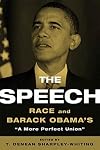
(Early reviewers book.) While a number of the essays in this book were interesting, the book as a whole struck me as overly repetitive; there's only so much speech to go around, and after the fifth or sixth essay discussing the parallels Obama drew between Wright and his grandmother I started tuning out a little.
As such, the essays I found most illuminating were probably the ones that explicitly strayed furthest from the text of the speech itself (such as Dominic Thomas's contribution on show more race relations in France) and Alice Walker's essay on the South (which didn't mention Wright at all, rather choosing as its starting point Obama's closing anecdote about a moment of connection between a young white woman and an elderly black man). show less
As such, the essays I found most illuminating were probably the ones that explicitly strayed furthest from the text of the speech itself (such as Dominic Thomas's contribution on show more race relations in France) and Alice Walker's essay on the South (which didn't mention Wright at all, rather choosing as its starting point Obama's closing anecdote about a moment of connection between a young white woman and an elderly black man). show less
 This review was written for LibraryThing Early Reviewers.
I like very much the idea behind “The Speech: Race and Barack Obama’s ‘A More Perfect Union’”. Edited by T. Denean Sharpley-Whiting, this book brings together 15 very different people with very differing views on then Senator Obama’s speech of March 18th, 2008. As Omar H. Ali puts it, “The fact is that there are at least as many ways to interpret the words contained within this or any other speech as there are people listening to or reading such words. No single interpretation show more can capture the entirety of what a particular speaker intends, or all the ways in which their speech is received.”
As I read each person’s thoughts on that momentous speech, I compared it to my own view. There is a nice balance in this book ranging from extremely favorable opinions to disappointment over a chance missed. The essays are generally written in a very scholarly manner (prompting me to look up a few words) and include a great deal of historical context. I found myself trying to look at the speech through different eyes than my own (which saw the speech as yet another example of our President’s intelligence and talent) – which I suppose, was really the point of his words that day.
Was I editing the book, I might have made a few changes, though. First off – I would have let the writers know that the historical context of the speech would be provided at the beginning of the book. Many of them laid the groundwork of what was happening in the country and in the election at that time, and the repetition got tiresome by the third essay or so. Also, I would have either placed the text of the speech at the beginning, so that it was fresh in the reader’s mind prior to reading the essays or would have broken the speech up - then grouping the essays that touched on each of those aspects together. (And then put the full text at the end of the book.) I found myself reading some parts of the speech over and over again when quoted in the essays, without having the text as a whole in the background of my thoughts.
It is fascinating, though, to share the same experience with other people whose lives are so different from mine. To know that others – like Alice Randall (as I did) “…first heard The Speech on a car radio. And so it came to me initially as words in air. It came to me as songs often come to me, as disembodied sound that reaches the body with a kind of anonymity that entices one to believe that the voice one hears in one’s own.”
To see pointed out very important elements that I missed: “At the center of The Speech are three words separating then from now: Not this time. These three words are Obama’s victory. Not this time. Repeating this phrase twice and repeating the phrase “This time” six times, Obama begins to break with the past.”
For me, the most important there of the speech was that “It requires all Americans to realize that your dreams do not have to come at the expense of my dreams; that investing in the health, welfare, and education of black and brown and white children will ultimately help all of America prosper.” In our country, where “A recent study conducted at Princeton University revealed that a white felon stands an equal chance of being granted a job interview as a black applicant with no criminal record,”. Because we finally have a black president does not mean that all the inequalities have been swept away. But it also does NOT mean, as pointed out by Obama, that the fulfillment of his dream to become president means that whites have lost their chance to succeed as he has.
This speech, this man, is a game changer for our country…in I believe, a wonderful way. Because of who he is, because of what he has done, because of what he will lead this country to become. Closing with an anecdote from Obama’s senior adviser, David Axelrod:
“Obama wrote in the middle of the night for the two nights before this speech. At two A.M on the day of the speech, Axelrod woke up to see that Obama had sent it to him on his BlackBerry. Axelrod read it and e-mailed Obama back to say, “This is why you should be president.”
Should be and is. show less
As I read each person’s thoughts on that momentous speech, I compared it to my own view. There is a nice balance in this book ranging from extremely favorable opinions to disappointment over a chance missed. The essays are generally written in a very scholarly manner (prompting me to look up a few words) and include a great deal of historical context. I found myself trying to look at the speech through different eyes than my own (which saw the speech as yet another example of our President’s intelligence and talent) – which I suppose, was really the point of his words that day.
Was I editing the book, I might have made a few changes, though. First off – I would have let the writers know that the historical context of the speech would be provided at the beginning of the book. Many of them laid the groundwork of what was happening in the country and in the election at that time, and the repetition got tiresome by the third essay or so. Also, I would have either placed the text of the speech at the beginning, so that it was fresh in the reader’s mind prior to reading the essays or would have broken the speech up - then grouping the essays that touched on each of those aspects together. (And then put the full text at the end of the book.) I found myself reading some parts of the speech over and over again when quoted in the essays, without having the text as a whole in the background of my thoughts.
It is fascinating, though, to share the same experience with other people whose lives are so different from mine. To know that others – like Alice Randall (as I did) “…first heard The Speech on a car radio. And so it came to me initially as words in air. It came to me as songs often come to me, as disembodied sound that reaches the body with a kind of anonymity that entices one to believe that the voice one hears in one’s own.”
To see pointed out very important elements that I missed: “At the center of The Speech are three words separating then from now: Not this time. These three words are Obama’s victory. Not this time. Repeating this phrase twice and repeating the phrase “This time” six times, Obama begins to break with the past.”
For me, the most important there of the speech was that “It requires all Americans to realize that your dreams do not have to come at the expense of my dreams; that investing in the health, welfare, and education of black and brown and white children will ultimately help all of America prosper.” In our country, where “A recent study conducted at Princeton University revealed that a white felon stands an equal chance of being granted a job interview as a black applicant with no criminal record,”. Because we finally have a black president does not mean that all the inequalities have been swept away. But it also does NOT mean, as pointed out by Obama, that the fulfillment of his dream to become president means that whites have lost their chance to succeed as he has.
This speech, this man, is a game changer for our country…in I believe, a wonderful way. Because of who he is, because of what he has done, because of what he will lead this country to become. Closing with an anecdote from Obama’s senior adviser, David Axelrod:
“Obama wrote in the middle of the night for the two nights before this speech. At two A.M on the day of the speech, Axelrod woke up to see that Obama had sent it to him on his BlackBerry. Axelrod read it and e-mailed Obama back to say, “This is why you should be president.”
Should be and is. show less
This review was written for LibraryThing Early Reviewers.As an Obama supporter with a keen interest in his magnificent speeches, I was very excited to read this book. As enjoyable and interesting as it was, I believe that the book has a very narrow audience, namely, Obama supporters with a keen interest in his speeches! Most, if not all, of the essays are written by Obama backers, even though some of the essayists offer somewhat critical sentiments about the impact and magnitude of the then-candidate's famous "Race Speech." I don't remember show more reading anything written by any authors who are generally critical of Obama and/or his policies and views. So while there was a pretty decent variety of persons and personalities that came through in the essays, the overall scope of opinions ranged from, "I love Obama and this speech!" to "I love Obama but this speech wasn't as great as everyone said."
With that said, I did find each particular essayist's take on the race speech to be pretty fresh and valuable on its own. The most fascinating of the essays, in my opinion, was written by a Jamaican-born woman who discussed the speech in the context of the sociological similarities and differences between black men and women who are descendants of American slaves, and black men and women who have no personal connection to this nation's "original sin" of slavery. Another essay comparing American race relations to those in France was likewise unique and interesting.
The inclusion of the text of the speech itself was a plus, although I would have liked to have seen it placed in the front of the book. I read the speech first anyway, and it would have been more convenient not to have had to skip to the end of the book to do so. But that's a stylistic critique, not a substantive one.
Bottom line: if you like Barack Obama and you like his speeches, and in particular, if you want to know what some people think about the historical and societal impact of the Race Speech, then this book is a must-have. If you are not an Obama supporter, or if you think a speech is a speech, or if you just want to take from his speech what you want to take, and couldn't care less what other people think its impact will be, then you probably won't be buying it. show less
With that said, I did find each particular essayist's take on the race speech to be pretty fresh and valuable on its own. The most fascinating of the essays, in my opinion, was written by a Jamaican-born woman who discussed the speech in the context of the sociological similarities and differences between black men and women who are descendants of American slaves, and black men and women who have no personal connection to this nation's "original sin" of slavery. Another essay comparing American race relations to those in France was likewise unique and interesting.
The inclusion of the text of the speech itself was a plus, although I would have liked to have seen it placed in the front of the book. I read the speech first anyway, and it would have been more convenient not to have had to skip to the end of the book to do so. But that's a stylistic critique, not a substantive one.
Bottom line: if you like Barack Obama and you like his speeches, and in particular, if you want to know what some people think about the historical and societal impact of the Race Speech, then this book is a must-have. If you are not an Obama supporter, or if you think a speech is a speech, or if you just want to take from his speech what you want to take, and couldn't care less what other people think its impact will be, then you probably won't be buying it. show less
This review was written for LibraryThing Early Reviewers.Not only a great resource for scholars of Obama's rhetoric, as it contains the actual speech on race the President gave as candidate Obama, but also an insightful look into the "meaning" and "significance" of that speech as viewed from various perspectives.
I would also add that the essays give a great historical narrative of the primary battle between Clinton and Obama in the time surrounding the Wright scandal, and the campaigns response to it. Not only should it be considered a solid show more historical artifact, but a good connected narrative as well.
I remember watching the speech live and thinking it was quite powerful, but now, having read this work, I find all the subtle nuances in the speech come to the surface to provide a more in-depth analysis of exactly what was said.
This book is accessible to the average reader and at the same time valuable to the academic reader. I strongly believe that this book is worth the money and the time to read it. Everyone interested in race, politics, and Obama should have a copy, and, especially those who fall into none of the aforementioned camps. show less
I would also add that the essays give a great historical narrative of the primary battle between Clinton and Obama in the time surrounding the Wright scandal, and the campaigns response to it. Not only should it be considered a solid show more historical artifact, but a good connected narrative as well.
I remember watching the speech live and thinking it was quite powerful, but now, having read this work, I find all the subtle nuances in the speech come to the surface to provide a more in-depth analysis of exactly what was said.
This book is accessible to the average reader and at the same time valuable to the academic reader. I strongly believe that this book is worth the money and the time to read it. Everyone interested in race, politics, and Obama should have a copy, and, especially those who fall into none of the aforementioned camps. show less
This review was written for LibraryThing Early Reviewers.Lists
You May Also Like


Associated Authors
Statistics
- Works
- 12
- Also by
- 6
- Members
- 215
- Popularity
- #103,624
- Rating
- 3.4
- Reviews
- 11
- ISBNs
- 25
- Languages
- 1
- Favorited
- 1
