
Beth Cato
Author of The Clockwork Dagger
About the Author
Image credit: Beth Cato
Series
Works by Beth Cato
Maps {short story} 1 copy
A Picture is Worth [short story] — Author — 1 copy
Associated Works
Uncle John's Bathroom Reader Presents Flush Fiction: 88 Short-Short Stories You Can Read in a Single Sitting (2012) — Contributor — 35 copies, 2 reviews
Mysterion: Rediscovering the Mysteries of the Christian Faith (2016) — Contributor — 18 copies, 1 review
The Magazine of Fantasy and Science Fiction July/August 2019, Vol. 137, Nos. 1 & 2 (1951) — Contributor — 13 copies, 1 review
Voyager: A Science Fiction and Fantasy eBook Sampler From Harper Voyager US (2014) — Contributor — 7 copies
The 2015 Rhysling Anthology: The Best Science Fiction, Fantasy & Horror Poetry of 2014 (2015) — Contributor — 7 copies, 1 review
Diabolical Plots: Year Five (Diabolical Plots Anthology Series Book 4) (2019) — Contributor — 6 copies, 2 reviews
The 2019 Rhysling Anthology: The best science fiction, fantasy & horror poetry of 2018 selected by the Science Fiction Poetry Association (2019) — Contributor — 5 copies, 3 reviews
Uncanny Magazine: The Best of 2018 — Contributor, some editions — 4 copies
For Want of a Horse: Twenty-Three Tales of Supernatural Stallions, Magical Mares, and Paranormal Ponies (2015) — Contributor — 2 copies, 2 reviews
Small Wonders, Issue 0: February 2023 — Contributor — 1 copy
Beneath Ceaseless Skies Issue #137 — Contributor — 1 copy
Stupefying Stories: March 2012 — Contributor — 1 copy
StarShipSofa, #414: A Lonesome Speck of Home / Makeisha in Time (2013) — Contributor — 1 copy, 1 review
Tagged
Common Knowledge
- Birthdate
- 1980-01-13
- Gender
- female
- Organizations
- SFWA
- Awards and honors
- Rhysling Award (Best Short Poem, 2019)
- Agent
- Strauss, Rebecca
- Nationality
- USA
- Birthplace
- Hanford, California, USA
- Places of residence
- Phoenix, Arizona, USA
- Associated Place (for map)
- USA
Members
Reviews
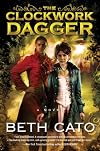
I knew next to nothing about steampunk, other than the fact that it attracts a devoted following and looks like a really interesting genre. I wasn't even completely certain how attracted I would be once I truly explored it, but, finding the visual aesthetic appealing in the handful of films I've watched, and the conventions that some friends attend, I wanted to explore what steampunk was like on the printed page, how it played out in deeper story-telling. The Clockwork Dagger seemed a show more popular choice, so I decided to make it my entry point.
This is Beth Cato's first full-length novel, and we all know that first novels deserve a certain understanding in some areas. Many authors are still finding their voice with that first publication, and so some faults are to be expected. That said, I was impressed with how strongly our protagonist, Octavia Leander’s, voice came through. I could hear this character speaking clearly on the first page, the cadences and tone of her voice clear in my perception, and growing clearer with each chapter. I'm quite impressed with how Cato developed Leander through the course of these 200 pages, and I felt that I had met a character that I truly knew by the time I closed the book. The other primary characters receive an equally just treatment..all are developed thoroughly and carefully. Occasionally, a piece of reflective or introspective dialogue felt forced, but this was rare, and ultimately never broke my suspension of disbelief. The greatest strength of Cato's writing in this debut is the care with which she permits her characters to come to life. This is accomplished in no small regard due to her handling of the language, which is clever and inventive, merging well a period piece and modern language as seems a requirement for this genre.
Second would be the world-building. This novel is as steampunk as they come. We're introduced to a nice balance of Victorian dialogue, whirring machinations and inventions, magical spells and curses, and a mystery playing out aboard a dirigible. I was surprised by the magical components of the book...surprised in a good way. It's just that I hadn't really known how much a part of steampunk that magic is, but there you have it...this was a part of my education. I’m actually surprised with the depth of complexity that Cato captures in this world, given that the novel is relatively concise in length, but every nuance of the political structure, the economic issues between nations, and an industrial revolution run amok in war are designed with each detail considered and completely working. The warring nations and corrupt leadership form a fascinating backdrop to the story, without becoming overly didactic in their metaphor.
What Cato tackles head-on in this work is the seeming conflict between faith and science.
Octavia Leander, you see, is a medician...a healer who understands the natural ways to heal that the earth provides, as well as possessing magical means of mending broken people. More than this, these magical abilities are derived from a religious faith, a faith in the Lady and her Tree. Legend holds that the Lady received her power after asking God for the ability to heal more people, and the medicians follower her order. Octavia is ridiculed by many who trust in the rapid new technological developments of the age, yet her abilities cannot be questioned. She is a gifted healer, perhaps the most gifted known in recent memory, and it is for this reason that she is hunted. Most simply end up accepting her abilities with some awe, while concluding that such a path is not for them, thus walking away and attempting to reconcile the visible effects of an unseen faith with the measurable, quantifiable and tactile world of technological advances around them. That reconciliation seems to occur on mostly a surface level, never delved into too deeply...just as in our culture today. I think that this faith in a more ancient knowledge is the thesis of the novel, and what I especially appreciate is that Cato handles it adeptly without ever leaving the reader groaning or resentful. She never develops this into any sort of theology. She is content with the imagery that she is presenting, and it does its job well.
There's a romantic sub-plot that the book could simply live without. Each development in this regard feels forced and un-natural, and, on the rare occasions in which I did feel that something was out of place, it was in those moments. That said, I have no interest (and barely any tolerance) for the romantic genre, so this could just be my own clouded perceptions, and I'm willing to own that.
The ending feels a bit...stretched...but not to a point in which I feel anything is lost. Simply, proportions of things seem to become very large and epic very quickly, an abrupt step from the heavily interpersonal plot that Cato has developed up to that point. I think that it would have worked better with a bit more transition, but, while trying to avoid spoilers, I’ll say that this could also be seen as a device to further her emphasis on the power of faith.
I expected steampunk to be a bit of escapism, as it has always felt a bit whimsical in my previous (brief) experiences. I certainly didn’t expect it to deal with something deeper and thought-provoking, but I was pleasantly surprised here. I’m certain that, if you’re already a fan, this is already on your list or on your shelf. If, like me, you’re just exploring what this whole thing is all about, then this is a good first read…the kind of novel that stays with for a bit after you’ve finished. I think Cato’s future works will get better, but I’m glad that I’ve met Octavia Leander. show less
This is Beth Cato's first full-length novel, and we all know that first novels deserve a certain understanding in some areas. Many authors are still finding their voice with that first publication, and so some faults are to be expected. That said, I was impressed with how strongly our protagonist, Octavia Leander’s, voice came through. I could hear this character speaking clearly on the first page, the cadences and tone of her voice clear in my perception, and growing clearer with each chapter. I'm quite impressed with how Cato developed Leander through the course of these 200 pages, and I felt that I had met a character that I truly knew by the time I closed the book. The other primary characters receive an equally just treatment..all are developed thoroughly and carefully. Occasionally, a piece of reflective or introspective dialogue felt forced, but this was rare, and ultimately never broke my suspension of disbelief. The greatest strength of Cato's writing in this debut is the care with which she permits her characters to come to life. This is accomplished in no small regard due to her handling of the language, which is clever and inventive, merging well a period piece and modern language as seems a requirement for this genre.
Second would be the world-building. This novel is as steampunk as they come. We're introduced to a nice balance of Victorian dialogue, whirring machinations and inventions, magical spells and curses, and a mystery playing out aboard a dirigible. I was surprised by the magical components of the book...surprised in a good way. It's just that I hadn't really known how much a part of steampunk that magic is, but there you have it...this was a part of my education. I’m actually surprised with the depth of complexity that Cato captures in this world, given that the novel is relatively concise in length, but every nuance of the political structure, the economic issues between nations, and an industrial revolution run amok in war are designed with each detail considered and completely working. The warring nations and corrupt leadership form a fascinating backdrop to the story, without becoming overly didactic in their metaphor.
What Cato tackles head-on in this work is the seeming conflict between faith and science.
Octavia Leander, you see, is a medician...a healer who understands the natural ways to heal that the earth provides, as well as possessing magical means of mending broken people. More than this, these magical abilities are derived from a religious faith, a faith in the Lady and her Tree. Legend holds that the Lady received her power after asking God for the ability to heal more people, and the medicians follower her order. Octavia is ridiculed by many who trust in the rapid new technological developments of the age, yet her abilities cannot be questioned. She is a gifted healer, perhaps the most gifted known in recent memory, and it is for this reason that she is hunted. Most simply end up accepting her abilities with some awe, while concluding that such a path is not for them, thus walking away and attempting to reconcile the visible effects of an unseen faith with the measurable, quantifiable and tactile world of technological advances around them. That reconciliation seems to occur on mostly a surface level, never delved into too deeply...just as in our culture today. I think that this faith in a more ancient knowledge is the thesis of the novel, and what I especially appreciate is that Cato handles it adeptly without ever leaving the reader groaning or resentful. She never develops this into any sort of theology. She is content with the imagery that she is presenting, and it does its job well.
There's a romantic sub-plot that the book could simply live without. Each development in this regard feels forced and un-natural, and, on the rare occasions in which I did feel that something was out of place, it was in those moments. That said, I have no interest (and barely any tolerance) for the romantic genre, so this could just be my own clouded perceptions, and I'm willing to own that.
The ending feels a bit...stretched...but not to a point in which I feel anything is lost. Simply, proportions of things seem to become very large and epic very quickly, an abrupt step from the heavily interpersonal plot that Cato has developed up to that point. I think that it would have worked better with a bit more transition, but, while trying to avoid spoilers, I’ll say that this could also be seen as a device to further her emphasis on the power of faith.
I expected steampunk to be a bit of escapism, as it has always felt a bit whimsical in my previous (brief) experiences. I certainly didn’t expect it to deal with something deeper and thought-provoking, but I was pleasantly surprised here. I’m certain that, if you’re already a fan, this is already on your list or on your shelf. If, like me, you’re just exploring what this whole thing is all about, then this is a good first read…the kind of novel that stays with for a bit after you’ve finished. I think Cato’s future works will get better, but I’m glad that I’ve met Octavia Leander. show less
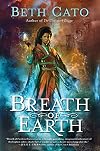
In general, I'm a fan of Beth Cato, although she walks the line of too much stuff going on to the detriment of the story. However, I definitely feel like her writing just keeps getting better and better, so this is an exciting new world from her.
Very original, very interesting weaving of San Francisco history with a magical influences and I like the pointed exaggeration of the brutal havoc caused by colonialism in India and China, and the oppression of Chinese immigrants to the US-- not show more that her world exaggerates the reality all that much, but that the alternative history is set up to focus on it in a way that most history books do not.
I appreciate the diversity of the characters (asian, hawaiian, unknown, trans) the strong heroine, the interesting the magics (geomancers!) and the airships (yay). I like both the compassion displayed and the thorny-ness of the problems they face. Also, btw, kick-ass adventure. I can't wait to see where this goes next. show less
Very original, very interesting weaving of San Francisco history with a magical influences and I like the pointed exaggeration of the brutal havoc caused by colonialism in India and China, and the oppression of Chinese immigrants to the US-- not show more that her world exaggerates the reality all that much, but that the alternative history is set up to focus on it in a way that most history books do not.
I appreciate the diversity of the characters (asian, hawaiian, unknown, trans) the strong heroine, the interesting the magics (geomancers!) and the airships (yay). I like both the compassion displayed and the thorny-ness of the problems they face. Also, btw, kick-ass adventure. I can't wait to see where this goes next. show less
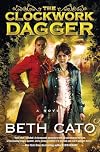
Combining a steampunk airship adventure with nature and saint based spirituality, ugly/adorable flying gremlins, competing political conspiracies, a missing princess, various forms of magic, and the beginning stages of romance, Clockwork Dagger charmed and entertained me. Octavia Leander, orphaned in the war, has healing powers sought by all sides, so though she just wants to practice her craft in a quiet rural setting she's drawn into a dangerous power struggle.
Fortunately she’s quick show more thinking and has the support of the Lady, a healing goddess who may have begun life as a human but now is embodied as the spirit of a magnificent magical tree. The characters are wonderful--beside Octavia there is Leaf, the little green gremlin, Viola Stout, an unconventional older woman with a surprising secret, Alonzo Garret, the handsome airship steward who's always around when there's trouble, and assorted eccentrics who make up the airship's passengers and crew. The story's landscape includes smoky cities, marshy swamps, and country towns and though it’s set in a fantasy kingdom, not England, the book reminded me of Gail Carriger's Etiquette and Espionage series. show less
Fortunately she’s quick show more thinking and has the support of the Lady, a healing goddess who may have begun life as a human but now is embodied as the spirit of a magnificent magical tree. The characters are wonderful--beside Octavia there is Leaf, the little green gremlin, Viola Stout, an unconventional older woman with a surprising secret, Alonzo Garret, the handsome airship steward who's always around when there's trouble, and assorted eccentrics who make up the airship's passengers and crew. The story's landscape includes smoky cities, marshy swamps, and country towns and though it’s set in a fantasy kingdom, not England, the book reminded me of Gail Carriger's Etiquette and Espionage series. show less
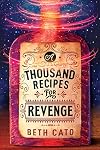
Such intricate detail, such originality! I love the way Ms. Cato combines her finer appreciation and understanding of food with consummate storytelling to bring a tale both original and enjoyable. The complexity rivals that of a gourmet meal and makes it ever so difficult to set the book aside for other obligatory matters, like work and sleep. Of course, there is something to be said for being forced to enjoy this tale in carefully measured portions, allowing one to savor the nuances that show more might be missed in a binge. While magic and food are not a new pairing, A Thousand Recipes for Revenge manages to set its distinctive mark on the trope that stands out against the other examples I have encountered.
Highly recommended! show less
Highly recommended! show less
Lists
Awards


You May Also Like


Associated Authors
Statistics
- Works
- 35
- Also by
- 86
- Members
- 1,156
- Popularity
- #22,230
- Rating
- 3.7
- Reviews
- 60
- ISBNs
- 27
- Favorited
- 2
