
Marvin Minsky (1927–2016)
Author of The Society of Mind
About the Author
Marvin Minsky is Toshiba Professor of Media Arts and Sciences and Professor of Electrical Engineering and Computer Science at the Massachusetts Institute of Technology and cofounder of the M.I.T. Artificial Intelligence Laboratory
Image credit: David Orban
Works by Marvin Minsky
The Emotion Machine: Commonsense Thinking, Artificial Intelligence, and the Future of the Human Mind (2006) 427 copies, 4 reviews
Robotics: The First Authoritative Report from the Ultimate High-Tech Frontier (1985) 22 copies, 2 reviews
Review: Society of Mind 1 copy
THE EMOTION UNIVERSE 1 copy
Associated Works
Life in the Universe: Scientific American : A Special Issue (Scientific American, a Special Issue) (1995) — Contributor — 20 copies
Isaac Asimov's Science Fiction Magazine: Vol. 9, No. 12 [December 1985] (1985) — Contributor — 13 copies
Evolution @ Intersection — Contributor — 2 copies
Tagged
Common Knowledge
- Canonical name
- Minsky, Marvin
- Legal name
- Minsky, Marvin Lee
- Birthdate
- 1927-08-09
- Date of death
- 2016-01-24
- Gender
- male
- Education
- Bronx High School of Science, New York, New York, USA
Phillips Academy, Andover, Massachusetts, USA
Harvard University (B.A.|Mathematics|1950)
Princeton University (Ph.D.|Mathematics|1954) - Occupations
- professor (Computer Science | Massachusetts Institute of Technology | 1958- )
- Organizations
- Massachusetts Institute of Technology
National Academy of Sciences
National Academy of Engineering
Association for the Advancement of Artificial Intelligence (Fellow)
Argentine National Academy of Science
National Space Society (show all 12)
Planetary Society
IEEE (Fellow)
ACM (Member)
Committee for Skeptical Inquiry
Artificial Intelligence Group (co-director)
United States Navy (WWII) - Awards and honors
- Turing Award (1969)
Japan Prize (1990)
Benjamin Franklin Medal (2001)
Joseph Priestly Award (1995)
IEEE Computer Pioneer Award (1995)
Fellow, American Academy of Arts and Sciences (show all 12)
Fellow, Computer History Museum (2006)
IEEE Intelligent Systems' AI Hall of Fame (2011)
Dan David Prize (2014)
BBVA Foundation Frontiers of Knowledge Award (2013)
Royal Society of Medicine Rank Prize (1995)
Killian Award (1989) - Relationships
- Papert, Seymour (colleague)
- Cause of death
- cerebral hemorrhage
- Nationality
- USA
- Birthplace
- New York, New York, USA
- Places of residence
- New York, New York, USA (birth)
- Place of death
- Boston, Massachusetts, USA
- Associated Place (for map)
- New York, USA
Members
Reviews
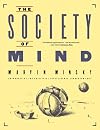
I first read this when I was experimenting with chatbots in the early 1990's. It's more or less how a computer scientist sees child psychology, with the goal of describing how the mind works. It's pretty much full of profound BS, but there are a few gems hidden in the weeds. It was worth a re-read, if only to remember how much thinking about thinking has not really changed in forty years."Reductionist" doesn't do it justice - when all you have is a communication channel, everything looks show more like a network. show less

Harry Harrison of course is one of science fiction's "grand old men," and Marvin Minsky is a leading light in the nascent field of artificial intelligence (AI). The Turing Option is a true Gernsbackian novel (a lovely term referencing the grandfather of American science fiction, Hugo Gernsback, Jr., which has since been replaced by the vaguely porny-sounding "hard SF" as the descriptor of choice) set in the not-too-distant future (the book opens in 2023) which explores the boundary between show more artificial and organic (or "real") intelligence as well as the sources of human personality. The lead character is a young scientist who survives an assassination attempt even though he is shot in the head; as his knowledge is desperately needed by his employers, the AI technology that he'd developed is utilized to reconstruct his brain and, with it, his mind: his knowledge, personality and memories. This is one of the rare instances where a lecture in thriller clothes works; indeed, I was far more interested in the didactic segments than the plot itself (corporations with their own private armies, espionage and "black ops" services trumping national governments, waging guerilla war on each other, yadda-yadda-yadda). There is a lot to absorb, but it is so fascinating that it never bogs down; indeed, I had to force myself to read it more slowly in an attempt to retain more of the information conveyed. Deeply thought-provoking and easily the best thing I've read by Harrison thus far (admittedly that isn't much), I will definitely be re-reading this again at some point. And again. And again. Michael (Mr. "There's No Such Thing as Global Warming!") Crichton only wishes he could write this well.
The funny/sad thing is, I'd be willing to bet that The Turing Option is now as out-of-date as the prospects of K. Eric Drexler -- who offers a complimentary blurb on the inside front cover. show less
The funny/sad thing is, I'd be willing to bet that The Turing Option is now as out-of-date as the prospects of K. Eric Drexler -- who offers a complimentary blurb on the inside front cover. show less

This extraordinary book was written at least ten years before its time. When it was written, there was not the computing power to support the ideas and concepts in it.
When I initially wrote this review, both Minsky and Papert were still alive. Now they're both gone. The world is a smaller, poorer place without them.
Connectionism (later on termed neural networks) began here.
When I initially wrote this review, both Minsky and Papert were still alive. Now they're both gone. The world is a smaller, poorer place without them.
Connectionism (later on termed neural networks) began here.

A book like no other. 270 one-page essays carefully outlining Minsky's theory of the mind. These range in topic and complexity from casual anecdotes and folk reasoning to dense, neologism-laden academic work. Minsky's style is crisp and enjoyable, so he helps you swim through the difficult stuff. It all feels like a text whose aphoristic tone and broad scope will reward each return to it, saying more than it seems to say at first.
Lists
Awards


You May Also Like


Associated Authors
Statistics
- Works
- 21
- Also by
- 13
- Members
- 3,227
- Popularity
- #7,930
- Rating
- 3.8
- Reviews
- 30
- ISBNs
- 46
- Languages
- 8
- Favorited
- 8
