
Alyn Shipton
Author of A New History of Jazz
About the Author
Alyn Shipton is a critic for The Times in London.
Image credit: www.alynshipton.co.u
Works by Alyn Shipton
Associated Works
BBC Proms 2019 : Prom 45 : Nina Simone : Mississippi Goddam [programme] (2019) — Programme notes — 1 copy
Tagged
Common Knowledge
- Birthdate
- 1953-11-25
- Gender
- male
- Short biography
- Alyn Shipton is an award-winning author and broadcaster, who is jazz critic for The Times in London, and a presenter/producer of jazz programmes for BBC Radio. He was Consultant Editor of the New Grove Dictionary of Jazz, and has a lifelong interest in oral history, including editing the memoirs of Danny Barker, Doc Cheatham and George Shearing. His first biography of Fats Waller, published in 1988, has scarcely been out of print since. His life of Bud Powell (written with Alan Groves) was the first English language biography of the pianist, and his book Groovin’ High, the life of Dizzy Gillespie, won the 1999 ARSC award for the best research of the year. His monumental New History of Jazz, published in 2001, was the Jazz Journalists’ Association Book of the Year, and won Alyn the coveted “Jazz Writer of the Year” title in the British Jazz Awards. In 2003 he won the Willis Conover / Marian McPartland Award for lifetime achievement in Jazz Broadcasting. In 2010 he was named Jazz Broadcaster of the Year in the UK Parliamentary Jazz Awards. Alyn won an open scholarship to Oxford in 1972, where he read English at St. Edmund Hall. He later went on to take a PhD in music history at Oxford Brookes University. He has been a lecturer in music at Brookes (2002-3), teaching the jazz history course, and he has also given lectures on jazz and American popular music at Exeter University and at the Institute for United States Studies in the University of London. He is now lecturer in Jazz History at the Royal Academy of Music, London. Alyn divides his time between living in Oxford, UK, and deep in rural France. [from www.alynshipton.co.uk]
Members
Reviews
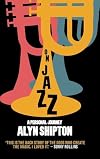
On Jazz by Alyn Shipton is both an informal historical account of jazz through one person's eyes as well as a wonderful glimpse behind the scenes.
While this book, as its subtitle says, is a personal journey it is not simply about Shipton's life and experiences. These serve largely as a frame which allows him to offer insight into not just the music and those making it but the social and cultural world within which it was done. I found the style and framing to work very well, weaving personal show more anecdotes with the larger picture.
If you are a fan of the jazz itself and not just of some of the music for when you're in the mood, this will be a rewarding read. You'll learn about the artists, about what they went through in making their art, and about the evolution of the music itself. If you just use jazz for certain moods, well, this book may not suit you. I understand that, I am that way about country music. Some country fits with certain moods and serves as a balm, but I don't care to know about the artists or the inner workings of the industry except where it intersects with the larger culture of which it is a part. In other words, a book like this about country music probably wouldn't satisfy me very well.
So for those who love jazz music itself rather than just what it does for you, this book is a must read. If you're a fan of music history in general there is a lot here you will find interesting.
Reviewed from a copy made available by the publisher via NetGalley. show less
While this book, as its subtitle says, is a personal journey it is not simply about Shipton's life and experiences. These serve largely as a frame which allows him to offer insight into not just the music and those making it but the social and cultural world within which it was done. I found the style and framing to work very well, weaving personal show more anecdotes with the larger picture.
If you are a fan of the jazz itself and not just of some of the music for when you're in the mood, this will be a rewarding read. You'll learn about the artists, about what they went through in making their art, and about the evolution of the music itself. If you just use jazz for certain moods, well, this book may not suit you. I understand that, I am that way about country music. Some country fits with certain moods and serves as a balm, but I don't care to know about the artists or the inner workings of the industry except where it intersects with the larger culture of which it is a part. In other words, a book like this about country music probably wouldn't satisfy me very well.
So for those who love jazz music itself rather than just what it does for you, this book is a must read. If you're a fan of music history in general there is a lot here you will find interesting.
Reviewed from a copy made available by the publisher via NetGalley. show less
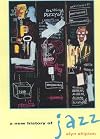
Jazz was always a mystery for me, but I made a concerted effort a few years ago to understand it better. I have read a couple of more basic introductions (the NPR Guide, the Complete Idiot's Guide) before this one, and I found Shipton's book to be very well written and researched. It provides a great background, not only on the music, but also on the environment that created jazz. He takes pleasure in debunking some of the myths that have grown up around the music (sometimes too much show more pleasure), but his arguments are always backed up with research. While giving ample coverage to the giants of jazz, he also introduces the reader to many other figures who have shaped the music. Shipton is opinionated, but it always clear where he is stating an opinion. All in all, I would highly recommend this book for anyone looking to deepen their understanding and curiosity about jazz. The only real shortcoming is that the book only has a small section of photographs. The Ken Burns jazz book lacks the breadth and depth of this one, but you do get to see great pictures of many of the people and places Shipton refers to in this very good book. show less
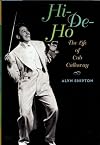
I’ve always had a soft spot for Cab Calloway. From the time I was small my grandmother, who grew up in Harlem, would sing "Minnie the Moocher," his trademark song, to my sister and I, then regale us with stories of nights dancing at the Cotton Club to the music of Cab and his big band. She may have seen other artists perform there, but she only ever mentioned Cab Calloway by name. Apparently, he was a memorable and electrifying personality.
So, is it possible to catch such lightning in a show more bottle?
Alyn Shipton’s biography is lovingly detailed and extremely informative. The research that went into the material was obviously extensive and, even though personal details are relatively sparse, it appears he worked with the cooperation of Calloway’s family as well. However, this book is aimed more at fellow musicians (or musical scholars) than it is at the average reader. Shipton’s goal is obvious from the start, to persuade readers to re-evaluate Calloway’s musical legacy, to see him and his band as jazz innovators in their own right, not merely a populist crossover act that pandered to the lowest common denominator. And that’s all well and good, but he spills an inordinate amount of ink attempting to describe the contributions of the individual musicians on many of the band’s numerous recordings and, honestly, trying to capture the sound of a swing band in writing is a fool’s errand. In this, the only thing Shipton accomplished was to force me to seek out old clips of Calloway so I could see for myself what a magnetic performer he was. And he truly was.
Although I was initially attracted to the book because of Calloway’s connection to the Harlem Renaissance period, it surprised me that the last two sections, detailing his later years, were infinitely more engaging. The depiction of Cab’s early days in show business was rather dry - detailing the line-up changes and curriculum vitae of each and every band member, their tour schedules, song arrangements, sets and costumes, not to mention his various professional relationships with songwriters, managers, mobsters and club-owners. I’m ashamed to admit that, at times, I had to force myself not to skim these bits. After the decline in popularity of big band music, his career appears to be in a downward spiral before he re-invents himself as a Broadway musical star and ultimately endears himself to an entire new generation of music fans with his appearance in The Blues Brothers film. It’s during that relatively brief fallow period, when Calloway sinks into a deep depression, that the reader finally feels privy to some aspect of his inner life. Prior to that, although there were deaths, divorce, infidelity, racism and child rearing, Shipton describes these events very superficially, perhaps for fear of devolving into melodrama and diminishing the book’s more serious musical aims.
So ultimately, I came away with a greater knowledge of Cab Calloway’s professional background and his musical oeuvre, as well as a renewed appreciation for his contributions to music, but felt that I really didn’t get to know him any better as a man.
Recommended for serious fans of jazz and/or twentieth century African-American history. show less
So, is it possible to catch such lightning in a show more bottle?
Alyn Shipton’s biography is lovingly detailed and extremely informative. The research that went into the material was obviously extensive and, even though personal details are relatively sparse, it appears he worked with the cooperation of Calloway’s family as well. However, this book is aimed more at fellow musicians (or musical scholars) than it is at the average reader. Shipton’s goal is obvious from the start, to persuade readers to re-evaluate Calloway’s musical legacy, to see him and his band as jazz innovators in their own right, not merely a populist crossover act that pandered to the lowest common denominator. And that’s all well and good, but he spills an inordinate amount of ink attempting to describe the contributions of the individual musicians on many of the band’s numerous recordings and, honestly, trying to capture the sound of a swing band in writing is a fool’s errand. In this, the only thing Shipton accomplished was to force me to seek out old clips of Calloway so I could see for myself what a magnetic performer he was. And he truly was.
Although I was initially attracted to the book because of Calloway’s connection to the Harlem Renaissance period, it surprised me that the last two sections, detailing his later years, were infinitely more engaging. The depiction of Cab’s early days in show business was rather dry - detailing the line-up changes and curriculum vitae of each and every band member, their tour schedules, song arrangements, sets and costumes, not to mention his various professional relationships with songwriters, managers, mobsters and club-owners. I’m ashamed to admit that, at times, I had to force myself not to skim these bits. After the decline in popularity of big band music, his career appears to be in a downward spiral before he re-invents himself as a Broadway musical star and ultimately endears himself to an entire new generation of music fans with his appearance in The Blues Brothers film. It’s during that relatively brief fallow period, when Calloway sinks into a deep depression, that the reader finally feels privy to some aspect of his inner life. Prior to that, although there were deaths, divorce, infidelity, racism and child rearing, Shipton describes these events very superficially, perhaps for fear of devolving into melodrama and diminishing the book’s more serious musical aims.
So ultimately, I came away with a greater knowledge of Cab Calloway’s professional background and his musical oeuvre, as well as a renewed appreciation for his contributions to music, but felt that I really didn’t get to know him any better as a man.
Recommended for serious fans of jazz and/or twentieth century African-American history. show less
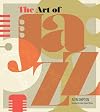
In this coffee-table sized book, Shipton shows the development of the images associated with jazz music: from posters and sheet-music cover sheets in the earliest years of the twentieth century to record and CD cover images throughout the years. He identifies artists who were jazz fans and created paintings affected by the music, including Paul Mondrian, George Wettling, Norman Lewis, William T, Williams, and S. Neil Fujita. As jazz became freer and more complex, many album covers reflected show more this change, using more abstract and impressionistic images.
There are hundreds of illustrations in well produced color. Shipton provides us with a history of jazz as a frame in which to hang all these images, which range from early photographs to beautiful art. I personally numerous wildly creative albums from Miles Davis (especially Bitches Brew) and Wynton Marsalis (several featuring artwork by Romare Bearden). The historical material is not comprehensive, but it definitely gives us a solid skeleton on which to hang the artistic material.
Shipton is a well known jazz critic in the UK, and he has written several books about individual artists and groups. I'll be keeping an eye out for them. show less
There are hundreds of illustrations in well produced color. Shipton provides us with a history of jazz as a frame in which to hang all these images, which range from early photographs to beautiful art. I personally numerous wildly creative albums from Miles Davis (especially Bitches Brew) and Wynton Marsalis (several featuring artwork by Romare Bearden). The historical material is not comprehensive, but it definitely gives us a solid skeleton on which to hang the artistic material.
Shipton is a well known jazz critic in the UK, and he has written several books about individual artists and groups. I'll be keeping an eye out for them. show less
Lists
Awards


You May Also Like


Associated Authors
Statistics
- Works
- 22
- Also by
- 1
- Members
- 448
- Popularity
- #54,748
- Rating
- 3.9
- Reviews
- 6
- ISBNs
- 77
- Languages
- 2