
Gavin Stamp (1948–2017)
Author of Edwin Lutyens: Country Houses
About the Author
Gavin Stamp is the author of, among other titles, The English House, 1860-1914: The Flowering of English Domestic Architecture, Lutyens: New Delhi & the Monumental, & The Changing Metropolis: Earliest Photographs of London, 1839-1879. (Bowker Author Biography)
Image credit: Gavin Stamp
Works by Gavin Stamp
An Architect of Promise: George Gilbert Scott Junior (1839-1897) and the Late Gothic Revival (2002) 7 copies, 1 review
History today, May 2022 1 copy
Associated Works
The Fallen: A Photographic Journey Through the War Cemeteries and Memorials of the Great War, 1914-18 (1990) — Introduction — 15 copies, 1 review
Tagged
Common Knowledge
- Legal name
- Stamp, Gavin Mark
- Birthdate
- 1948-03-15
- Date of death
- 2017-12-30
- Gender
- male
- Education
- Dulwich College, London
University of Cambridge (Gonville and Caius College) - Occupations
- architectural historian
universityprofessor - Organizations
- Glasgow School of Art (Mackintosh School of Architecture)
- Relationships
- Artley, Alexandra (spouse)
Hill, Rosemary (spouse) - Nationality
- UK
- Birthplace
- Bromley, Kent, England, UK
- Associated Place (for map)
- England, UK
Members
Reviews
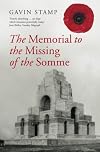
I came across ‘The Memorial to the Missing of the Somme’ via [a:Owen Hatherley|2871671|Owen Hatherley|https://images.gr-assets.com/authors/1445556151p2/2871671.jpg]’s twitter, where he recommended it as a particularly good book about architecture. Indeed, the writing style is quite similar to his own: exacting, thoughtful, alternately generous and waspish. At first I doubted that a single war memorial, however magnificent, could merit two hundred pages of discussion. I swiftly became show more interested, however, despite having only vaguely heard of Edwin Lutyens before. (I’d come across him as a designer of mansions with gardens by Gertrude Jekyll, who he collaborated with.) It seems he was an architectural genius and a rather maddening man, constantly making puns. He revered Christopher Wren and coined the term ‘Wrenaissance’. Despite this perpetual levity he was responsible for the Whitehall Cenotaph, as well as the Thriepval Arch on one of the most deadly battlefields the world has ever known. This visually fascinating multi-arched memorial contains the names of all 73,357 men of the British army who vanished in the Battle of the Somme.
Stamp gives an outline of the battle and its appallingly destructive pointlessness: the British suffered 419,654 casualties, the French 204,253, and the Germans somewhere between 450,000 (German estimate) and 680,000 (British estimate). The front line moved barely three miles during those months of slaughter. Such gargantuan, senseless killing deserves a serious effort at collective remembrance. Accordingly, Stamp praises the British authorities for creating a series of striking monuments that convey sorrow rather than bombast. No-one won the Battle of the Somme. The village the arch is named after, Thriepval, was so thoroughly obliterated that its exact location was lost forever. The ground was so dense with corpses that when a visitors centre was being constructed in 2004, the bodies of seven German soldiers were uncovered. The book balances these horrors with a clear account of Lutyens, and of the architectural references drawn upon to honour the sacrifices of the lost without glorifying the war.
Stamp argues convincingly for the lasting impact of this particular memorial, although I was less convinced by his relative disdain for the French efforts (for example the Verdun memorial which is also an ossuary). I’d have to see both to make a judgement and this book made me think it would be worth doing so. This is unusual for a book on architecture, as I usually read them as a comfortable sofa-based substitute for going to places myself. Stamp’s well-evidenced passion for this specific monument is infectious. Even if you have no specific interest in war memorials, I recommend this elegantly expressed and powerful book. It is an excellent non-technical architectural history and a moving paean of praise. show less
Stamp gives an outline of the battle and its appallingly destructive pointlessness: the British suffered 419,654 casualties, the French 204,253, and the Germans somewhere between 450,000 (German estimate) and 680,000 (British estimate). The front line moved barely three miles during those months of slaughter. Such gargantuan, senseless killing deserves a serious effort at collective remembrance. Accordingly, Stamp praises the British authorities for creating a series of striking monuments that convey sorrow rather than bombast. No-one won the Battle of the Somme. The village the arch is named after, Thriepval, was so thoroughly obliterated that its exact location was lost forever. The ground was so dense with corpses that when a visitors centre was being constructed in 2004, the bodies of seven German soldiers were uncovered. The book balances these horrors with a clear account of Lutyens, and of the architectural references drawn upon to honour the sacrifices of the lost without glorifying the war.
Stamp argues convincingly for the lasting impact of this particular memorial, although I was less convinced by his relative disdain for the French efforts (for example the Verdun memorial which is also an ossuary). I’d have to see both to make a judgement and this book made me think it would be worth doing so. This is unusual for a book on architecture, as I usually read them as a comfortable sofa-based substitute for going to places myself. Stamp’s well-evidenced passion for this specific monument is infectious. Even if you have no specific interest in war memorials, I recommend this elegantly expressed and powerful book. It is an excellent non-technical architectural history and a moving paean of praise. show less
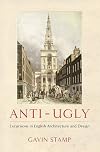
Stamp's opinions about good and bad architecture seem reasonable, and he is willing to change his mind from time to time. But a book about architecture really needs lots more illustrations and pictures than this one has. You'll be constantly googling these buildings to know what they are, unless perhaps you are an architecture buff who lives in England already. Still, there are lots of good stories and well-supported opinions here, particularly the author's scorn of most modern architects, show more but especially sculptors. Statues belong on plinths! Not on the ground where people can take selfies with them. I tend to agree. show less
An architect of promise : George Gilbert Scott junior (1839-1897) and the late Gothic revival by Gavin Stamp

GEORGE GILBERT SCOTT junior was the lost hope of Late Victorian architecture. Today he is little known but during his tragically short career he helped change the direction of British architecture. His work inaugurated the refined, elegant style of the last decades of the 19th century which dared to look to Perpendicular Gothic for inspiration. His now demolished church of St Agnes in Kennington, South London, was hugely influential and one of the key buildings which marked the rejection of show more High Victorian Gothic in the 1870s. Scott was also a domestic architect and was known as a pioneer in the 'Queen Anne' revival of a vernacular classicism. He was responsible for furniture, metalwork and painted decoration. Moving in advanced artistic circles, he designed wallpaper for William Morris and then for the firm of Watts & Co. which he established with G. F. Bodley and Thomas Garner. Nor was Scott just an architect, designer and church restorer: he was briefly a Fellow of Jesus College Cambridge, having written a prize-winning essay which atempted to reconcile Christianity with the unsettling scientific discoveries of his day. Today, Scott is known as the father of the great Sir Giles Gilbert Scott, architect of Liverpool Cathedral and Bankside Power Station, and as the wayward son of the great Sir George Gilbert Scott, designer of the Albert Memorial. 'Middle Scott' was certainly very different from his famous father and his career was curtailed by scandal and retreat from public life. This new book is the first full-length study of Scott's life and work to be published. In addition to charting Scott's crucial role in changing the direction of the Gothic revival, the author explores his recorded ideas on art and design and even politics, so illuminating the cultural history of the Late Victorian decades. He also gives the first complete account of Scott's sensational public examination under the Lunacy Acts and later sad years in and out of lunatic asylums before his premature death in 1897 while staying in the Midland Grand Hotel at St Pancras' Station - ironically one his father's most famous buildings. This book re-establishes Scott's reputation as one of the most influential and important of Late Victorian designers, whose recent obscurity has distorted our understanding of the period. Lavishly illustrated; comprehensive list of works. Full index. show less

Magnificently illustrated angry railing against the destruction of our Victorian built heritage that is diminished in places by its venom.
Awards

You May Also Like


Associated Authors
Statistics
- Works
- 23
- Also by
- 3
- Members
- 533
- Popularity
- #46,707
- Rating
- 3.6
- Reviews
- 9
- ISBNs
- 37
- Languages
- 1