
Anna Lappé
Author of Hope's Edge: The Next Diet for a Small Planet
About the Author
Image credit: Anna Lappé
Works by Anna Lappé
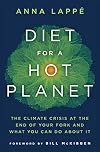
Diet for a Hot Planet: The Climate Crisis at the End of Your Fork and What You Can Do about It (2010) 209 copies, 33 reviews
Associated Works
Food Inc.: A Participant Guide: How Industrial Food is Making Us Sicker, Fatter, and Poorer-And What You Can Do About It (2009) — Contributor — 539 copies, 3 reviews
Take Back Your Time: Fighting Overwork and Time Poverty in America (2003) — Contributor — 90 copies, 2 reviews
Tagged
Common Knowledge
- Canonical name
- Lappé, Anna
- Birthdate
- 1973
- Gender
- female
- Education
- Columbia University (MA|Economic and Political Development)
Brown University - Occupations
- teacher
writer - Relationships
- Lappé, Frances Moore (mother)
- Nationality
- USA
- Birthplace
- Yonkers, New York, USA
- Places of residence
- Bay Area, California, USA
- Map Location
- USA
Members
Reviews
Diet for a Hot Planet: The Climate Crisis at the End of Your Fork and What You Can Do about It by Anna Lappé
Thank you for writing this book. It gives me hope! We make over 200 food choices a day, and if at least one more choice per day favored sustainability and climate-friendly food practices, we could reduce the rate of environmental destruction. Lappe distinctively points out the pro-industrial food argument that we could not feed the planet using organic and sustainable agriculture. She then proceeds to cite the facts: Not only can organic, sustainable farming adequately feed us, but it can show more promote economic self-sufficiency among the poorer communities who can really tap into their natural resources. She makes the case to work with the environment, using science to bolster the natural producing capacity of the land. In our current environment, science is used to manipulate the natural cycle of the land through bio-tech crops, GMOs, pesticides, herbicides, and more. Sure, this method produces a heck of a lot of calories for humans, but somehow, the poor communities are still poor and most critically, still hungry. The ROI from smartly switching to organic, sustainable farming globally is tremendous. The downfall? A few corporate bigwigs lose their jobs. Oh, and our immediate gratification for five varieties of chips ahoy is squashed... Read this book. You decide. show less
 This review was written for LibraryThing Early Reviewers.
Diet for a Hot Planet: The Climate Crisis at the End of Your Fork and What You Can Do about It by Anna Lappé
Anna Lappe has written this book to inform the reader of the importance of food choices as they relate to the effect on the planet and its climate. She explains how each step in the food production chain results in and impacts the total greenhouse-gas emissions. A great deal of eye-opening information is provided regarding the amount of fossil fuel used to produce our food and get it to our local grocery store.
It is amazing how much grain is used to produce a pound of meat. Lappe gives us show more stories of the success of some farmers as they are developing sustainable food production, not only in the United States but in other places around the world. She pokes holes in several myths that the giant food companies want us to believe, especially the myths that we have to use huge amounts of chemicals to increase yield and that we need to develop genetically modified food. Lappe also exposes how giant food corporations attempt to portray themselves as being environmentally friendly. She shows how to separate the real facts from the spin.
Lappe closes the book by providing a list of seven principles of a climate-friendly diet. Many resources are given so the reader can do further reading and stay up-to-date on current information. A very worthwhile read. show less
It is amazing how much grain is used to produce a pound of meat. Lappe gives us show more stories of the success of some farmers as they are developing sustainable food production, not only in the United States but in other places around the world. She pokes holes in several myths that the giant food companies want us to believe, especially the myths that we have to use huge amounts of chemicals to increase yield and that we need to develop genetically modified food. Lappe also exposes how giant food corporations attempt to portray themselves as being environmentally friendly. She shows how to separate the real facts from the spin.
Lappe closes the book by providing a list of seven principles of a climate-friendly diet. Many resources are given so the reader can do further reading and stay up-to-date on current information. A very worthwhile read. show less
This review was written for LibraryThing Early Reviewers.Diet for a Hot Planet: The Climate Crisis at the End of Your Fork and What You Can Do about It by Anna Lappé
As an introduction to the science of climate change as affected by the global industrial food system, Diet for a Hot Planet excels at informing and entertaining. I have to admit I was hesitant when I started reading it and was sure it was going to be a chore to get through, but I really enjoyed it. Lappe writes in a way that is straight forward and easy to understand, which is a quite feat considering the volume of information included in the book.
In fact, that would be my only qualm, at show more least with the first section. It is intensely information heavy, with little anecdotal relief. One concept after another is thrown at the reader, with little chance to actually absorb any of it. All of the information is entirely relevant to the rest of the book, however, which is obvious in the number of references Lappe makes to information she's already introduced. And when she does reference something she's gone over before, Lappe does tend to review it, which is a great relief, at least for me.
The notes and bibliography are extensive, and throughout the different sections there are a lot of suggestions for further reading and research. It gives the impression of "Don't just take my word for it" and gives the reader the opportunity to actually go out and learn from more than just one source. While Lappe's worldviews are obvious and assumed to be correct, which could be abrasive to someone who sees the world and issues differently, the assumptions made in the book do seem to be scientifically valid, and everything she references is well cited. Overall, the book is very well researched. I especially appreciated the attention she gave to soil health, something that often is overlooked when discussing the health of an ecosystem.
The last three parts of the book are very easily followed, full of personality and wit as well as convincing arguments and biased or not, a whole lot of science. Lappe writes with a voice that is personable and not at all condescending. In the introduction she says she doesn't want to create cynics of her readers, and I would have to say that that definitely shows. The anecdotes and stories she chooses to express the hope that she's learned to see in the world really do illustrate it.
It's an incredibly effective book. I honestly think I will read it again. show less
In fact, that would be my only qualm, at show more least with the first section. It is intensely information heavy, with little anecdotal relief. One concept after another is thrown at the reader, with little chance to actually absorb any of it. All of the information is entirely relevant to the rest of the book, however, which is obvious in the number of references Lappe makes to information she's already introduced. And when she does reference something she's gone over before, Lappe does tend to review it, which is a great relief, at least for me.
The notes and bibliography are extensive, and throughout the different sections there are a lot of suggestions for further reading and research. It gives the impression of "Don't just take my word for it" and gives the reader the opportunity to actually go out and learn from more than just one source. While Lappe's worldviews are obvious and assumed to be correct, which could be abrasive to someone who sees the world and issues differently, the assumptions made in the book do seem to be scientifically valid, and everything she references is well cited. Overall, the book is very well researched. I especially appreciated the attention she gave to soil health, something that often is overlooked when discussing the health of an ecosystem.
The last three parts of the book are very easily followed, full of personality and wit as well as convincing arguments and biased or not, a whole lot of science. Lappe writes with a voice that is personable and not at all condescending. In the introduction she says she doesn't want to create cynics of her readers, and I would have to say that that definitely shows. The anecdotes and stories she chooses to express the hope that she's learned to see in the world really do illustrate it.
It's an incredibly effective book. I honestly think I will read it again. show less
This review was written for LibraryThing Early Reviewers.Diet for a Hot Planet: The Climate Crisis at the End of Your Fork and What You Can Do about It by Anna Lappé
Anna Lappé's *Diet for a Hot Planet* offers an optimistic take on the link between a micro issue (what one eats) and a macro problem (climate change). And, despite all the problems of the status quo (and potential catastrophes if we let business continue as usual) described in the outset of the text, the optimism in the latter parts of the book is appropriate, as it encourages readers to make incremental changes in their eating habits in ways that, collectively, will benefit the earth show more (regardless of one's take on climate change, I'd venture). Yes, some of the recommendations echo those of Michael Pollan (and also Mark Bittman in his *Food Matters*); so there's a certain sensibility to the text: eat locally, move toward a more vegetarian-style diet, be mindful of food and packaging waste, etc. For some readers, then, Lappé's book won't contain much that's new. But I'm in favor of giving such works plenty of attention: As long as some members of the target audience (described as folks without much knowledge of climate-change theories) become more reflective about their eating habits, one would think that some good will result. Now, as LibraryThing member rtp3 said in an earlier review of this book, it’s time to head out to the garden! show less
This review was written for LibraryThing Early Reviewers.Lists
Awards


You May Also Like


Associated Authors
Statistics
- Works
- 4
- Also by
- 5
- Members
- 810
- Popularity
- #31,509
- Rating
- 3.8
- Reviews
- 41
- ISBNs
- 10
- Languages
- 1
