
Bonnie Yochelson
Author of Jacob Riis (55)
About the Author
Bonnie Yochelson teaches at the School of Visual Arts, New York.
Image credit: Andrea Hayley/The Epoch Times
Works by Bonnie Yochelson
Associated Works
Tagged
Common Knowledge
- Gender
- female
- Education
- Swarthmore College (BA)
New York University (MA, PhD) - Occupations
- curator
consultant (curator)
historian (art) - Short biography
- Bonnie Yochelson, who was curator of prints and photographs at the Museum of the City of New York from 1987 to 1991, is currently the Museum's consulting curator.
Members
Reviews
Rating: 4.5* of five
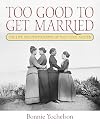
The Publisher Says: Explore Gilded Age New York through the lens of Alice Austen, who captured the social rituals of New York’s leisured class and the bustling streets of the modern city. Celebrated as a queer artist, she was this and much more
Alice Austen (1866–1952) lived at Clear Comfort, her grandparent’s Victorian cottage on Staten Island, which is now a National Historic Landmark. As a teenager, she devoted herself to photography, recording what she called show more “the larky life” of tennis matches, yacht races, and lavish parties.
When she was 25 and expected to marry, Austen used her camera to satirize gender norms by posing with her friends in their undergarments and in men’s clothes, “smoking” cigarettes, and feigning drunkenness. As she later remarked, she was “too good to get married.” Austen embraced the rebellious spirit of the “New Woman,” a moniker given to those who defied expectations by pursuing athletics, higher education, or careers. She had romantic affairs with women, and at 31, she met Gertrude Tate, who became her life partner. Briefly, Austen considered becoming a professional photographer. She illustrated Bicycling for Ladies, a guide written by her friend Violet Ward, and she explored the working-class neighborhoods of Manhattan to produce a portfolio, “Street Types of New York.” Rejecting the taint of commerce, however, she remained within the confines of elite society with Tate by her side.
Although interest in Austen has accelerated since 2017, when the Alice Austen House was designated a national site of LGBTQ history, the only prior book on Austen was published in 1976. Copiously illustrated, Too Good to Get Married fills the need for a fresh and deeply researched look at this skillful and witty photographer. Through analysis of Austen’s photographs, Yochelson illuminates the history of American photography and the history of sexuality.
I RECEIVED A DRC FROM THE PUBLISHER VIA EDELWEISS+. THANK YOU.
My Review: This isn't an obvious fit for the usual definition of #WITMonth I've been working with. Indulge me for a moment: In society, now as much as in Austen's time, there is a phenomenon called "code switching." It's a kind of translation your queer friends know well, and your young friends, your opposite-gender friend;, we are most all of us doing a bit of code-switching.
What Author Yochelson does in this magisterial biography of lesbian artist and bon vivant is a translation of Austen's code-switching between woman of substance and closeted (as all were then required to be)...if only barely...lesbian in a long-term partnership.
It occurred to me to call this a translation when I read more about how Austen "{rejected} the taint of commerce...{and} remained within the confines of elite society with Tate by her side." This was a woman who spoke one language, of intimacy and sapphic love, at home, and a very, very different one among her public social circle. Austen documented, and Author Yochelson caringly and carefully examines, the world of women we would otherwise never know existed.
What this book does with skill and panache is the very thing the presently installed in government social reactionaries hate the most: Demonstrate in words and pictures that queerness, its existence and its joyfulness, has always existed and thus is among the real identities others can ascribe to.
There is more shock in the world of today at these intimate, fun-having images than there was in the earlier Gilded Age, because the sexual lives of others are more publicly known and thus easier to discuss...and judge...than the private lives of the day. Gossip was then shameful, vulgar, low; and is now journalism, casually reported and widely and openly discussed. Reality TV and celebrity journalism are thoroughly established in respectability.
It is a world I suspect Miss Austen would thoroughly dislike.
This house, this family, is Miss Austen's native world. Gossip about personal lives, while surely (humanly) indulged in, would not be done in public by these folk. Officially. Behind hands and doors and fans, sure! Thus the need to code-switch constantly would've kept Miss Austen and later Miss Tate (her partner) as well quite busy and alert.
The ladies in question in later life
The value of this explication of life among the hidden sapphic sisters of the era can't be overstated. Aesthetically we're all much richer for the re-emergence of these images; societally, we are hugely enriched by this evidence of the way diversity has flourished and enriched the culture of every era.
Look carefully, these were shocking, as tame as they seem now!
I think this work of translation from lives once unable to be spoken openly to the mass medium of publishing, as a rescue operation of identity and artistry previously masked and ignored, is worth the purchase price. There are over 100 photographs in the text. It is a treasure trove of lesbian life in the first Gilded Age. It is also a human life's worth of creative joy and pleasure shared.
It is, most importantly in my eyes, my elder sibling in queerness restored to me, guiding me through the world's rage and hate by her example. Celebrate that beauty and gift. show less
The Publisher Says: Explore Gilded Age New York through the lens of Alice Austen, who captured the social rituals of New York’s leisured class and the bustling streets of the modern city. Celebrated as a queer artist, she was this and much more
Alice Austen (1866–1952) lived at Clear Comfort, her grandparent’s Victorian cottage on Staten Island, which is now a National Historic Landmark. As a teenager, she devoted herself to photography, recording what she called show more “the larky life” of tennis matches, yacht races, and lavish parties.
When she was 25 and expected to marry, Austen used her camera to satirize gender norms by posing with her friends in their undergarments and in men’s clothes, “smoking” cigarettes, and feigning drunkenness. As she later remarked, she was “too good to get married.” Austen embraced the rebellious spirit of the “New Woman,” a moniker given to those who defied expectations by pursuing athletics, higher education, or careers. She had romantic affairs with women, and at 31, she met Gertrude Tate, who became her life partner. Briefly, Austen considered becoming a professional photographer. She illustrated Bicycling for Ladies, a guide written by her friend Violet Ward, and she explored the working-class neighborhoods of Manhattan to produce a portfolio, “Street Types of New York.” Rejecting the taint of commerce, however, she remained within the confines of elite society with Tate by her side.
Although interest in Austen has accelerated since 2017, when the Alice Austen House was designated a national site of LGBTQ history, the only prior book on Austen was published in 1976. Copiously illustrated, Too Good to Get Married fills the need for a fresh and deeply researched look at this skillful and witty photographer. Through analysis of Austen’s photographs, Yochelson illuminates the history of American photography and the history of sexuality.
I RECEIVED A DRC FROM THE PUBLISHER VIA EDELWEISS+. THANK YOU.
My Review: This isn't an obvious fit for the usual definition of #WITMonth I've been working with. Indulge me for a moment: In society, now as much as in Austen's time, there is a phenomenon called "code switching." It's a kind of translation your queer friends know well, and your young friends, your opposite-gender friend;, we are most all of us doing a bit of code-switching.
What Author Yochelson does in this magisterial biography of lesbian artist and bon vivant is a translation of Austen's code-switching between woman of substance and closeted (as all were then required to be)...if only barely...lesbian in a long-term partnership.
It occurred to me to call this a translation when I read more about how Austen "{rejected} the taint of commerce...{and} remained within the confines of elite society with Tate by her side." This was a woman who spoke one language, of intimacy and sapphic love, at home, and a very, very different one among her public social circle. Austen documented, and Author Yochelson caringly and carefully examines, the world of women we would otherwise never know existed.
What this book does with skill and panache is the very thing the presently installed in government social reactionaries hate the most: Demonstrate in words and pictures that queerness, its existence and its joyfulness, has always existed and thus is among the real identities others can ascribe to.
There is more shock in the world of today at these intimate, fun-having images than there was in the earlier Gilded Age, because the sexual lives of others are more publicly known and thus easier to discuss...and judge...than the private lives of the day. Gossip was then shameful, vulgar, low; and is now journalism, casually reported and widely and openly discussed. Reality TV and celebrity journalism are thoroughly established in respectability.
It is a world I suspect Miss Austen would thoroughly dislike.
This house, this family, is Miss Austen's native world. Gossip about personal lives, while surely (humanly) indulged in, would not be done in public by these folk. Officially. Behind hands and doors and fans, sure! Thus the need to code-switch constantly would've kept Miss Austen and later Miss Tate (her partner) as well quite busy and alert.
The ladies in question in later life
The value of this explication of life among the hidden sapphic sisters of the era can't be overstated. Aesthetically we're all much richer for the re-emergence of these images; societally, we are hugely enriched by this evidence of the way diversity has flourished and enriched the culture of every era.
Look carefully, these were shocking, as tame as they seem now!
I think this work of translation from lives once unable to be spoken openly to the mass medium of publishing, as a rescue operation of identity and artistry previously masked and ignored, is worth the purchase price. There are over 100 photographs in the text. It is a treasure trove of lesbian life in the first Gilded Age. It is also a human life's worth of creative joy and pleasure shared.
It is, most importantly in my eyes, my elder sibling in queerness restored to me, guiding me through the world's rage and hate by her example. Celebrate that beauty and gift. show less
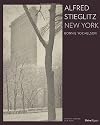
I have had a poster of Edward Steichen's photograph of The Flatiron Building hanging on my bedroom wall since I was a teenager. Looking at this poster daily led to the development of a little obsession with the Flatiron building and any art work depicting the Flatiron building. (actual name : The Fuller Building). This obsession led me to the photography of Alfred Stieglitz.
This volume is a collection of all the New York City photographs by Stieglitz. A history of Stieglitz's life in NYC show more and Europe, his photography, his marriages and the galleries, magazines and photographic organizations he founded comprises the text of the book. His photography is compared to the paintings and photographs of other artists, many who inspired him, depicting the same subjects (images included in the book) and in my opinion, often found not to be as good as the work that had inspired him. It's obvious that he sometimes copied other artists styles outright. The text describes that photographers sometimes did this copying of style as a challenge among friends.
The photography is beautiful. I love Stieglitz's older NYC photos --- ground level, rain and snow covered scenes. His later photos, shot from high rise windows are not as interesting to me. I realize that they were considered ground breaking at the time because most people had not seen NYC from above. show less
This volume is a collection of all the New York City photographs by Stieglitz. A history of Stieglitz's life in NYC show more and Europe, his photography, his marriages and the galleries, magazines and photographic organizations he founded comprises the text of the book. His photography is compared to the paintings and photographs of other artists, many who inspired him, depicting the same subjects (images included in the book) and in my opinion, often found not to be as good as the work that had inspired him. It's obvious that he sometimes copied other artists styles outright. The text describes that photographers sometimes did this copying of style as a challenge among friends.
The photography is beautiful. I love Stieglitz's older NYC photos --- ground level, rain and snow covered scenes. His later photos, shot from high rise windows are not as interesting to me. I realize that they were considered ground breaking at the time because most people had not seen NYC from above. show less
This small book with limited writing and an abundance of horrific pictures is a must read for anyone who is interested in social history, grinding poverty and child mortality in NY at the turn of the century, understanding that the modern term ' 3rd world country ' is easily applied here.
The pictures show homeless, ragged and shoeless children sleeping on the streets, young orphans renting out some dirty squalid room someplace with no adults involved, the 16 hour work days including children show more who worked often as many hours in horrible and dangerous conditions as the adults and all the filthy, dangereous and awful places they 'lived' and often died.
Many lived in coal cellars, under City dumps, on the streets, etc.
It is a wonder any of them survived and that the suicide rate wasn't higher than what it was.
Harrowing. show less
The pictures show homeless, ragged and shoeless children sleeping on the streets, young orphans renting out some dirty squalid room someplace with no adults involved, the 16 hour work days including children show more who worked often as many hours in horrible and dangerous conditions as the adults and all the filthy, dangereous and awful places they 'lived' and often died.
Many lived in coal cellars, under City dumps, on the streets, etc.
It is a wonder any of them survived and that the suicide rate wasn't higher than what it was.
Harrowing. show less
You May Also Like


Associated Authors
Statistics
- Works
- 10
- Also by
- 3
- Members
- 195
- Popularity
- #112,376
- Rating
- 4.2
- Reviews
- 3
- ISBNs
- 15
- Languages
- 2