
Georges Bernanos (1888–1948)
Author of The Diary of a Country Priest
About the Author
A novelist and essayist, Georges Bernanos was interested in the struggle between good and evil within saintly individuals. He was born in Paris in 1888. He studied at the Sorbonne where he received a degree in law and in literature in 1909. He served in the military from 1909 to 1910 and again show more during World War I. After the war, Bernanos worked as an inspector for an insurance company. Bernanos's first major success as a writer came in 1926 with the publication of the novel Under the Sun of Satan. His well-known work The Diary of a Country Priest followed in 1936. Both novels traced the unknowing submission of characters, after some early disappointing experience, to the forces of Satan and the subsequent destruction of their moral selves. From 1930 to 1932, Bernanos wrote for Le Figaro. In his articles and essays, Bernanos pleaded for a renewed spirituality in France and a renewed moral integrity. Mouchette, a short novel set in a bleak village untouched by the twentieth century was published in 1937. As was The Diary of a Country Priest, Mouchette was made into a film by Robert Bresson. The writings of Georges Bernanos are concerned with the struggle between pride and innocence that lies within every individual. They treat spiritual concerns and the mystery of Christianity. Bernanos is considered among the most original of Roman Catholic novelists. Bernanos died of cancer in Paris on July 5, 1948. (Bowker Author Biography) show less
Works by Georges Bernanos
George Bernanos : Oeuvres romanesques completes tome 1 [ Bibliotheque de la Pleiade ] (French Edition) (2015) 6 copies
Les Grands Cimetières sous la Lune 3 copies
℗Un ℗delitto: romanzo 2 copies
Oeuvres. Tome IV. Journal d'un curé de campagne. Une Nuit. Dialogue d'Ombres. Madame Dargent. 2 copies
Um crime 2 copies
Zločin 2 copies
Dialogues d'ombres 1 copy
LA JOIA. B 1-DAVANT 1 copy
Las víctimas 1 copy
Reforma y Conversión. Para la conmemoración de los 500 años de la Reforma Luterana, 1517. (2017) 1 copy
La joie 1 copy
Sous le soleil de Satán 1 copy
Bernanos par lui même 1 copy
Rivoluzione e libertà 1 copy
℗Una ℗notte: Dialogo d'ombre 1 copy
Journal d'un curé de campagne. Editions Plon. 1936. Broché. 366 pages. Couverture légèrement défraîchie. (Littérature) (1900) 1 copy
Bernanos / La joie. / 186 1 copy
Obras 1 copy
Bronnen van levend geloof : gedachten en gedichten van Bernanos, Claudel, Delp, Hesse, Kennedy, Stein en anderen — Author — 1 copy
Nous autres francais 1 copy
Dialogue d'ombres et autres nouvelles — Author — 1 copy
Las victimas 1 copy
Ultimi scritti politici 1 copy
Un uomo solo 1 copy
Madame Dargent 1 copy
Noe͏̈l à la Maison de France 1 copy
Spanish Civil War Diary 1 copy
Associated Works
Tagged
Common Knowledge
- Canonical name
- Bernanos, Georges
- Legal name
- Bernanos, Louis-Émile-Clément-Georges
- Birthdate
- 1888-02-20
- Date of death
- 1948-07-05
- Gender
- male
- Education
- Vaugirard College
Insitut Catholique
University of Paris (Lic. 1909) - Occupations
- novelist
soldier
farmer
insurance inspector
weekly editor - Organizations
- French Army (WWI)
Catholic Church - Awards and honors
- Prix Femina- La Vie Heureuse (1929)
Grand Prix du roman de l'Académie française (1936)
Croix de Guerre (WWI) - Relationships
- Bernanos, Michel (son)
Talbert d'Arc, Jeanne (wife)
de Gaulle, Charles (classmate) - Cause of death
- Cancer du foie
- Nationality
- France
- Birthplace
- Paris, France
- Places of residence
- Paris, France
Barbacena, State of Minas Gerais, Brazil
Fressin, Pas de Calais, France
Paraguay
Tunisia
Palma de Mallorca, Spain - Place of death
- Neuilly-sur-Seine, Hauts-de-Seine, France
- Burial location
- Cimetière communal, Indre, Centre-Val de Loire, France
- Associated Place (for map)
- France
Members
Reviews

If you had to guess, you'd probably assume that an English book with this title would be all about badgers, daffodils and hedgehogs, whilst a French one would be full of seething incestuous passion in the cowshed and at least three brutal, violent murders. Or a deadly boring collection of pious reflections.
There is a badger in this book, and a lot of mud, a few sudden deaths, and some Zola-style inherited alcoholism, but this is neither nature-study nor sex-and-social-realism: Bernanos takes show more his naive young village priest through a succession of tough philosophical and theological debates with himself and with various other characters who all somehow seem to represent different aspects of the author's complicated personality and ideological history. Whether they are priests, knightly bikers, atheist medics, haughty landowners or naughty girls, they all get to set out their arguments in a very fair and reasonable way, but none of them, not even the narrator himself, is allowed to have a convincing answer to the real-world problems of evil, poverty, disease, etc. (Interesting to see that, unlike almost every other novelist, Bernanos seems to treat sex as a very minor and unimportant corner of human morality, a long way behind poverty and inequality.)
The passion and intensity of the debates going on here make this a book that is probably easier to take for young readers than for old cynics, who went through all this when they were seventeen and don't really care to revisit it, but all the same it is fantastic writing, constantly taking you in unexpected directions. And it's ambiguous enough in its conclusions that you certainly don't need to be a convinced Christian (or even a convinced atheist) to appreciate it. show less
There is a badger in this book, and a lot of mud, a few sudden deaths, and some Zola-style inherited alcoholism, but this is neither nature-study nor sex-and-social-realism: Bernanos takes show more his naive young village priest through a succession of tough philosophical and theological debates with himself and with various other characters who all somehow seem to represent different aspects of the author's complicated personality and ideological history. Whether they are priests, knightly bikers, atheist medics, haughty landowners or naughty girls, they all get to set out their arguments in a very fair and reasonable way, but none of them, not even the narrator himself, is allowed to have a convincing answer to the real-world problems of evil, poverty, disease, etc. (Interesting to see that, unlike almost every other novelist, Bernanos seems to treat sex as a very minor and unimportant corner of human morality, a long way behind poverty and inequality.)
The passion and intensity of the debates going on here make this a book that is probably easier to take for young readers than for old cynics, who went through all this when they were seventeen and don't really care to revisit it, but all the same it is fantastic writing, constantly taking you in unexpected directions. And it's ambiguous enough in its conclusions that you certainly don't need to be a convinced Christian (or even a convinced atheist) to appreciate it. show less

This is a rather unlikely book, a lightweight crime story that appeared in between Bernanos's two most famous novels, Sous le soleil de Satan (1926) and Journal d'un curé de campagne (1936) and was obviously written as a pot-boiler. Maybe as a way of signalling that we shouldn't treat it as canonical, he sets it in the South, a long way away from his usual territory in Artois. But it does involve a priest.
A new parish priest arrives, late in the evening after a difficult journey, to take up show more his duties in the remote mountain village of Mégère. The same night, an old lady is murdered in her bedroom and a stranger with a fatal gunshot wound is found lying in the grounds of her château. The examining magistrate called in to investigate turns out to be a vague and dreamy little man (a foreshadowing of Adamsberg?), who is rather taken by the new curé, despite the latter's rather evasive answers.
This isn't a tight-knit detective story or police procedural in the usual sense: there is a mystery and an ingenious solution that (more-or-less) works technically, but the solution is revealed rather than detected: the answer is supplied direct to the reader, whilst the investigators seem to get left out of the story altogether in the final chapters. The solution takes Bernanos into what struck me as surprising moral territory, and he comes across as rather more sympathetic and broad-minded than I would have expected from the stereotype I have of him as a right-wing Catholic traditionalist. On the other hand, he doesn't seem to see much hope for any of his characters: having started off with a full set of disadvantages in life they can only expect things to get worse.
Your time would almost certainly be spent more productively reading a real policier or one of Bernanos's mainstream novels, but all the same this is a very interesting oddity, and I don't regret making a small diversion to look at it. show less
A new parish priest arrives, late in the evening after a difficult journey, to take up show more his duties in the remote mountain village of Mégère. The same night, an old lady is murdered in her bedroom and a stranger with a fatal gunshot wound is found lying in the grounds of her château. The examining magistrate called in to investigate turns out to be a vague and dreamy little man (a foreshadowing of Adamsberg?), who is rather taken by the new curé, despite the latter's rather evasive answers.
This isn't a tight-knit detective story or police procedural in the usual sense: there is a mystery and an ingenious solution that (more-or-less) works technically, but the solution is revealed rather than detected: the answer is supplied direct to the reader, whilst the investigators seem to get left out of the story altogether in the final chapters. The solution takes Bernanos into what struck me as surprising moral territory, and he comes across as rather more sympathetic and broad-minded than I would have expected from the stereotype I have of him as a right-wing Catholic traditionalist. On the other hand, he doesn't seem to see much hope for any of his characters: having started off with a full set of disadvantages in life they can only expect things to get worse.
Your time would almost certainly be spent more productively reading a real policier or one of Bernanos's mainstream novels, but all the same this is a very interesting oddity, and I don't regret making a small diversion to look at it. show less
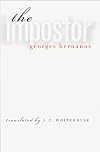
The Impostor is a searching account of the torment that besets Father Cénabre, historian of mysticism and controversial star of the Parisian clergy, when his faith suddenly deserts him. As the priest struggles to cope secretly, he crosses paths with associates on the complex margins of a Church facing modern politics in the early twentieth century. Georges Bernanos’s compelling and dark portraits of that shadowy world’s inhabitants throw into stark relief the determination of a humble show more priest, Father Chevance, who alone knows Cénabre’s secret and struggles to save him. By turn touching and scathing, The Impostor explores the delicate balance between redemption and damnation and illuminates the fragility of our constructed selves. show less
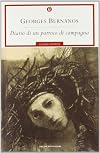
Bernanos is one of the greatest Catholic writers of the 20th Century and this book, winner of the 1936 Grand-Prix of the French Academy, is widely recognised as his masterpiece. A tale of a young, seemingly inept, parish priest in a remote French village, this is indeed a remarkable novel but not necessarily an enjoyable one. Difficult is what it certainly is. First of all because it reflects the contradictions of its author - a devout Catholic who could be outspokenly critical of the show more Church, a reactionary monarchist with socialist ideals, a supporter of De Gaulle who became disillusioned with post-war France. It is also difficult because, as its title implies, it expresses its (not always obvious) theological/philosophical message through the medium of a fictional diary - which means long monologues and reminiscences of dialogues between the protagonist and fellow clerics and/or parishioners. Bernanos provides no easy or convenient answers and, for a Catholic novel which ends on a note of hope, it has more than its fair share of existentialist angst. A challenging read, but a strangely captivating one. show less
Lists
Awards


You May Also Like


Associated Authors
Statistics
- Works
- 105
- Also by
- 2
- Members
- 3,978
- Popularity
- #6,341
- Rating
- 3.8
- Reviews
- 61
- ISBNs
- 314
- Languages
- 18
- Favorited
- 9


