

Henry de Montherlant (1895–1972)
Author of Chaos and Night
About the Author
Image credit: henrydemontherlant.mes-biographies.com
Series
Works by Henry de Montherlant
Jeunes Filles Jf 1 (Collection Folio) 25 copies
Le Solstice de Juin 3 copies
Romans et oeuvres de fiction non théâtrales : Texte ne varietur (Bibliothèque de la Pléiade) (1975) 2 copies
Henri Matisse: Gravures originales sur le thème de Chant de Pasiphaé, Pour le texte H. De Montherlant. (1981) 2 copies
Mariette Lydis 2 copies
Mors et vita ; Service inutile 2 copies
Notes sur mon théâtre 2 copies
Encore Un Instant De Bonheur 2 copies
Gedichten 1 copy
Piedade para as mulheres 1 copy
Mrtva kraljica 1 copy
Gli scapoli 1 copy
ÖLÜ KIRALİÇE 1 copy
TEATRO. EL MAESTRE DE SANTIAGO. HIJO DE NADIE. MALATESTA. LA REINA MUERTA Y MAÑANA AMANECERÁ (1950) 1 copy
Romans 1 copy
Tiermenschen Roman 1 copy
Indurare pentru femei 1 copy
Cazul Exupere 1 copy
Baietii 1 copy
Carnets 1965, 1966, 1967, Carnets sans dates et 1972 : Tous feux éteints - Edition originale (1975) 1 copy
Lettres à une jeune fille 1 copy
L'agneau 1 copy
La paix dans la guerre 1 copy
HISTOIRE DE LA PETITE 19 1 copy
A lányok 1 copy
Théatre 1 copy
Demain il fera jour 1 copy
Dívky. I 1 copy
Théâtre choisi 1 copy
Garder tout en composant tout: Carnets inédits - Derniers carnets (1924-1972) (Les Cahiers de la NRF) (French Edition) (2001) 1 copy
O demonio do bem 1 copy
Les jeunes filles, tome 1 1 copy
Associated Works
From Flaubert to the Present: French Stories — Contributor — 3 copies
Meesters der vertelkunst : zevenendertig verhalen uit de moderne wereldliteratuur (1975) — Contributor — 2 copies
Tagged
Common Knowledge
- Legal name
- Montherlant, Henry Marie Joseph Frédéric Expedite Millon de
- Birthdate
- 1895-04-20
- Date of death
- 1972-09-21
- Gender
- male
- Education
- Collège Sainte-Croix, Neuilly-sur-Seine
- Occupations
- novelist
essayist
dramatist - Organizations
- Académie française (1960)
- Awards and honors
- Grand Prix de Littérature de l'Académie française (1934)
- Short biography
- Henry Marie Joseph Frédéric Expedite Millon de Montherlant est un essayiste, dramaturge et académicien français.
Henry de Montherlant est d'une famille, du côté paternel, originaire de la Catalogne. Il fait ses études au lycée Janson de Sailly et à l'école Sainte-Croix de Neuilly. Pendant les vacances il s'initie à la tauromachie, et tue des taurillons. C'est à cette occasion que son nom apparaît pour la première fois dans un journal. "Le Toréro" de Nimes, du 8 octobre 1911, donne le compte-rendu de deux mises à mort qu'il exécute à Burgos. Il a alors quinze ans.
Il se destine tôt à la littérature. Dans son enfance, sa mère lui lit "Quo vadis" de Henryk Sienkiewicz, et cette lecture lui fournit les thèmes qu'il abordera sa vie durant : l'amitié, le suicide et la Rome antique.
Pendant la guerre, classé service auxiliaire et affecté comme secrétaire à un état-major de l'intérieur, il fait une demande pour être versé dans un régiment d'infanterie du 20° corps, dans un poste du service armé. Muté au 360° régiment d'infanterie, il est grièvement blessé, en 1918.
De 1920 à 1924, il est secrétaire général de l'Oeuvre de l'Ossuaire de Douaumont, présidée par le maréchal Pétain. Rétabli, il s'adonne aux sports athlétiques. En 1925, en toréant à Albacete (Espagne), il est blessé par coup de corne. De 1925 à 1935, il fait des séjours en Espagne, Italie, Afrique du Nord et Sahara.
En 1940, réformé pour blessure de guerre, Montherlant assiste, comme correspondant de guerre, aux combats de la Somme et de l'Oise. Il y est légèrement blessé.
En 1960, il est élu à l'Académie française sans en avoir fait expressément la demande. Douze ans plus tard, devenu aveugle, il se suicide.
Parmi ses œuvres, on peut citer : "Les Bestiaires" (1926), "La Reine Morte" (1942), "Le Maître De Santiago" (1947), "Les Célibataires" (1934), "Les Jeunes Filles" (1936-39) ou encore "La Rose de sable" (1968). - Cause of death
- suicide
- Nationality
- France
- Birthplace
- Paris, France
- Place of death
- Paris, France
- Map Location
- France
- Associated Place (for map)
- Paris, France
Members
Reviews
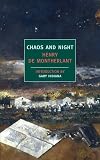
Not what I was expecting- I'm not sure what I was expecting, but it wasn't latter day Celine. Montherlant's protagonist is an anarchist who, thanks to self-obsession and an almost pathological hatred of actually existing human beings, turns into a nihilist, despite his own better judgment. HdM does a nice job mixing up omniscient third person narration and free indirect discourse. It's quite tricky, sometimes, working out whether we're reading 'Celestino,' HdM, or HdM's thoughts on show more Celestino's thoughts... and so on. Anyway, plenty of irony, which apparently a lot of readers don't pick up on, despite the author's preface (in which he denies having any of the thoughts in the book, and denies that he was trying to paint a portrait of 'The Left' in general). I don't know how much of the 'philosophy' of this book HdM truly believe; I'd like to think none of it. But who knows. Novelists aren't necessarily the brightest bulbs in the box.
Otherwise, plenty of nifty aphorisms, a killer ending, and a fabulous scene in which Celestino watches a bullfight. Also, it's short, and, pace Celine/Dostoevsky etc., nihilism is best treated quickly. And well translated.
On the down side, what's with all the typos? Get on that, NYRB. show less
Otherwise, plenty of nifty aphorisms, a killer ending, and a fabulous scene in which Celestino watches a bullfight. Also, it's short, and, pace Celine/Dostoevsky etc., nihilism is best treated quickly. And well translated.
On the down side, what's with all the typos? Get on that, NYRB. show less
An aging veteran of the Spanish Civil War has been living in Paris, in exile, for many years. He is an ardent anarchist, obsessed with Spanish politics. Initially he seems somewhat ludicrous and out of touch with the times, as well as absurdly paranoid about his need to watch out for being arrested for his crimes during the war. Due to family circumstances he must risk a return to Spain. I will not spoil the plot, but the ending is excellent.
More than a story, this novel represents an show more exposition on facing mortality. The author suggests that all that is true are "chaos" (life) & "night" (that which exists before birth & after death). Much philosophical pondering occurs throughout this tale, and the combination make for an excellent reading experience.
One warning: If one does not know Paris intimately the beginning can be confusing. Eventually, however, it makes no difference. show less
More than a story, this novel represents an show more exposition on facing mortality. The author suggests that all that is true are "chaos" (life) & "night" (that which exists before birth & after death). Much philosophical pondering occurs throughout this tale, and the combination make for an excellent reading experience.
One warning: If one does not know Paris intimately the beginning can be confusing. Eventually, however, it makes no difference. show less
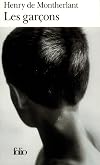
One of my desert island books... the novel revolves around a special friendship ("amitié particulière") between two boys in a Catholic school in Paris in 1913, its breakup due to a jealous priest and the consequences.
The storyline is based closely on de Montherlant's own experiences (he was expelled from school following such a relationship), and although the earliest drafts of parts of the novel were written by a young de Montherlant in 1913/1914, the novel was not completed until more show more than 50 years later, in 1967.
Despite the content of the story, Les garçons is neither a "gay" novel nor a confessional. Rather, Henry de Montherlant uses the novel to explore deeper questions of morality. In Les garçons, ultimate salvation seems to depend on how the individual reacts to the tyranical unfairness of life, and the realisation that true lasting love may be, in the end, an impossible dream. show less
The storyline is based closely on de Montherlant's own experiences (he was expelled from school following such a relationship), and although the earliest drafts of parts of the novel were written by a young de Montherlant in 1913/1914, the novel was not completed until more show more than 50 years later, in 1967.
Despite the content of the story, Les garçons is neither a "gay" novel nor a confessional. Rather, Henry de Montherlant uses the novel to explore deeper questions of morality. In Les garçons, ultimate salvation seems to depend on how the individual reacts to the tyranical unfairness of life, and the realisation that true lasting love may be, in the end, an impossible dream. show less

The fire that consumes. Montherlant finally published his play La Ville dont le prince est un enfant in 1951, decades after he had started writing down this autobiographical story. Montherlant himself had been expelled from the Catholic boys school Sainte-Croix de Neuilly in 1912 for his improper relationship with Philippe Giquel, a younger boy who had joined the school aged twelve. The movie is titled The Fire that Burns.
Lists
Awards


You May Also Like


Associated Authors
Statistics
- Works
- 132
- Also by
- 6
- Members
- 1,813
- Popularity
- #14,179
- Rating
- 4.1
- Reviews
- 38
- ISBNs
- 167
- Languages
- 9
- Favorited
- 11
