
Karen Lindsey (1) (1944–)
Author of Dr. Susan Love's Breast Book
For other authors named Karen Lindsey, see the disambiguation page.
Works by Karen Lindsey
Divorced, Beheaded, Survived: A Feminist Reinterpretation of the Wives of Henry VIII (1995) 316 copies, 8 reviews
Tagged
Common Knowledge
Members
Reviews
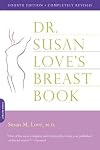
This is an extremely comprehensive and readable book that will be particularly interesting to anyone diagnosed with breast cancer but which should be required reading for anyone with breasts. Full disclosure: I read the 2005 edition, which was the most recent edition at half price books when I was shopping -- things have been changing so fast in the world of breast cancer treatment that it is woefully out of date, but, tbh, the most recent edition (from 2015) will be equally behind the show more times. Since I have done A LOT of reading about breast cancer, reading a book from 15+ years ago was an enlightening time capsule on how different treatment for breast cancer (and especially metastatic breast cancer) was not that long ago. What isn't dated is Love's helpful and detailed descriptions of the anatomy of the breast and the basics of how cancer develops and progresses. I was also really drawn to her to-the-point discussion of the limitations of mammograms and breast self exams. Love has an authentic, opinionated, and personable writing voice and a sly sense of humor. The line drawings that illustrate the book are sometimes helpful and sometimes hilarious, but I mostly loved them. If I see the 2015 version at a used book store in the future, I will probably pick it up to see how Love's viewpoint has changed over the years. Highly recommended in combination with other sources that cover more recent developments. show less
Divorced, Beheaded, Survived: A Feminist Reinterpretation Of The Wives Of Henry Viii by Karen Lindsey
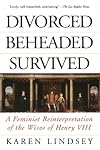
Okay, I should preface by saying that I am a history junkie, and that Tudor England is my drug of choice. Seriously, it’s like my crack. I know all the major players, I know how most historians view each person, I know who participated in who’s downfall. I’m the person to go to for any Tudor related question. I’m also the person who loved the tv show The Tudors because of all the sexy men but grumbled about the historical accuracies, mostly due to the timeline. Also, I love the show more Spanish Ambasador Chapuys. He was so witty. In life, and on The Tudors.
Now, I know what some of you are thinking. Jenn, if you know so much about Tudor history, why do you still read about it. Well, the obvious answer is, like I already mentioned, it’s like crack to me. The not obvious answer is that it had a lot to do with the whole feminist reinterpretation. I agree with the feminist movement to an extent but I’m not on board with radical feminism, which is what I was expecting. Boy, was I surprised.
Karen Lindsey has done her research and done it well. But rather than pick sides like most historians do, and back only her side, she explains what most (or, frankly just some) historians think, and why she differs with it. She paints all his wives in a more human light than history tends to do. She wrote a very factual text that was interesting, witty and dare I say, fun to read.
Even though the title referenced only the wives, I was pleasantly surprised to find the opening chapter was on Margaret Beaufort (Henry’s grandmother) and the final chapter was on how his three children, and briefly his great-niece Jane Grey, took the throne.
The only qualms I had with the writing was that the author chose to spell the name of Anne Boleyn as “Ann”. It was very distracting. There is some historical debate about the correct spelling of the last name, while Anne was at the French court as a child, she commonly wrote her last name as “Bullen” which would be an almost French pronunciation of the English spelling. But the spelling of her first name has, to my knowledge, never been debated. I double checked with the bibliography included in the back of the book and each book referencing her was spelled as “Anne”. My only guess was that perhaps she didn’t want Boleyn to be confused with the fourth wife, Anne of Cleves or the “heretic” Anne Askew who appears during the time of his sixth wife.
Whatever the reason, I found it very distracting, like I already mentioned and it seemed to make chapters 2-4 kind of drag for me. But once Jane Seymour (wife number three) came into the picture, the pace seemed to pick back up, so I think the fault was my own.
The only other problem that I had was that she included a chapter on Anne Boleyn titled “The Great Whore”. I know that some have referenced her as such in history, but it seemed odd to me that one would chose that chapter title in a feminist reinterpretation. She goes on in later chapters to praise Katheryn Howard’s (wife number 5) ability to be ahead of her time in embracing her sexual desires rather than agreeing to be merely just a political pawn in a patriarchal society. The juxtaposition left me a bit confused.
But all in all, it’s a great read, if history is your thing. Really the only wife that things worked out for was Anne of Cleves (wife number four). I give this book 4 dog eared pages. show less
Now, I know what some of you are thinking. Jenn, if you know so much about Tudor history, why do you still read about it. Well, the obvious answer is, like I already mentioned, it’s like crack to me. The not obvious answer is that it had a lot to do with the whole feminist reinterpretation. I agree with the feminist movement to an extent but I’m not on board with radical feminism, which is what I was expecting. Boy, was I surprised.
Karen Lindsey has done her research and done it well. But rather than pick sides like most historians do, and back only her side, she explains what most (or, frankly just some) historians think, and why she differs with it. She paints all his wives in a more human light than history tends to do. She wrote a very factual text that was interesting, witty and dare I say, fun to read.
Even though the title referenced only the wives, I was pleasantly surprised to find the opening chapter was on Margaret Beaufort (Henry’s grandmother) and the final chapter was on how his three children, and briefly his great-niece Jane Grey, took the throne.
The only qualms I had with the writing was that the author chose to spell the name of Anne Boleyn as “Ann”. It was very distracting. There is some historical debate about the correct spelling of the last name, while Anne was at the French court as a child, she commonly wrote her last name as “Bullen” which would be an almost French pronunciation of the English spelling. But the spelling of her first name has, to my knowledge, never been debated. I double checked with the bibliography included in the back of the book and each book referencing her was spelled as “Anne”. My only guess was that perhaps she didn’t want Boleyn to be confused with the fourth wife, Anne of Cleves or the “heretic” Anne Askew who appears during the time of his sixth wife.
Whatever the reason, I found it very distracting, like I already mentioned and it seemed to make chapters 2-4 kind of drag for me. But once Jane Seymour (wife number three) came into the picture, the pace seemed to pick back up, so I think the fault was my own.
The only other problem that I had was that she included a chapter on Anne Boleyn titled “The Great Whore”. I know that some have referenced her as such in history, but it seemed odd to me that one would chose that chapter title in a feminist reinterpretation. She goes on in later chapters to praise Katheryn Howard’s (wife number 5) ability to be ahead of her time in embracing her sexual desires rather than agreeing to be merely just a political pawn in a patriarchal society. The juxtaposition left me a bit confused.
But all in all, it’s a great read, if history is your thing. Really the only wife that things worked out for was Anne of Cleves (wife number four). I give this book 4 dog eared pages. show less

There aren't many reviews out here for this book right now (possibly because the fifth edition is so new?). Maybe because of the scope of the subject (the book has over 700 pages). I won't try to go in to everything that she covers. I'll simply say this: as women are approaching their 50's and having mammograms (hopefully regularly) and doing occasional or possibly even routine self exams, I recommend that each and every one of you have this book on your shelves and do some reading of at show more least the early chapters.
The chance of developing invasive breast cancer in a woman's lifetime is 1 in 8.
The time to have the information in hand and know the questions to ask and be comfortable and knowledgeable about your breasts and the various terminology associated with abnormal mammograms is BEFORE you have one.
This is the book that covers all aspects of breast health and breast cancer. I highly recommend it. show less
The chance of developing invasive breast cancer in a woman's lifetime is 1 in 8.
The time to have the information in hand and know the questions to ask and be comfortable and knowledgeable about your breasts and the various terminology associated with abnormal mammograms is BEFORE you have one.
This is the book that covers all aspects of breast health and breast cancer. I highly recommend it. show less
Divorced, Beheaded, Survived: A Feminist Reinterpretation Of The Wives Of Henry Viii by Karen Lindsey
I was a little disappointed by the fact that I wouldn't consider a feminist interpretation more than a personal interpretation. However, I still enjoyed the book. She definitely was on Anne Boleyn's side and expressed more sympathy for her than some of the other authors whose books I have read.
You May Also Like


Associated Authors
Statistics
- Works
- 6
- Members
- 806
- Popularity
- #31,649
- Rating
- 3.9
- Reviews
- 12
- ISBNs
- 33
- Languages
- 3