
Khālid Khalīfah (1964–2023)
Author of Death Is Hard Work
About the Author
Image credit: Khālid Khalīfah, 2023.
Works by Khālid Khalīfah
لم يصل عليهم أحد 1 copy
Tagged
Common Knowledge
- Canonical name
- Khalīfah, Khālid
- Legal name
- خالد خليفة
- Birthdate
- 1964-01-01
- Date of death
- 2023-09-30
- Gender
- male
- Education
- Al-Mutanabbi High School (graduated|1982)
Aleppo University (Faculty of Law|graduated|1988) - Occupations
- novelist
poet
screenwriter - Cause of death
- heart attack
- Nationality
- Syria
- Birthplace
- Maryamin, Aleppo, Syria
- Places of residence
- Aleppo, Syria
Damascus, Syria (1999)
Latakia, Syria - Place of death
- Damascus, Syria (at home)
- Associated Place (for map)
- Syria
Members
Reviews
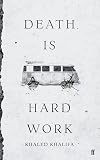
This slim novella of only 180 pages seems like a kind of miracle to me. It's not the first book from Syria that I've read: that was Shatila Stories sent to me by Kim from Reading Matters and it was special because it was a collaborative writing project set up to give voice to Syrian refugees in the sprawling Shatila refugee camp in Beirut. But Death is Hard Work is by an author living in Damascus, a city which has been a war zone since 2012. It is Khalifa's fifth novel, and the second to be show more written since the civil war. And somehow, despite having his books banned by the Syrian government, he has been able to keep writing them, even though No Knives in the Kitchen of this City (2013, translated into English 2016) was openly critical of the Syrian regime. And if you didn't know already how the regime deals with dissidents, you will by the end of this short book.
The plot is deceptively simple. It's about an event which is an everyday occurrence in the everyday cities of the west. An eldest son undertakes to fulfil the last wish of his dying father, that is, to be buried beside his sister in the family plot in his hometown near Aleppo. It's only a couple of hours away from Damascus. But it is not a simple wish because his hometown is one where protests erupted against the regime, and anyone and everyone who comes from there is regarded as a troublemaker whether they are activists or not. It has taken Bolbol years to overcome this stigma and he has been living in a kind of paralysis to stay under the radar. To travel across a landscape dotted with checkpoints where he must produce his identity card which names his origin is fraught with peril. Because, as we see, there are no rules. Combatants on both sides can detain, imprison, torture or execute anyone at any time. And his father Abdel Latif is a troublemaker even in death. In Syria, even helping the rebel wounded can get you summarily executed by the regime. And father has been doing just that in another rebel town...
Bolbol makes the journey with his siblings, Hussein and Fatima. Khalifa has constructed his plot around an event which usually brings a family together, but the death of their parent does nothing to bring these three together. They are metaphors for the intractable hatreds in Syria, and vivid incarnations of how civil wars tear families apart.
It was Wikipedia which alerted me to the significance of Hussein mindlessly quoting dogma. Khalifa uses this character to exemplify the theme of his 2006 novel In Praise of Hatred (Madih al-karahiya, translated into English 2013), which was a protest against the suffering [the Syrian people] have endured as a result of the religious and political dogmas that have tried to negate their ten-thousand-year civilisation. (Wikipedia, viewed 25/3/19).
Because he can't think for himself, Hussein flounders in situations where this dogma doesn't apply. Bolbol, who doesn't believe in anything anymore, is stuck in his fatalistic stasis, deferring to his younger brother's misdirected energy. And Fatima, who spends most of her time crying and being ordered about, represents the way women have been unable to achieve any autonomy. While the rest of the world is moving on and women have become independent contributors to the societies they live in, the Syrian women of Khalifa's novel still have nothing to do but cook for their menfolk and lay them out when they die. And Fatima fails even at that. The journey with the putrefying corpse takes days and there is nothing she can do to mask the smell, so nobody wants to eat the sandwiches she has made.
To read the rest of my review please visit https://anzlitlovers.com/2019/03/25/death-is-hard-work-by-khaled-khalifa-transla... show less
The plot is deceptively simple. It's about an event which is an everyday occurrence in the everyday cities of the west. An eldest son undertakes to fulfil the last wish of his dying father, that is, to be buried beside his sister in the family plot in his hometown near Aleppo. It's only a couple of hours away from Damascus. But it is not a simple wish because his hometown is one where protests erupted against the regime, and anyone and everyone who comes from there is regarded as a troublemaker whether they are activists or not. It has taken Bolbol years to overcome this stigma and he has been living in a kind of paralysis to stay under the radar. To travel across a landscape dotted with checkpoints where he must produce his identity card which names his origin is fraught with peril. Because, as we see, there are no rules. Combatants on both sides can detain, imprison, torture or execute anyone at any time. And his father Abdel Latif is a troublemaker even in death. In Syria, even helping the rebel wounded can get you summarily executed by the regime. And father has been doing just that in another rebel town...
Bolbol makes the journey with his siblings, Hussein and Fatima. Khalifa has constructed his plot around an event which usually brings a family together, but the death of their parent does nothing to bring these three together. They are metaphors for the intractable hatreds in Syria, and vivid incarnations of how civil wars tear families apart.
It was Wikipedia which alerted me to the significance of Hussein mindlessly quoting dogma. Khalifa uses this character to exemplify the theme of his 2006 novel In Praise of Hatred (Madih al-karahiya, translated into English 2013), which was a protest against the suffering [the Syrian people] have endured as a result of the religious and political dogmas that have tried to negate their ten-thousand-year civilisation. (Wikipedia, viewed 25/3/19).
Since childhood, Hussein had been in the habit of memorising entire pages of cheap almanacs published by Islamic philanthropic organisations, containing famous sayings, aphorisms, verses from the Qu'ran, and prophetic Hadith, and he used them in everyday speech to give his audience the impression of his being well read. (p.11)
Because he can't think for himself, Hussein flounders in situations where this dogma doesn't apply. Bolbol, who doesn't believe in anything anymore, is stuck in his fatalistic stasis, deferring to his younger brother's misdirected energy. And Fatima, who spends most of her time crying and being ordered about, represents the way women have been unable to achieve any autonomy. While the rest of the world is moving on and women have become independent contributors to the societies they live in, the Syrian women of Khalifa's novel still have nothing to do but cook for their menfolk and lay them out when they die. And Fatima fails even at that. The journey with the putrefying corpse takes days and there is nothing she can do to mask the smell, so nobody wants to eat the sandwiches she has made.
To read the rest of my review please visit https://anzlitlovers.com/2019/03/25/death-is-hard-work-by-khaled-khalifa-transla... show less
In the first chapter, Abdel Latif dies in a quiet hospital room in Damascus. His last wish is to be buried in his home village of Anabiya next to his sister Leila. His son Bolbol agrees, because what else can he do at his father's deathbed? The remaining chapters have Bolbol and his brother and sister making their way with the body through a war-torn nation where a two-hour drive takes three days, with plenty of time for flashbacks. They believe that once they leave government-controlled show more territory their ID cards with their northern birthplaces will get them easily through checkpoints controlled by the Free Syrian Army, but then they meet the black-flagged, bearded fighters with their variety of foreign accents. There is bleak comedy here, absurdity, and terror, but there is also poignant romance and a stubbornly relatable humanity.
Fun fact I learned from this book: the title or honorific Ustadh, as in "Ustadh Abdel Latif", means "teacher" and is remarkably similar to the Spanish second-person formal pronoun "usted". I wonder how that happened. show less
Fun fact I learned from this book: the title or honorific Ustadh, as in "Ustadh Abdel Latif", means "teacher" and is remarkably similar to the Spanish second-person formal pronoun "usted". I wonder how that happened. show less
This book is a powerful and disturbing look at the absurdity of life in modern Syria. Its simple, blunt language and matter-of-fact tone really drove home the desperation and resignation of people in Syria. You realize how polarized a country can become (sounds familiar), and how the constant fear of death robs one of everything that makes life worth living -- love, companionship, family, sex, financial reward, enjoying a meal, freedom of thought/movement, all these things are taken away. show more The only characters who can achieve any of those "normal" elements of life are those who accept death and are no longer governed by fear. It's depressing, but I highly recommend this novel, both for the insight and empathy it creates for the Syrian crisis and its refugees, and the warning it represents when a society and its leaders entirely lose their moral compass. Quick read too -- only 180 pages. show less
This book is about three siblings in modern day Syria trying to fulfill their father's dying wish to be buried in the town he grew up with, where is sister is buried. The trip, which would take only a few hours in peace-time, is a multi-day journey through dangerous, war-torn Syria. While the horrors of war is the back drop of this story, it is primarily a story about ordinary people trying to live their lives amidst the war. The trio have to maneuver through areas controlled by both sides show more of the war, and they all present a danger to them in their own ways. The book didn't really take sides in the conflict, although you do know where the characters' (and perhaps the author's) sympathies lie, rather it presents a country torn up and devastated by the violence of war and how that takes a toll on the people who live there. A simple trip to bury a father becomes a dangerous ordeal. The characters aren't exactly likable, but I found myself hoping that they find what they needed none the less. Despite their character flaws, they take a dangerous journey to do what they felt they needed to do for a father that they were not particularly close to. I do feel like I was left with a more complete understanding of what ordinary people are going through in Syria and other areas of the world that are suffering from wars. If I have one criticism it was that the story of the the sister was not as developed as the two brothers. I would have liked to understand her motivations and backstory more - but perhaps that says something about modern day Syria as well. However, other female characters are more complete characters (mostly seen through the eyes of a male character). show less
Lists
Awards


You May Also Like


Associated Authors
Statistics
- Works
- 15
- Members
- 664
- Popularity
- #37,984
- Rating
- 3.2
- Reviews
- 31
- ISBNs
- 52
- Languages
- 7
