
Beverley Nichols (1898–1983)
Author of Down the Garden Path
About the Author
Beverley Nichols (1898-1983) was a prolific writer on subjects ranging from religion to politics and travel, in addition to authoring six novels, five detective mysteries, four children's stories, six autobiographies, and six plays. He is perhaps best remembered today for his gardening books
Image credit: From the back cover of "Merry Hall," Portland, Ore.: Timber Press, 1998.
Series
Works by Beverley Nichols
The valet as historian 2 copies
Deltas encyclopedie van de katten 2 copies
Søgelys over Indien 2 copies
Los ricos y la muerte 1 copy
Associated Works
Tagged
Common Knowledge
- Legal name
- Nichols, John Beverley
- Birthdate
- 1898-09-09
- Date of death
- 1983-09-15
- Gender
- male
- Education
- University of Oxford (Balliol College)
Marlborough College - Occupations
- author
playwright
journalist
public speaker - Organizations
- Oxford Union (President)
- Nationality
- UK
- Birthplace
- Bower Ashton, Bristol, England, UK
- Places of residence
- Glatton, Cambridgeshire, England, UK (Allways)
Hampstead Heath, London, England, UK (Number 1 Ellerdale Close)
Ashtead, Surrey, England, UK (Meadowstream)
Ham, Richmond, London, England, UK (Sudbrook Cottage) - Place of death
- Kingston, London, England, UK
- Burial location
- St Nicholas Churchyard, Glatton, Cambridgeshire, England, UK
- Map Location
- England, UK
Members
Discussions
Found: Kids fantasy book with corrupted compass in Name that Book (August 2025)
Will I like the Beverly Nichols trilogy? in Gardening (April 2014)
Reviews
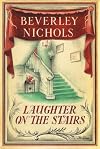
A favorite read of the year! This is the second book in the Merry Hall trilogy, about a 1950s British author’s adventures in gardening. Merry Hall was one of my top ten reads of 2024, so I had trouble imagining that Laughter on the Stairs could possibly reach the heights of hilarity of its predecessor. I’m happy to report that it is every bit as enjoyable as Merry Hall was!
Rather than focusing primarily on the garden, like in Merry Hall, Laughter on the Stairs is mostly about Beverley show more Nichols’ experience renovating the house itself. We get plenty of returning characters, plus some delightful new ones! Mrs. Fortescue, his temporary housekeeper while Gaskin recovers from surgery, and unanticipated superfan of Nichols, had me laughing the hardest. Nichols’ friendship with Miss Mint, the neighbor who is afraid of everything, was unexpectedly touching and made me well up at the end.
I loved the chapter on birds, and the chapter where the new kitten, “Five,” is brought to the house for the first time. And the grand finale of the ultra competitive flower show at the end of the book left me weak from laughter!
What’s unbelievable to me is that these haven’t yet been made into audiobooks! As fun as it is to physically read Laughter on the Stairs, it would truly be next level to be able to listen to someone act out all the characters. show less
Rather than focusing primarily on the garden, like in Merry Hall, Laughter on the Stairs is mostly about Beverley show more Nichols’ experience renovating the house itself. We get plenty of returning characters, plus some delightful new ones! Mrs. Fortescue, his temporary housekeeper while Gaskin recovers from surgery, and unanticipated superfan of Nichols, had me laughing the hardest. Nichols’ friendship with Miss Mint, the neighbor who is afraid of everything, was unexpectedly touching and made me well up at the end.
I loved the chapter on birds, and the chapter where the new kitten, “Five,” is brought to the house for the first time. And the grand finale of the ultra competitive flower show at the end of the book left me weak from laughter!
What’s unbelievable to me is that these haven’t yet been made into audiobooks! As fun as it is to physically read Laughter on the Stairs, it would truly be next level to be able to listen to someone act out all the characters. show less
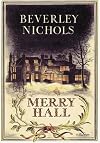
Merry Hall is a new all time favorite book, and a very enthusiastic 5 stars! I had a good feeling about it the second I held it in my hands, because I noticed there was a smooth groove where many thumbs had been, turning pages, and that is a sure sign that a book has been loved by the masses. It couldn’t have been better! Merry Hall was published in 1951, and takes place in post-war England. If P.G. Wodehouse was to have written a nonfiction book about his experience with gardening, this show more would be the book!
Although people who love gardening will recognize many of the plants and trees referenced in Merry Hall, you don’t actually need to know anything about gardening to enjoy this one. Beverley Nichols is hilariously snarky, and he had me continuously pausing to cackle. I loved the cast of characters he encounters and captures in minute detail; from his talented but curmudgeonly gardener Oldfield, to his two nosy neighbors Miss Emily and “Our Rose.” Also, the way he writes about his cats “One” and “Four” is a true delight, and so accurate to how cats are.
Even amidst the snarky tone of Merry Hall, the deep admiration he has for nature shines through - there are moments in here that are genuinely beautiful and touching. Apparently Nichols wrote a whole bunch of these books, so I’m definitely planning on reading every single one! show less
Although people who love gardening will recognize many of the plants and trees referenced in Merry Hall, you don’t actually need to know anything about gardening to enjoy this one. Beverley Nichols is hilariously snarky, and he had me continuously pausing to cackle. I loved the cast of characters he encounters and captures in minute detail; from his talented but curmudgeonly gardener Oldfield, to his two nosy neighbors Miss Emily and “Our Rose.” Also, the way he writes about his cats “One” and “Four” is a true delight, and so accurate to how cats are.
Even amidst the snarky tone of Merry Hall, the deep admiration he has for nature shines through - there are moments in here that are genuinely beautiful and touching. Apparently Nichols wrote a whole bunch of these books, so I’m definitely planning on reading every single one! show less
Husband: What's that you're reading?
Me: *holds book up* It's about a guy gardening.
Husband: *looks confused* Is it a novel?
Me: Nope. Like a memoir. Guy buys a big Georgian house in the country in England and builds a garden.
Husband: So it's like the most boring book ever written?
Me: It's interesting actually.
Husband: Uh huh. Nonfiction. Pshaw.
Me: You're reading nonfiction. You're reading three thousand pages on the Civil War.
Husband: That's different.
As delightfully exasperating as that show more conversation was, it does encapsulate most of what I have to say about Merry Hall. It has no plot, no thrust, it sounds like it ought be terribly dry, and it seems that there's little point (it's not even a how-to book--in fact, it would be worse than useless as a how-to book). And yet, it is a fabulously entertaining read--provided you like England and the English, find details compelling, and are content to be pulled along by voice. I do, I do, and I am. If you also do and are as well, you'll like Merry Hall, too. Falls short of five-star territory because Nichols is just a touch racist and a heap misogynistic and the (mostly brief) moments when those attitudes touch the pages make the book less than perfectly pleasant. They are not deal-breakers, however, as they seem to be, for the first, an unfortunate product of the time that we can almost excuse because there seems to be no malice in it, and, for the second, a disposition rather than an ideology and one which causes little harm in Nichols's mostly-male world. show less
Me: *holds book up* It's about a guy gardening.
Husband: *looks confused* Is it a novel?
Me: Nope. Like a memoir. Guy buys a big Georgian house in the country in England and builds a garden.
Husband: So it's like the most boring book ever written?
Me: It's interesting actually.
Husband: Uh huh. Nonfiction. Pshaw.
Me: You're reading nonfiction. You're reading three thousand pages on the Civil War.
Husband: That's different.
As delightfully exasperating as that show more conversation was, it does encapsulate most of what I have to say about Merry Hall. It has no plot, no thrust, it sounds like it ought be terribly dry, and it seems that there's little point (it's not even a how-to book--in fact, it would be worse than useless as a how-to book). And yet, it is a fabulously entertaining read--provided you like England and the English, find details compelling, and are content to be pulled along by voice. I do, I do, and I am. If you also do and are as well, you'll like Merry Hall, too. Falls short of five-star territory because Nichols is just a touch racist and a heap misogynistic and the (mostly brief) moments when those attitudes touch the pages make the book less than perfectly pleasant. They are not deal-breakers, however, as they seem to be, for the first, an unfortunate product of the time that we can almost excuse because there seems to be no malice in it, and, for the second, a disposition rather than an ideology and one which causes little harm in Nichols's mostly-male world. show less
Nichols is the comfort read of gardeners because his books, although full of village characters and quirky neighbours, are ultimately about his garden. In this favourite reread, he has returned from service in India after the war and is trying to find a house outside of London. Happily for both author and reader, he not only finds Merry Hall itself but with it its gardener, Oldfield, and a property much in need of Nichols' tender care. Well, not so tender, as the book describes the antics show more involved with burning down a holly hedge, chopping down ancient elms whose roots are sucking the goodness out of the soil for miles and the demolition of a scum-filled pond.
This is book one of a trilogy about Merry Hall and it might be one of my favourite Nichols books. A writer, decorator, garden designer, pianist of no small accomplishment if he can play Chopin as he does throughout the book, Nichols was one of those creative beings who had a compulsion to make beautiful everything around him. I love him because he can be so hissy spitty deliciously catty at times but also because his is a soul which craves the beautiful and works hard to make it happen.
This isn't heavy stuff. The heavens won't open and the finger of enlightenment won't give you a flick on your third eye. But if you are ever laid low by a bug and would like some companionship, Nichols is your man. It would help if you are also a gardener because he has the excellent habit of saying what his plants are in Latin. Ooooh, a gardener after my own heart.
Afterthought: a friend commented that Nichols gets compared to E.F. Benson quite often but I want to say, quite firmly, that he isn't really in Benson's league. The latter is dry, wry, elegant and refined. Nichols can be quite waspish and is NOT subtle. He can also be quite openly campy (which I love). But he is a gardener and that's what I connect to. If you don't garden, I can't speak to whether or not this book would be hopelessly dated 40s stuff or not. show less
This is book one of a trilogy about Merry Hall and it might be one of my favourite Nichols books. A writer, decorator, garden designer, pianist of no small accomplishment if he can play Chopin as he does throughout the book, Nichols was one of those creative beings who had a compulsion to make beautiful everything around him. I love him because he can be so hissy spitty deliciously catty at times but also because his is a soul which craves the beautiful and works hard to make it happen.
This isn't heavy stuff. The heavens won't open and the finger of enlightenment won't give you a flick on your third eye. But if you are ever laid low by a bug and would like some companionship, Nichols is your man. It would help if you are also a gardener because he has the excellent habit of saying what his plants are in Latin. Ooooh, a gardener after my own heart.
Afterthought: a friend commented that Nichols gets compared to E.F. Benson quite often but I want to say, quite firmly, that he isn't really in Benson's league. The latter is dry, wry, elegant and refined. Nichols can be quite waspish and is NOT subtle. He can also be quite openly campy (which I love). But he is a gardener and that's what I connect to. If you don't garden, I can't speak to whether or not this book would be hopelessly dated 40s stuff or not. show less
Lists
Awards


You May Also Like


Associated Authors
Statistics
- Works
- 69
- Also by
- 5
- Members
- 3,135
- Popularity
- #8,144
- Rating
- 3.9
- Reviews
- 74
- ISBNs
- 110
- Languages
- 6
- Favorited
- 13
