
Bill Yenne
Author of The Story of the First Easter (Children's Bible Classics)
About the Author
Bill Yenne is the author of three dozen works of biography and historical nonfiction, including many books on military and aviation history. His previous books about combat aviation include Superfortress: The B-29 and American Airpower in World War II (written with legendary U.S. Air Force show more commander General Curtis E. LeMay), The Story of the Boeing Company, and The American Aircraft Factory in World War II. Most recently, he has written B-52 Stratofortress: The Complete History of the World's Longest Serving and Best Known Bomber. He currently lives in San Francisco, California. www.billyenne.com show less
Series
Works by Bill Yenne
Aces High: The Heroic Saga of the Two Top-Scoring American Aces of World War II (2009) 91 copies, 3 reviews
100 Inventions That Shaped World History: Companion To: 100 Events That Shaped World History (1993) 69 copies
Operation Long Jump: Stalin, Roosevelt, Churchill, and the Greatest Assassination Plot in History (2015) 52 copies, 1 review
Hitler's Master of the Dark Arts: Himmler's Black Knights and the Occult Origins of the SS (2010) 48 copies, 1 review
Hit the Target: Eight Men who Led The Eighth Air Force to Victory over the Luftwaffe (2015) 45 copies, 1 review
Alexander the Great: Lessons from History's Undefeated General (World Generals Series) (2010) 41 copies
Area 51 - Black Jets: A History of the Aircraft Developed at Groom Lake, America's Secret Aviation Base (2014) 38 copies
Cities of Gold: Legendary Kingdoms, Quixotic Quests, and Fantastic New World Wealth (2011) 35 copies
B-52 Stratofortress: The Complete History of the World's Longest Serving and Best Known Bomber (2012) 29 copies
Rising Sons: The Japanese American GIs Who Fought for the United States in World War II (2007) 27 copies
The Other Custers: Tom, Boston, Nevin, and Maggie in the Shadow of George Armstrong Custer (2018) 27 copies
When Tigers Ruled the Sky: The Flying Tigers: American Outlaw Pilots over China in World War II (2016) 27 copies, 1 review
MacArthur’s Air Force: American Airpower over the Pacific and the Far East, 1941–51 (2019) 24 copies
The White Rose of Stalingrad: The Real-Life Adventure of Lidiya Vladimirovna Litvyak, the Highest Scoring Female Air Ace of All Time (General Aviation) (2013) 23 copies
Operation Cobra and the Great Offensive: Sixty Days That Changed the Course of World War II (2003) 18 copies, 2 reviews
Julius Caesar: Lessons in Leadership from the Great Conqueror (World Generals Series) (2012) 18 copies
Black '41: The West Point Class of 1941 and the American Triumph in World War II (1991) 12 copies, 1 review
Building the B-17 Flying Fortress: A Detailed Look at Manufacturing Boeing's Legendary World War II Bomber in Original Photos (2021) 11 copies
The Complete History of U.S. Cruise Missiles: From Kettering's 1920s' Bug & 1950's Snark to Today's Tomahawk (2018) 10 copies
Our Colonial Period: The Chronicle of American History from 1607 to 1770 (Making of America Series) (1995) 10 copies
Secret Gadgets and Strange Gizmos: High-Tech (and Low-Tech) Innovations of the U.S. Military (2005) 7 copies
The Ultimate Encyclopedia of Beer: A Complete Guide to the Best Beers from Around the World (2019) 6 copies
America's Round-Engine Warbirds: Airframes and Powerplants at the Close of the Military Prop Era (2022) 6 copies
The Sand Creek Massacre: The Official 1865 Congressional Report with James P. Beckwourth's Additional Testimony and Related Documents (2016) 5 copies
The Great Railroads of North America 4 copies
Exploration & Discovery: The Chronicle of American History from 1492 to 1606 (Making of America Series) (1996) 2 copies
The Lions by the Golden Gate: Sarah Dix Hamlin and The History of San Francisco's Hamlin School 1 copy
Woody, and national treasure 1 copy
Aerocar 1 copy
Associated Works
MHQ: The Quarterly Journal of Military History — Autumn 2013 (2013) — Author "When Japan Bombed Oregon" — 4 copies
Tagged
Common Knowledge
- Legal name
- Yenne, William P.
- Other names
- YENNE William P.
YENNE, Bill - Birthdate
- 1949-10-01
- Gender
- male
- Education
- University of Montana
Stanford University - Occupations
- Book producer
photographer
writer - Organizations
- American Aviation Historical Society
American Society of Journalists and Authors
American Book Producers Association
St. Philip's Belfry Society (founding member)
American Graphic Systems BookWorks, founder and president, 1983-- - Nationality
- USA
- Places of residence
- San Francisco, California, USA
- Associated Place (for map)
- California, USA
Members
Reviews
Operation Long Jump: Stalin, Roosevelt, Churchill, and the Greatest Assassination Plot in History by Bill Yenne
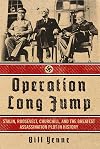
Operation Long Jump looks at the German plot to kill President Roosevelt, Prime Minister Churchill, and Russian leader Joseph Stalin at their meeting in Tehran. It opens with a fictional bleak picture of the Germans succeeding. The book then goes into the background of each countries intelligence operations at the time and what Iran was like at that time. The author also gave a background of some of the local individuals that played a major role in the events in Tehran. Then the events of show more Operation Long Jump were covered, explaining how the operation failed. The final portion of the book is looking at how the world and the end of WWII could have been affected if the plot had succeeded. I found the book to be a smooth read. It gave a lot information about a part of WWII that I didn't know had even happened. I very much enjoyed this book. show less

The subjects of this book are not the greats, nor the near greats, of aviations history. They are the black sheep that have embarrassed their builders, enraged their owners and frightened their pilots. In many cases, these are aircraft that never should have been built and which are more starkly bizarre than the most deranged flights of fantasy. This book of "black sheep'' includes some of the worst and most dangerous contrivances ever perpetrated, such as Count Caproni's Transaereo, which show more was really nothing more than three huge triplanes nailed to a houseboat. Then there's the worthless Brewster F2ABuffalo, the asymmetrical Blohm & Voss Bv-141, the "disposable'' Bachem Ba-349, and the infamous Yokosuka MXY7--the only airplane ever designed to kill its own pilot--just to name a few. show less
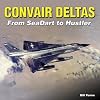
Convair Deltas: From SeaDart to Hustler tells the compelling story of America's aerospace industry in its heyday. It was a time when manufacturers boldly took the initiative to explore futuristic designs by actually building and flying airplanes to determine how well they worked, if at all. Convair led the way with a complete family of aircraft that included America's first delta-wing jet, the revolutionary XF-92A, and the world's first jet-powered seaplane, the XF2Y-1 SeaDart. Added to that show more list were the XFY-1 Pogo turboprop vertical-takeoff-and-landing (VTOL) fighter and the F-102A Delta Dagger and F-106A Delta Dart supersonic missile-firing interceptors. As a fitting finale, Convair also produced the record-breaking four-engine B-58 Hustler--the world's first Mach 2 strategic bomber.
Noted aviation author Bill Yenne thoroughly documents Convair's quest to conquer the aerodynamic mysteries of the delta wing. His stories explain the dramatic struggles and technological triumphs that gave the world some of its greatest fighter and bomber aircraft. While a number of these individual aircraft have been covered in other books over the years, there has never been a major work featuring the detailed developmental history of all six together. Plus, this book shows them in the proper historical context of U.S. aircraft designed for frontline operation during the Cold War. show less
Noted aviation author Bill Yenne thoroughly documents Convair's quest to conquer the aerodynamic mysteries of the delta wing. His stories explain the dramatic struggles and technological triumphs that gave the world some of its greatest fighter and bomber aircraft. While a number of these individual aircraft have been covered in other books over the years, there has never been a major work featuring the detailed developmental history of all six together. Plus, this book shows them in the proper historical context of U.S. aircraft designed for frontline operation during the Cold War. show less
Hitler's Master of the Dark Arts: Himmler's Black Knights and the Occult Origins of the SS by Bill Yenne

There have been many books written about Himmler’s SS, the organization that began as Hitler’s Schutzstaffel (“protection squad”) and ended up the multi-layered behemoth most responsible for war crimes in Nazi Germany. However, Bill Yenne’s book, “Hitler’s Master of the Dark Arts,” has a slightly different purpose than most of these: to show the background and origins of Nazi racial philosophy and how these philosophies made the SS tick.
On the positive side, Yenne provides show more an exhaustive background of the philosophies of Teutonic racial superiority (dating back to the mid-19th century) and an in-depth background of the German philosophers whose belief systems included – among other things -- the embrace of pre-Christian pagan religions (hence the word “occult” in Yenne’s title) and whose philosophies young Heinrich Himmler devoured. Yenne shows how Himmler, determined to transform his belief in “Aryan” superiority into a dogma, promoted archaeological digs and anthropological studies of living Tibetans and created the “Ahnenerbe”, an organization devoted to proving Aryan superiority.
The Ahnenerbe’s sub-organizations (there were more than 50) are listed in a sidebar, which gives the reader a clear sense of how doggedly determined Himmler was to "prove" his point. Speaking of sidebars, there are many extremely informative ones scattered throughout the book and, coupled with the plethora of illustrations also included, they make Yenne’s book a visual and illuminating treat (if one can use that term when discussing the history of such an aberrant and abhorrent organization).
On the down side, however, the text is often peppered with somewhat corny suppositions. That Heinrich Himmler believed himself to be the reincarnation of Heinrich I, the first king of Germany is an interesting fact but Yenne should have let it go after stating it once. He doesn’t: he keeps bringing it up throughout the text as if he himself believes it. When discussing Himmler’s marriage, he mentions: “As Himmler might have observed, though, this was actually not his first marriage. His first wedding had occurred 1,022 years earlier in 906, when, in his previous life as Heinrich I, he had married a woman named Hatheburg, whose Saxon father was Count Edwin of Merseburg.” At the end of this sizeable paragraph, which describes the noble lineage of the Heinrich I’s bride, Yenne finally provides his reason for including this information: “Heinrich Himmler was no doubt pleased to lay claim to such a majestic and most Aryan pedigree through his belief in reincarnation.”
A paragraph with a fairly interesting dip back into Himmler’s imagined ancestry, yes, but when the justification for its inclusion rests on phrases such as “As Himmler might have observed” and “Himmler was no doubt pleased” the reader can see that Yenne is no longer stating facts.
These types of suppositions are located more in the first half of the book, however, and the writing, while occasionally clumsy throughout, also contains some solid information. In spite of the book's flaws, “Hitler’s Master of the Dark Arts” manages to clearly illustrate the philosophies of the little man behind the pince-nez who orchestrated the Holocaust and his cadre of Black Knights who carried it out. show less
On the positive side, Yenne provides show more an exhaustive background of the philosophies of Teutonic racial superiority (dating back to the mid-19th century) and an in-depth background of the German philosophers whose belief systems included – among other things -- the embrace of pre-Christian pagan religions (hence the word “occult” in Yenne’s title) and whose philosophies young Heinrich Himmler devoured. Yenne shows how Himmler, determined to transform his belief in “Aryan” superiority into a dogma, promoted archaeological digs and anthropological studies of living Tibetans and created the “Ahnenerbe”, an organization devoted to proving Aryan superiority.
The Ahnenerbe’s sub-organizations (there were more than 50) are listed in a sidebar, which gives the reader a clear sense of how doggedly determined Himmler was to "prove" his point. Speaking of sidebars, there are many extremely informative ones scattered throughout the book and, coupled with the plethora of illustrations also included, they make Yenne’s book a visual and illuminating treat (if one can use that term when discussing the history of such an aberrant and abhorrent organization).
On the down side, however, the text is often peppered with somewhat corny suppositions. That Heinrich Himmler believed himself to be the reincarnation of Heinrich I, the first king of Germany is an interesting fact but Yenne should have let it go after stating it once. He doesn’t: he keeps bringing it up throughout the text as if he himself believes it. When discussing Himmler’s marriage, he mentions: “As Himmler might have observed, though, this was actually not his first marriage. His first wedding had occurred 1,022 years earlier in 906, when, in his previous life as Heinrich I, he had married a woman named Hatheburg, whose Saxon father was Count Edwin of Merseburg.” At the end of this sizeable paragraph, which describes the noble lineage of the Heinrich I’s bride, Yenne finally provides his reason for including this information: “Heinrich Himmler was no doubt pleased to lay claim to such a majestic and most Aryan pedigree through his belief in reincarnation.”
A paragraph with a fairly interesting dip back into Himmler’s imagined ancestry, yes, but when the justification for its inclusion rests on phrases such as “As Himmler might have observed” and “Himmler was no doubt pleased” the reader can see that Yenne is no longer stating facts.
These types of suppositions are located more in the first half of the book, however, and the writing, while occasionally clumsy throughout, also contains some solid information. In spite of the book's flaws, “Hitler’s Master of the Dark Arts” manages to clearly illustrate the philosophies of the little man behind the pince-nez who orchestrated the Holocaust and his cadre of Black Knights who carried it out. show less
Lists
LAST GASP (1)
You May Also Like


Associated Authors
Statistics
- Works
- 161
- Also by
- 2
- Members
- 5,117
- Popularity
- #4,880
- Rating
- 3.7
- Reviews
- 41
- ISBNs
- 375
- Languages
- 9
- Favorited
- 1