
David Henry Sterry
Author of Hos, Hookers, Call Girls, and Rent Boys: Professionals Writing on Life, Love, Money, and Sex
About the Author
David Henry Sterry is the author of fourteen books, including Hos, Hookers, Call Girls and Rent Boys; Master of Ceremonies: A True Story of Love, Murder, Roller Skates and Chippendales, The Essential Guide to Getting Your Book Published, and Mort Morte. He was a finalist for the Henry Miller Award. show more R.J. Martin, JR.'s stories, poems and journalism have appeared in numerous anthologies, magazines, newspapers and literary publications. A formerly incarcerated person from San Francisco, his work in combating international trafficking in the Bay Area led to a Certificate of Honor from the City and County in 2006. He holds a Master's Degree in Creative Writing from San Francisco State University. show less
Image credit: Stacie Joy
Works by David Henry Sterry
Hos, Hookers, Call Girls, and Rent Boys: Professionals Writing on Life, Love, Money, and Sex (2009) 115 copies, 3 reviews
Johns, Marks, Tricks and Chickenhawks: Professionals & Their Clients Writing about Each Other (2013) 23 copies
Master of Ceremonies: A True Story of Love, Murder, Roller Skates and Chippendales (2008) 4 copies, 1 review
Associated Works
Tagged
Common Knowledge
- Gender
- male
- Occupations
- actor
marriage counselor
screenwriter
comedian
athlete - Places of residence
- San Rafael, California, USA
- Associated Place (for map)
- California, USA
Members
Reviews
Master of Ceremonies: A True Story of Love, Murder, Roller Skates and Chippendales by David Henry Sterry
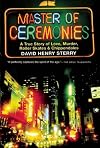
(Reprinted from the Chicago Center for Literature and Photography [cclapcenter.com]. I am the original author of this essay, as well as the owner of CCLaP; it is not being reprinted here illegally.)
As regular readers know, I am spending the week finally making my way through a whole series of books I found only so-so, some of which have been in my reading list for months as I've instead cherry-picked other titles from the always huge stack. Take today's book, for example, David Henry show more Sterry's Master of Ceremonies, a true-life memoir with a hook you'd think couldn't fail -- it's his account of a short period from his youth, when he acted as emcee for the notorious male stripclub Chippendales, back in the late 1970s early 1980s when it was at its cultural dominance. See, it can be hard sometimes for the young whippersnappers to remember this, but Chippendales was actually a much bigger deal politically than you might think a cheesy male stripclub could be; it was literally the first time in history that women had ever been invited to be the leering, obnoxious audience members of such an environment, instead of the objects of beauty being leered at, an empowering moment according to '80s second-wave feminists, one of the developments they argue that ushered in the second wave of feminism to begin with.
It's impossible to have actually gone through that and not emerge with at least a few great stories; after all, like the close-by Studio 54, Chippendales was one of those places that started as a kitschy New York club* but eventually became a national phenomenon, in this case a literal franchise that eventually inspired merchandise, a touring company and more. And that's why Master of Ceremonies doesn't necessarily deserve a low score, because it's a naturally fascinating story that will at least entertain on a basic level no matter what the circumstances; it is in fact filled with the kinds of juicy details you'd expect from such a memoir, all those nights of wasted housewives offering a hundred dollars to snort coke off a stripper's member, all those kinds of stories you pick up a book like this to read in the first place. But it's a fact that there are serious problems with this book too, not the least of which is the quality of the writing itself; much of it, frankly, is less a coherent narrative story and more a series of unrelated exclamations and bon mots, what I think is Sterry's attempt at Oscar-Wildean wit but more often than not is simply difficult to follow. Then add the fact that he writes all dialogue phonetically, to match whatever accent that particular character might have (actual line from the book -- "Y'll never work in dis bizness wid a big hoipee on ya lip"), and you can see why it's hard sometimes merely to figure out what's being said.
This alone is sure to drive many heavy readers a little crazy; now add that when all is said and done, Sterry ultimately doesn't have much to actually conclude about it all, not too many truly unique observations, his memoir more like a written description of a typical episode of "E! True Hollywood Story" than what you'd expect from someone who was actually in the center of the maelstrom at the time. Plus, I have to admit my frustration with Sterry blithely skipping right over what one quickly realizes is the most fascinating part of this whole story; that this literal paean to female heterosexuality was in reality this bizarre '70s '80s big-city mishmash of straight, gay and everything in between, not just out people and closeted people but those who were confused over their orientation in the first place, in a world where flaming queens were being paid big bucks to be the objects of lust for a group of straight women over the course of a night. The few times Sterry even touches on these subjects all tend to be the most conceptually interesting moments of the entire book -- the moments where this sweaty drug-fueled meat-market environment comes crashing against the personalities of the delicate little club boys simply trying to make rent, of what it might or might not say about a gay man's identity if he spends every evening dancing naked in a warehouse and letting drunk straight women paw at him all night. So to gloss over such aspects as dismissively as Sterry does here is disappointing to say the least, a willful ignoring of what seems to me to be one of the most unique aspects he as an insider can bring to it all, the thing he can add to the conversation that no long-after cable-television documentary can.
I don't want to tell everyone to skip this book, nor do I want to recommend it to everyone; it is instead a title for those addicted to celebrity tabloids and trash talk shows, those who don't mind a merely mediocre project as long as it's dishing up engaging true details about a world of money and drugs they'll never be a part of. That's not a strong recommendation, I know, but neither do I consider this a strong book, which I guess is why God invented sevens in the first place.
Out of 10: 7.3
*Or, well, technically Chippendales actually started as a revue in southern California; it could be argued, though, that it was the NYC version that eventually turned it into the national phenomenon it became. show less
As regular readers know, I am spending the week finally making my way through a whole series of books I found only so-so, some of which have been in my reading list for months as I've instead cherry-picked other titles from the always huge stack. Take today's book, for example, David Henry show more Sterry's Master of Ceremonies, a true-life memoir with a hook you'd think couldn't fail -- it's his account of a short period from his youth, when he acted as emcee for the notorious male stripclub Chippendales, back in the late 1970s early 1980s when it was at its cultural dominance. See, it can be hard sometimes for the young whippersnappers to remember this, but Chippendales was actually a much bigger deal politically than you might think a cheesy male stripclub could be; it was literally the first time in history that women had ever been invited to be the leering, obnoxious audience members of such an environment, instead of the objects of beauty being leered at, an empowering moment according to '80s second-wave feminists, one of the developments they argue that ushered in the second wave of feminism to begin with.
It's impossible to have actually gone through that and not emerge with at least a few great stories; after all, like the close-by Studio 54, Chippendales was one of those places that started as a kitschy New York club* but eventually became a national phenomenon, in this case a literal franchise that eventually inspired merchandise, a touring company and more. And that's why Master of Ceremonies doesn't necessarily deserve a low score, because it's a naturally fascinating story that will at least entertain on a basic level no matter what the circumstances; it is in fact filled with the kinds of juicy details you'd expect from such a memoir, all those nights of wasted housewives offering a hundred dollars to snort coke off a stripper's member, all those kinds of stories you pick up a book like this to read in the first place. But it's a fact that there are serious problems with this book too, not the least of which is the quality of the writing itself; much of it, frankly, is less a coherent narrative story and more a series of unrelated exclamations and bon mots, what I think is Sterry's attempt at Oscar-Wildean wit but more often than not is simply difficult to follow. Then add the fact that he writes all dialogue phonetically, to match whatever accent that particular character might have (actual line from the book -- "Y'll never work in dis bizness wid a big hoipee on ya lip"), and you can see why it's hard sometimes merely to figure out what's being said.
This alone is sure to drive many heavy readers a little crazy; now add that when all is said and done, Sterry ultimately doesn't have much to actually conclude about it all, not too many truly unique observations, his memoir more like a written description of a typical episode of "E! True Hollywood Story" than what you'd expect from someone who was actually in the center of the maelstrom at the time. Plus, I have to admit my frustration with Sterry blithely skipping right over what one quickly realizes is the most fascinating part of this whole story; that this literal paean to female heterosexuality was in reality this bizarre '70s '80s big-city mishmash of straight, gay and everything in between, not just out people and closeted people but those who were confused over their orientation in the first place, in a world where flaming queens were being paid big bucks to be the objects of lust for a group of straight women over the course of a night. The few times Sterry even touches on these subjects all tend to be the most conceptually interesting moments of the entire book -- the moments where this sweaty drug-fueled meat-market environment comes crashing against the personalities of the delicate little club boys simply trying to make rent, of what it might or might not say about a gay man's identity if he spends every evening dancing naked in a warehouse and letting drunk straight women paw at him all night. So to gloss over such aspects as dismissively as Sterry does here is disappointing to say the least, a willful ignoring of what seems to me to be one of the most unique aspects he as an insider can bring to it all, the thing he can add to the conversation that no long-after cable-television documentary can.
I don't want to tell everyone to skip this book, nor do I want to recommend it to everyone; it is instead a title for those addicted to celebrity tabloids and trash talk shows, those who don't mind a merely mediocre project as long as it's dishing up engaging true details about a world of money and drugs they'll never be a part of. That's not a strong recommendation, I know, but neither do I consider this a strong book, which I guess is why God invented sevens in the first place.
Out of 10: 7.3
*Or, well, technically Chippendales actually started as a revue in southern California; it could be argued, though, that it was the NYC version that eventually turned it into the national phenomenon it became. show less
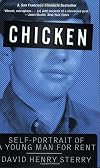
The writing of this book sparkles. It's the only book I've read by a worker in the sex industry that got me inside their heads, made me see the industry, what they did and how they managed to do it and remain both dignified and humble when sex for money is such a taboo. It isn't at all titillating but neither doesn't it shy away from graphic descriptions. What truly lifts the book and marks it out as quite different from others in this genre, is the author's empathy for his clients, his show more desire to make them happy and fulfilled and not just sexually satiated. He does his job to the best of his ability, it is not just a way to extract money from people. The descriptions of some of the clients are among the most bizarre characters you will ever read about. The author is talented writer, an empathetic communicator and obviously skilled where it counts.
I am surprised no one has made a film of the book. The story of a middle-class boy, abandoned by his family, attending a Catholic college roaring around town on a Harley going from job to job as a (heterosexual) prostitute is interesting enough. But with the ending, of how the author is rescued (almost) by the love of a good woman, is just destined to make a good film one day.
Brilliant book. Really a five-star read.
Rewritten March 13th, 2013. show less
I am surprised no one has made a film of the book. The story of a middle-class boy, abandoned by his family, attending a Catholic college roaring around town on a Harley going from job to job as a (heterosexual) prostitute is interesting enough. But with the ending, of how the author is rescued (almost) by the love of a good woman, is just destined to make a good film one day.
Brilliant book. Really a five-star read.
Rewritten March 13th, 2013. show less
Hos, Hookers, Call Girls, and Rent Boys: Professionals Writing on Life, Love, Money, and Sex by David Henry Sterry
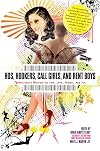
Lots of short pieces, some great and some not, from both happy and devastated sex workers; there’s a lot of correlation between race/class and happiness here, which strikes me as unlikely to be unique to sex work but still to be important in sex work particularly. Here’s a bit I liked a lot, from Sadie Lune:
On the online domination boards, no one can stop talking about power. Where power comes from, which dominatrices wield “natural power,” what a domme’s powerful self has show more “made” a proud man do, blah blah power-strength blah. But what we talk about, often off the Internet and out of leather, is the power of money. We discuss the fallacy of the “ultimate control” we’re attributed that in reality depends on the humiliation sluts for tuition and childcare payments. More often than not the money tops the scene. Money says it’s strap-on time when we are tired of looking at asses. Money demands slow heavy bondage when all we feel like is smacking a grateful subject around. Money wants to be humiliated in a way that runs contrary to our well-crafted sex-positive communication skills. Money forces us to bring out our diaper-changing mommy personas when we have run dry of emotional presence and support for our friends. … And then, sometimes, we love it. And often we put in the energy and the time and we get well compensated and have a little fun and it’s just about right for a good job. But the biggest trick is really coming to terms with the fact that money is the boss’s boss …. show less
On the online domination boards, no one can stop talking about power. Where power comes from, which dominatrices wield “natural power,” what a domme’s powerful self has show more “made” a proud man do, blah blah power-strength blah. But what we talk about, often off the Internet and out of leather, is the power of money. We discuss the fallacy of the “ultimate control” we’re attributed that in reality depends on the humiliation sluts for tuition and childcare payments. More often than not the money tops the scene. Money says it’s strap-on time when we are tired of looking at asses. Money demands slow heavy bondage when all we feel like is smacking a grateful subject around. Money wants to be humiliated in a way that runs contrary to our well-crafted sex-positive communication skills. Money forces us to bring out our diaper-changing mommy personas when we have run dry of emotional presence and support for our friends. … And then, sometimes, we love it. And often we put in the energy and the time and we get well compensated and have a little fun and it’s just about right for a good job. But the biggest trick is really coming to terms with the fact that money is the boss’s boss …. show less
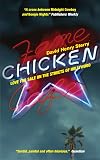
I did enjoy reading this at the time, but now, after the whole James Frey incident, I'm very nervous of such memoirs. But true or not, it's an entertaining read about a confronting subject, written in a matter-of-fact style that's not entirely glamourous or gritty, but somewhere in between.
You May Also Like


Associated Authors
Statistics
- Works
- 11
- Also by
- 1
- Members
- 273
- Popularity
- #84,853
- Rating
- 3.3
- Reviews
- 12
- ISBNs
- 20
- Languages
- 4