
Mark Mills (2) (1963–)
Author of The Savage Garden
For other authors named Mark Mills, see the disambiguation page.
Mark Mills (2) has been aliased into Mark B. Mills.
Works by Mark Mills
Works have been aliased into Mark B. Mills.
Tagged
Common Knowledge
- Legal name
- Mills, Mark B.
- Birthdate
- 1963-08-06
- Gender
- male
- Education
- Lancing College
University of Cambridge - Occupations
- novelist
screenwriter - Nationality
- UK
- Birthplace
- Geneva, Geneva, Switzerland
Members
Reviews
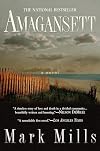
One fine day in July 1947 Conrad Labarde a Basque fisherman and his partner Rollo are hauling in their net and the familiar twitch of the line is absent, and where are the pulls and tugs against the twine, or a flicker of a surface break? They both know that they have an inert load beneath the pewter skin of the sea and there is nothing else to do but bring it in. It is what they hoped it wasn’t, a dead woman still beautiful but sea washed and peaceful.
The setting for this mystery is the show more south fork of Long Island at Amagansett near East Hampton not far from the most eastern part of New York, Montauk Point. This is a community that has been settled over the centuries by fishermen of all kinds and all nationalities. From early days this was a perfect spot for capturing the right whale, which swam in these cold Atlantic waters, and yet it was a great breeding ground for smaller sea life like scallops and oysters. The gatherers of this kind of food were called Bonackers.
Montauk folk were initially the Montaukett Indians but Norwegians, Finns, Spaniards, Danes, Dutch and Portuguese joined them for the fishing. The Italians came for the building of the Long Island Railroad and the Irish just came. The whalers had distain for the Bonackers who harvested mainly small stuff such as clams, scallops and oysters, the early settlers looked down on all new comers and worst of all they were all considered invisible and of no account to the Gatsbian types who left the city to build summer homes in the Hamptons.
In this fairly isolated area it was not surprising that Conrad knew the dead woman and he wanted to know what happened to her. But this was the job of a relative newcomer to the area, Deputy Tom Hollis, originally from the city, to find out why this young woman was found in the water. The first thing he notices is that she was wearing jewelry and he realizes there is more to the story.
The victim of the drowning is soon revealed to be Lillian Wallace who belongs to a wealthy family who wants a quick resolution to the case because her brother is interested in running for a political office. The Chief of the East Hampton Police is a kowtower to people of influence and he too wants the death written off.
The power of this story comes from the depths of the characters and their backgrounds. Conrad Labarde served in a very elite unit during the war, and even in it he was unique and feared because he seemed to be guarded by angels. He knew better, but like most he never spoke of his wartime experiences, except for one time. He said that war tears at the heart of every man and at the sense of who he is.
‘ You could be brave one minute, a coward the next, selfless then cruel, compassionate and heartless within moments of each other. You spent a lifetime forging a view of what made you tick, what marked you out from other men. Then war came along and ripped that construct limb from limb. It seized you by the neck, pressed your face to the mirror and showed you that you weren’t one thing or another, but all things at the same time. The only question was: which bit of you would show up next? That’s what F**ed you up. The not knowing.’
Tom Hollis had his life torn apart in a different way but he learned many of the same life lessons. He knew that it had to be something Lillian had experienced that led to her death.
Eastern Long Island in 1947 is distant time and place but Mark Mills has no problem capturing the essence of the era as well as the location. This book brought back memories of my own of visiting Montauk Point with friends in the early ‘60s and watching the breakers of the Atlantic crash on the shore as we looked out from what seemed like land’s end.
He also used the language of the sea beautifully and it was foreign to me as he spoke of longshore sets turning and right whales bound east’rd inside the bar. I loved it.
I also took home from this book that this area once belonged to the Montaukett Indians and moneyed developers wanted to make a northern Miami Beach in the area, setting aside agreement with the native people. Judges declared the Montauketts extinct even while they sat in their courtrooms in full regalia. A hurricane in 1938 stopped the plans for a while but money will always talk and it will be heard. show less
The setting for this mystery is the show more south fork of Long Island at Amagansett near East Hampton not far from the most eastern part of New York, Montauk Point. This is a community that has been settled over the centuries by fishermen of all kinds and all nationalities. From early days this was a perfect spot for capturing the right whale, which swam in these cold Atlantic waters, and yet it was a great breeding ground for smaller sea life like scallops and oysters. The gatherers of this kind of food were called Bonackers.
Montauk folk were initially the Montaukett Indians but Norwegians, Finns, Spaniards, Danes, Dutch and Portuguese joined them for the fishing. The Italians came for the building of the Long Island Railroad and the Irish just came. The whalers had distain for the Bonackers who harvested mainly small stuff such as clams, scallops and oysters, the early settlers looked down on all new comers and worst of all they were all considered invisible and of no account to the Gatsbian types who left the city to build summer homes in the Hamptons.
In this fairly isolated area it was not surprising that Conrad knew the dead woman and he wanted to know what happened to her. But this was the job of a relative newcomer to the area, Deputy Tom Hollis, originally from the city, to find out why this young woman was found in the water. The first thing he notices is that she was wearing jewelry and he realizes there is more to the story.
The victim of the drowning is soon revealed to be Lillian Wallace who belongs to a wealthy family who wants a quick resolution to the case because her brother is interested in running for a political office. The Chief of the East Hampton Police is a kowtower to people of influence and he too wants the death written off.
The power of this story comes from the depths of the characters and their backgrounds. Conrad Labarde served in a very elite unit during the war, and even in it he was unique and feared because he seemed to be guarded by angels. He knew better, but like most he never spoke of his wartime experiences, except for one time. He said that war tears at the heart of every man and at the sense of who he is.
‘ You could be brave one minute, a coward the next, selfless then cruel, compassionate and heartless within moments of each other. You spent a lifetime forging a view of what made you tick, what marked you out from other men. Then war came along and ripped that construct limb from limb. It seized you by the neck, pressed your face to the mirror and showed you that you weren’t one thing or another, but all things at the same time. The only question was: which bit of you would show up next? That’s what F**ed you up. The not knowing.’
Tom Hollis had his life torn apart in a different way but he learned many of the same life lessons. He knew that it had to be something Lillian had experienced that led to her death.
Eastern Long Island in 1947 is distant time and place but Mark Mills has no problem capturing the essence of the era as well as the location. This book brought back memories of my own of visiting Montauk Point with friends in the early ‘60s and watching the breakers of the Atlantic crash on the shore as we looked out from what seemed like land’s end.
He also used the language of the sea beautifully and it was foreign to me as he spoke of longshore sets turning and right whales bound east’rd inside the bar. I loved it.
I also took home from this book that this area once belonged to the Montaukett Indians and moneyed developers wanted to make a northern Miami Beach in the area, setting aside agreement with the native people. Judges declared the Montauketts extinct even while they sat in their courtrooms in full regalia. A hurricane in 1938 stopped the plans for a while but money will always talk and it will be heard. show less
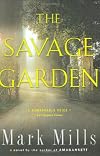
For decades one of my favorite books has been The Magus by John Fowles, both versions. I have read both of them multiple times. Last night I had the pleasure of finishing The Savage Garden by Mark Mills. This is only his second book and he looks relatively young which is always a good thing to my mind. I certainly hope he has many more novels in him. The Savage Garden owes quite a lot to The Magus, whether intentionally or otherwise. There are huge similarities and yet they are both show more wonderfully unique.
The Savage Garden takes place in Italy in 1958. A young Cambridge student of Art History is sent by his advisor to examine a very special garden in Tuscany. The garden itself is full of surprises and is not what it seems at first glance. Nor is anyone in the Docci Villa which owns the garden and surrounding property. Like The Magus there are incidental ties to the German occupation and there are almost as many twists and turns and surprises.There is more than one mystery to be solved by the protagonist and he does so brilliantly. In the end the young student comes away with much more than just his thesis. Mills' writing is so effortless that I could see the garden perfectly in my mind's eye and hear the wind and almost smell the surrounding countryside. Several hours of reading would pass in a flash. Reading like this is what I live for (after my family of course). I have no doubt I will find this book on my shelf in years to come and be delighted to read it again show less
The Savage Garden takes place in Italy in 1958. A young Cambridge student of Art History is sent by his advisor to examine a very special garden in Tuscany. The garden itself is full of surprises and is not what it seems at first glance. Nor is anyone in the Docci Villa which owns the garden and surrounding property. Like The Magus there are incidental ties to the German occupation and there are almost as many twists and turns and surprises.There is more than one mystery to be solved by the protagonist and he does so brilliantly. In the end the young student comes away with much more than just his thesis. Mills' writing is so effortless that I could see the garden perfectly in my mind's eye and hear the wind and almost smell the surrounding countryside. Several hours of reading would pass in a flash. Reading like this is what I live for (after my family of course). I have no doubt I will find this book on my shelf in years to come and be delighted to read it again show less

The panegyrics splattered across the front and back of The Information Officer mean it has some high expectations to meet, and Mills _mostly_ meets them, though I must say I was looking for a little more.
The island of Malta is being bombed into dust by Italian and German bombers, but there's something darker on the island itself, as well. When the eponymous Officer, Max, is confronted by the bodies of several Maltese women, he is set on a path to unearth a British killer on the island, show more before the situation on the ground explodes both literally and figuratively.
This book had some strong points, and some weaker ones. Mills' prose is quite accomplished. Evocative without being needlessly flashy, it's the perfect vehicle for his clearly in-depth research. He is able to conjure up the atmosphere of the Island's virtual siege convincingly.
Max himself - along with the other characters - is interesting, albeit a little bit colourless. It's always a challenge in novels that rely heavily on action in the narrative; your protagonist is constantly having to act, but not necessarily in ways that would set them apart from anyone else.
The supporting cast fares better in this respect; the breathing room allows more flavour to emerge, and I found myself wishing I could see more of them. Many of Max's adventures take place alone.
The plot is arguably the weakest part of the novel. It's not weak, per se, but it is a bit silly in more than one place. Its lack of realism is jarring in a novel where everything else feels quite real. This is typified by the ending, which devolves into a very silly, movie-like climax coupled with some redundant - and even more silly - bookends.
I am also prejudiced against psychos in crime/mystery novels. They feel so hackneyed and boring and lazy to me, and it becomes clear early on that we are dealing with a psycho (another silly part: interludes written from the psycho's perspective), and thus the need for credible, interesting motivation and characterisation is thrown out the window. They are an easy out for a writer, and should be avoided, I feel.
So in the end, The Information Officer really was a mix of good and bad parts to me, but Mills definitely has potential if he can get his Airport Thriller inclinations under control. show less
The island of Malta is being bombed into dust by Italian and German bombers, but there's something darker on the island itself, as well. When the eponymous Officer, Max, is confronted by the bodies of several Maltese women, he is set on a path to unearth a British killer on the island, show more before the situation on the ground explodes both literally and figuratively.
This book had some strong points, and some weaker ones. Mills' prose is quite accomplished. Evocative without being needlessly flashy, it's the perfect vehicle for his clearly in-depth research. He is able to conjure up the atmosphere of the Island's virtual siege convincingly.
Max himself - along with the other characters - is interesting, albeit a little bit colourless. It's always a challenge in novels that rely heavily on action in the narrative; your protagonist is constantly having to act, but not necessarily in ways that would set them apart from anyone else.
The supporting cast fares better in this respect; the breathing room allows more flavour to emerge, and I found myself wishing I could see more of them. Many of Max's adventures take place alone.
The plot is arguably the weakest part of the novel. It's not weak, per se, but it is a bit silly in more than one place. Its lack of realism is jarring in a novel where everything else feels quite real. This is typified by the ending, which devolves into a very silly, movie-like climax coupled with some redundant - and even more silly - bookends.
I am also prejudiced against psychos in crime/mystery novels. They feel so hackneyed and boring and lazy to me, and it becomes clear early on that we are dealing with a psycho (another silly part: interludes written from the psycho's perspective), and thus the need for credible, interesting motivation and characterisation is thrown out the window. They are an easy out for a writer, and should be avoided, I feel.
So in the end, The Information Officer really was a mix of good and bad parts to me, but Mills definitely has potential if he can get his Airport Thriller inclinations under control. show less
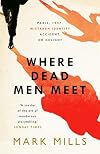
It was a dark & stormy night.….no, really. Late one evening in 1912 Sister Agnes answered a knock at the door of St. Theresa’s Orphanage. The first thing she saw was a shadowy figure standing in the distance. The second was a baby boy left on the step. Maybe that’s why she & the newly christened Luke went on to develop such a strong bond. Even after he was adopted, she continued to be a fixture in his life as he grew up.
By 1937, Luke is working as a minor intelligence officer at the show more British Embassy in Paris when he gets the news. Sister Agnes has been murdered. Luke is devastated & has no idea her death is a harbinger that his easy life in Paris is over.
He meets the mysterious Borodin who warns Luke his life is in danger. But who is he & why does he want to help? Before Luke can figure it out, he & Borodin are on the run after several attempts on their lives. Luke ends up on the Swiss-Austrian border where he meets Pippi, a woman dedicated to helping Jews escape from Germany. The fallout from their adventures only makes his situation worse but it also provides some shocking answers to how he ended up at the orphanage.
Ooooh lawdy, this is a humdinger. It all kicks off when powerful men in another country stumble across a 25 year old secret. There are multiple narrators so at times we know more than Luke. Or do we? All of these people have personal agendas & are driven by self preservation. They change their stories like their clothes & it’s impossible to know who to trust. It’s clear early on that Luke’s real identity is at the root of all the mayhem & it’s a harrowing ride to the truth.
The author makes effective use of the era as a backdrop to the primary plot. Hitler is beginning to flex his muscles & there are ominous rumblings about the treatment of German Jews. As the action moves through France, Austria, Switzerland & Italy, it feels like all of Europe is holding its breath in the prelude to WWII. This creates a subtle underlying tension that adds to the suspense of Luke’s story.
Although few of the characters are actually spies there’s a definite espionage vibe to the story. The major characters are well developed & Luke is a sympathetic leading man. Multiple twists & double crosses keep you guessing who will survive as the characters converge at the final destination.
By the end, all Luke’s questions are answered & there are hints that a sequel may follow. It’s a fast paced, entertaining story that holds your attention. Fans of period thrillers, particularly those by John le Carre´ or Robert Harris, will find much to enjoy here. show less
By 1937, Luke is working as a minor intelligence officer at the show more British Embassy in Paris when he gets the news. Sister Agnes has been murdered. Luke is devastated & has no idea her death is a harbinger that his easy life in Paris is over.
He meets the mysterious Borodin who warns Luke his life is in danger. But who is he & why does he want to help? Before Luke can figure it out, he & Borodin are on the run after several attempts on their lives. Luke ends up on the Swiss-Austrian border where he meets Pippi, a woman dedicated to helping Jews escape from Germany. The fallout from their adventures only makes his situation worse but it also provides some shocking answers to how he ended up at the orphanage.
Ooooh lawdy, this is a humdinger. It all kicks off when powerful men in another country stumble across a 25 year old secret. There are multiple narrators so at times we know more than Luke. Or do we? All of these people have personal agendas & are driven by self preservation. They change their stories like their clothes & it’s impossible to know who to trust. It’s clear early on that Luke’s real identity is at the root of all the mayhem & it’s a harrowing ride to the truth.
The author makes effective use of the era as a backdrop to the primary plot. Hitler is beginning to flex his muscles & there are ominous rumblings about the treatment of German Jews. As the action moves through France, Austria, Switzerland & Italy, it feels like all of Europe is holding its breath in the prelude to WWII. This creates a subtle underlying tension that adds to the suspense of Luke’s story.
Although few of the characters are actually spies there’s a definite espionage vibe to the story. The major characters are well developed & Luke is a sympathetic leading man. Multiple twists & double crosses keep you guessing who will survive as the characters converge at the final destination.
By the end, all Luke’s questions are answered & there are hints that a sequel may follow. It’s a fast paced, entertaining story that holds your attention. Fans of period thrillers, particularly those by John le Carre´ or Robert Harris, will find much to enjoy here. show less
Lists
Awards


You May Also Like
Associated Authors
Statistics
- Works
- 9
- Members
- 3,170
- Popularity
- #8,055
- Rating
- 3.4
- Reviews
- 206
- ISBNs
- 160
- Languages
- 10
- Favorited
- 1


