
Alison Croggon
Author of The Naming
About the Author
Alison Croggon was born in the Transvaal, South Africa in 1962. She worked as a journalist for the Melbourne Herald until 1985. Her first book of poems, This Is the Stone, was published in 1991 and won the Anne Elder Award and the Dame Mary Gilmore Prize. Her other books of poetry include The Blue show more Gate, Attempts at Being, The Common Flesh: New and Selected Poems, and Theatre. She also writes the children's fantasy series Pellinor. Her children's novel, The River and the Book, won the 2016 Wilderness Society Environment Award for Children¿s Literature, Fiction. She is Melbourne theatre critic for The Australian and keeps a blog of theatre criticism called Theatre Notes. In 2009, she was named Geraldine Pascall Critic of the Year. She has also written and had preformed nine theatrical works including the operas Gauguin and The Burrow, and the plays Lenz, Samarkand and The Famine, and Blue. (Bowker Author Biography) show less
Image credit: Courtesy of Alison Croggon
Series
Works by Alison Croggon
The Island 9 copies
Associated Works
The World of the Golden Compass: The Otherworldly Ride Continues (2007) — Contributor — 71 copies, 2 reviews
Tagged
Common Knowledge
- Birthdate
- 1962
- Gender
- female
- Occupations
- novelist
playwright
librettist
poet - Nationality
- Australia
- Birthplace
- Transvaal Province, South Africa
- Places of residence
- Melbourne, Victoria, Australia
- Associated Place (for map)
- Australia
Members
Discussions
Fiction, Magic -please help in Name that Book (February 2017)
Fantasy Witch Book Series??? in Name that Book (March 2016)
Reviews
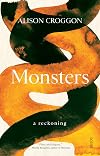
In this book, the author, Alison Croggon shares the complexities of her mind and the tapestry of her emotions with her readers. We get to know about her experiences growing up in Australia and the trials and tribulations of two parents who did not get along and the loneliness of having two sisters she did not like. She is a master storyteller and relates with clarity just how dysfunctional her family was and how she suffered deep emotional wounds that remain with her today.
In a fascinating show more way, Croggon includes the impact of years of inequality of treatment toward women on her own small self. She remains fully aware of her second class circumstances as a woman and comments frequently about her own limitations in this book. I enjoyed this memoir and learned a great deal from the author. The saddest part is discovering the depth of hurt Croggon has felt that has been caused by those who should have loved her most. Croggon realizes later in her life that she cannot forgive the younger sister she is closest to in age, and she grieves for her other sister who suffers from mental illness. Croggon is most offended when the sister she cannot forgive uses her name to wangle an appointment without even asking her. Their relationship is a hopeless disaster.
Also fascinating is Croggon's revelation of the toll her nuclear family has taken on her own sense of self esteem. She appears to struggle with a lack of self confidence and entitlement that so many women still do to this day. Her mother is both fragile and frugal and even though she loves her is so soul-crushed she finally escapes her husband's domination by leaving him and her daughters. Croggon 's years alone with her father and sisters only last until she is fifteen when she also leaves.
"Monsters" is a riveting story of lost love and the reckoning that occurs when a person feels lost and alone in the world despite having family. The author is able to help the reader understand how dysfunctional family, racist politics and negative attitudes can eat away and diminish the very essence of a human being, forever affecting their ability to love others and feel safe. This book is 😍 written and worth a read and a place on your book shelf! show less
In a fascinating show more way, Croggon includes the impact of years of inequality of treatment toward women on her own small self. She remains fully aware of her second class circumstances as a woman and comments frequently about her own limitations in this book. I enjoyed this memoir and learned a great deal from the author. The saddest part is discovering the depth of hurt Croggon has felt that has been caused by those who should have loved her most. Croggon realizes later in her life that she cannot forgive the younger sister she is closest to in age, and she grieves for her other sister who suffers from mental illness. Croggon is most offended when the sister she cannot forgive uses her name to wangle an appointment without even asking her. Their relationship is a hopeless disaster.
Also fascinating is Croggon's revelation of the toll her nuclear family has taken on her own sense of self esteem. She appears to struggle with a lack of self confidence and entitlement that so many women still do to this day. Her mother is both fragile and frugal and even though she loves her is so soul-crushed she finally escapes her husband's domination by leaving him and her daughters. Croggon 's years alone with her father and sisters only last until she is fifteen when she also leaves.
"Monsters" is a riveting story of lost love and the reckoning that occurs when a person feels lost and alone in the world despite having family. The author is able to help the reader understand how dysfunctional family, racist politics and negative attitudes can eat away and diminish the very essence of a human being, forever affecting their ability to love others and feel safe. This book is 😍 written and worth a read and a place on your book shelf! show less
 This review was written for LibraryThing Early Reviewers.
The Books of Pellinor are a high fantasy series that is a more accessible version of Tolkein's Lord of the Rings with the same richness of imagery and world building but with straightforward names and a less complicated history. That said it could also be that The Books of Pellinor are less intimidating because they're not as famous or as widely read as Tolkein.
The Books of Pellinor are set in the land of Edil-Amarandh - a land which has been on the precipe of danger for years - ever since show more Sharma, the Nameless One stole the Treesong from the Elementals (Elidhu) and broke the song. Cadvan of Lirigon is working against the dark but there's only so much he can do - until while on a mission he runs into Maerad - a slave girl who can see through his invisibility. Soon they're travelling together and finding that all is not right in the land. Then Maerad leads Cadvan to a boy named Hem and nothing is the same. Maerad and Hem have an instant connection and it's not long before Cadvan realises nothing happens without a reason and that only by working together can the light prevail.
Like the second book in the series, the third book picks up after the group flees Norloch but this time focusing on Hem and Saliman and their journey to Turbansk in the south. This novel runs concurrently to The Riddle. I had great expectations for this book because the first two of the series were absolutely brilliant. And it delivered.
This book may actually be my favourite of the series. I like Maerad but Hem is my favourite character and an entire book about him is perfection. I liked how he came to find his passion for healing and his talent for spying. And I adored the relationship between him and Saliman - I loved that he found he could love and trust and rely on Saliman to look after him and protect him and just be there for him. And IRC!!! I loved Irc the Crow and his thieving ways.
Only Irc seemed untouched by the rising despair that pervaded Turbansk. He told Hem, with a hoarse chuckle, that it was a good time for him: he was building an impressive collection of shiny spoons, buttons, and other treasures filched from the palace, which he had hidden somewhere under the eaves of the roof.
Croggon, Alison. The Crow: The Third Book of Pellinor (Pellinor Series 3) (p. 147). Candlewick Press. Kindle Edition. And I adored how Hem outwitted him.
Irc could count, but only up to five (a useful disability for Hem, who regularly emptied Irc’s treasure troves — as long as he left five objects, the crow didn’t notice anything was missing).
Croggon, Alison. The Crow: The Third Book of Pellinor (Pellinor Series 3) (p. 177). Candlewick Press. Kindle Edition.
Zelinka was fiery and I loved the friendship between her and Hem. And my heart broke for Hem when he found out she died. Poor Hem. It was a brutal blow. And it sucked - he loved her - he was going to marry her. Especially since he went all that way and she was dead before he even entered the compound. I was heartbroken by it. I really liked Zelika and I would've liked to see them make a go of it afterwards. I'm glad Saliman was there for Hem when he found out. Hared was a total badass and I would've loved to see the meeting between him and Hem after he'd disobeyed all his orders but returned with all the intel. I've got the feeling it would've been impressive.
531 pages and it felt way too short. It was fantastic and I adored every minute. 5 stars. show less
The Books of Pellinor are set in the land of Edil-Amarandh - a land which has been on the precipe of danger for years - ever since show more Sharma, the Nameless One stole the Treesong from the Elementals (Elidhu) and broke the song. Cadvan of Lirigon is working against the dark but there's only so much he can do - until while on a mission he runs into Maerad - a slave girl who can see through his invisibility. Soon they're travelling together and finding that all is not right in the land. Then Maerad leads Cadvan to a boy named Hem and nothing is the same. Maerad and Hem have an instant connection and it's not long before Cadvan realises nothing happens without a reason and that only by working together can the light prevail.
Like the second book in the series, the third book picks up after the group flees Norloch but this time focusing on Hem and Saliman and their journey to Turbansk in the south. This novel runs concurrently to The Riddle. I had great expectations for this book because the first two of the series were absolutely brilliant. And it delivered.
This book may actually be my favourite of the series. I like Maerad but Hem is my favourite character and an entire book about him is perfection. I liked how he came to find his passion for healing and his talent for spying. And I adored the relationship between him and Saliman - I loved that he found he could love and trust and rely on Saliman to look after him and protect him and just be there for him. And IRC!!! I loved Irc the Crow and his thieving ways.
Only Irc seemed untouched by the rising despair that pervaded Turbansk. He told Hem, with a hoarse chuckle, that it was a good time for him: he was building an impressive collection of shiny spoons, buttons, and other treasures filched from the palace, which he had hidden somewhere under the eaves of the roof.
Croggon, Alison. The Crow: The Third Book of Pellinor (Pellinor Series 3) (p. 147). Candlewick Press. Kindle Edition.
Irc could count, but only up to five (a useful disability for Hem, who regularly emptied Irc’s treasure troves — as long as he left five objects, the crow didn’t notice anything was missing).
Croggon, Alison. The Crow: The Third Book of Pellinor (Pellinor Series 3) (p. 177). Candlewick Press. Kindle Edition.
Zelinka was fiery and I loved the friendship between her and Hem.
531 pages and it felt way too short. It was fantastic and I adored every minute. 5 stars. show less

The Books of Pellinor are a high fantasy series that is a more accessible version of Tolkein's Lord of the Rings with the same richness of imagery and world building but with straightforward names and a less complicated history. That said it could also be that The Books of Pellinor are less intimidating because they're not as famous or as widely read as Tolkein.
The Books of Pellinor are set in the land of Edil-Amarandh - a land which has been on the precipe of danger for years - ever since show more Sharma, the Nameless One stole the Treesong from the Elementals (Elidhu) and broke the song. Cadvan of Lirigon is working against the dark but there's only so much he can do - until while on a mission he runs into Maerad - a slave girl who can see through his invisibility. Soon they're travelling together and finding that all is not right in the land. Then Maerad leads Cadvan to a boy named Hem and nothing is the same. Maerad and Hem have an instant connection and it's not long before Cadvan realises nothing happens without a reason and that only by working together can the light prevail.
Maerad was terrific. I loved her zest for life and learning and her desire to improve her circumstances - for all she could occasionally be childish and pessimistic. Cadvan was a bit more of an enigma - he was all over the place. Like Maerad, I found myself loving and hating him depending on how vague he was and then how kind he could be. I did like how periods were normalised in this. Nowadays it's not so much an issue but when it was first published it was still more of a topic to be embarrassed about, for all it was still discussed.
The fantasy elements are terrific and will feel familiar and comfortable for fantasy lovers. There's not anything particularly new (when is there?) but it's done well. The quest unfolds satisfactorily with a good balance of action and lore and character development. I enjoyed the inclusion of the Bard verses throughout the text and at the start of each segment. My favourite was the Canticles of Pel of Norloch. The world building is well developed and fascinating but thankfully not quite as overwhelming as Lord of the Rings. The appendices streamline knowledge that appears throughout the text rather than just adding a billion more backstories and histories. Well, and add some cheeky humour. I enjoyed the idea of matter and energy as music. A science that depended on laboratory experimentation, for example, simply didn’t exist, although it is known that the Schools of the Suderain included extremely advanced mathematicians and that the Bards of Baladh formulated and used physical laws in their astronomical observations. They were aware of atoms and subatomic particles, and theorized matter and energy as musical vibratory forces, anticipating quantum physics and string theory, and the Bard Thorkon of Turbansk proposed something that looks very like the theory of relativity.
Croggon, Alison. The Naming: The First Book of Pellinor (Pellinor Series 1) (pp. 487-488). Candlewick Press. Kindle Edition.
Although there is some romance in later books, the relationship between Cadvan and Maerad is one of friendship and respect and only has a few fleeting hints of anything like love in this first book. Maerad has had a hard life and Cadvan is understanding and steadfast in his support as she learns to adjust to freedom. For all he could be harsh he was also kind.
The side characters were interesting and I liked Silvia and Nelac and I'm pretty fond of Saliman - but my favourite character was Hem. Hem was hilarious. I can't wait to see more of him.
This won't be for everyone, The Naming alone, is almost 500 pages - but for those that like strong fantasy books with a quest and chosen ones and epic lore - this is for you. 5 stars. show less
The Books of Pellinor are set in the land of Edil-Amarandh - a land which has been on the precipe of danger for years - ever since show more Sharma, the Nameless One stole the Treesong from the Elementals (Elidhu) and broke the song. Cadvan of Lirigon is working against the dark but there's only so much he can do - until while on a mission he runs into Maerad - a slave girl who can see through his invisibility. Soon they're travelling together and finding that all is not right in the land. Then Maerad leads Cadvan to a boy named Hem and nothing is the same. Maerad and Hem have an instant connection and it's not long before Cadvan realises nothing happens without a reason and that only by working together can the light prevail.
Maerad was terrific. I loved her zest for life and learning and her desire to improve her circumstances - for all she could occasionally be childish and pessimistic. Cadvan was a bit more of an enigma - he was all over the place. Like Maerad, I found myself loving and hating him depending on how vague he was and then how kind he could be. I did like how periods were normalised in this. Nowadays it's not so much an issue but when it was first published it was still more of a topic to be embarrassed about, for all it was still discussed.
The fantasy elements are terrific and will feel familiar and comfortable for fantasy lovers. There's not anything particularly new (when is there?) but it's done well. The quest unfolds satisfactorily with a good balance of action and lore and character development. I enjoyed the inclusion of the Bard verses throughout the text and at the start of each segment. My favourite was the Canticles of Pel of Norloch. The world building is well developed and fascinating but thankfully not quite as overwhelming as Lord of the Rings. The appendices streamline knowledge that appears throughout the text rather than just adding a billion more backstories and histories. Well, and add some cheeky humour. I enjoyed the idea of matter and energy as music.
Croggon, Alison. The Naming: The First Book of Pellinor (Pellinor Series 1) (pp. 487-488). Candlewick Press. Kindle Edition.
Although there is some romance in later books, the relationship between Cadvan and Maerad is one of friendship and respect and only has a few fleeting hints of anything like love in this first book. Maerad has had a hard life and Cadvan is understanding and steadfast in his support as she learns to adjust to freedom. For all he could be harsh he was also kind.
The side characters were interesting and I liked Silvia and Nelac and I'm pretty fond of Saliman - but my favourite character was Hem. Hem was hilarious. I can't wait to see more of him.
This won't be for everyone, The Naming alone, is almost 500 pages - but for those that like strong fantasy books with a quest and chosen ones and epic lore - this is for you. 5 stars. show less
Alison Croggon's MONSTERS is a wild run through Croggon's mind. Structured around her broken relationship with a younger sister, Croggon muses on her family amid wanderings into just about every other conceivable area. The book is a frustrating read. The best parts are the ones that deal with her family and her life with - and without - them. If Croggon had devoted the entire book to a memoir of where and how she grew up, the book might be more successful. As it is, Croggon seems compelled show more to write about the evil that has crept into her relationship with her sister, but doesn't have enough to write about - or - doesn't want to reveal the whole scope of how life in sisterhood fell apart. Creatively (maybe), Croggon writes about the British Empire and colonialism for which she has a rightful distaste. This runs parallel to her dislike for her sister. The reader can grasp these concepts, barely. But why does Croggon take flight into so many other areas? The book is littered with mini essays that just don't seem to fit the book's otherwise memoir tone. It is as though Croggon published her diary. In it, some days she reminisced, other days she wrote about personal issues on her mind, and on other days she wrote essays on areas of interest to her. Detours that appear in MONSTERS are numerable: The Dolezal scandal, Camille Paglia's feminism, Christianity, Roman legends. the classification of living things, masculine vision. While a reader might not mind Croggon moving a bit out of her memoir to make a clear point regarding something that fits into her life in the book, no one wants to take as many detours as Croggon forces us to take in MONSTERS. Can any of these detours relate to her in a memoir sense? Possibly yes, if we are astute readers and stay on top of every word. Even then, though, we wonder: Surely there must have been a better way to do it? MONSTERS is not recommended as a memoir. Undoubtedly, those who will like it best are those who care for Croggon's fantasy works or her poetry. If that devoted to Croggon, they will probably be interested in the part of the self she shares in MONSTERS. The average reader, though, will finish the book hoping that the way she writes is not a new trend in the memoir field. show less
This review was written for LibraryThing Early Reviewers.Lists
Awards


You May Also Like


Associated Authors
Statistics
- Works
- 29
- Also by
- 2
- Members
- 7,368
- Popularity
- #3,318
- Rating
- 4.0
- Reviews
- 155
- ISBNs
- 200
- Languages
- 4
- Favorited
- 26
