
Adam Johnson (1) (1967–)
Author of The Orphan Master's Son
For other authors named Adam Johnson, see the disambiguation page.
About the Author
Adam Johnson is currently a Jones Lecturer at Stanford University. He lives in San Francisco. Adam Johnson was born on July 12, 1967 in South Dakota. He received a BA in journalism from Arizona State University in 1992, a MFA from the writing program at McNeese State University in 1996, and a PhD show more in English from Florida State University in 2000. He is a writer and associate professor in creative writing at Stanford University. He founded the Stanford Graphic Novel Project. He is the author of several books including Emporium and Parasites Like Us. He won the Pulitzer Prize for fiction in 2013 for The Orphan Master's Son and National Book Award for Fiction in 2015 for Fortune Smiles: Stories. (Bowker Author Biography) show less
Image credit: Adam Johnson at the National Book Festival By slowking - Own work, GFDL 1.2, https://commons.wikimedia.org/w/index.php?curid=28489411
Works by Adam Johnson
Associated Works
Tagged
Common Knowledge
- Canonical name
- Johnson, Adam
- Birthdate
- 1967-07-12
- Gender
- male
- Education
- Arizona State University (BA, 1992)
McNeese State University (MA, MFA, 1996)
Florida State University (PhD, 2001) - Occupations
- author
professor - Organizations
- Stanford University
- Awards and honors
- Wallace Stegner Fellowship (2001)
National Endowment for the Arts Fellowship (2010)
Gina Berriault Literary Award (San Francisco State University ∙ 2010)
Whiting Writers' Award (2009)
Pulitzer Prize (Fiction, 2013) - Relationships
- Harrell, Stephanie (wife)
Johnson, James Geronimo (son) - Nationality
- USA
- Birthplace
- South Dakota, USA
- Places of residence
- San Francisco, California, USA
- Associated Place (for map)
- USA
Members
Discussions
The Orphan Master's Son in 75 Books Challenge for 2020 (August 2020)
Reviews
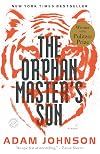
This book won the Pulitzer in 2013, deservedly so. This is a fascinating story that provides the reader a glimpse into the bizarro world of North Korea.
I think the story epitomizes the phrase "perception IS reality". The first part tells of the life of Jun Do, who grows up in the orphanage that his father runs. Everyone thinks he's an orphan, because why else would you live in an orphanage, if you weren't. He goes on to become a kidnapper for the state, abducting foreign nationals (mostly show more Japanese) at the request of DPRK officials (doctors, artists, etc). He then becomes a signal operator on a fishing boat, listening to whatever transmissions from the West he can pickup. Among them, transmissions from the ISS, that he thinks are coming from the bottom of the sea (he can't fathom anything flying above the earth). The end of the first part has him being sent to a prison mine because a diplomatic trip to Texas didn't go exactly the way officials wanted.
In the second part, Jun do is no more, he has now taken on the identity of Commander Ga, a national hero, whom he has no resemblance with. But because perception is reality, he is accepted as such. Except by his (or rather Ga's) wife, who is Korea's moth famous film star and the ingenue, of the Dear Leader; Kim Jong-Il
This was a twisted and delightful read. It brought to mind shades of Catch-22 and Dr. Strangelove, as well as a smattering of Walter Mitty. My favorite read so far this year.
Passages that stuck with me...
"The boys stopped at the harbor, it's dark waters ropey with corpses, thousands of them in the throes of the waves, looking like curds of sticky millet that start to flip and toss when the pan heats."
"How to tell the Second Mate that the only way to shake your ghosts, is to find them..."
"To survive in this world, you've got to be many times a coward buy at least once a hero... At least that's what a guy told me one time when I was beating shit out of him"
9/10
S: 5/7/16 - F: 5/22/16 ( 16 Days) show less
I think the story epitomizes the phrase "perception IS reality". The first part tells of the life of Jun Do, who grows up in the orphanage that his father runs. Everyone thinks he's an orphan, because why else would you live in an orphanage, if you weren't. He goes on to become a kidnapper for the state, abducting foreign nationals (mostly show more Japanese) at the request of DPRK officials (doctors, artists, etc). He then becomes a signal operator on a fishing boat, listening to whatever transmissions from the West he can pickup. Among them, transmissions from the ISS, that he thinks are coming from the bottom of the sea (he can't fathom anything flying above the earth). The end of the first part has him being sent to a prison mine because a diplomatic trip to Texas didn't go exactly the way officials wanted.
In the second part, Jun do is no more, he has now taken on the identity of Commander Ga, a national hero, whom he has no resemblance with. But because perception is reality, he is accepted as such. Except by his (or rather Ga's) wife, who is Korea's moth famous film star and the ingenue, of the Dear Leader; Kim Jong-Il
This was a twisted and delightful read. It brought to mind shades of Catch-22 and Dr. Strangelove, as well as a smattering of Walter Mitty. My favorite read so far this year.
Passages that stuck with me...
"The boys stopped at the harbor, it's dark waters ropey with corpses, thousands of them in the throes of the waves, looking like curds of sticky millet that start to flip and toss when the pan heats."
"How to tell the Second Mate that the only way to shake your ghosts, is to find them..."
"To survive in this world, you've got to be many times a coward buy at least once a hero... At least that's what a guy told me one time when I was beating shit out of him"
9/10
S: 5/7/16 - F: 5/22/16 ( 16 Days) show less
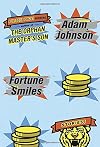
In the very near future, a tech professional creates a holographic image of the recently assassinated president to help cope with his wife’s debilitating illness. In the aftermath of two hurricanes, a Louisiana man searches for his former girlfriend, who has abandoned him with their young child. A woman dying of cancer tries to make sense of her life and how her family is moving on. The former warden of an East German political prison is forced to come to grips with the personal costs of show more the atrocities committed under his watch. A pedophile, who was himself abused as a child, struggles with the effort to control and change his nature. Two defectors from the tyranny of North Korea attempt to adjust to their new lives of freedom, with very different results.
Do those sound like the themes for a light-hearted, uplifting collection of stories? In fact, the ironically titled Fortune Smiles is anything but cheerful. What these tales are, however, is far more impressive: insightful, darkly humorous, occasionally brilliant, and deeply affecting. While the settings and time frames differ in each, these are all stories that deal with human pain—of loss, of regret, of denial, of fear. Throughout the volume, Adam Johnson does a masterful job of engaging the reader with powerful, direct language as well as dialogue that always feels real. This was my first exposure to this talented writer and I was very impressed, to say the least.
All of the stories are strong in their own way, but I would have to say that “Interesting Facts” made the biggest impression on me. I suspect that that story was clearly the most personal to the author: A woman suffering through the advanced stages of breast cancer must reconcile her illness with own failed literary career in the light of the success and adulation that her husband—who has recently published an acclaimed novel set in North Korea—is enjoying. On the other hand, “George Orwell Was a Friend of Mine,” which is told from the perspective of the Stasi prison administrator, was perhaps the only story that fell a little short of mark set by the rest. While the concept of how destructive a man’s self-delusion can be on his family was poignantly rendered, the characterization seemed a little one-dimensional to be fully plausible.
There is one aspect of the book that I am still trying to work out. In “Interesting Facts,” the husband steals an idea for a character—a pedophile named Mr. Roses—from his wife and later publishes a story of his own called “Dark Meadow.” Of course, Fortune Smiles contains this very story toward the end of the collection. While I am not averse to this sort of post-modern trickery, it did present a dilemma. I read the book from front to back over a few days, just as one might read a novel. However, this approach created more of a connection between the stories than was probably warranted, or maybe even intended. In retrospect, I think I would have been better served treating every tale as a one-off experience and considering each in isolation from the others. Still, this is a minor quibble for what was really a very satisfying reading experience. This is a book that definitely merits wide-spread attention as well as the accolades it has garnered. show less
Do those sound like the themes for a light-hearted, uplifting collection of stories? In fact, the ironically titled Fortune Smiles is anything but cheerful. What these tales are, however, is far more impressive: insightful, darkly humorous, occasionally brilliant, and deeply affecting. While the settings and time frames differ in each, these are all stories that deal with human pain—of loss, of regret, of denial, of fear. Throughout the volume, Adam Johnson does a masterful job of engaging the reader with powerful, direct language as well as dialogue that always feels real. This was my first exposure to this talented writer and I was very impressed, to say the least.
All of the stories are strong in their own way, but I would have to say that “Interesting Facts” made the biggest impression on me. I suspect that that story was clearly the most personal to the author: A woman suffering through the advanced stages of breast cancer must reconcile her illness with own failed literary career in the light of the success and adulation that her husband—who has recently published an acclaimed novel set in North Korea—is enjoying. On the other hand, “George Orwell Was a Friend of Mine,” which is told from the perspective of the Stasi prison administrator, was perhaps the only story that fell a little short of mark set by the rest. While the concept of how destructive a man’s self-delusion can be on his family was poignantly rendered, the characterization seemed a little one-dimensional to be fully plausible.
There is one aspect of the book that I am still trying to work out. In “Interesting Facts,” the husband steals an idea for a character—a pedophile named Mr. Roses—from his wife and later publishes a story of his own called “Dark Meadow.” Of course, Fortune Smiles contains this very story toward the end of the collection. While I am not averse to this sort of post-modern trickery, it did present a dilemma. I read the book from front to back over a few days, just as one might read a novel. However, this approach created more of a connection between the stories than was probably warranted, or maybe even intended. In retrospect, I think I would have been better served treating every tale as a one-off experience and considering each in isolation from the others. Still, this is a minor quibble for what was really a very satisfying reading experience. This is a book that definitely merits wide-spread attention as well as the accolades it has garnered. show less
 This review was written for LibraryThing Early Reviewers.
The Pulitzer Prize-winning author of The Orphan Master’s Son offers up some outstanding short stories of people on the edge of tragedy. In Fortune Smiles: Stories, Adam Johnson’s six stories do not share much in the way of settings, but the tone is always right on the lip of heartbreak, a sort of last kiss with hope.
There’s a former Stasi officer who can’t forget his past when pieces of it are being delivered to his doorstep (“George Orwell Was a Friend of Mine”). Of course, he show more doesn’t really think he did anything wrong, which leads us to the question of what in the world do we do with true believers?
And in a return in tone if not content to The Orphan Master’s Son, in the title story a pair of North Korean defectors are having a really hard time adjusting to life in the south–and it’s even harder for the guy who never meant to defect in the first place.
And, in “Interesting Facts,” one of Johnson’s most remarkable stories, a woman struggles with the effect her cancer is having on both her and her family. Then—perhaps just because he can—Johnson moves onto “Dark Eden,” a story that takes its premise from a story mentioned in passing in “Interesting Facts.” This one is particularly hard to take: It’s a first-person account of a pedophile who really, really doesn’t want to hurt anyone.
Running through the stories is a weird sort of humor, the kind that makes a broken heart only slightly less unbearable; it’s easy to see why Fortune Smiles has already been long-listed for the National Book Award.
(Reviewed on Lit/Rant: www.litrant.tumblr.com) show less
There’s a former Stasi officer who can’t forget his past when pieces of it are being delivered to his doorstep (“George Orwell Was a Friend of Mine”). Of course, he show more doesn’t really think he did anything wrong, which leads us to the question of what in the world do we do with true believers?
And in a return in tone if not content to The Orphan Master’s Son, in the title story a pair of North Korean defectors are having a really hard time adjusting to life in the south–and it’s even harder for the guy who never meant to defect in the first place.
And, in “Interesting Facts,” one of Johnson’s most remarkable stories, a woman struggles with the effect her cancer is having on both her and her family. Then—perhaps just because he can—Johnson moves onto “Dark Eden,” a story that takes its premise from a story mentioned in passing in “Interesting Facts.” This one is particularly hard to take: It’s a first-person account of a pedophile who really, really doesn’t want to hurt anyone.
Running through the stories is a weird sort of humor, the kind that makes a broken heart only slightly less unbearable; it’s easy to see why Fortune Smiles has already been long-listed for the National Book Award.
(Reviewed on Lit/Rant: www.litrant.tumblr.com) show less
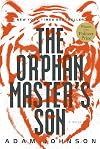
I discovered from reading The Orphan Master's Son that I know precious little about North Korea. I can say with a fair amount of confidence that I know a whole lot more after having read this book. (Yes, I know it's fictional but a good majority of it is based on the realities of that country and its people.) I have to admit that it was slow going at the beginning. I didn't feel the push to keep going that I usually do when reading something that is really interesting to me. However, this show more wasn't because the characters lacked depth. I think it stems from what I mentioned at the top of this post: I was completely in the dark about North Korea and found it hard to connect. I have since done some research into the topic on my own and I am blown away by the mastery of Adam Johnson. This is a story of a man without identity. His true self is stripped away again and again by those in power. He is not the master of his own life...and yet...His spirit will not fully submit. For the entirety of this novel, I was waiting for this man's redemption because his suffering was so great and so complete that I felt that it was unfair that he not get his happy ending. I can't say if I was rewarded at the end or not because to do so would rob you of the experience yourself. If you enjoy contemporary historical fiction and/or have an interest in a part of the world that to me has always seemed shrouded in mystery (and really it still is) then this book is for you. show less
Lists
Awards


You May Also Like


Associated Authors
Statistics
- Works
- 10
- Also by
- 8
- Members
- 6,151
- Popularity
- #3,996
- Rating
- 4.0
- Reviews
- 370
- ISBNs
- 93
- Languages
- 14
- Favorited
- 5


