
Colin B. Bailey
Author of Masterpieces of Impressionism and Post Impressionism: The Annenberg Collection
About the Author
Colin B. Bailey is Chief Curator at The Frick Collection, New York.
Works by Colin B. Bailey
Masterpieces of Impressionism and Post Impressionism: The Annenberg Collection (1989) 159 copies, 1 review
The Age of Watteau, Chardin, and Fragonard: Masterpieces of French Genre Painting (2003) 49 copies, 1 review
Associated Works
Tagged
Common Knowledge
- Canonical name
- Bailey, Colin B.
- Legal name
- Bailey, Colin Barry
- Birthdate
- 1955-10-20
- Gender
- male
- Education
- Brasenose College, University of Oxford (BA|1978|MA|1982|Ph.D|1985
- Occupations
- museum curator
museum director
art historian - Organizations
- Morgan Library & Museum
Fine Arts Museum of San Francisco
The Frick Collection
National Gallery of Canada
Kimbell Art Museum
Philadelphia Museum of Art (show all 7)
J. Paul Getty Museum - Awards and honors
- Ordre des Arts et des Lettres (Chevalier, 1994)
Ordre des Arts et des Lettres (Officier, 2010)
Mitchell Prize for the History of Art (2004)
Foundation for Italian Art and Culture Excellency Award (2013)
Fondation Broquette-Gonin Prix du Rayonnement de la Langue et de la Littérature Françaises (2020) - Relationships
- Wintermute, Alan (spouse)
- Nationality
- UK
- Birthplace
- London, England, UK
- Places of residence
- New York, New York, USA
- Associated Place (for map)
- UK
Members
Reviews
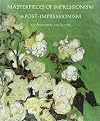
This book is the companion piece to the 1989 Philadelphia Museum of Art exhibition. There are 51 full page glorious prints of the paintings from Corot to to Matisse with Monet and Cezanne in between notable others. On the page(s) immediately following the illustrations is an informing concise but not overwhelming essay putting the artist and painting in context. The overall effect is to highlight these wonderful works and make them shine. The writing from the curators of the museum no matter show more how erudite or to the point or well presented is secondary.
Quotes: (page 7, Eugene Boudin's On the Beach 1865) “In this painting of 1865, a dense crowd is pulled up nearly to the water's edge at dusk. A few swimmers remain in the sea, although the bathing wagons are now pulled back from the tide. Two little girls play at the right, while the two women under parasols seem more caught up by their conversation than by the grand effects of the sky. But the crowd to the left, the man in profile setting the mood, seems to have fallen silent, staring out to the horizon as if in anticipation of the shift from yellow to red that is about to take place as the sun meets the sea---in an effect of temporal progress that, as Bauldelaire noted in 1859, Boudin had mastered completely...The heroic boldness of Courbert and the tonal subtleties of Whistler are not seen here, nor are the brilliant bravura brushstrokes of the young Monet. It is calmer, more tempered, and---for his railing against the participants---wondrously kind and sympathetic to a mutual participation in the moment.”
(page 70, Portrait of Uncle Dominique as a Monk c.1866) “Cezanne's early development was fraught with the passionate exploration for the means of realizing the ambitions he had discussed so earnestly with his childhood intimate in Aix, Emile Zola. Like Guillemet, Cezanne and Zola were determined to make their marks; Cezanne's means of doing this in the late 1850s and early 1860s was the execution of a group of intensely worked landscapes and figure subjects, often charged with a macabre obsession with violence and intense sexuality. During the summer of 1866---perhaps first in a landscape of the Seine at Bennecourt---he began experimenting with paintings in which he abandoned the brush all together, working as Courbet had in his landscapes and flower pictures (although never with figures) exclusively with a palette knife. This method, due to the necessity of swift execution and density of paint, helped him achieve a directness of execution and boldness of image...”
(page 98, The Bouquet c.1886) “In July 1886, Vincent's brother Theo van Gough wrote to their mother in Holland, reporting on the activities of Vincent, who had joined him in Paris earlier that spring: 'He is mainly painting flowers---with the object to put more lively color into his next pictures. He is also much more cheerful than in the past or they come to see him. He also has acquaintances who give him a collection of flowers every week which may serve him as models. If they are able to keep it up I think his difficult times are over and he will be able to make it by himself.'”d people like him here. show less
Quotes: (page 7, Eugene Boudin's On the Beach 1865) “In this painting of 1865, a dense crowd is pulled up nearly to the water's edge at dusk. A few swimmers remain in the sea, although the bathing wagons are now pulled back from the tide. Two little girls play at the right, while the two women under parasols seem more caught up by their conversation than by the grand effects of the sky. But the crowd to the left, the man in profile setting the mood, seems to have fallen silent, staring out to the horizon as if in anticipation of the shift from yellow to red that is about to take place as the sun meets the sea---in an effect of temporal progress that, as Bauldelaire noted in 1859, Boudin had mastered completely...The heroic boldness of Courbert and the tonal subtleties of Whistler are not seen here, nor are the brilliant bravura brushstrokes of the young Monet. It is calmer, more tempered, and---for his railing against the participants---wondrously kind and sympathetic to a mutual participation in the moment.”
(page 70, Portrait of Uncle Dominique as a Monk c.1866) “Cezanne's early development was fraught with the passionate exploration for the means of realizing the ambitions he had discussed so earnestly with his childhood intimate in Aix, Emile Zola. Like Guillemet, Cezanne and Zola were determined to make their marks; Cezanne's means of doing this in the late 1850s and early 1860s was the execution of a group of intensely worked landscapes and figure subjects, often charged with a macabre obsession with violence and intense sexuality. During the summer of 1866---perhaps first in a landscape of the Seine at Bennecourt---he began experimenting with paintings in which he abandoned the brush all together, working as Courbet had in his landscapes and flower pictures (although never with figures) exclusively with a palette knife. This method, due to the necessity of swift execution and density of paint, helped him achieve a directness of execution and boldness of image...”
(page 98, The Bouquet c.1886) “In July 1886, Vincent's brother Theo van Gough wrote to their mother in Holland, reporting on the activities of Vincent, who had joined him in Paris earlier that spring: 'He is mainly painting flowers---with the object to put more lively color into his next pictures. He is also much more cheerful than in the past or they come to see him. He also has acquaintances who give him a collection of flowers every week which may serve him as models. If they are able to keep it up I think his difficult times are over and he will be able to make it by himself.'”d people like him here. show less
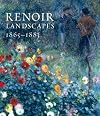
Four essays precede the plates: The Public Face of Renoir as a Landscapist by John House; ‘The Victory of Modern Art’ Landscape Painting in Mid-Nineteenth-Century France by Simon Kelly; Renoir in the City by Christopher Riopelle; ‘The Greatest Luminosity, Colour and Harmony’ Renoir’s Landscapes 1862-1883 by Colin B Bailey. Included also is a Topographical Chronology, an appendix: Landscapes in the Salon, a bibliography and an index.
Although “landscape” seems to be interpreted show more quite loosely to include cityscapes plus a few rather dubious inclusions which are little more the figure paintings (but who’s complaining if it means more pictures) even so it is a surprise the number of landscapes Renoir produced. Even more so that they in now way play second fiddle to his more familiar figure paintings.
The essays, which are well supported with notes, are fairly self explanatory. I found Ripolle’s most interesting with its descriptions of the Paris in which Renoir grew up, along with the clearance of run-down districts to make way for the grand boulevards during this period. It helps one appreciate too that many of Renoir’s renditions of Paris where of these newly constructed avenues.
The catalogue commences on page 82 and occupies nearly 200 pages. Each painting is accompanied by a comprehensive discussion covering a number of aspects, and often Renoir’s rendition of a scene is accompanied by the same or a similar view produced by another artist, and particularly Monet, who often accompanied Renoir and painted the same scene along side him. These comparisons are very enlightening.
Beautifully illustrated throughout almost entirely in colour (the few exceptions being monochrome period photographs and one or two of the comparative examples by other artists), the 73 plates while being “full page” in as much as they each sit alone on the page, very few of the amount to more than half page in size due to their proportions; maybe there is an argument here that the book would have better served its purpose if it had itself been landscape in format. In addition to the featured works there are around 90 further colour illustrations including a few full page bleed images of a detail from a painting, the rest varying in size from 2” x 2.5” up to a half page; the total number of colour images being over 160.
It is a lavishly produced volume, the test is informative, but above all the paintings are truly beautiful, one cannot help feeling a little regret that Renoir did not produce even more landscapes.
11.4” x 10” (29 cm x 25.5 cm) Published 2007 ISBN 9781857093179 Paperback, 9781857093223 Hardback show less
Although “landscape” seems to be interpreted show more quite loosely to include cityscapes plus a few rather dubious inclusions which are little more the figure paintings (but who’s complaining if it means more pictures) even so it is a surprise the number of landscapes Renoir produced. Even more so that they in now way play second fiddle to his more familiar figure paintings.
The essays, which are well supported with notes, are fairly self explanatory. I found Ripolle’s most interesting with its descriptions of the Paris in which Renoir grew up, along with the clearance of run-down districts to make way for the grand boulevards during this period. It helps one appreciate too that many of Renoir’s renditions of Paris where of these newly constructed avenues.
The catalogue commences on page 82 and occupies nearly 200 pages. Each painting is accompanied by a comprehensive discussion covering a number of aspects, and often Renoir’s rendition of a scene is accompanied by the same or a similar view produced by another artist, and particularly Monet, who often accompanied Renoir and painted the same scene along side him. These comparisons are very enlightening.
Beautifully illustrated throughout almost entirely in colour (the few exceptions being monochrome period photographs and one or two of the comparative examples by other artists), the 73 plates while being “full page” in as much as they each sit alone on the page, very few of the amount to more than half page in size due to their proportions; maybe there is an argument here that the book would have better served its purpose if it had itself been landscape in format. In addition to the featured works there are around 90 further colour illustrations including a few full page bleed images of a detail from a painting, the rest varying in size from 2” x 2.5” up to a half page; the total number of colour images being over 160.
It is a lavishly produced volume, the test is informative, but above all the paintings are truly beautiful, one cannot help feeling a little regret that Renoir did not produce even more landscapes.
11.4” x 10” (29 cm x 25.5 cm) Published 2007 ISBN 9781857093179 Paperback, 9781857093223 Hardback show less

This is a book about Manet's relationship with the Parisian Modernism of the late 1800's. It illustrates how his hallmark deployment of the enigmatic is prompted by his deliberate mixing of genre types and his deployment of modern symbols such as fashion, music and industry (informed by the work of his colleague Baudelaire). The book is also very illuminating on the influence of photography on Manet's work and his relationships with his models. It is a catalog of an exhibition that ran at show more the Royal Academy in London show less
The Age of Watteau, Chardin, and Fragonard: Masterpieces of French Genre Painting by Colin B. Bailey
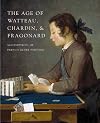
i think the book is very good but i don't really like this kind of art.i find the group pictures very tediious. i like the portraits of singles or duos. the clothes of course are beautiful. i don't remember seeing this exhibit but usually i go to the summer exhibiton.
Awards
You May Also Like


Associated Authors
Statistics
- Works
- 33
- Also by
- 5
- Members
- 765
- Popularity
- #33,260
- Rating
- 4.3
- Reviews
- 9
- ISBNs
- 53
- Languages
- 3