
Laleh Bakhtiar (1938–2020)
Author of Sufi: Expressions of the Mystic Quest
About the Author
Works by Laleh Bakhtiar
The Sense of Unity : The Sufi Tradition in Persian Architecture (1973) — Author — 46 copies, 1 review
Critical Thinking and the Chronological Quran in the Life of Prophet Muhammad : the year 12 of the revelation (2 BH/620-621 CE) (2016) 24 copies, 1 review
Moral Healer's Handbook: The Psychology of Spiritual Chivalry (God's Will Be Done, Vol. 2) (1994) 17 copies, 1 review
Traditional Psychoethics and Personality Paradigm (God's Will Be Done, Vol. 1) (God's Will Be Done) (v. 1) (1993) 13 copies
Moral Healing Through the Most Beautiful Names: The Practice of Spiritual Chivalry (God's Will Be Done, Vol 3) (1994) 11 copies, 2 reviews
Islamic Ethics: The Moral Education Textbook Series: An Interfaith Perspective Grade 1 (2005) 2 copies
Avicenna On Diseases Causes and Symptoms from the Canon of Medicine Volume 1 (2012) 2 copies, 1 review
Avicenna On Managing the Elderly, Temperament Extremes and Environmental Changes from the Canon of Medicine Volume 1 (2012) 2 copies, 1 review
Exiled in the West: The Mystical Narration of Shihab al-Din Suhrawardi's Recital of the Occidental Exile (2019) 1 copy
Avicenna on the Four Humours: Sanguineous/serous/bilious/atrabilious/blood/phlegm/yellow Bile/black Bile (2012) 1 copy, 1 review
Hijab : Islamic Modest Dress — Translator — 1 copy
Associated Works
Ibn al-Arabi: The Mysteries of Bearing Witness to the Oneness of God and Prophethood of Muhammad (2001) — Editor, some editions — 4 copies, 1 review
Avicenna Canon of Medicine Volume 3: Special Pathologies (The Canon of Medicine) (2014) — Editor — 4 copies
Avicenna Canon of Medicine Volume 5: Pharmacopia and Index of the Complete Five Volumes (2015) — Editor — 3 copies
Avicenna Canon of Medicine Volume 4: Systemic Diseases, Orthopedics and Cosmetics (2015) — Editor — 3 copies
Tagged
Common Knowledge
- Birthdate
- 1938-07-29
- Date of death
- 2020-10-18
- Gender
- female
- Education
- Tehran University (Quranic Arabic)
Chatham College (BA | History)
University of New Mexico (MA|Philosophy and Counseling Psychology)
University of New Mexico (PhD|Educational Psychology) - Occupations
- translator
editor
psychotherapist
resident scholar
writer
teacher - Organizations
- Kazi Publications
University of Chicago
Institute of Traditional Psychology - Relationships
- Nasr, Seyyed Hossein (teacher)
- Nationality
- Iran (birth)
USA - Birthplace
- Tehran, Imperial State of Iran
- Places of residence
- New York, New York, USA
Los Angeles, California, USA
Washington D.C., USA
Tehran, Iran
Chicago, Illinois, USA - Place of death
- Chicago, Illinois, USA
- Associated Place (for map)
- USA
Members
Reviews
Unusual way to write the translation but once you read the author's introduction it makes sense. Once I got the hang of how to read it, I realized that it is an enormous service this woman has done for humanity by doing the translation herself.

Existen numerosas razones para la importancia de la traducción de Laleh Bakhtiar del Sagrado Corán, la menor de las cuales es que su Corán sublime proporciona una interpretación sensible y humanista para el libro sagrado. Como directora ejecutiva de Domestic Harmony Foundation, una organización sin fines de lucro que trabaja contra la violencia doméstica en las comunidades musulmanas, del Medio Oriente y del sur de Asia, esta interpretación de la Sra. Bakhtiar es particularmente show more importante. A menudo nos enfrentamos a individuos que son víctimas del uso de los versos del Corán por parte de sus compañeros para promover sus logros abusivos, citando el versículo polémico 4:34. Su interpretación proporciona un enfoque más islámico: que cuando todo lo demás falla, alejarse de Él, la esposa debería ser el último recurso, y no golpear. Este significado es particularmente importante en nuestro campo de trabajo cuando las víctimas y los abusadores necesitan ser educados sobre la verdadera naturaleza de las enseñanzas islámicas. -
There are numerous reasons for the importance of Laleh Bakhtiar's translation of the Holy Quran, the least of which is that her Sublime Quran provides a sensible and humanistic interpretation for the holy book. As the Executive Director of the Domestic Harmony Foundation, a non-profit organization working against domestic violence within Muslim, Middle Eastern and South Asian communities, this interpretation of Ms. Bakhtiar's is particularly significant. We are often faced with individuals who are victimized by their partners' usage of Quranic verses to further their abusive gains, citing the controversial verse 4:34. Her interpretation provides a more Islamic minded approach- that when all else fails, to move away from - the wife should be the last resort, and not to hit. This meaning is particularly important in our field of work when the victims and the abusers need to be educated as to the real nature of Islamic teachings. show less
There are numerous reasons for the importance of Laleh Bakhtiar's translation of the Holy Quran, the least of which is that her Sublime Quran provides a sensible and humanistic interpretation for the holy book. As the Executive Director of the Domestic Harmony Foundation, a non-profit organization working against domestic violence within Muslim, Middle Eastern and South Asian communities, this interpretation of Ms. Bakhtiar's is particularly significant. We are often faced with individuals who are victimized by their partners' usage of Quranic verses to further their abusive gains, citing the controversial verse 4:34. Her interpretation provides a more Islamic minded approach- that when all else fails, to move away from - the wife should be the last resort, and not to hit. This meaning is particularly important in our field of work when the victims and the abusers need to be educated as to the real nature of Islamic teachings. show less
Existen numerosas razones para la importancia de la traducción de Laleh Bakhtiar del Sagrado Corán, la menor de las cuales es que su Corán sublime proporciona una interpretación sensible y humanista para el libro sagrado. Como directora ejecutiva de Domestic Harmony Foundation, una organización sin fines de lucro que trabaja contra la violencia doméstica en las comunidades musulmanas, del Medio Oriente y del sur de Asia, esta interpretación de la Sra. Bakhtiar es particularmente show more importante. A menudo nos enfrentamos a individuos que son víctimas del uso de los versos del Corán por parte de sus compañeros para promover sus logros abusivos, citando el versículo polémico 4:34. Su interpretación proporciona un enfoque más islámico: que cuando todo lo demás falla, alejarse de él, la esposa deberÃía ser el último recurso, y no golpear. Este significado es particularmente importante en nuestro campo de trabajo cuando las víctimas y los abusadores necesitan ser educados sobre la verdadera naturaleza de las enseñanzas islámicas. -
There are numerous reasons for the importance of Laleh Bakhtiar's translation of the Holy Quran, the least of which is that her Sublime Quran provides a sensible and humanistic interpretation for the holy book. As the Executive Director of the Domestic Harmony Foundation, a non-profit organization working against domestic violence within Muslim, Middle Eastern and South Asian communities, this interpretation of Ms. Bakhtiar's is particularly significant. We are often faced with individuals who are victimized by their partners' usage of Quranic verses to further their abusive gains, citing the controversial verse 4:34. Her interpretation provides a more Islamic minded approach- that when all else fails, to move away from - the wife should be the last resort, and not to hit. This meaning is particularly important in our field of work when the victims and the abusers need to be educated as to the real nature of Islamic teachings. show less
There are numerous reasons for the importance of Laleh Bakhtiar's translation of the Holy Quran, the least of which is that her Sublime Quran provides a sensible and humanistic interpretation for the holy book. As the Executive Director of the Domestic Harmony Foundation, a non-profit organization working against domestic violence within Muslim, Middle Eastern and South Asian communities, this interpretation of Ms. Bakhtiar's is particularly significant. We are often faced with individuals who are victimized by their partners' usage of Quranic verses to further their abusive gains, citing the controversial verse 4:34. Her interpretation provides a more Islamic minded approach- that when all else fails, to move away from - the wife should be the last resort, and not to hit. This meaning is particularly important in our field of work when the victims and the abusers need to be educated as to the real nature of Islamic teachings. show less
Este no es un libro típico y uno no debería esperar leerlo como tal. Primero, el estilo del libro es muy diferente de lo que normalmente leemos en inglés, y es solo después de que comienzas, que una leve familiaridad comienza a despertar en ti. Dicho en el estilo naqqali (Narrador), este libro está estructurado de manera similar a nuestra rica tradición de narración ilustrada en libros como el Shahnameh (Libro de los Reyes, Ferdowsi). Segundo, el libro está lleno de fotos, cada una show more con subtítulos, por lo que puedes comenzar a digerir el libro de esa manera. Tercero, es leer los extractos de las más de 300 cartas, escritas en el maravilloso estilo americano de Helen, como otra forma de disfrutar el libro. Y, finalmente, están las perspectivas explicadas que ponen todo en contexto y llenan el punto de vista de la familia tal como lo describen las hijas igualmente talentosas e inspiradas de Helen. Es la historia de Helen Jeffreys, una estadounidense de Idaho, que llegó a Irán como enfermera en los años treinta. Quién vino a formar una familia, pero también vino a servir y amar a Irán más allá de lo que podamos imaginar hoy. El libro es un conjunto, una transcripción, una historia tomada de las cartas que Helen escribió a sus hijos durante su increíble vida. Las fotos y los recuerdos de la familia se usaron para dar vida a las palabras de 2 de sus hijas y Rose (Shireen). y Mary Nell (Laleh). En 1927, Helen conoció y se casó con un iraní, un apuesto Abol Bakhtiar que había venido a América a buscar su fortuna. El salvaje salvaje oeste se encuentra con el salvaje salvaje este. -
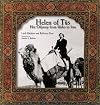
This is not a typical book and one should not expect to read it as such. First, the style of the book is very different than what we typically read in English, and it is only after you begin, that it's faint familiarity begins to awaken in you. Told in the naqqali (Storyteller) style, this book is structured similarly to our rich tradition of storytelling depicted in such books as the Shahnameh (Book of Kings, Ferdowsi). Second, the book is full of photos, each captioned, so you can begin to somewhat digest the book that way. Third, is to read the excerpts from the more than 300 letters, written in Helen's wonderfully American style, as a whole other way to enjoy the book. And finally there are the explained perspectives that puts everything into context and fills in the family's viewpoint as described by Helen's equally talented and inspired daughters. It is the story of Helen Jeffreys, an American from Idaho, who came to Iran as a nurse in the thirties. Who came to raise a family, but also came to serve and love Iran beyond anything we can imagine today. The book is an assemblage, a transcript, a story taken from the letters that Helen wrote to her children during her incredible life. The family's photos and mementoes were used to bring the words to life by 2 of her daughters and Rose (Shireen). and Mary Nell (Laleh). In 1927 Helen met and married an Iranian, a dapper Abol Bakhtiar who had come to America to seek his fortune. The Wild Wild West meets the Wild Wild East. show less
This is not a typical book and one should not expect to read it as such. First, the style of the book is very different than what we typically read in English, and it is only after you begin, that it's faint familiarity begins to awaken in you. Told in the naqqali (Storyteller) style, this book is structured similarly to our rich tradition of storytelling depicted in such books as the Shahnameh (Book of Kings, Ferdowsi). Second, the book is full of photos, each captioned, so you can begin to somewhat digest the book that way. Third, is to read the excerpts from the more than 300 letters, written in Helen's wonderfully American style, as a whole other way to enjoy the book. And finally there are the explained perspectives that puts everything into context and fills in the family's viewpoint as described by Helen's equally talented and inspired daughters. It is the story of Helen Jeffreys, an American from Idaho, who came to Iran as a nurse in the thirties. Who came to raise a family, but also came to serve and love Iran beyond anything we can imagine today. The book is an assemblage, a transcript, a story taken from the letters that Helen wrote to her children during her incredible life. The family's photos and mementoes were used to bring the words to life by 2 of her daughters and Rose (Shireen). and Mary Nell (Laleh). In 1927 Helen met and married an Iranian, a dapper Abol Bakhtiar who had come to America to seek his fortune. The Wild Wild West meets the Wild Wild East. show less
May 25, 2021Spanish
You May Also Like


Associated Authors
Statistics
- Works
- 50
- Also by
- 6
- Members
- 425
- Popularity
- #57,428
- Rating
- 4.0
- Reviews
- 30
- ISBNs
- 80
- Languages
- 2