
Antonio Iturbe
Author of The Librarian of Auschwitz
About the Author
Image credit: via Babelio
Works by Antonio Iturbe
Associated Works
Tagged
Common Knowledge
- Legal name
- Iturbe, Antonio González
- Other names
- Iturbe, Antonio G.
- Birthdate
- 1967-03-07
- Gender
- male
- Education
- Universidad Autónoma de Barcelona (BA|Journalism|1991)
- Occupations
- journalist
- Nationality
- Spain
- Birthplace
- Zaragoza, Spain
- Associated Place (for map)
- Zaragoza, Spain
Members
Reviews
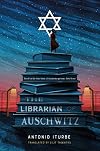
What can I say? This book is breathtaking, in that the majority of the story is true, as told to the author by Dita, the 14 year old who kept the "Library" at Auschwitz. Other characters and incidents have been compiled from different survivors stories and records.
Dita is part of a group of a few hundred Jews who are kept at Auschwitz in case the Red Cross comes to see the treatment being metered out by the Nazis. They are fed a meagre ration, sleep in bunks and in Bunker 31, they are show more allowed to group the children to play. What the Nazis don't know is that 31 is actually a school where the children are taught whatever subjects the adults can remember. A part of this school is the Library, a collection of 8 books smuggled into the death camp, and hidden under floorboards at the back of the building.
Dita is given the role of the librarian by Freddy Hirsch, an enigmatic German Jew who is in charge of all the better treated prisoners. But Freddy is hiding a terrible secret and when Dita stumbles upon talking with an SS soldier in private, she is horrified to think he may be a collaborator with the Nazis. What is Freddy's secret?
I think this book will appeal to readers of The Book Thief and The Boy in Striped Pyjamas - we know what is really going to happen to most of the characters in the story, so Antonio Iturbe's little side steps into other characters' events helps to build up the picture of individuals caught up in a mass atrocity.
This is not for the squeamish as he doesn't hold back in his descriptions of what happens to the inmates - not only in the gas chamber, but also Dr Mengele's subjects, the people worked or starved to death and the punishments metered out to escapees who are re-caught.
What shines in this book is Dita's use of the books to escape her harsh reality - she travels with the cheeky Czech soldier and the Count of Monte Christo to far away worlds and escapes her own terrible one. The author's descriptions of the way she tends to the welfare of the books with smuggled glue and scissors demonstrates the great power of the books and the word's contained within. There are lots of memorable quote but my favorite is from page 4..."Books are extremely dangerous. They make people think." show less
Dita is part of a group of a few hundred Jews who are kept at Auschwitz in case the Red Cross comes to see the treatment being metered out by the Nazis. They are fed a meagre ration, sleep in bunks and in Bunker 31, they are show more allowed to group the children to play. What the Nazis don't know is that 31 is actually a school where the children are taught whatever subjects the adults can remember. A part of this school is the Library, a collection of 8 books smuggled into the death camp, and hidden under floorboards at the back of the building.
Dita is given the role of the librarian by Freddy Hirsch, an enigmatic German Jew who is in charge of all the better treated prisoners. But Freddy is hiding a terrible secret and when Dita stumbles upon talking with an SS soldier in private, she is horrified to think he may be a collaborator with the Nazis. What is Freddy's secret?
I think this book will appeal to readers of The Book Thief and The Boy in Striped Pyjamas - we know what is really going to happen to most of the characters in the story, so Antonio Iturbe's little side steps into other characters' events helps to build up the picture of individuals caught up in a mass atrocity.
This is not for the squeamish as he doesn't hold back in his descriptions of what happens to the inmates - not only in the gas chamber, but also Dr Mengele's subjects, the people worked or starved to death and the punishments metered out to escapees who are re-caught.
What shines in this book is Dita's use of the books to escape her harsh reality - she travels with the cheeky Czech soldier and the Count of Monte Christo to far away worlds and escapes her own terrible one. The author's descriptions of the way she tends to the welfare of the books with smuggled glue and scissors demonstrates the great power of the books and the word's contained within. There are lots of memorable quote but my favorite is from page 4..."Books are extremely dangerous. They make people think." show less
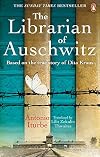
Well, you all know how I felt going into this novel - so how did it pan out?
About 30 pages in I'd decided to bail. The fictionalising of events in Auschwitz really wasn't sitting well with my conscience, and the narrative voice wasn't doing it for me either. It felt like something had perhaps been lost in the translation from Spanish to English; there was a stiltedness to it. At over 400 pages long it's not a short book either, and I wasn't sure I could go the distance given the subject show more matter.
So I put it to one side, but then my husband and I had a conversation about it. This is a man who won't watch the Titanic movie as he feels disgusted about Hollywood turning a terrible tragedy into entertainment, and who refused to go to Auschwitz when he was in Poland as he didn't want to feel like he was contributing to it being a tourist attraction. I expected for sure that he'd agree that writing a novel about a librarian in Auschwitz was a poor taste way of getting sales, but he surprised me by suggesting that there may be value in reading it given the author's engagement with Dita Kraus, the 'librarian' of Auschwitz. At the back of the book I found that Iturbe had engaged significantly with her, even visiting the Czech ghetto with her where her family were initially moved to, so I decide to pick it up again, and a few more chapters in the narrative style stopped jarring with me and I really got into it.
Having read Eli Wiesel's Night, Iturbe doesn't capture the horror of Auschwitz with the same sharpness of a survivor's own account, but I tried to keep the perspective that his objective wasn't necessarily to be that authority. Rather, he wanted to develop out the story of Kraus' teenage role in Auschwitz as librarian for 8 books as the narrative device for telling the story of the family camp. This was, at the time, a new and suspicious step by the Nazis, allowing families to stay together, with the prisoners informed that after 6 months each intake would receive special treatment. A school for children was allowed to take place every day, a significant event beyond its educational merit as its structure and focus resulted in no children dying whilst attending the school, which statistically was unheard of in Auschwitz hitherto. Needless to say the family camp was simply a ruse to distract any potential inspections from The Red Cross, and you can guess what the special treatment at the end of the 6 months was for so many innocent souls.
The trouble with fictional accounts of something like Auschwitz is that as you become absorbed you can lose the perspective of it being based on real lives. As Iturbe develops the plot of this book and dramatic tension is built up at various points, at times I did feel uncomfortable that the Auschwitz horrors were giving me page-turning moments.
So, in all, I own up - I enjoyed it and zipped through it in 2 days. Should I have enjoyed it? Should it have been page-turning fodder? I still feel that there's an author's selfishness at play in wanting to use Auschwitz as a plot device, but on the other side of the coin he writes of the bravery of a number of people whose stories would probably otherwise be lost in history forever.
4 stars for being a good read. I'm still searching my conscience a little, though. show less
About 30 pages in I'd decided to bail. The fictionalising of events in Auschwitz really wasn't sitting well with my conscience, and the narrative voice wasn't doing it for me either. It felt like something had perhaps been lost in the translation from Spanish to English; there was a stiltedness to it. At over 400 pages long it's not a short book either, and I wasn't sure I could go the distance given the subject show more matter.
So I put it to one side, but then my husband and I had a conversation about it. This is a man who won't watch the Titanic movie as he feels disgusted about Hollywood turning a terrible tragedy into entertainment, and who refused to go to Auschwitz when he was in Poland as he didn't want to feel like he was contributing to it being a tourist attraction. I expected for sure that he'd agree that writing a novel about a librarian in Auschwitz was a poor taste way of getting sales, but he surprised me by suggesting that there may be value in reading it given the author's engagement with Dita Kraus, the 'librarian' of Auschwitz. At the back of the book I found that Iturbe had engaged significantly with her, even visiting the Czech ghetto with her where her family were initially moved to, so I decide to pick it up again, and a few more chapters in the narrative style stopped jarring with me and I really got into it.
Having read Eli Wiesel's Night, Iturbe doesn't capture the horror of Auschwitz with the same sharpness of a survivor's own account, but I tried to keep the perspective that his objective wasn't necessarily to be that authority. Rather, he wanted to develop out the story of Kraus' teenage role in Auschwitz as librarian for 8 books as the narrative device for telling the story of the family camp. This was, at the time, a new and suspicious step by the Nazis, allowing families to stay together, with the prisoners informed that after 6 months each intake would receive special treatment. A school for children was allowed to take place every day, a significant event beyond its educational merit as its structure and focus resulted in no children dying whilst attending the school, which statistically was unheard of in Auschwitz hitherto. Needless to say the family camp was simply a ruse to distract any potential inspections from The Red Cross, and you can guess what the special treatment at the end of the 6 months was for so many innocent souls.
The trouble with fictional accounts of something like Auschwitz is that as you become absorbed you can lose the perspective of it being based on real lives. As Iturbe develops the plot of this book and dramatic tension is built up at various points, at times I did feel uncomfortable that the Auschwitz horrors were giving me page-turning moments.
So, in all, I own up - I enjoyed it and zipped through it in 2 days. Should I have enjoyed it? Should it have been page-turning fodder? I still feel that there's an author's selfishness at play in wanting to use Auschwitz as a plot device, but on the other side of the coin he writes of the bravery of a number of people whose stories would probably otherwise be lost in history forever.
4 stars for being a good read. I'm still searching my conscience a little, though. show less
If a story set in the hell of Auschwitz can be triumphant, it is [The Librarian of Auschwitz]. In the midst of the unimaginable, the inmates set up a school, providing some semblance of safety to the children. The librarian--14-year-old Dita--manages the few precious books, those made of paper and flesh, and risks her life in doing so. We see Auschwitz through her eyes, her fear of Mengele, her worry for her family and friends, her need to understand her mentor's motive in a moment of crisis.
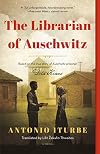
This was billed as a young adult novel, but I question that young adult designation. This novel was based loosely on the life of 14 year old Dita Kraus. Dita and her family were Czech Jews and were first sent to Terizen and then on to Auschwitz. The Nazis kept a family camp at Auschwitz for about a year so that the press and Red Cross could visit and tell the world that this was a nice place. They even had a "school" for children-with no books, desks, pencils, papers, etc. Through the show more resistance Dita came to have 8 books which she cared for and passed around. Had she been caught it would have been the gas chambers for her and her family. Dita and her mother were transferred to Belgen-Belsen where things were even worse than Auschwitz. Eventually Dita is liberated by the English. There are some interesting interviews with Dita on Youtube. I felt this book was a little too much fiction--it even had the obligatory romance--prisoner and Nazi officer. It was billed as a novel, so I don't want to judge too harshly. Also, if it was written for 13-17 year olds, I understand the included romance. 447 pages show less
Lists
Awards


You May Also Like


Associated Authors
Statistics
- Works
- 25
- Also by
- 1
- Members
- 2,998
- Popularity
- #8,508
- Rating
- 4.1
- Reviews
- 87
- ISBNs
- 117
- Languages
- 17