
Hanna Pylväinen
Author of The End of Drum-Time
About the Author
Image credit: Uncredited image found at author's website
Works by Hanna Pylväinen
Pox [short story] 1 copy
Tagged
Common Knowledge
- Gender
- female
- Education
- Mount Holyoke College (BA, Summa Cum Laude)
University of Michigan (MFA|Creative Writing) - Awards and honors
- Zell Postgraduate Fellow in Fiction (University of Michigan)
Yaddo Foundation Fellowship
MacDowell Colony Fellowship
Fine Arts Work Center fellowship - Nationality
- USA
- Associated Place (for map)
- USA
Members
Reviews
Rating: 4* of five
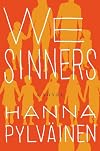
The Book Description: This stunning debut novel—drawn from the author's own life experience—tells the moving story of a family of eleven in the American Midwest, bound together and torn apart by their faith
The Rovaniemis and their nine children belong to a deeply traditional church (no drinking, no dancing, no TV) in modern-day Michigan. A normal family in many ways, the Rovaniemis struggle with sibling rivalry, parental expectations, and forming their own unique show more identities in such a large family. But when two of the children venture from the faith, the family fragments and a haunting question emerges: Do we believe for ourselves, or for each other? Each chapter is told from the distinctive point of view of a different Rovaniemi, drawing a nuanced, kaleidoscopic portrait of this unconventional family. The children who reject the church learn that freedom comes at the almost unbearable price of their close family ties, and those who stay struggle daily with the challenges of resisting the temptations of modern culture. With precision and potent detail, We Sinners follows each character on their journey of doubt, self-knowledge, acceptance, and, ultimately, survival.
NB The author won a 2012 Whiting Writers' Award, given for debut or early-career writers who have shown outstanding promise.
My Review: What is it with Michigan? Bonnie Jo Campbell (American Salvage and Peace Like A River) made me think I'd rather not visit any time soon, Michael Zadoorian gave me some images I'd rather not have of how failing lives and spirits “cope”, and then came the hopelessness of The Galaxie and Other Rides, Josie Sigler's stories that make Knockemstiff look like madcap comedy. Now this nice Finnish lady makes me think the place should be carpet-bombed and put out of our collective national misery.
Hanna Pylväinen is clearly telling the story of her own life. It's made explicit in the publisher's sales pitch. “Drawn from her own life” indeed. And “drawn” in this usage is less “limned” than “poulticed out.” The horrifying, toxic sect of christian belief her family follows is so grotesquely wrongheaded and grimly abusive that it's hard for me to read the book at all. It boggles my mind that anyone could experience any of these things and go on thinking this is a religion of love and light. It's a sadistic, controlling hate group.
Anyway.
I kept reading because Hanna Pylväinen writes in elegant, unadorned prose about the feelings and spirits of her family. She isn't forgiving and she isn't denigrating and she is, most of all, not apologetic. She quite simply tells the stories she's got inside her to tell, and she does so without one bit of fuss or drama.
The stories more than make up for her reticent writing.
Oh, and I keep calling them stories because that's what they are. No amount of hollering “this is a novel it's a novel see see it's a novel!” makes it a novel. It's a collection of linked short stories. It's a darn good one, but it's still a collection of linked short stories. That means 99% of y'all will smile wanly, say something polite about the review if you're so inclined, and then shudder off to read something with a plot.
Your loss. Hanna Pylväinen is a bright new talent on the literary scene. She's unsparingly sympathetic and astringently kind. She's not to be missed in this debut effort, because one day soon, you'll see her bewildering and unpronounceable name at the front of every B&N/Waterstones/Chapters. You can snort with quietly derisory self-satisfaction at all the Janie-come-latelies warbling her praises. “Oh yes, Hanna {Mumblemumble}! I read We Sinners back in the day. Such a book!”
So read it. Read it for fun if you like to get in deep with struggling people; read it for education if you've always had more than enough on your table and in your house; read it to stoke your outrage machine if you're a feminist or a rationalist; read it for bragging rights if you're snobbish. I don't care. Just read it. show less
The Book Description: This stunning debut novel—drawn from the author's own life experience—tells the moving story of a family of eleven in the American Midwest, bound together and torn apart by their faith
The Rovaniemis and their nine children belong to a deeply traditional church (no drinking, no dancing, no TV) in modern-day Michigan. A normal family in many ways, the Rovaniemis struggle with sibling rivalry, parental expectations, and forming their own unique show more identities in such a large family. But when two of the children venture from the faith, the family fragments and a haunting question emerges: Do we believe for ourselves, or for each other? Each chapter is told from the distinctive point of view of a different Rovaniemi, drawing a nuanced, kaleidoscopic portrait of this unconventional family. The children who reject the church learn that freedom comes at the almost unbearable price of their close family ties, and those who stay struggle daily with the challenges of resisting the temptations of modern culture. With precision and potent detail, We Sinners follows each character on their journey of doubt, self-knowledge, acceptance, and, ultimately, survival.
NB The author won a 2012 Whiting Writers' Award, given for debut or early-career writers who have shown outstanding promise.
My Review: What is it with Michigan? Bonnie Jo Campbell (American Salvage and Peace Like A River) made me think I'd rather not visit any time soon, Michael Zadoorian gave me some images I'd rather not have of how failing lives and spirits “cope”, and then came the hopelessness of The Galaxie and Other Rides, Josie Sigler's stories that make Knockemstiff look like madcap comedy. Now this nice Finnish lady makes me think the place should be carpet-bombed and put out of our collective national misery.
Hanna Pylväinen is clearly telling the story of her own life. It's made explicit in the publisher's sales pitch. “Drawn from her own life” indeed. And “drawn” in this usage is less “limned” than “poulticed out.” The horrifying, toxic sect of christian belief her family follows is so grotesquely wrongheaded and grimly abusive that it's hard for me to read the book at all. It boggles my mind that anyone could experience any of these things and go on thinking this is a religion of love and light. It's a sadistic, controlling hate group.
Anyway.
I kept reading because Hanna Pylväinen writes in elegant, unadorned prose about the feelings and spirits of her family. She isn't forgiving and she isn't denigrating and she is, most of all, not apologetic. She quite simply tells the stories she's got inside her to tell, and she does so without one bit of fuss or drama.
The stories more than make up for her reticent writing.
Oh, and I keep calling them stories because that's what they are. No amount of hollering “this is a novel it's a novel see see it's a novel!” makes it a novel. It's a collection of linked short stories. It's a darn good one, but it's still a collection of linked short stories. That means 99% of y'all will smile wanly, say something polite about the review if you're so inclined, and then shudder off to read something with a plot.
Your loss. Hanna Pylväinen is a bright new talent on the literary scene. She's unsparingly sympathetic and astringently kind. She's not to be missed in this debut effort, because one day soon, you'll see her bewildering and unpronounceable name at the front of every B&N/Waterstones/Chapters. You can snort with quietly derisory self-satisfaction at all the Janie-come-latelies warbling her praises. “Oh yes, Hanna {Mumblemumble}! I read We Sinners back in the day. Such a book!”
So read it. Read it for fun if you like to get in deep with struggling people; read it for education if you've always had more than enough on your table and in your house; read it to stoke your outrage machine if you're a feminist or a rationalist; read it for bragging rights if you're snobbish. I don't care. Just read it. show less
We Sinners follows a family of eleven who belong to a claustrophobicly-conservative Lutheran sect that bans everything from television to "music with a beat." Though their religion seems surreal from an outside perspective, the members of the family prove to be all too human. The father struggles with anger, stress, and anxiety, the mother struggles with making the right choices for her nine children, and the children find themselves split as they find their way through contemporary America. show more The characters are sympathetic and horrifying - and sometimes both. The story is compelling, and the narrative is clear and engaging. show less
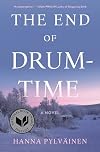
It took me a shamefully-long time to read this dense novel, I admit, but I'm grateful for the strength to stick it out. That and, of course, Pylväinen's genius, lustrous prose, reminding me anew of the glory and power of literature, and the ability to transport me, a millenial of Caribbean descent, to 1850s Scandinavia: wild! The rather-ponderous first third of the book a given, the lovely love story and the too-familiar exploration of forced faith endeared this novel to me as one unlike show more any other. show less
 This review was written for LibraryThing Early Reviewers.
We Sinners by Hanna Pylvainen is the story of the large Rovaniemi clan, Warren and Pirjo, and their nine children. More than that, though, it is the story of their faith, a fundamentalist version of Christianity that originated in Finland, Laestadianism. The Rovaniemis' church is impressively strict, demanding that its congregants forgo dancing, TV watching, drinking, listening to popular music, and using birth control. In the tradition of some evangelical churches, it relies on lay show more preachers rather than the formally educated and ordained. The church community is small and insular, and rather more a main character in Pylvainen's story so central is it to her characters' lives.
In We Sinners, Pylvainen explores the Rovaniemi family member by member, from those who embrace their faith whole-heartedly to those who can't wait to escape to a world free from the narrow confines of it. It probes the psyches of both parents who each question their dedication to God, Warren when he faces the possibility of being called upon to preach and Pirjo, when it seems like something so simple as a television set could derail her family's focus. It follows the children as they explore the lives they've been effectively denied, dating boys outside the church, experimenting with drinking, finding themselves and being excommunicated from everything they've ever known because of the selves they find. Some choose to leave, and some choose to embrace the church and the, strict, if comfortable way of life they have grown to appreciate.
Pylvainen's short novel is not short on profundity. Many might choose to villify this church, but Pylvainen, instead, chooses to show a more balanced picture of the trials and rewards of faith and readers emerge on the other side of her narrative forced to decide for themselves which is the better way, if indeed there is one. For some of the children, the comfort of living in a community with faith that they all have in common draws them in inexorably as they grow to adulthood. For them, the longed for words of absolution become a comfort and a necessity. Their large families rise up around them, for better or worse. The others attempt to find solace in "worldly" relationships where it eludes them, they trade their family and faith for freedom, but find that freedom from their faith isn't all they ever dreamed. All find themselves haunted by the faith of their childhood and, it seems, that none find exactly what they're looking for at the end of either path.
We Sinners is a quiet but powerful book that explores the vagaries of a commanding faith from inside and out. Pylvainen's prose is stark but illuminating, shining a light on a topic that rarely gets so much balanced attention. While Pylvainen briefly explores each of the family's members to great effect, the focus always remains on the fundamentalism that both unites and divides and how the choice to stay or to go always leaves someone standing on the other side of the glass wondering if they failed to choose the better way. We Sinners' portrayal of faith might not be for everyone, but anyone who wants to understand what makes a fundamentalist Christian family tick would do well to give Pylvainen's thoughtful debut a look. show less
In We Sinners, Pylvainen explores the Rovaniemi family member by member, from those who embrace their faith whole-heartedly to those who can't wait to escape to a world free from the narrow confines of it. It probes the psyches of both parents who each question their dedication to God, Warren when he faces the possibility of being called upon to preach and Pirjo, when it seems like something so simple as a television set could derail her family's focus. It follows the children as they explore the lives they've been effectively denied, dating boys outside the church, experimenting with drinking, finding themselves and being excommunicated from everything they've ever known because of the selves they find. Some choose to leave, and some choose to embrace the church and the, strict, if comfortable way of life they have grown to appreciate.
Pylvainen's short novel is not short on profundity. Many might choose to villify this church, but Pylvainen, instead, chooses to show a more balanced picture of the trials and rewards of faith and readers emerge on the other side of her narrative forced to decide for themselves which is the better way, if indeed there is one. For some of the children, the comfort of living in a community with faith that they all have in common draws them in inexorably as they grow to adulthood. For them, the longed for words of absolution become a comfort and a necessity. Their large families rise up around them, for better or worse. The others attempt to find solace in "worldly" relationships where it eludes them, they trade their family and faith for freedom, but find that freedom from their faith isn't all they ever dreamed. All find themselves haunted by the faith of their childhood and, it seems, that none find exactly what they're looking for at the end of either path.
We Sinners is a quiet but powerful book that explores the vagaries of a commanding faith from inside and out. Pylvainen's prose is stark but illuminating, shining a light on a topic that rarely gets so much balanced attention. While Pylvainen briefly explores each of the family's members to great effect, the focus always remains on the fundamentalism that both unites and divides and how the choice to stay or to go always leaves someone standing on the other side of the glass wondering if they failed to choose the better way. We Sinners' portrayal of faith might not be for everyone, but anyone who wants to understand what makes a fundamentalist Christian family tick would do well to give Pylvainen's thoughtful debut a look. show less
Lists
Awards


You May Also Like


Associated Authors
Statistics
- Works
- 5
- Members
- 407
- Popularity
- #59,757
- Rating
- 3.9
- Reviews
- 51
- ISBNs
- 14
- Languages
- 2
